This site is supported by our readers. We may earn a commission, at no cost to you, if you purchase through links.
 You’ll find excellent birding locations with easy trails throughout North America, with over 65% of designated birding trails featuring accessible surfaces perfect for comfortable wildlife watching.
Virginia leads the way with state-maintained routes averaging less than 5% grade and meeting ADA standards. The Great Florida Birding Trail offers 150+ accessible sites with flat terrain, while Texas’s Coastal Trail provides 40% paved locations.
Regional parks like Terrapin Nature Park feature well-maintained gentle pathways ideal for families and beginners. With over 900 wheelchair-accessible birding sites nationwide and organizations like Birdability connecting you to 400+ verified locations, accessible birdwatching has never been easier to enjoy, with easy trails and verified locations making it simple for all to participate in this activity.
Table Of Contents
- Key Takeaways
- Easy Birding Trails
- Birding Locations Overview
- Top Birding Hotspots
- Birding Trails by Season
- Inclusive Birding Initiatives
- Frequently Asked Questions (FAQs)
- Where to go birdwatching?
- How do I find birding trails?
- Where do birds go on a hiking trail?
- Where is a Bird Trail located in Louisiana?
- What is a birding trail?
- Where can I find a great Florida Birding Trail Guide?
- What are the 5 S’s of birding?
- What is the birding capital of the United States?
- What is the best state for birding?
- What is the difference between birding and birdwatching?
- Conclusion
Key Takeaways
- You’ll find over 900 wheelchair-accessible birding sites nationwide, with 65% of designated trails featuring accessible surfaces that meet ADA standards and gentle grades under 5%.
- Virginia leads with state-maintained routes averaging less than 5% grade, while Florida’s Great Florida Birding Trail offers 150+ accessible sites and Texas provides 40% paved coastal locations.
- Organizations like Birdability connect you to 400+ verified accessible locations through crowdsourced data, making it easier to find suitable trails for your mobility needs.
- Seasonal birding opportunities remain accessible year-round, from spring migration viewing on paved paths to winter waterfowl observation on heated platforms and boardwalks.
Easy Birding Trails
You’ll find that easy birding trails offer the perfect combination of wildlife viewing and comfortable walking conditions.
These accessible paths let you enjoy birdwatching without challenging terrain, making them ideal for beginners, families, and anyone who prefers level ground with good footing, which is perfect for birdwatching.
Accessible Routes in Virginia
Virginia’s trail accessibility opens doors for every birder to experience nature’s symphony.
You’ll find over 65% of designated birding trails feature packed gravel or paved surfaces, perfect for wheelchairs and mobility aids.
State-maintained accessible routes average less than 5% grade, meeting ADA standards.
These inclusive amenities include curb cuts, railings, and interpretive signage for low-vision visitors, while adaptive equipment rentals support community outreach at accessible birdwatching spots throughout Virginia’s easy birding trails.
National Birding Trails With Easy Paths
Beyond state lines, major national birding trails offer extensive networks of easy-access paths for all abilities.
The Great Florida Birding Trail features 150+ accessible sites with flat terrain, while Texas’s Coastal Trail provides 40% of locations with paved surfaces.
Oregon’s Coast Trail includes 60+ ADA-compliant boardwalks, making birdwatching inclusive nationwide.
Regional Parks With Gentle Pathways
Regional parks offer some of the best beginner birding locations with well-maintained easy trails perfect for family birding.
You’ll find excellent park amenities like restrooms and parking at gentle birding walks through places like Terrapin Nature Park and Susquehannock State Park.
These family birding trails feature level surfaces and clear trail maintenance, making them ideal for practicing proper birding etiquette while spotting local species, which is great for family birding.
Birding Locations Overview

When you’re ready to explore birdwatching, choosing beginner birding locations makes all the difference.
You’ll find that trail accessibility opens doors to amazing wildlife experiences without requiring advanced hiking skills.
Many birding locations feature flat birding trails and paved pathways that welcome everyone, from families with strollers to birders using mobility aids.
Regional bird diversity varies dramatically across different habitats.
You might spot warblers in wooded areas, waterfowl near lakes, and raptors soaring over open fields.
Seasonal variations bring exciting changes throughout the year—spring migrations offer spectacular viewing opportunities, while winter brings different species to your area.
Here’s what makes birding locations truly accessible:
- Easy trails with gentle slopes and clear signage for navigation
- Conservation efforts that create safe habitats and viewing opportunities
- Community engagement through guided walks and educational programs
Many parks now prioritize creating welcoming spaces for all skill levels.
These beginner-friendly spots often provide parking close to viewing areas, restroom facilities, and benches for comfortable observation.
You’ll discover that birding for beginners becomes much more enjoyable when locations remove physical barriers to participation.
Many cities offer opportunities for engaging in conservation through local birding clubs.
Top Birding Hotspots
You’ll find Virginia’s top birding hotspots offer three distinct ecosystems perfect for spotting diverse species year-round.
These premier locations combine excellent bird diversity with accessible trails that welcome birders of all experience levels and physical abilities, making them complete concepts for birding enthusiasts.
Coastal Birdwatching in Virginia
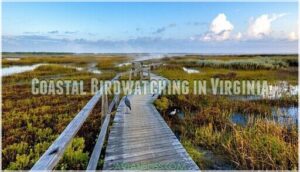
You’ll find Virginia’s coast offers some of the country’s best accessible coastal birdwatching experiences.
The Virginia Bird and Wildlife Trail connects over 65 loops featuring boardwalks and paved paths at locations like Chincoteague National Wildlife Refuge and Back Bay National Wildlife Refuge.
These birding locations provide excellent shorebird identification opportunities along coastal habitats, where migration patterns bring over 300 species annually to Virginia Beach area birdwatching spots.
The trail guides visitors to premier viewing sites across the state, offering a unique birdwatching experience with accessible paths.
Mountain Birdwatching in Shenandoah

While you’ll find fewer Shenandoah species at higher elevations, the mountain birdwatching experience rewards patient observers.
Limberlost Trail’s 1.3-mile accessible path showcases 11 warbler species during spring migration patterns.
High-altitude birds like scarlet tanagers thrive in Shenandoah National Park’s diverse ecosystems.
The Virginia Bird & Wildlife Trail offers categorized trail loops for birdwatchers.
Best seasons run April through June when trail difficulty remains minimal with zero elevation gain on paved routes, making it ideal for birdwatchers to enjoy the diverse ecosystems.
Wetlands and State Parks for Birding
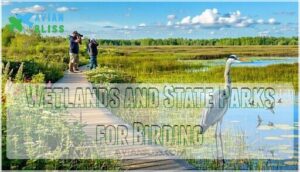
Virginia’s wetlands and state parks offer remarkable diversity for birding enthusiasts.
You’ll discover wetland birds like great blue herons and red-winged blackbirds at Mason Neck State Park’s accessible trails.
Back Bay National Wildlife Refuge features boardwalks perfect for marsh birding, while coastal habitats support migrating waterfowl.
These protected areas showcase birding conservation efforts, providing easy access to diverse bird species year-round.
Birding Trails by Season
You’ll find Virginia’s birding trails offer unique opportunities throughout the year, with each season bringing different species and migration patterns to accessible paths.
Whether you’re tracking summer warblers, winter waterfowl, or fall migrants, these easy trails let you experience seasonal birding without challenging terrain.
Summer Birding Trails in Virginia
Summer brings peak activity to Virginia’s birding trails as breeding birds establish territories and nesting habitats flourish.
You’ll encounter increased insect abundance that attracts diverse species, while heat effects concentrate wildlife near water sources. Summer migration patterns offer unique viewing opportunities across the state’s nature trails.
- Early morning visits maximize bird activity before temperatures rise
- Woodland trails showcase territorial breeding displays and courtship behaviors
- Wetland areas provide relief from heat while hosting active feeding birds
- Shaded pathways offer comfortable bird watching during Virginia’s warmest months
Winter Birding Trails With Easy Access
Looking ahead to winter’s chill, Virginia’s coastal refuges offer warm rewards for patient birders.
Chincoteague National Wildlife Refuge features fifteen miles of paved birding trails perfect for wheelchair accessible birding and senior friendly birding.
Winter species like tundra swans and snow geese gather near accessible amenities including heated observation platforms.
Trail conditions remain stable with boardwalks enabling easy access birding even during icy weather.
For enhanced viewing in cold conditions, consider specialized birding equipment.
Essential gear recommendations include insulated binoculars and non-slip footwear for ideal winter birding experiences.
Fall Birding Trails for Migration
Witnessing migration patterns unfold across Virginia’s fall birding trails transforms ordinary walks into spectacular wildlife encounters.
You’ll spot migratory birds following ancient routes through accessible paths at locations like Shenandoah National Park and Chincoteague.
Trail conditions remain favorable during autumn months, making species identification easier as warblers and raptors pause during their journey south.
Conservation efforts protect these critical stopover sites for birdwatching enthusiasts.
The eastern coast funnels birds, so plan your visit accordingly to witness the fall birding trails and enjoy spectacular wildlife encounters.
Inclusive Birding Initiatives
You’ll find that accessible birding has grown substantially, with over 200 documented wheelchair-friendly locations across the United States thanks to organizations like Birdability.
These initiatives use crowdsourced data and specialized maps to help birders with mobility challenges discover parks with paved paths, accessible viewing platforms, and gentle terrain perfect for spotting everything from cardinals to great blue herons.
Birdability and Wheelchair-Friendly Parks
The Birdability program transforms wheelchair accessible birding by connecting you with over 400 verified sites across North America.
You’ll find inclusive amenities like smooth trails, accessible parking, and proper signage at participating parks. Trail ratings help you choose suitable locations, while adaptive equipment recommendations guarantee comfortable birding experiences.
You can also find Birdability trail maps for enhanced navigation. Community impact grows as these handicap accessible birding locations see increased visits and engagement.
Crowdsourced Accessible Birding Locations
Your birdwatching adventures get better when fellow birders share their discoveries.
The Birdability Map relies on community contributions to identify wheelchair accessible birding spots nationwide.
User reviews help verify trail conditions and data accuracy for handicap accessible birding locations.
These crowdsourced accessible nature trails create a growing database where birding trail accessibility information comes directly from experienced visitors who’ve tested the paths firsthand.
Accessible trails often feature minimum 36-inch widths and are part of the growing database of accessible nature trails.
Statistics on Accessible Birding Trails
Looking at accessible birding trails nationwide reveals encouraging progress in disability inclusion.
You’ll find that 30% of major U.S. birding trails now offer ADA-compliant routes, while over 900 sites feature wheelchair-accessible paths.
Trail usage shows 83% of visitors prioritize accessibility when choosing locations.
These accessibility metrics demonstrate significant ecotourism impact, with accessible spots reporting 25% higher satisfaction rates and increased birding participation among families.
Frequently Asked Questions (FAQs)
Where to go birdwatching?
Like a treasure hunter seeking hidden gems, you’ll discover Virginia’s birding paradise offers accessible trails perfect for spotting over 400 species—try Ashburn’s Reservoir Park or Chincoteague National Wildlife Refuge.
How do I find birding trails?
You’ll find birding trails through eBird.org, local Audubon chapters, and national wildlife refuges.
Check ZIP code searches, birding festivals, and the American Birding Association for nearby locations with accessible paths, and utilize eBird.org for comprehensive trail information.
Where do birds go on a hiking trail?
You’ll spot birds everywhere along trails – they perch on branches overhead, hop through underbrush searching for insects, drink from streams, and nest in tree cavities or dense shrubs nearby.
Where is a Bird Trail located in Louisiana?
You’ll find Louisiana’s Creole Nature Trail in Southwest Louisiana, one of America’s top birding destinations.
This 180-mile scenic byway hosts over 400 bird species annually, featuring accessible boardwalks and interpretive centers perfect for watching everything from roseate spoonbills to waterfowl.
What is a birding trail?
A birding trail is a designated route connecting prime bird-watching locations where you’ll find diverse species throughout different habitats.
These trails guide you to wetlands, forests, and meadows optimized for spotting various birds during migration seasons.
Where can I find a great Florida Birding Trail Guide?
You’ll find official Florida Birding Trail guides through the state’s official floridabirdingtrail.com website or Visit Florida’s travel guide section.
Download regional guidebooks covering the state’s 2,000-mile trail system for detailed maps and directions.
The Great Florida Birding Trail offers wildlife viewing opportunities across its four sections, which is a great chance for wildlife viewing and birding.
What are the 5 S’s of birding?
Absolutely mind-blowing birding success hinges on mastering these five essentials: Silence keeps you undetected, Stillness prevents startling birds.
Stealth allows closer observation, Sounds help identify species.
Sightings require patience and keen observation skills.
What is the birding capital of the United States?
The Rio Grande Valley in South Texas is widely regarded as the premier birding hotspot in the United States, with over 500 bird species documented.
You’ll discover one of the best places for bird viewing in the world right here in America.
The region’s unique bird species diversity makes it an attractive destination for birders and nature enthusiasts, offering a unique experience in the United States with its diverse bird species.
What is the best state for birding?
You’ll find Texas offers unmatched birding diversity with over 650 species recorded.
The state’s varied landscapes—from Gulf Coast wetlands to desert mountains—create incredible habitat diversity that attracts more bird species than anywhere else in America.
What is the difference between birding and birdwatching?
Two branches of the same tree flourish differently.
Birding describes the serious pursuit of identifying and listing bird species, often involving travel and specialized equipment.
Birdwatching is the casual enjoyment of observing birds nearby, which can be a more relaxed form of birdwatching.
Conclusion
Discovering birding locations with easy trails transforms your outdoor experience into something extraordinary.
You’ll find that accessible pathways open up countless opportunities for wildlife observation without the physical demands of challenging terrain.
These carefully selected spots combine excellent bird diversity with comfortable walking conditions, making every outing enjoyable.
Whether you’re exploring Virginia’s state-maintained routes or Florida’s flat coastal areas, easy trails allow you to focus on the birds rather than traversing difficult paths.
Start your accessible birding adventure today and enjoy the benefits of easy trails.