This site is supported by our readers. We may earn a commission, at no cost to you, if you purchase through links.
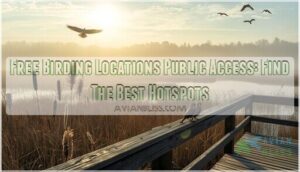
Most birders don’t realize that over 560 national wildlife refuges across the United States offer completely free access to some of the continent’s best bird watching opportunities. You don’t need expensive memberships or paid permits to observe migrating warblers in spring wetlands or count raptors along coastal flyways.
Public lands managed by federal, state, and local agencies provide thousands of accessible birding sites where you can spot everything from common backyard species to rare migrants. These locations usually include well-maintained trail systems, observation platforms, and habitat diversity that attracts birds year-round. Finding and accessing these free birding hotspots requires knowing where to look and what features make a site worth visiting.
Table Of Contents
- Key Takeaways
- What Makes a Great Public Birding Location
- Top Free Birding Sites Across The U.S
- Using EBird to Find Birding Hotspots
- Accessible Birding for All Skill Levels
- Conservation Efforts at Public Birding Sites
- Frequently Asked Questions (FAQs)
- What is the birding capital of the United States?
- What colors not to wear when birding?
- What permits are required for birding groups?
- Are dogs allowed at birding locations?
- What are typical operating hours restrictions?
- How do weather conditions affect access?
- Are camping facilities available at sites?
- What birding gear should I bring to public sites?
- How do I identify birds without prior experience?
- What time of day is best for birding?
- Conclusion
Key Takeaways
- Over 560 national wildlife refuges across the U.S. offer completely free birding access with no permits or memberships required, alongside thousands of state parks, municipal preserves, and coastal sites that provide diverse habitats and maintained trail systems.
- The best public birding locations combine habitat diversity (wetlands, forests, grasslands) with practical features like observation platforms, ADA-compliant boardwalks, and year-round accessibility that supports both casual observers and serious birders.
- eBird serves as a critical free tool for finding hotspots by mapping decades of sighting data to specific locations, showing which species appear when and where while contributing your observations to conservation science and habitat management decisions.
- Many public birding sites run active conservation programs including wetland restoration, invasive species removal, and citizen science monitoring that let visitors directly support wildlife protection while accessing free equipment loans, guided walks, and beginner programs.
What Makes a Great Public Birding Location
Not all birding spots are created equal. The best public locations offer free access, diverse habitats, and enough trails or observation points to keep you coming back.
For stunning elevation-based diversity, check out these top mountain birding locations where altitude brings unexpected species.
Here’s what separates a decent spot from one worth adding to your regular rotation.
Free Entry and Parking Access
You won’t need to crack open your wallet at most public birding sites. Free admission and no parking fees are the norm at city parks, nature preserves, and many wildlife refuges across the country.
Here’s what you can expect:
- No entry fees – Public access routes stay open during daylight hours with no permits required.
- Free parking – First-come parking lots accommodate weekend crowds at best birding locations.
- Public restrooms – Many local birding spots provide facilities and water stations at no charge.
Habitat Diversity and Bird Species
Mixed landscapes pack more bird species into your binoculars. Wetlands, forests, and grasslands stacked side by side create biodiversity hotspots where you’ll spot waders, warblers, and raptors in one morning.
Habitat complexity drives species richness—layered canopy, shrubs, and open ground support different feeding guilds year-round. During bird migration peaks, diverse ecosystems offer reliable food and cover that pull in hundreds of species for serious birding and wildlife observation.
Layered habitats draw hundreds of bird species during migration by offering diverse food and shelter across canopy, shrubs, and open ground
A recent study in the Philippines highlights the value of bird species diversity across habitats for conservation and birding experiences.
Trail Systems and Observation Points
Well-planned park trails turn casual strolls into serious bird watching adventures. You’ll find observation decks every half mile to mile on popular birding routes, rising six to ten feet for wildlife viewing across wetlands and canopy.
Nature trails loop through diverse habitats instead of forcing backtracking, while hiking trails connect to boardwalks over sensitive areas where stepping off-path would trash nesting zones.
Trail managers often use standardized trail condition surveys to assess and maintain these paths for public access.
Year-Round Accessibility
Public access extends beyond summer peak seasons at well-managed birding trails. You’ll encounter year-round visitor services including seasonal hours that shift with daylight, trail maintenance crews clearing ice and snow, and safety measures like wildlife closure signs during nesting periods.
eBird hotspots track these accessible sites where bird watching continues through winter months, supporting wildlife viewing whenever migration timing or weather permits your visit.
Top Free Birding Sites Across The U.S
You don’t need a membership or a fancy pass to find outstanding birding spots. Public lands across the country offer free access to some of the best bird watching you’ll find anywhere.
Many species you’ll encounter are easy to identify using regional bird guides for the Eastern United States or similar free resources.
Here’s where to start your search for those hidden gems and well-known hotspots that won’t cost you a dime.
National Wildlife Refuges
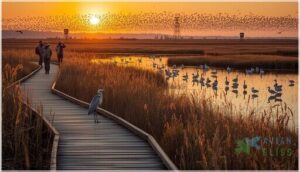
You’ll find over 570 National Wildlife Refuges spread across every state and territory, each offering free entry to explore diverse landscapes from wetlands to coastal waters. These sites protect migratory birds, waterfowl, and endangered species through active habitat restoration and wildlife conservation efforts.
Refuge management includes:
- Controlled burns and vegetation planting for ecosystem health
- Wetland hydrological adjustments to support aquatic habitats
- Invasive species removal through conservation partnerships
- Wildlife monitoring via citizen science programs
- Visitor services like trails, boardwalks, and birding education events
Each refuge updates its conservation plan every 15 years to guide wildlife preservation priorities.
State and Municipal Parks
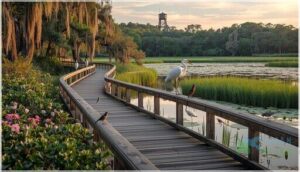
You’ll discover outstanding birding at state and municipal parks where local governments manage green spaces for urban wildlife and year-round park accessibility. Florida’s Fort De Soto Park boasts over 250 bird species, while Lettuce Lake Park in Tampa features a 3,500-foot boardwalk connecting you to 187 recorded species. Circle B Bar Reserve in Lakeland offers restored wetlands through municipal conservation efforts.
| Park Name | Location | Key Features |
|---|---|---|
| Fort De Soto Park | Pinellas County, FL | 250+ species, 7 miles of trails, monthly beginner programs |
| Lettuce Lake Park | Tampa, FL | 187 species, 3,500-foot boardwalk, observation tower |
| Circle B Bar Reserve | Lakeland, FL | Restored wetlands, diverse habitats, wildlife viewing hotspot. |
Park governance shapes your experience through free or low-cost entry, day-use hours, and amenity standards that balance recreation with habitat protection.
Nature Preserves and Wetlands
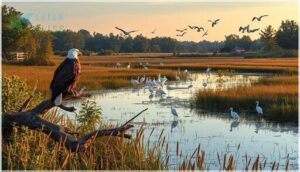
Nature preserves and wetlands deliver concentrated birding in protected habitats where restoration efforts rebuild ecosystems.
Se7en Wetlands in Mulberry hosts 27 species including Bald Eagles amid wastewater treatment wetlands.
Lower Green Swamp Preserve and Golden Aster Scrub offer restored habitats supporting bird migration corridors.
These sites prioritize wildlife conservation through ecosystem management that balances habitat restoration with your access to diverse birding opportunities.
Coastal Birding Destinations
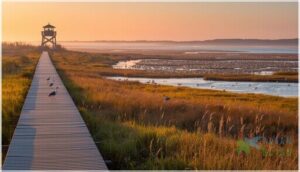
Coastal habitats concentrate shorebirds and waders along accessible tidal zones where migration pulses bring peak diversity. Fort De Soto Park in Tampa Bay records over 250 species along 7 miles of trails threading beach habitat and wetlands, while spring shorebird migration from March to May draws birders to coastal trails where tidal birding reveals plovers and terns feeding on exposed flats.
- Free boardwalks positioned over salt marshes bring you eye-level with roseate spoonbills and herons
- Observation towers provide sweeping views across tidal flats where thousands of shorebirds cluster at low tide
- Coastal birding destinations offer ADA-accessible routes connecting beaches to wetland conservation areas
Using EBird to Find Birding Hotspots
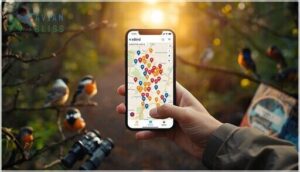
You don’t need to wander aimlessly hoping to stumble onto good birds. eBird puts decades of sightings from thousands of birders right at your fingertips, showing you exactly where species show up and when.
Here’s how to tap into that goldmine of data and find your next great birding spot.
Understanding EBird Hotspot Data
eBird hotspots pin bird watching locations to actual geographic boundaries, letting you track species distribution across different habitats. When you explore these birding locations through eBird’s tools, you’ll see which birds show up when and where.
Each eBird hotspot creation gives researchers better habitat mapping data, turning your sightings into real conservation science through focused data analysis and species tracking.
Regional Birding Trail Systems
Think of regional birding trails as your roadmap to conservation and ecotourism—coordinated trail network planning links dozens of sites across counties into a unified experience. You’ll find birding easier when each stop promotes bird habitat conservation and wildlife corridor management.
- Uniform signage guides you through diverse habitats like wetlands and forests
- Regional trail development divides areas into clusters for better resource allocation
- Community engagement strategies recruit volunteers for site maintenance
- Restoration projects expand access as new birding trails open
Community Science Contributions
When you log a sighting through eBird or iNaturalist, you’re joining thousands of volunteers in citizen science efforts that directly shape bird conservation. Your citizen data helps track seasonal patterns and species distributions across birding locations.
Community engagement strengthens wildlife conservation through volunteer roles like photo verification and quality control. Science outreach programs train newcomers, turning casual observations into powerful conservation efforts that inform habitat management decisions.
Accessible Birding for All Skill Levels
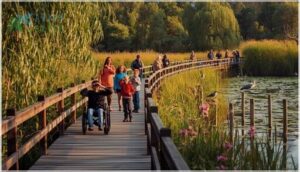
You don’t need years of experience or expensive gear to start birding at public sites. Most parks go out of their way to make birding accessible through paved trails, free programs, and equipment you can borrow.
Here’s what to look for when you’re just getting started or want easier access to great birding spots.
ADA-Compliant Boardwalks and Trails
Many public birding sites now feature accessible boardwalks designed for wheelchair users and families with strollers. These routes showcase inclusive design while bringing you closer to wildlife viewing opportunities.
- Boardwalks must maintain a 36-inch clear width for wheelchair passage with ADA compliance standards
- Running slopes can’t exceed 5 percent on main surfaces to guarantee trail maintenance meets accessibility requirements
- Resting areas appear every 200 feet on longer segments for outdoor recreation comfort
- Slip-resistant surfaces support birding, hiking, and biking trails during all weather conditions
Beginner Birding Programs
You’ll find beginner birding programs at community nature centers across Tampa Bay, where community events run weekly during morning hours.
Mentor programs pair you with experienced birders who demonstrate bird identification using field guides and live tips on birding trails. These birding workshops teach wildlife viewing basics—shape, size, behavior—while you practice bird watching tips with loaner binoculars and simple checklists recording at least five species.
Free Guided Walks and Events
Free guided nature tours at city parks bring you face-to-face with wildlife viewing opportunities during weekend and weekday walks that repeat monthly. You’ll spot birds on birding trails in Tampa Bay with volunteer training leaders who share bird watching tips and event scheduling through published calendars—no admission fee or pre-registration required.
Community engagement thrives when local experts lead hour-long strolls covering:
- Shaded observation points with interpretive signs
- Beginner-friendly paces on 1-2 mile routes
- Seasonal migration patterns and species highlights
Binocular Loan Programs
You can borrow binoculars for free from park offices and nature centers without membership fees or advance reservations. Most programs offer 8×42 or 10×42 waterproof models with protective cases, and you’ll return them after one to two weeks. Equipment maintenance includes routine cleaning and alignment checks to guarantee binocular quality for every birder exploring birding trails.
| Loan Process | Equipment Maintenance | User Experience |
|---|---|---|
| Valid ID and small deposit | Routine cleaning after each use | Online or walk-in borrowing |
| 1-2 week sign-out periods | Alignment checks and replacements | Beginner-friendly orientation |
| Renewal if no conflicts | Inventory tracking by staff | Backs bird conservation efforts |
Conservation Efforts at Public Birding Sites

When you visit free birding sites, you’re not just watching birds—you’re supporting real conservation work happening on the ground.
Many public parks and preserves run active restoration projects, protect wetlands, and monitor threatened species using data collected by visitors like you. Here’s how these sites are making a difference for birds and their habitats.
Habitat Restoration Projects
You’ll see habitat restoration transform public birding sites when conservation groups tackle invasive species removal and replant native grasses, forbs, and shrubs that support pollinators and songbirds.
These ecological conservation projects create wildlife corridors linking fragmented habitats, while habitat monitoring tracks plant survival and bird population rebounds.
Restored wetlands deliver ecosystem services like flood control and improved water quality alongside thriving native plantings that attract the species you want to see.
Wetlands Conservation Initiatives
You’ll discover wetlands conservation initiatives at public birding hotspots funded through interagency programs that restore natural hydrology and stabilize coastal shorelines with living materials.
These wetland restoration projects coordinate regulatory efforts to halt habitat loss while delivering ecosystem services like carbon sequestration and flood control. Conservation funding enables wildlife corridors that connect protected sites, turning scattered wetlands into networks where ecotourism and habitat preservation work hand in hand.
Citizen Science Monitoring Programs
You can join citizen science projects at public birding sites that transform your observations into conservation impact through volunteer training and standardized data quality protocols. Avian monitoring programs engage you in wildlife research while community outreach connects volunteers with ecological conservation methods that drive real change.
- Complete training modules covering species identification and data entry practices before monitoring events.
- Submit observations with metadata including date, location, weather, and your experience level for context.
- Access dashboards showing your contributions and placement on hotspot maps after data review.
- Participate in seasonal workshops that refresh skills and recruit new citizen engagement participants.
- Contribute to long-term datasets supporting habitat management decisions at birding locations you visit.
Protected Species Management
You’ll notice protected species management at public birding sites through permit systems and time-of-year restrictions that minimize breeding disruption.
Wildlife protection uses buffer zones, noise guidelines, and habitat conservation measures to support population dynamics across wetland and foraging areas.
Conservation planning combines species monitoring with ecological conservation to track habitat preservation success, ensuring your birding experiences align with long-term wildlife recovery goals.
Frequently Asked Questions (FAQs)
What is the birding capital of the United States?
New York City earns its title as America’s birding capital, drawing observers to Central Park where over 270 species appear along the Atlantic Flyway each year.
What colors not to wear when birding?
Skip neon colors, bright whites, shiny gear, and high contrast outfits when birding.
Birds detect UV brighteners in treated fabrics, so choose muted, matte clothing to avoid spooking species at birding locations.
What permits are required for birding groups?
You’ll need a group use permit for organized birding on most public lands.
Federal refuges require special use authorization, while state parks need permits for tours exceeding specified group size limits to protect wildlife.
Are dogs allowed at birding locations?
Here’s the leash: most birding locations require dogs on leash to protect nesting zones.
Wildlife protection dictates pet access policies, though service animal exceptions apply.
Always check bird friendly zones and birding spots rules beforehand.
What are typical operating hours restrictions?
Most birding trails in Florida and wildlife sites operate dawn to dusk hours, with seasonal closures during nesting periods.
They also have parking limits at peak migration, and weather alerts triggering temporary shutdowns for your safety.
How do weather conditions affect access?
Florida’s climate shifts can close trails fast—heavy rains flood boardwalks, storm impacts trigger evacuations, and heat waves shrink viewing windows.
Check weather alerts before visiting Tampa Bay birding trails for trail safety updates.
Are camping facilities available at sites?
Many parks offer tent pitching areas with basic campsite amenities like picnic tables and fire rings.
You’ll find RV accessibility at Flatwoods Park, while Circle B Bar Reserve and Lettuce Lake Park require camping permits for primitive camping near wildlife.
What birding gear should I bring to public sites?
You’ll want 8×42 binoculars for binocular selection, a regional field guide, and maybe a spotting scope with tripod stands.
Camera equipment works well at birding locations, though many birding trails simply require good optics and patience.
How do I identify birds without prior experience?
You can start by watching bird shape clues, color patterns, and beak analysis to separate species quickly.
Listen for vocalization tips, observe feather identification details, and visit birding spots to practice these skills.
What time of day is best for birding?
Dawn chorus peaks in early morning when bird activity hits its highest levels, so you’ll spot more species before 10 a.m.
Late afternoon brings another surge as birds forage before dusk.
Conclusion
Your next birding trip could reveal species you’ve only seen in field guides—if you know where to look.
Free birding locations and public access sites across the country give you direct entry to prime habitat without gatekeepers or fees.
Download eBird tonight, check those refuge hours, and pack your binoculars. The warblers won’t wait, and neither should you.
Public lands belong to everyone, including birders ready to use them.
- https://www.birdingbuddies.com/birds/location/united_states/florida/golden_aster_scrub_nature_preserve/
- https://www.hillsboroughcounty.org/library/hillsborough/media-center/documents/conservation-and-regional-parks/elapp/elapp-brochure.pdf
- http://www.tampaaudubon.org/
- https://alabamabirdingtrails.com/trails/coastal/
- https://ak.audubon.org/southeast-alaska-birding-trail