This site is supported by our readers. We may earn a commission, at no cost to you, if you purchase through links.
 When a baby bird fell from nest, don’t panic – it’s often completely normal.
Most young birds you’ll find on the ground are fledglings, not helpless babies. These little ones naturally leave the nest before they can fly well, spending days hopping around while parents feed them from nearby branches.
You’ll know it’s a healthy fledgling if it has feathers and can stand. Only naked, eyes-closed nestlings or visibly injured birds need help.
The best thing? Step back and observe from a distance. Parent birds are usually watching and will continue caring for their youngster. Sometimes the most helpful thing you can do is absolutely nothing at all.
But there are specific signs that reveal when intervention becomes necessary.
Table Of Contents
Key Takeaways
- Most grounded baby birds are healthy fledglings – You’ll find that birds with feathers who can stand are naturally learning to fly, so don’t intervene unless they’re naked nestlings or visibly injured.
- Wait and observe from a distance first – You should step back for at least two hours during daylight to see if parent birds return, as they’re usually nearby and will continue feeding their young.
- Only handle birds when absolutely necessary – You’ll need gloves for safety and should contact wildlife rehabilitators immediately for injured birds, as keeping wild birds without permits is illegal.
- Create temporary shelter if parents don’t return – You can place abandoned chicks in a makeshift nest using soft materials within 50 feet of the original location to help facilitate reunion.
Baby Bird Falls
You’ll find baby birds on the ground for several common reasons that affect nest stability and safety.
Strong winds, heavy rain, or human activity can shake branches enough to dislodge young birds before they’re ready to leave the nest.
Causes of Falling
Baby birds fall from their nest for several reasons.
Poor nest construction can make structures unstable. Environmental factors like strong winds or storms shake branches.
During the fledgling stage, young birds naturally leave before they’re ready to fly. Parental neglect sometimes occurs when parents abandon weak chicks.
Sibling rivalry can push smaller birds out as stronger siblings compete for space and food, which can be a result of poor nest construction, strong winds, or parental neglect.
Nest Disturbances
Human Activity creates the biggest threat to nesting birds through construction, landscaping, and tree removal.
When you disturb vegetation during nesting season, you’re directly contributing to Habitat Loss and Environmental Impact.
Wildlife rehabilitation centers report that 40% of fallen nestling cases stem from human-caused nest disturbances.
Conservation Strategies now emphasize timing outdoor projects to protect avian care needs during critical breeding periods.
Inclement Weather
During severe storms, strong winds and heavy rain create dangerous conditions that force baby birds from their nests.
When storms hit, baby birds become vulnerable refugees forced from their homes by nature’s raw power.
Temperature extremes stress vulnerable nestlings, while flood risks threaten ground-level safety.
Wind damage destroys nest structures, causing habitat changes that separate families, and these storm effects make fallen nestlings more susceptible to hypothermia and dehydration.
Quick bird rescue becomes critical, as wildlife rehabilitation centers handle increased nestling care during weather emergencies.
Predators and Threats
Natural enemies constantly threaten baby birds on the ground.
Cats, snakes, raccoons, and other predators view helpless chicks as easy meals.
Habitat loss from human development forces wildlife into smaller spaces, increasing competition and danger.
Environmental toxins weaken birds’ immune systems, making them vulnerable.
Climate change disrupts food chains, affecting survival rates.
If you spot an injured bird, contact wildlife rescue immediately for proper bird protection.
You should also consider if the bird is a nestling or fledgling before taking action, as understanding baby bird development is essential.
Survival on Ground
Once a baby bird hits the ground, survival becomes a race against time and the elements.
Every second counts when tiny wings can’t carry them to safety.
The little bird faces immediate threats from predators, dehydration, and exposure while desperately needing its parents to find and care for it, which is a matter of survival.
Food and Water Needs
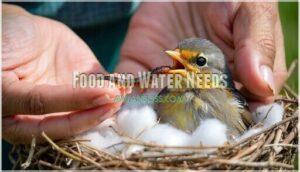
Grounded baby birds can’t survive long without proper nutrition. You’ll need to understand their feeding frequency – every 15-30 minutes during daylight hours.
Different bird species have specific nutritional requirements. Songbirds need protein-rich insects, while seed-eaters require specialized diets.
Hydration methods involve moisture from food rather than direct water. For specialized diets, you might consider commercial baby bird food.
Never attempt supplementation needs yourself – inappropriate food types can harm fledging birds. Contact wildlife rehabilitators immediately for proper baby bird care guidance.
Predator Avoidance
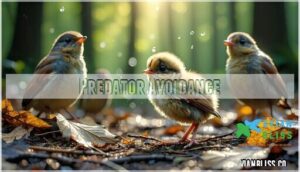
Fallen chicks use several survival tactics to avoid predators.
Their downy feathers match ground cover, providing natural camouflage techniques that reduce detection by 70%.
When threatened, they freeze completely until danger passes.
Parent birds create alarm calls and use parental defense strategies like wing-dragging to distract predators.
If spotted, chicks show rapid flight response through erratic hopping patterns that confuse attackers and help them reach safety.
Shelter and Protection
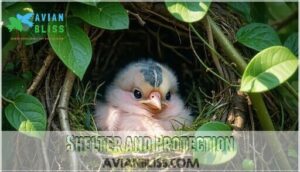
Baby birds on the ground need immediate weather shielding from rain, wind, and temperature extremes.
Dense shrubs, tall grass, or makeshift nest alternatives provide essential cover. You’ll spot them huddling under leaves or seeking dark, enclosed spaces instinctively.
Many people buy specialized bird shelters for extra protection.
- Weather shielding: Dense vegetation offers natural protection from harsh elements
- Nest alternatives: Cardboard boxes with soft materials create temporary safe spaces
- Predator deterrents: Thick brush and elevated hiding spots reduce visibility to threats
- Safe relocation: Move birds to nearby bushes within 50 feet of original nest location
Reunion With Mother
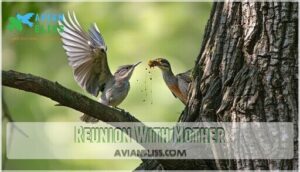
Mother birds often return within hours to search for missing fledglings, using calls to locate them.
Reunion success depends on timing and proximity to the original nest box. Human scent doesn’t typically cause abandonment—this myth persists despite ornithology research proving otherwise.
During fledgling stage, delayed reunion can occur naturally as parents may take time to find grounded babies.
Imprinting concerns are minimal since bird behavior favors biological parents over temporary caregivers, supporting animal welfare.
Mother Bird Behavior
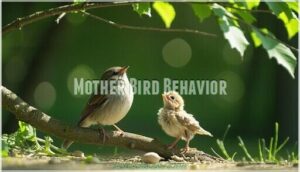
When a baby bird falls from its nest, you’ll notice the mother bird’s behavior changes dramatically as she searches for her missing chick.
She’ll continue feeding and caring for the fallen baby if she can locate it on the ground, often making frequent trips with food while calling to maintain contact and care.
Recognition of Baby
Against common belief, mother birds rely on multiple bird behavior cues beyond scent for Species Identification.
Visual Cues like chick size and feather patterns help determine Chick Age, while specific Auditory Signals create recognition bonds.
Ornithology research shows backyard birds use imprinting during critical periods.
However, human handling creates Imprinting Risks that can disrupt natural bird nest dynamics and proper bird behavior recognition patterns.
Feeding and Care
When you spot a fallen chick, resist the urge to offer water or food directly.
Mother birds handle their baby’s dietary needs through specialized regurgitation, delivering perfectly balanced nutrition. Your backyard birds know best regarding bird health and baby care.
- Dietary Needs: Parent birds provide species-specific nutrition that human food can’t replace
- Hydration Methods: Chicks receive moisture through their mother’s carefully delivered meals
- Shelter Building: Natural nests offer protection while maintaining proper hygiene practices
Nest Repair and Reunion
After finding their fallen baby, mother birds quickly assess the nest situation.
They’ll gather twigs, leaves, and other Safe Materials to rebuild damaged areas.
You can help by placing the chick in a makeshift nest nearby using soft cloth or paper towels.
Monitoring Reunion efforts from a distance lets parents locate their baby without human interference.
This Nest Reconstruction process supports Fledgling Support while maintaining bird health and baby safety through natural parenting instincts and conservation principles.
Abandonment Signs
Recognizing when a mother bird has abandoned her baby requires careful observation of specific behavioral patterns.
Watch for these critical abandonment signs:
- Parental Absence – No adult visits for over two hours during daylight
- Silent Nest Proximity – No parental vocalizations or responses to baby’s calls
- Poor Feather Condition – Chick appears disheveled, weak, or malnourished
- Repeated Ground Presence – Baby remains on ground without retrieval attempts
- Failed Injury Assessment – No parental care despite visible distress
These situations can arise from natural population control.
These baby safety indicators help determine intervention needs.
Human Intervention
If you find a baby bird on the ground, you’ll need to act quickly but carefully to give it the best chance of survival.
Your decision to help or step back depends on several important factors including local laws, safety risks, and the bird’s actual condition.
Handling and Safety
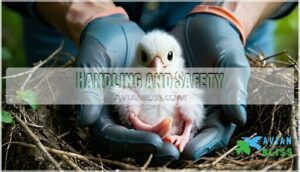
When mother birds can’t help, you step in carefully. Safe Handling means wearing gloves and moving slowly. Never grab a baby bird with bare hands. For enhanced safety, consider using specialized bird gloves during handling.
| Action | Safe Method | Avoid |
|---|---|---|
| Picking Up | Use towel or gloves | Bare hands, sudden moves |
| Disease Prevention | Wash hands after contact | Touching face before washing |
| Legal Considerations | Check local wildlife laws | Keeping wild birds as pets |
First Aid involves checking for injuries without poking. Bird Identification helps determine species-specific needs. Remember child safety, infant safety, and newborn safety principles apply here too.
Rehabilitation Centers
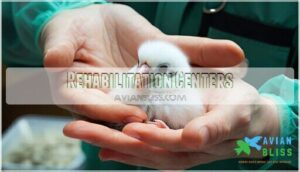
When everything else fails, licensed rehabilitation centers offer your best hope for orphaned birds.
Expert staff use specialized bird diet formulas and monitor release criteria carefully.
These center resources depend on funding sources like donations and grants.
Professional wildlife rehabilitators understand infant health needs better than most healthcare providers.
They create proper environments for bird recovery and eventual freedom.
Local Wildlife Regulations

Wildlife laws protect birds through strict permit requirements for handling fallen chicks.
Most states classify native birds as protected species under federal regulations.
It’s important to remember that fledglings need space to develop.
Here’s what you need to know:
- Permit Requirements – Only licensed rehabilitators can legally care for wild birds
- Protected Species – Federal laws prohibit keeping native birds without permits
- Reporting Violations – Contact wildlife agencies about injured or orphaned birds immediately
- Habitat Preservation – Disturbing nests violates conservation laws in most areas
Disease Risks and Precautions
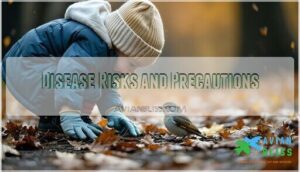
Handle baby birds carefully—they carry zoonotic diseases like avian flu and salmonella.
Wear disposable gloves and wash hands thoroughly after contact.
Keep children away during rescue efforts.
Watch for fever, diarrhea, or respiratory symptoms within seven days.
Report any illnesses to healthcare providers, mentioning bird exposure for proper baby health care guidance, especially if you experience respiratory symptoms.
Conservation Efforts
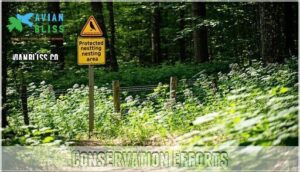
When you find a baby bird on the ground, your actions can support broader wildlife conservation efforts that protect entire species and their habitats.
Reporting the incident to local wildlife authorities helps scientists track population health and identify threats that affect bird communities in your area.
Reporting Nest Disturbances
Several key steps help protect bird populations when you encounter nest disturbances.
Report Disturbances promptly to local wildlife authorities to Monitor Populations effectively.
Document the location, species if known, and circumstances.
Your reports support Conservation Goals by tracking Habitat Threats across communities.
- Contact state wildlife agencies immediately
- Photograph evidence without disturbing further
- Note exact location using GPS coordinates
- Record date, time, and weather conditions
This data helps researchers understand patterns affecting baby development in wild birds, similar to how we track baby milestones in child development.
Quick reporting prevents Avian Diseases from spreading and protects vulnerable baby birds during critical growth periods, which is essential for wildlife protection.
Habitat Protection
Beyond reporting incidents, you protect bird habitats through daily choices. Your yard becomes a nesting sanctuary when you plant native trees and reduce pesticide use.
Support reforestation efforts that create safe corridors for wildlife movement. You can also help by providing food sources for local birds.
| Protection Method | Your Action | Bird Benefit |
|---|---|---|
| Native Plants | Choose local species | Natural food sources |
| Pesticide Reduction | Use organic alternatives | Safer nesting areas |
| Window Strikes | Install decals/screens | Prevent collisions |
| Cat Management | Keep pets indoors | Reduce predation |
| Light Pollution | Use motion sensors | Less migration disruption |
Ecosystem preservation starts in your backyard. Pollution reduction and climate change mitigation protect future generations of birds and support child health through cleaner environments.
Species Conservation
Your actions today help protect Bird Population numbers for future generations.
When you report fallen chicks or damaged nests, you’re contributing valuable data that tracks species health across regions. Habitat Loss threatens many bird families, while Avian Diseases can spread quickly through local communities.
Here’s how you make a difference:
- Report sightings – Document species you encounter to help scientists track population changes
- Support Conservation Funding – Donate to local wildlife organizations that monitor bird health
- Reduce Climate Change impact – Use bird-friendly practices in your yard and community
- Share knowledge – Teach others about protecting nesting birds and their habitats
Community Education and Awareness
Share your baby bird discoveries with neighbors through community support networks and parenting tips forums.
Bird conservation starts when communities report wildlife incidents together, teaching responsible intervention prevents avian diseases from spreading while supporting habitat preservation efforts.
Local baby care tips often include wildlife reporting guidelines, creating stronger community bonds around shared conservation values.
Frequently Asked Questions (FAQs)
What diseases can baby birds transmit to humans?
Though bird flu rarely spreads to humans, baby birds commonly carry Salmonella bacteria, which can cause serious illness.
You’ll get infected by touching contaminated birds or surfaces then touching your mouth. Wash hands thoroughly after any bird contact.
These diseases are known as zoonotic transmissions from animals to humans.
How long can baby birds survive without food?
You’ll survive almost 24 hours without food as baby birds.
Altricial species like bluebirds barely survive a few hours, while fledglings show better resilience.
Young birds have fat reserves that help sustain them temporarily.
When do baby birds typically leave the nest naturally?
Like nature’s gentle clock, you’ll find most baby birds leave their nest between 12-21 days after hatching.
They’re called fledglings at this stage, still learning to fly perfectly while parents continue feeding them nearby.
Are there legal penalties for keeping wild birds?
Yes, you’ll face serious legal penalties for keeping wild birds.
The Migratory Bird Treaty Act makes it a federal crime, with fines up to $15,000 and possible jail time.
You need proper permits for rehabilitation.
What time of year do most birds nest?
Most birds nest during spring season, which runs from March through June.
Nesting typically begins around March but can start as early as February.
You’ll find some late nesters like goldfinches waiting until July or September, which is a notable exception to the typical nesting period.
Conclusion
Like a protective umbrella shielding from life’s storms, your knowledge about what to do when a baby bird fell from nest can make the difference between helping and harming.
Remember that most fledglings are meant to be on the ground as part of their natural development.
Watch from a distance first, intervene only when truly necessary, and contact wildlife rehabilitators for injured birds.
Your patience and proper response give these young birds their best chance at survival and independence.
- https://abcbirds.org/news/mbta-april-2025/
- https://dec.ny.gov/news/press-releases/2025/5/dec-issues-annual-spring-reminder-to-help-keep-wildlife-and-people-safe-if-you-care-leave-it-there
- https://www.fws.gov/story/what-do-if-you-find-baby-bird-injured-or-orphaned-wildlife
- https://dwr.virginia.gov/wildlife/injured/birds/
- https://nestwatch.org/learn/how-to-nestwatch/faqs/what-should-i-do-if-i-see-a-young-bird-fallen-out-of-the-nest/