This site is supported by our readers. We may earn a commission, at no cost to you, if you purchase through links.
 When you find a baby bird, don’t panic—but act quickly.
First, determine if it’s truly orphaned by watching for parents for 1-2 hours from a distance.
Nestlings (eyes closed, few feathers) need immediate help, while fledglings (hopping, more feathers) might just be learning to fly.
If genuinely orphaned, create a warm, quiet space using a small box with soft cloth.
Don’t attempt feeding unless you’re trained—improper nutrition kills more birds than starvation.
Contact licensed wildlife rehabilitators within 24 hours for proper orphaned bird care and release.
Time matters, but knowing when not to intervene matters even more.
Table Of Contents
- Key Takeaways
- Orphaned Bird Assessment
- Initial Care and Housing
- Feeding and Nutrition
- Hygiene and Growth Monitoring
- Rehabilitation and Release
- Frequently Asked Questions (FAQs)
- How can wildlife rehabilitators help abandoned baby birds?
- Are abandoned baby birds protected?
- How has technology changed the care of abandoned baby birds?
- What if you find an abandoned baby bird?
- What if a bird is not orphaned?
- How do you know if a baby bird is orphaned?
- Should I give an abandoned baby bird water?
- What legal permits are required for bird rehabilitation?
- How do you handle aggressive or defensive birds?
- What vaccinations or medications might orphaned birds need?
- Conclusion
Key Takeaways
- Don’t rescue unless truly orphaned – Watch from 20-30 feet away for 1-2 hours before intervening, as parent birds often return between feedings and you’ll prevent unnecessary rescues
- Create proper emergency housing immediately – Set up a warm (85-90°F), quiet, ventilated box with soft cloth bedding and contact licensed wildlife rehabilitators within 24 hours
- Never attempt feeding without training – Improper nutrition kills more birds than starvation, so you’ll need species-specific formulas, correct temperatures (102-108°F), and proper feeding techniques to prevent aspiration
- Focus on preventing human imprinting – Minimize contact, use mirrors and bird calls for species recognition, and work with rehabilitators to ensure successful wild release rather than creating dependency
Orphaned Bird Assessment
Finding a baby bird can trigger your rescue instincts, but you’ll need to assess whether it truly needs help before taking action.
The key is distinguishing between a nestling that’s fallen too early and a fledgling that’s naturally learning to fly.
Distinguishing Nestlings and Fledglings
The key to successful bird identification lies in recognizing physical development markers.
Nestlings appear featherless with closed eyes, completely dependent on parental care. These helpless babies can’t regulate body temperature and require immediate nestling care intervention if truly orphaned.
Fledglings display partial feather development with open eyes, actively learning flight skills. During the fledgling stage, young birds often hop on the ground while parents remain nearby.
Proper age determination through bird identification prevents unnecessary rescue attempts, as fledgling care differs substantially from nestling protocols. Understanding bluebird parental care strategies is vital for effective rescue and release methods.
Signs of Orphaned or Injured Birds
Despite appearing vulnerable, baby birds often aren’t truly orphaned.
Clear Bird Injury Signs include visible bleeding, obvious wounds, dragging wings, or inability to stand.
Orphaned Bird Behavior manifests when nestlings lie motionless outside nests or fledglings remain grounded for hours without parental visits.
Look for missing feathers, labored breathing, or birds caught by predators, which are situations that require immediate bird first aid intervention.
Observing for Parental Return
Before intervening in orphaned bird care, watch patiently from a distance to confirm true abandonment. Parent birds often return quickly and leave, making their presence easy to miss during bird monitoring.
Position yourself 20-30 feet away for proper nestling observation without disrupting natural fledgling behavior.
Adult birds may take up to an hour between feedings, especially during critical stages when teaching independence.
If no parental return signs appear after this waiting period, you can safely proceed with bird rescue tips and reassurance protocols.
Initial Care and Housing
Once you’ve secured a truly orphaned bird, your first priority is creating a safe, warm environment that mimics the nest conditions they’ve lost.
Think of yourself as temporarily stepping into the parent’s role—providing the right temperature, quiet space, and proper housing setup that gives these vulnerable creatures their best chance at survival.
Creating a Surrogate Nest
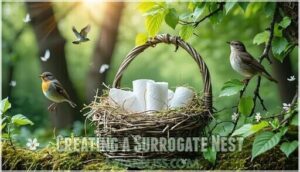
When finding a bird’s original nest damaged or unreachable, you’ll need to craft a makeshift home that mimics nature’s design.
Use a small basket or plastic container with drainage holes, lined with soft materials like paper towels or cloth.
Position your surrogate nest within eight feet of the original location, securing it firmly in a sheltered spot away from predators and weather.
For a more permanent solution, consider using bird nesting boxes to provide a safe habitat with a natural design that mimics the bird’s original nest.
Maintaining Ambient Temperature
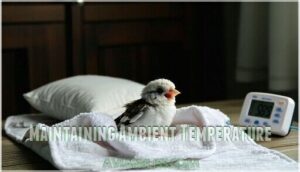
Temperature control becomes your lifeline when caring for nestlings who can’t regulate their own body heat.
Your warm touch replaces the missing parent’s care when tiny lives hang in the balance.
You’ll need consistent warmth maintenance using a bird heating pad on low or warm water bottles wrapped in cloth.
- 85-90°F for naked nestlings – their tiny bodies depend entirely on external heat sources
- Gradual temperature reduction to 75°F as protective feathers emerge and grow
- Regular thermal monitoring with a thermometer prevents dangerous overheating
- Ambient temperature consistency – sudden changes can shock their delicate systems
Climate regulation requires attention to detail, but it’s simpler than you’d think.
Position heat sources carefully and check temperatures frequently to keep your feathered patient comfortable.
Using the right heating pad products is vital for maintaining ideal temperature conditions.
Reducing Stress and Ensuring Ventilation
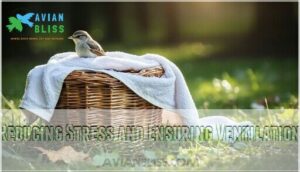
Within moments of bringing your feathered friend home, you’ll need to create a quiet environment that mimics nature’s sanctuary.
Poke several ventilation holes in the container for proper air quality while covering it with a towel for darkness.
This stress reduction technique calms anxious birds naturally, and keeping the space away from household chaos—no barking dogs or chattering kids nearby—is crucial.
Good ventilation prevents respiratory issues, while calming techniques like minimal handling help your bird focus on healing rather than fear.
Housing and Bedding Options
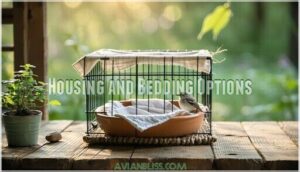
Choose the right bird enclosure setup to give your feathered friend the best start. You’ll need enclosed spaces like cages, bins, or boxes with proper ventilation systems and thermal control.
When building or selecting enclosures, consider using materials with natural rot resistance properties to guarantee a safe environment.
- Nest Boxes: Use small deep dishes lined with hand towels for tucking nestlings securely
- Bedding Materials: Line enclosures with soft cloth or paper towels to prevent slipping and injury
- Enclosure Designs: House one bird per container in quiet areas away from pets and children
Feeding and Nutrition

Feeding orphaned birds properly can mean the difference between life and death for these vulnerable creatures.
You’ll need to master the right formulas, temperatures, and techniques to give them their best chance at survival.
Choosing The Right Hand-Feeding Formula
Once housing is secured, your bird’s survival depends on selecting the right handfeeding formula. Commercial formulas like Kaytee Exact outperform homemade mixtures, reducing malnutrition risks while supporting faster growth and healthier feather development.
When choosing a formula, consider the benefits of baby bird nutrition for ideal health.
| Formula Types | Best For |
|---|---|
| Kaytee Exact | General parrots and songbirds |
| Mazuri High-Fat | Macaws and African greys |
| Pretty Bird with Probiotics | Digestive support needs |
| Harrison’s Complete | Iron-sensitive species |
| Nestora Health18 | Nectar-feeding birds like lories |
Species-specific formulas contain balanced proteins (17-19%), controlled iron levels, and digestive enzymes that homemade blends can’t match. Your formula choice directly impacts crop care success and feeding schedules effectiveness, making it a crucial decision for the health and well-being of your bird, especially for general parrots and songbirds.
Preparing and Warming The Formula
Beyond the basic mixing process, achieving proper handfeeding formula consistency requires painstaking attention to thermal control and nutrition balance.
Mix your bird formula preparation to pudding-like smoothness using bottled water, then warm to 102-108°F—test on your wrist like baby formula.
Feeding tools must stay clean between uses, and bird warmth maintenance during feeding prevents shock and guarantees the best digestion for your feathered patient.
Feeding Techniques and Schedules
Using proper bird feeding techniques makes the difference between life and death for orphaned chicks.
Feed nestlings every 20-30 minutes during daylight hours using a small syringe or curved eyedropper at the beak’s side.
Allow swallowing between spoonfuls to prevent aspiration.
Clean the beak afterward and gently massage the crop to release trapped air, ensuring proper nutrient balance and digestion.
Gradually Introducing Species-Specific Diets
Transitioning your orphaned bird from hand-feeding formulas to species-specific diets requires careful timing and gradual implementation.
Start this diet shift when pinfeathers emerge, typically around 10-14 days for songbirds.
Mix formula with appropriate whole foods in a 3:1 ratio initially, and research dietary needs thoroughly—insectivorous species need protein-rich insects while granivorous birds require seeds.
Monitor nutrient balance closely, adjusting food variety based on natural feeding behaviors, as proper bird nutrition plans prevent developmental issues and improve release success rates substantially.
Understanding the importance of a balanced avian diet is vital for creating effective nutrition strategies.
Hygiene and Growth Monitoring
Maintaining proper hygiene and monitoring your orphaned bird’s development requires daily attention to prevent complications and promote healthy growth.
You’ll need to track weight changes, watch feather development, and keep feeding equipment spotless to give your rescued bird the best chance at survival, which involves daily attention.
Cleaning and Disinfecting Feeding Tools
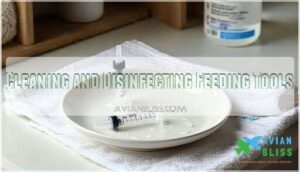
Proper sanitization prevents deadly bacterial infections that can kill vulnerable chicks within hours.
Clean feeding tools immediately after each use to maintain bird hygiene practices and prevent contamination.
- Disinfectant Types: Use diluted bleach solution (1:10 ratio) or specialized avian-safe cleaning solutions
- Tool Maintenance: Rinse syringes and eyedroppers with warm water before applying disinfection methods
- Sterilization Methods: Boil metal tools for 5 minutes or use alcohol-based sanitizing equipment
- Waste Management: Dispose of contaminated materials promptly during the bird care hygiene phase
- Hygiene Maintenance: Store clean tools in sealed containers between feedings
Regular cleaning with proper cleaning supplies is essential for maintaining a healthy environment.
Tracking Weight Gain and Feather Development
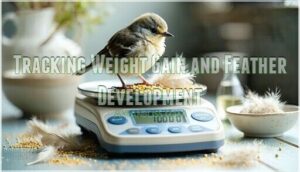
Since monitoring your bird’s progress requires precision, daily weighing becomes your most reliable indicator of health.
Use digital gram scales to track 5-10% weight increases, comparing results against species-specific weight charts.
Document feather growth stages—pinfeathers emerge around day 6-10, with sheaths breaking by days 10-14.
This bird growth tracking reveals nutritional deficits early, ensuring proper avian development through careful growth monitoring.
Introducing Environmental Enrichment

As feathers begin to emerge, you’ll transform their basic housing into a stimulating environment that encourages natural bird behavior stimulation.
Environmental enrichment includes safe perch design at varying heights, natural lighting exposure, and environmental toys that promote sensory stimulation.
Wildlife rehabilitation techniques emphasize gradual social interaction opportunities while bird growth tracking continues, preparing them for eventual release under aviary specialist guidance.
Recognizing Signs of Improper Care
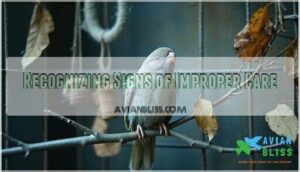
Even with proper enrichment in place, you’ll need to watch for red flags that signal something’s going wrong.
Malnutrition signs include feather abnormalities, weakness, and stunted growth.
Respiratory distress, behavioral defects, and habituation issues can develop from improper orphaned bird care.
Monitor your bird’s health closely—sudden weight loss, poor feather development, or abnormal behavior means it’s time to contact avian rehabilitation experts immediately to address potential issues related to orphaned bird care.
Rehabilitation and Release

Rehabilitation requires careful medical assessment by a licensed veterinarian to determine your rescued bird’s treatment needs and recovery timeline.
The ultimate goal is releasing a fully capable bird back into its natural habitat while preventing harmful imprinting or habituation to humans.
Comprehensive Medical Assessment
Medical evaluation becomes your bird’s lifeline when you’re dealing with complex injuries that go beyond basic care.
A licensed veterinarian will conduct thorough injury diagnosis to identify wing injuries, respiratory distress, and neurological impairment that untrained eyes might miss.
Essential medical assessment components include:
- Physical examination – checking for fractures, toxicity symptoms, and internal injuries
- Diagnostic testing – blood work, X-rays, and pathogen screening
- Rehabilitation planning – creating species-specific recovery protocols and avian surgery recommendations when needed
This thorough approach guarantees proper toxicity treatment and addresses underlying health issues before release consideration.
Preventing Imprinting and Habituation
You can’t become mom or dad to these feathered orphans—that’s the golden rule of wildlife rehabilitation.
Minimize human contact during feeding and care to prevent social bonding with you instead of their own species.
Use mirrors, recorded bird calls, and species-specific care techniques for proper species recognition.
Environmental enrichment with natural perches and hiding spots encourages wild behavior patterns, while behavioral therapy through controlled exposure helps maintain their survival instincts for successful independence release.
Evaluating Flight and Foraging Abilities
Before releasing your bird back to the wild, you’ll need to confirm it’s developed proper Flight Patterns and Wing Strength.
Test flight abilities by observing three consecutive strong flights covering at least 10 meters each. Your bird should demonstrate vertical takeoff and sustained flapping for 30 seconds minimum.
Evaluate Foraging Skills by monitoring if it obtains 80% of daily food independently through natural Feeding Behavior, showing true Release Readiness.
Considering Release Strategies and Locations
Success hinges on choosing appropriate release sites that mirror the bird’s natural habitat.
You’ll need to evaluate terrain, food sources, and predator presence before deciding between soft release strategies (gradual acclimation) or hard release protocols (direct placement).
Post release monitoring through banding helps track survival rates and validates your bird release tips effectiveness.
Frequently Asked Questions (FAQs)
How can wildlife rehabilitators help abandoned baby birds?
You’ll provide specialized medical care, create species-specific feeding regimens, and maintain proper housing temperatures.
Through rehabilitation techniques, you’ll restore flight abilities and prevent habituation before carefully selecting appropriate release sites for successful reintegration, ensuring a smooth reintegration.
Are abandoned baby birds protected?
Most baby birds are protected by federal and state wildlife laws.
You can’t legally keep them as pets – they must go to licensed wildlife rehabilitators within 24 hours for proper care.
How has technology changed the care of abandoned baby birds?
Digital breakthroughs now let you monitor temperature, humidity, and feeding schedules through sensors and automated incubators.
Artificial intelligence, environmental DNA and networked sensors help track health status more precisely than ever before, with artificial intelligence and networked sensors being key to these advancements.
What if you find an abandoned baby bird?
Like finding a fragile treasure needing urgent care, you’ll need to assess if it’s truly abandoned.
Observe from a distance for an hour – parents often return quickly.
If none appear, gently place it in a ventilated box and contact wildlife rehabilitators immediately.
What if a bird is not orphaned?
When you spot a bird that seems lost, step back and observe from distance.
Parent birds often leave temporarily to hunt for food, returning quickly to feed their young.
Don’t intervene immediately—wait an hour first, and remember that parent birds often return quickly.
How do you know if a baby bird is orphaned?
Patience is a virtue when detective work begins.
Observe from a distance for one hour—if parent birds don’t return to feed the baby, it’s likely orphaned and needs your help.
Should I give an abandoned baby bird water?
You shouldn’t give water directly to baby birds since they can aspirate and drown.
They get hydration from their food formula.
If you must provide water, use an eyedropper carefully, avoiding the trachea opening.
What legal permits are required for bird rehabilitation?
You’ll need federal rehabilitation permits for migratory birds plus state permits . Requirements include being 18+, having 100 hours hands-on experience, and meeting specific licensing criteria that vary by location.
How do you handle aggressive or defensive birds?
Like a cornered hawk with ruffled feathers, defensive birds need gentle, confident handling.
You’ll use thick gloves, towels for safe restraint, and calm movements.
Avoid direct eye contact—it’s threatening.
Work quickly but smoothly to minimize their stress and yours.
What vaccinations or medications might orphaned birds need?
Vaccinations aren’t typically given to orphaned birds since most avian vaccines target domestic poultry diseases.
However, you’ll likely need antibiotics for infections, anti-parasitic medications for mites or worms, and supportive treatments like fluids or vitamins based on veterinary assessment.
Conclusion
Managing orphaned bird care and release is like walking a tightrope—one wrong step can mean the difference between life and death.
You’ve learned that proper assessment comes first, followed by species-appropriate nutrition and gradual rehabilitation.
Remember, successful orphaned bird care and release requires patience, expertise, and strict adherence to protocols.
When in doubt, contact licensed rehabilitators immediately, as your quick thinking and proper intervention can give these vulnerable creatures their best shot at returning to the wild where they belong.
- https://myrightbird.com/articles/hand-feeding-formulas-from-mazuri
- https://www.kaytee.com/all-products/pet-bird/-/media/1963C2C29FDA459FB9FA0822583872D6.ashx'
- https://www.merckvetmanual.com/management-and-nutrition/management-of-the-neonate/care-of-orphaned-native-birds-and-mammals
- https://birdsnways.com/possible-hand-feeding-problems/
- https://www.harrisonsbirdfoods.com/product/juvenile-hand-feeding-formula-certified-organic/