This site is supported by our readers. We may earn a commission, at no cost to you, if you purchase through links.
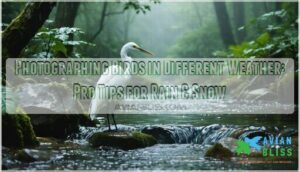 Photographing birds in different weather conditions isn’t just challenging—it’s where magic happens.
You’ll need weather-sealed cameras with telephoto lenses and protective gear like rain covers to survive the elements.
Fog creates ethereal backdrops that make birds appear to float, while rain droplets add stunning textures to wet feathers.
Snow brings unique camouflage challenges and winter migrations to frozen perches.
The secret? Embrace reduced contrast by adding +1 to +2 EV exposure compensation.
Bad weather provides naturally soft, even lighting that eliminates harsh shadows and reveals intricate feather details you’d never capture on sunny days.
Your most memorable shots wait beyond your comfort zone.
Table Of Contents
- Key Takeaways
- Bird Photography Basics
- Weather Conditions Matter
- Lighting Considerations
- Composition and Storytelling
- Safety and Ethics
- Focusing Strategies
- Location and Timing
- Mastering Bad Weather Photography
- Frequently Asked Questions (FAQs)
- How difficult is bird photography?
- What is the difference between bird watching and bird photography?
- Should you photograph birds?
- What factors affect bird photography?
- What is bird photography?
- Does the background matter in bird photography?
- What is the best weather for bird photography?
- What shutter speed is best for bird photography?
- What AF mode should I use for bird photography?
- How do weather apps help predict bird activity?
- Conclusion
Key Takeaways
- Weather-seal your gear and bump exposure +1 to +2 stops – You’ll need rain covers and cold-weather protection while adjusting for reduced contrast in fog, rain, and snow conditions.
- Embrace challenging weather for unique shots – You’ll capture ethereal fog backdrops, rain-textured feathers, and dramatic winter scenes that most photographers miss by staying indoors.
- Switch to manual focus and spot metering – You’ll overcome autofocus struggles in low contrast by taking control of your camera settings when conditions get tough.
- Position yourself at wetlands, coasts, and migration routes during storms – You’ll find active birds in strategic locations where weather creates the most compelling behavioral photography opportunities.
Bird Photography Basics
You’ll face unique challenges when photographing birds in harsh weather, but the right gear and camera techniques can transform these obstacles into creative opportunities.
Proper equipment protection and adjusted camera settings will help you capture stunning images when most photographers stay indoors.
Essential Gear and Protection
Weather-sealed DSLRs and mirrorless cameras with telephoto lenses (400-600mm) form your foundation for harsh conditions.
Camera rain covers protect electronics while lens hoods shield against water spots.
For reliable performance, consider investing in cameras built tough.
Battery cold protection means keeping spares inside your jacket—cold drains power fast.
Microfiber cloths remove droplets instantly, and humidity control through silica packets prevents lens fog.
Layered clothing keeps you comfortable during long shoots, ensuring you have the best performance in any weather condition.
Camera Settings and Techniques
When shooting birds in challenging conditions, you’ll need to master specific camera settings for success.
Increase exposure compensation by +1/3 to +2/3 stops in fog to avoid underexposure.
Switch to spot metering to meter directly off your subject, not the background.
Always shoot in RAW format for maximum post-processing flexibility, and don’t hesitate to bump your ISO for faster shutter speeds in dim conditions.
Weather Conditions Matter
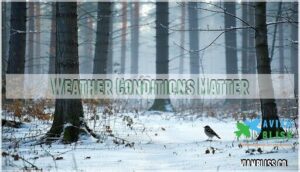
Weather conditions can make or break your bird photography, transforming ordinary scenes into extraordinary images that most photographers never attempt.
When storms hit, most photographers pack up—but that’s when the real magic begins
You’ll discover that fog, rain, and snow create unique opportunities for dramatic shots with enhanced colors, minimalist compositions, and intimate behavioral moments, which can lead to dramatic shots.
Fog and Rain Photography
Fog landscapes transform ordinary scenes into ethereal backdrops where birds appear to float against soft focus backgrounds.
Rain droplets on wet feathers create enchanting textures while atmospheric conditions produce moody atmosphere perfect for storytelling.
During inclement weather, contrast drops 35-50%, requiring +1 to +2 EV exposure compensation. Rainy day photography demands spot metering to properly expose birds against diffused backgrounds, which often results in a need for exposure compensation.
Snow and Ice Photography
Winter’s white canvas transforms bird photography into an art form.
Snow camouflage challenges you to spot subjects against brilliant backgrounds, while frozen waterfowl create stunning reflections on icy surfaces.
Frosty details on feathers demand precise exposure—bump up +1 to +2 stops to avoid underexposed snowy bird photos.
Winter migration brings unexpected species to icy perches, making freezing temperatures worthwhile for dedicated wildlife photography in snow.
These migratory birds, like the distinctive snow goose, travel thousands of miles to reach their destinations, often creating unique opportunities for capturing stunning reflections and experiencing the thrill of winter migration.
Lighting Considerations
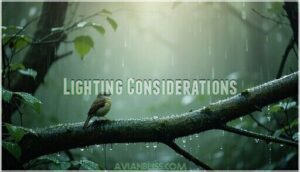
Understanding light in adverse weather transforms your bird photography from snapshots into compelling visual stories.
Weather conditions that drive other photographers indoors actually provide some of the most flattering natural lighting you’ll encounter, creating soft, even illumination that eliminates harsh shadows and highlights intricate feather details with professional-quality results.
This type of lighting helps to create images with intricate feather details.
Natural Light in Bad Weather
Bad weather transforms harsh sunlight into nature’s perfect softbox.
Cloudy weather creates diffused lighting that eliminates harsh shadows, revealing incredible feather detail you’d miss on sunny days.
These atmospheric conditions produce story-rich photos with moody depth.
Adjust your white balance for cooler tones, and embrace how diffused light enhances exposure latitude across challenging lighting conditions.
Artificial Light in Wildlife Photography
When flash photography becomes your creative ally, you’ll discover its power to freeze rapid wing movements and reveal stunning feather detail.
Fill flash during overcast conditions enhances bird photography without harsh shadows, while light modifiers like diffusers soften artificial light for natural-looking results.
Red-eye reduction settings prevent unwanted eye shine that can ruin your shot.
Composition and Storytelling
When rain starts falling or fog rolls in, you’re presented with nature’s most powerful storytelling tools that transform ordinary bird photos into compelling narratives.
These challenging conditions strip away distractions and create minimalist compositions that focus attention entirely on your feathered subjects and their remarkable adaptability to harsh weather, showcasing their remarkable ability to thrive.
Minimalist Compositions in Fog

Foggy mornings transform bird photography into an art form where less becomes more.
You’ll create stunning atmospheric images by embracing fog minimalism and using vast negative space as your canvas.
Focus on shape rather than detail—a lone heron becomes a graceful silhouette against gray emptiness.
Atmospheric perspective adds depth through subtle tonal shifts, while color isolation makes even muted plumage pop dramatically in minimalist compositions.
Capturing Bird Behavior in Rain
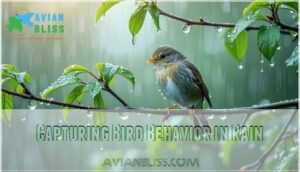
During rainy conditions, you’ll discover birds exhibit fascinating behaviors that create compelling raindrop moments for your camera.
Watch for bird preening sequences as they shake water from wet feathers—these actions produce dynamic shots with excellent feather details.
Rainy day shots often capture birds seeking shelter, feeding actively due to increased insect availability, or displaying unique postures.
Focus on these behavioral changes against wet landscapes to tell authentic stories about wildlife resilience in challenging weather conditions.
Understanding bird behavior patterns is essential for capturing these unique moments effectively, and it helps in showcasing wildlife resilience and their ability to adapt to challenging weather conditions with dynamic shots.
Safety and Ethics
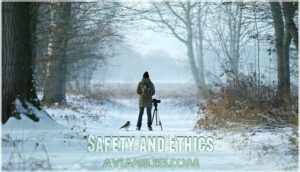
When you’re photographing birds in challenging weather conditions, your safety must come first before capturing that perfect shot.
You’ll also need to respect the birds’ well-being, as they’re already working harder to survive in harsh conditions and don’t need additional stress from photographers getting too close to cause them stress.
Personal Safety in Extreme Weather
When extreme weather strikes, preparation means the difference between capturing that perfect shot and becoming a statistic.
Weather hazards demand respect—cold weather clothing, safety gear, and emergency kits aren’t optional luxuries.
Pack first aid supplies, extra batteries, and communication devices.
Storm precautions save lives: check forecasts, tell someone your plans, and never compromise photography safety for the shot.
Understanding wildlife photography techniques is essential for capturing stunning images in various conditions.
Minimizing Disturbance to Birds
Beyond personal safety concerns, your behavior around birds directly impacts their wellbeing and survival.
Maintain distances of 50-100 meters depending on species, use bird blinds and quiet approach techniques, and practice patient waiting rather than forcing closer encounters.
Watch for stress signals like alarm calls or excessive preening, and consider how your wildlife ethics and birdwatching gear choices can make or break successful, sustainable bird photography sessions, ultimately affecting the birds’ ability to thrive in their natural habitat with minimal disturbance.
Focusing Strategies

When weather conditions reduce contrast and visibility, your camera’s autofocus system can struggle to lock onto your feathered subjects.
You’ll need to master both manual focusing techniques and understand how to optimize your autofocus settings to capture sharp images when fog, rain, or snow challenge your equipment’s performance.
Manual Focus in Low Contrast
Mastering focus techniques in low light and foggy conditions requires switching to manual mode when your camera’s internal meter struggles with contrast issues.
You’ll need to rely on your skills rather than technology when autofocus hunting becomes frustrating.
- Feel the satisfaction of nailing focus when others give up
- Experience the thrill of capturing sharp details in challenging conditions
- Gain confidence knowing you can shoot in any weather
- Create images that stand out from the crowd’s limitations
Use backbutton focus with manual exposure or auto ISO to maintain control while compensating for tricky lighting situations.
Understanding advanced focusing techniques is essential for capturing sharp bird photos in various environments.
Autofocus in Challenging Weather
Your camera’s autofocus system faces its toughest test when weather turns harsh, dropping accuracy up to 40% in heavy precipitation.
Modern weathersealed lenses with advanced algorithms help overcome these challenges, but you’ll need strategic adjustments to maintain sharp bird photography techniques.
Investing in lenses with proper weathersealed designs can substantially improve performance in adverse conditions.
| Weather Condition | Autofocus Challenge | Recommended Solution |
|---|---|---|
| Foggy Focus | Water droplets scatter light, reducing contrast | Switch to single-point AF, increase ISO for faster detection |
| Rainy Autofocus | Reduced contrast causes hunting | Use burst mode with continuous AF, enable focus tracking |
| Snowy Tracking | Falling flakes trigger false locks | Activate subject detection, use back-button focus |
| Low Light | Phase-detection struggles in dim conditions | Combine AF assist beam with higher shutter speed |
| Fast Shutter | Quick movements challenge tracking accuracy | Enable predictive focus with servo mode activation |
To overcome the challenges of autofocus in harsh weather, it’s essential to understand the specific issues caused by different conditions, such as reduced contrast and false locks, and apply the recommended solutions to achieve sharper images.
Location and Timing

Finding the right location in challenging weather transforms ordinary bird photography into extraordinary imagery.
You’ll discover that stormy conditions create unique opportunities when you know where to position yourself and when to capture the magic.
Choosing The Right Location
Scouting transforms ordinary rainy days into extraordinary photographic opportunities when you know where to look.
Strategic habitat selection during inclement weather can make the difference between coming home empty-handed and capturing award-winning shots.
- Wetland Areas – Ducks and herons remain active during light rain, using shallow waters for feeding opportunities
- Forest Locations – Songbirds seek shelter under dense canopies, creating intimate behavioral photography moments
- Coastal Sites – Shorebirds continue foraging despite weather, with dramatic storm backdrops enhancing compositions
- Bird Migration Routes – Weather fronts often trigger concentrated movement through established flyways
Shooting During Golden Hours
During these golden hours, your camera captures warm tones and soft focus naturally.
Morning shoots offer cooler birds and fewer crowds, while sunset moments provide dramatic silhouettes against snowy backgrounds.
Golden light transforms harsh winter scenes into magical photographs.
Natural lighting during sunrise and sunset creates stunning lighting effects that make ordinary birds extraordinary subjects worth pursuing.
Mastering Bad Weather Photography

Bad weather transforms ordinary bird photography into extraordinary art, creating atmospheric conditions that most photographers miss by staying indoors.
You’ll discover that rain, snow, and fog offer unique lighting opportunities and reveal compelling bird behaviors that simply don’t exist during perfect weather conditions, making atmospheric conditions a key factor.
Tips for Shooting in Rain and Snow
Once you’ve identified your perfect shooting spots, focus on protecting your gear while capturing stunning winter bird photography.
Success in photography in harsh conditions depends on preparation and technique.
Here’s your essential checklist for photography in extreme weather:
- Camera protection: Use rain sleeves or shower caps to shield your equipment from moisture and snow
- Battery management: Store spare batteries inside your jacket to prevent cold weather drainage using body heat
- Lens care: Pack microfiber cloths in sealed bags and use UV filters as sacrificial protection
- Exposure adjustments: Bump exposure compensation +1 to +2 stops in snowy conditions to avoid underexposure
- Focus strategies: Switch to manual focus when autofocus struggles with falling snowflakes or wet feathers
These techniques help you capture rainy landscapes, snowy textures, foggy silhouettes, wet feathers, and icy reflections while keeping your gear safe.
Post-Processing Techniques for Weather Photos
Effective postprocessing transforms your challenging weather shots into stunning masterpieces.
Start with noise reduction to clean up high-ISO grain, then apply contrast adjustments and clarity to reveal hidden feather details.
Use dehaze filters for foggy scenes, followed by precise exposure correction and color grading.
Image sharpening adds the final polish to your atmospheric bird portraits.
Mastering the noise reduction techniques is essential for achieving professional-looking results in bird photography.
Frequently Asked Questions (FAQs)
How difficult is bird photography?
Just like catching lightning in a bottle, bird photography challenges you’ll master through patience, practice, and persistence.
You’ll need sharp reflexes, telephoto lenses, and unwavering dedication to capture these elusive subjects in perfect moments.
What is the difference between bird watching and bird photography?
Bird watching focuses on observing and identifying species for enjoyment and learning.
Bird photography captures those moments through your camera, requiring technical skills, specialized equipment, and patience to create compelling images.
Should you photograph birds?
Absolutely. You’ll capture unique behaviors, stunning moments, and create lasting memories while connecting deeply with nature. Photography enhances your observation skills, patience, and appreciation for wildlife’s incredible adaptability and beauty.
What factors affect bird photography?
Weather becomes your secret weapon when light, atmospheric conditions, and bird behavior align perfectly.
You’ll capture dramatic shots using exposure compensation, proper gear protection, and patience during storms, fog, or snow.
What is bird photography?
Capturing wildlife through your camera lens, you’ll freeze birds in their natural habitats, documenting behavior, beauty, and moments that showcase avian life’s incredible diversity and wonder.
Does the background matter in bird photography?
Imagine this: your background can make or break your shot.
You’ll want clean, uncluttered backgrounds that highlight your feathered subject.
Busy backgrounds distract viewers from the bird’s beauty and behavior details.
What is the best weather for bird photography?
You’ll find overcast skies with light rain or mist create magic—diffused light eliminates harsh shadows while making colors pop.
Weather that keeps other photographers indoors gives you the best shots.
What shutter speed is best for bird photography?
Swift shutter speeds stop soaring subjects successfully. You’ll need 1/500s minimum for perched birds, 1/1000s for flight. Faster freezes wingbeats; slower creates motion blur for artistic effect.
What AF mode should I use for bird photography?
Use AI Servo or Continuous AF mode for moving birds. This mode tracks subjects continuously, adjusting focus as they fly or hop. For stationary birds, Single Shot AF works fine.
How do weather apps help predict bird activity?
Weather apps reveal migration patterns, storm fronts, and pressure changes that drive feeding frenzies. You’ll spot when birds seek shelter or become more active, timing your shoots perfectly.
Conclusion
Mastering photographing birds in different weather transforms ordinary moments into extraordinary captures.
You’ll discover that harsh conditions create the most compelling images—rain-soaked feathers revealing intricate textures, snow-covered branches providing dramatic contrast, and fog wrapping subjects in ethereal mystery.
Your camera becomes a gateway to nature’s hidden theater.
Don’t let challenging weather keep you indoors; instead, embrace these conditions as opportunities for unique storytelling.
With proper preparation and the techniques covered here, you’ll consistently capture stunning images that showcase birds in their most authentic, weather-worn beauty.
- https://stevecreek.com/photographing-wildlife-in-extreme-weather-conditions/
- https://jamanetwork.com/journals/jamanetworkopen/fullarticle/2822803
- https://www.prairiepictures.com/camera-news-reviews-techniques/2017/4/6/best-gear-for-storm-photography
- https://www.birdrescue.org/a-story-of-hope-little-mike-tiniest-seabird-survivor/
- https://winemergencyresponse.com/rescue-stories