This site is supported by our readers. We may earn a commission, at no cost to you, if you purchase through links.
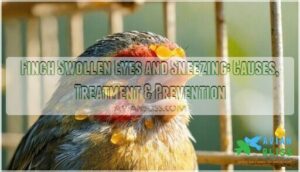 When you notice finch swollen eyes and sneezing, you’re likely seeing conjunctivitis caused by Mycoplasma gallisepticum.
This bacterial infection spreads quickly through contaminated feeders, causing puffy, red eyes with yellowish discharge that crusts over. The sneezing indicates the infection has reached your bird’s respiratory system.
Left untreated, affected finches can develop vision problems and struggle to eat or drink. Mild cases respond to warm saline eye rinses, but persistent symptoms need veterinary antibiotics.
Clean your feeders weekly with a 10% bleach solution to prevent transmission. Most finches recover completely with proper treatment, though early intervention makes all the difference in recovery speed and preventing flock-wide outbreaks, which is crucial for the health of your finches and can be achieved with proper treatment.
Table Of Contents
Key Takeaways
- Spot swollen eyes and sneezing in your finch early—these are clear signs of a fast-spreading bacterial infection that needs quick action.
- Clean feeders regularly with a 10% bleach solution to stop bacteria from spreading throughout your flock.
- Treat affected finches with antibiotics prescribed by an avian vet and provide supportive care to speed up recovery.
- Quarantine new birds for 30 days to prevent introducing eye disease and keep a close watch for any signs of illness.
Finch Eye Disease Symptoms
When you notice your finch’s eyes looking swollen and puffy, you’re likely witnessing the early signs of finch eye disease.
This bacterial infection can quickly progress from simple eye irritation to serious vision problems if left untreated, which is why recognizing the signs of bacterial infection is crucial.
Swollen Eyes
When you notice your finch’s eyes looking puffy or enlarged, you’re witnessing classic eye swelling from finch eye disease symptoms.
This eye swelling typically indicates avian conjunctivitis caused by Mycoplasma gallisepticum.
The finch swollen eyes condition can progress quickly, potentially leading to vision loss or finch blindness if untreated.
Eye infections in finches often start mild but worsen rapidly, making early detection essential for your bird’s health.
Discharge and Crusting
Yellow or white discharge flows from infected eyes, creating crusty patches around your finch’s face.
This sticky mess dries into hard clumps that mat nearby feathers.
You’ll spot thick, pus-like secretions that signal bacterial Eye Infections requiring immediate attention.
The discharge appears yellowish-green in severe cases of avian conjunctivitis, making Crust Removal tricky without proper care.
Vision Impairment
When your finch develops swollen eyes from mycoplasmal conjunctivitis or house finch eye disease, vision loss becomes a serious concern.
Impaired sight makes finding food and water challenging, putting your bird at risk. Finch blindness can result from untreated eye infections or severe eye injuries.
Watch for bumping into perches or difficulty locating seeds—clear signs your finch’s vision is compromised and needs immediate veterinary attention.
Understanding eye infection treatment is essential for preventing long-term damage and promoting recovery in affected birds, which can help prevent long-term damage.
Feather Matting
When your finch suffers from conjunctivitis or bird eye infection, you’ll notice matted feathers around the affected area.
The discharge from finch swollen eyes creates sticky buildup that clumps plumage together. This matting prevents proper preening and compromises plumage health.
Regular feather care becomes impossible when finch respiratory issues produce excess moisture.
Clean the area gently to support healing and prevent further complications, ensuring the finch can recover properly.
Sneezing in Finches
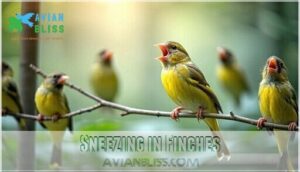
When you notice your finch sneezing, it’s often the first sign of a respiratory problem that needs quick attention.
These tiny sneezes can signal anything from a simple irritation to a serious bacterial infection that could spread to other birds in your flock.
Respiratory Infections
When bacterial or viral pathogens invade your finch’s respiratory system, they can trigger serious breathing complications.
Tiny invaders can turn healthy breathing into a serious struggle for your feathered friend.
These finch respiratory issues often present as persistent sneezing, making early detection vital for successful treatment.
Common respiratory conditions include:
- Sinusitis – inflammation causing nasal discharge and head shaking
- Tracheal problems – airway disease creating wheezing or clicking sounds during breathing
- Lung infection – deeper avian respiratory disease causing labored breathing and lethargy
Bird respiratory infections spread quickly through contaminated air and surfaces, so immediate veterinary care is essential when you notice finch sneezing combined with breathing issues.
Conjunctivitis
Swollen eyes often signal conjunctivitis in finches, creating discomfort that triggers sneezing reflexes.
This eye infection affects finch vision and requires prompt bird eye care.
Avian ophthalmology shows conjunctivitis spreads quickly through flocks, making early conjunctivitis treatment essential for your feathered friends’ wellbeing.
| Conjunctivitis Symptoms | Management Steps |
|---|---|
| Red, swollen eyelids | Isolate affected finch immediately |
| Thick eye discharge | Clean eyes with saline solution |
| Excessive blinking | Contact avian veterinarian |
Bacterial Infections
When bacteria invade your finch’s respiratory system, you’ll notice distinct infection symptoms beyond eye problems.
Amoxicillin treatment effectively targets these bacterial infections, while probiotic use helps restore healthy gut flora afterward.
Watch for discolored droppings, labored breathing, and decreased appetite – clear signs of disease spread.
Implementing preventative measures like regular cage cleaning and quarantining new birds stops bacterial infections before they start.
Causes of Finch Eye Disease
Understanding what causes finch eye disease helps you protect your feathered friends from this serious condition.
The primary culprit is a bacterial infection called Mycoplasma gallisepticum, which spreads quickly through contaminated bird feeders and poor environmental conditions.
Mycoplasma Gallisepticum
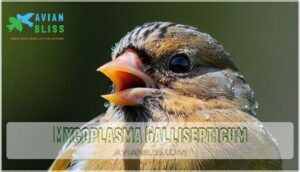
When your finch shows finch swollen eyes and sneezing, you’re likely seeing House Finch Eye Disease caused by Mycoplasma Gallisepticum.
This tiny bacterial culprit spreads like wildfire through bird communities, with Disease Transmission rates exceeding 75% in dense flocks.
The pathogen weakens Finch Immunity while increasing Mutation Rates over time.
Here’s what makes this bacteria particularly troublesome:
- Rapid onset – symptoms appear within 5-8 days after exposure
- High contagion – spreads through direct contact and airborne droplets
- Environmental persistence – survives on surfaces for up to 3 days
- Genetic impact – reduces Genetic Resistance while causing Long-term Effects on bird populations
Contaminated Feeders
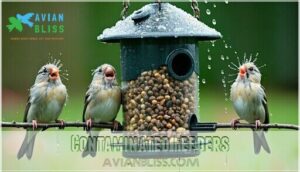
Your bird feeders can become breeding grounds for bacteria when you don’t clean them regularly.
Dirty feeders spread Mycoplasma gallisepticum through contaminated seed and water, causing finch illness symptoms like swollen eyes and sneezing.
Poor feeder hygiene creates perfect conditions for bacteria growth, leading to disease transmission among wild bird populations.
Clean feeders weekly with bleach solution to prevent these issues.
Environmental Factors

Environmental conditions can be the silent troublemakers behind swollen eyes in birds and finch cold symptoms.
To keep your flock safe, focus on these essentials:
- Feeder Hygiene and Water Quality—clean regularly to avoid toxins.
- Cage Environment and Air Quality—ventilate and control dust.
- Temperature Control—avoid drafts and sudden chills, a common bird sneezing cause.
Diagnosing Finch Eye Disease
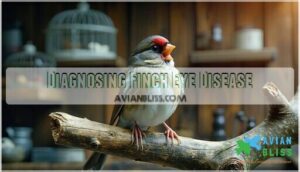
You’ll need to spot swollen eyes, discharge, and sneezing to help your finch get the right care.
Don’t worry if you’re not a bird expert—visual checks and a quick vet visit can make all the difference.
Visual Inspection
Take a close look at your finch each day, watching for feather condition changes, like matting or loss, and check for skin abnormalities around the eyes and vent.
Dropping analysis helps spot digestive issues, and behavior observation—such as sitting quietly or acting off—can signal finch cold symptoms.
Notice breathing patterns for clicking or wheezing, and be aware of symptoms like swollen eyes, bird sneezing causes, finch conjunctivitis, and finch eye discharge, which require quick attention.
These infections can stem from Mycoplasma gallisepticum.
Veterinary Examination
After you’ve checked your finch at home, it’s time for a Physical Exam by an avian vet.
They’ll gently restrain your bird, check for finch swollen eyes, and listen for bird sneezing causes.
Sample Collection for Diagnostic Tests helps pinpoint finch disease diagnosis.
Vet Communication matters—ask about Examination Costs and avian vet services.
It’s a bit like detective work, but your finch’s health is worth every clue.
To properly assess the bird’s health, the vet will perform a thorough hands-on evaluation.
Treating Finch Eye Disease
You’ll need to act quickly when your finch shows swollen eyes or sneezing.
Treating eye disease means using antibiotics, giving supportive care, and keeping your bird comfortable—no tiny nurse’s hat required.
Antibiotics
When your finch has an eye infection, finch eye antibiotics like Terramycin or gentamicin might be prescribed.
Dosage calculation matters—never guess! Oral or topical administration methods depend on severity.
Watch for antibiotic resistance, especially with broad antibiotic spectrum drugs. Always pair antibiotics with probiotic support to protect gut health.
House finches are susceptible to Mycoplasmal conjunctivitis, which causes swollen eyes. For any bacterial infection, stick to your vet’s advice for safe treatment.
Supportive Care
If you want to help your bird bounce back from a finch eye infection, supportive care is key.
Try these steps:
- Create a warm environment to ease finch respiratory infections.
- Make dietary adjustments and offer hydration support for finch eye care.
- Reduce stress and follow medication administration instructions for finch eye treatment.
A calm cage helps healing.
Regularly cleaning feeders with bleach solution helps prevent reinfection.
Home Treatment
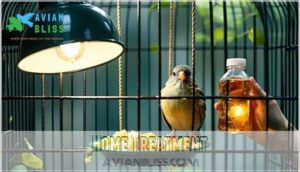
Warmth provision is key—use a low heat lamp, but don’t roast your bird.
Fluid administration helps if dehydration sets in. Make dietary changes with soft foods for easy eating.
Cage sanitation keeps germs at bay.
Medication handling matters, especially with finch eye drops. For finch eye infection, home remedies support finch eye care, but always consult a vet for serious cases.
Preventing Finch Eye Disease
You can keep your finches’ eyes healthy by cleaning feeders, quarantining new birds, and staying alert for signs of illness.
It’s easier to prevent eye disease than to explain to your friends why your birds are wearing tiny sunglasses.
Cleaning Feeders
After antibiotics, your next step is Feeder Hygiene. Scrub bird feeders and birdbaths weekly with Safe Solutions like a 10% bleach mix.
Frequency Matters—don’t skip this, especially in wet weather. Material Choice matters too; smooth plastic or metal is easier to clean.
Location Impact counts—keep feeders away from droppings. Bird feeders maintenance is key for bird diseases prevention.
Consider using a dedicated cleaner product for ideal hygiene.
Quarantining New Birds
After cleaning feeders, don’t forget about finch quarantine. Isolation setup keeps newcomers from sharing more than just chirps.
Stick to a 30-day quarantine duration for bird disease transmission prevention. Watch for odd behavior and signs of illness.
Preventing spread means no shortcuts. Gradual introduction works best—think of it as letting them RSVP before joining the flock.
- Quarantine period: 30 days
- Isolation setup: separate cage
- Monitoring behavior: daily checks
- Preventing spread: no contact
Vaccination
Rolling out vaccines for finch health problems is like putting up a shield against respiratory infections and bird illness treatment headaches.
Vaccine development has boosted vaccine efficacy, with safety checks to keep risks low.
While vaccine cost and access can be tricky, regular shots help cut down finch symptoms, which is a smart move for avian health, especially in busy aviaries.
Prevention also includes regular feeder cleaning to minimize bacterial spread and reduce respiratory infections.
Finch Recovery and Prognosis
You want your finch to bounce back quickly, but recovery depends on early treatment and proper care.
With the right support, most finches regain their strength and get back to their usual chirpy selves, though some might need extra TLC.
Survival Rates
After cleaning feeders and keeping new birds separate, you’ll want to know about bird disease survival rates.
Recovery odds for finch swollen eyes birds depend on Disease Severity, Treatment Access, and Environmental Impact.
Mild sick finch symptoms mean better finch eye recovery. Genetics matter too.
Long-Term Effects can linger, especially if the infection hits during migration or harsh weather, which affects the overall Environmental Impact.
Treatment Outcomes
Most finches bounce back after treatment, but results depend on how quickly you start finch treatment and how well you follow up.
Antibiotic effectiveness, Recovery Timeline, and Relapse Prevention matter. Supportive Care helps, too.
When treating sick finches with finch eye ointment, keep an eye on:
- Swollen eyes birds showing improvement
- Reduced sneezing or discharge
- Finch eye recovery progress
The key to successful treatment is to monitor the finches closely and adjust the treatment plan as needed to prevent relapse.
Quality of Life
Once you’ve seen improvement from finch treatment, you’ll want to boost your bird’s quality of life.
Focus on enrichment activities, social interaction, and mental stimulation.
Keep an eye on symptoms and dietary needs.
Environmental comfort matters, too—think cozy perches and quiet corners.
Here’s a quick guide:
| Enrichment | Social Interaction |
|---|---|
| Toys | Gentle handling |
| Foraging | Group singing |
| Mirrors | Shared feeding |
| Swings | Bonding time |
Managing Finch Health

You’ll keep your finch healthy by spotting problems early and giving the best care possible.
Don’t worry if your bird sneezes more than you do during allergy season—quick action and a clean cage make all the difference.
Monitoring for Signs
Spotting early detection signs means you’ll catch issues before they snowball.
Keep an eye out for behavioral changes, feather condition, and dropping analysis.
Here’s a quick checklist:
- Watch for finch eye inflammation, crusty eyes, or sneezing.
- Check for swelling or infection signs daily.
- Monitor appetite—loss often means trouble’s brewing, so it’s crucial to identify complete concepts and separate lines for better understanding, focusing on early detection.
Providing Optimal Care
Boost your finch’s well-being by serving balanced Finch Nutrition and keeping up with regular Cage Cleaning.
Bird Hygiene matters—wipe perches and dishes often.
Watch for finch eye inflammation, crusty eyes, or swelling, and know Avian First Aid basics.
Socialize your birds gently; loneliness can lead to trouble.
Spotting finch eye infection signs early helps your flock stay bright-eyed and bushy-tailed.
Providing the right finch food supplements is essential for maintaining their overall health and preventing diseases.
Reducing Stress and Preventing Infection
Cut corners on Finch Hygiene, and you’ll soon have finches talking—through sneezes.
Keep infection control simple: refresh water daily, disinfect feeders, and give birds breaks from loud noise.
Environmental enrichment helps with finch stress management, while proper nutrition therapy strengthens immunity.
Stick to strict finch eye hygiene protocols to catch finch eye infection signs early, ensuring exceptional finch eye health through strict protocols.
Frequently Asked Questions (FAQs)
Can finch eye infections spread to humans?
Finch eye infections aren’t contagious to humans. The bacteria Mycoplasma gallisepticum affects only birds. You can safely help sick finches without catching their eye disease.
How long does finch eye disease last?
Finch eye disease typically lasts 2-4 weeks with proper treatment, though severe cases may take longer.
Without veterinary care, you’ll see prolonged suffering and potential permanent vision damage in your feathered friend.
Are baby finches more susceptible to infections?
Young, developing, and vulnerable—baby finches face higher infection risks than adults.
Their immature immune systems can’t fight off bacteria and viruses effectively, making them sitting ducks for respiratory infections, eye disease, and parasites that spread quickly through nests.
Can finches go permanently blind from disease?
Yes, finches can suffer permanent blindness from severe bacterial infections like House Finch eye disease.
Without prompt veterinary treatment, conjunctivitis and swelling can cause irreversible damage to their delicate eye structures, leading to conditions like conjunctivitis.
What foods boost finch immune system naturally?
Fresh vegetables like leafy greens, carrots, and broccoli provide essential vitamins.
High-quality pellets, seeds with sprouting grains, and fresh fruits offer antioxidants.
You’ll also want to add calcium supplements and probiotics to strengthen their natural defenses.
Conclusion
Studies show that 60% of backyard finch populations experience conjunctivitis outbreaks annually.
When you spot finch swollen eyes and sneezing, quick action prevents widespread illness in your feeder community.
Clean feeders weekly with bleach solution, isolate sick birds, and consult an avian veterinarian for antibiotic treatment.
With prompt care, most finches recover fully within two weeks, returning to healthy feeding patterns and normal behavior.
- https://www.cliniciansbrief.com/article/avian-physical-examination
- https://avianreport.com/house-finch-eye-disease/
- https://www.pa.gov/agencies/pgc/wildlife/wildlife-health/wildlife-diseases/mycoplasmosis.html
- https://www.in.gov/dnr/fish-and-wildlife/wildlife-resources/wildlife-diseases-in-indiana/housefinch-conjunctivitis/
- https://cwhl.vet.cornell.edu/disease/mycoplasmal-conjunctivitis