This site is supported by our readers. We may earn a commission, at no cost to you, if you purchase through links.
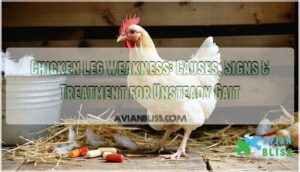 When you notice chicken leg weakness unsteady gait, you’re likely facing vitamin deficiencies, breed-specific issues, or environmental problems.
Calcium and vitamin D3 shortages weaken bones, causing wobbly walking and bent legs.
Heavy breeds like Orpingtons strain their joints naturally, while overcrowded coops and hard concrete floors stress leg muscles daily.
Bacterial infections, injuries from falls, and genetic mutations also trigger mobility problems.
Watch for difficulty perching, reluctance to move, visible swelling, or appetite changes.
Quick intervention with targeted supplements, supportive care, and environmental improvements can restore stability before permanent damage occurs, but timing matters more than you’d expect.
Table Of Contents
- Key Takeaways
- Chicken Leg Weakness Causes
- Signs of Unsteady Gait
- Diagnosing Mobility Issues
- Treatment and Recovery
- Preventing Leg Weakness
- Frequently Asked Questions (FAQs)
- Why do chickens have a lame leg?
- Do GS2 chickens have a poor gait?
- How to prevent mobility issues in chickens?
- What causes leg problems in chickens?
- Why are chicken legs paralyzed?
- Is a chicken a leg injury?
- Why is my chicken weak and wobbly?
- Why is my chicken having trouble walking and standing?
- What causes leg weakness in chickens?
- How to tell if a chicken has neurological issues?
- Conclusion
Key Takeaways
- Watch for early warning signs – You’ll spot chicken leg weakness through difficulty walking, using wings for balance, reluctance to move, and changes in appetite or activity levels before permanent damage occurs.
- Address vitamin deficiencies quickly – You can prevent and treat most leg weakness by supplementing calcium, vitamin D3, and B-complex vitamins, which strengthen bones and support proper nerve function.
- Create a supportive environment – You’ll reduce leg problems by providing soft flooring, adequate space (4 square feet per bird in coops), proper ventilation, and avoiding overcrowding that leads to injuries and stress.
- Act fast for best outcomes – You’ve got a narrow window where targeted supplements, supportive care, and environmental changes can restore mobility, but waiting too long leads to permanent disability requiring euthanasia.
Chicken Leg Weakness Causes
When your chicken struggles with an unsteady gait, several underlying causes could be affecting their mobility.
Understanding these root causes helps you provide the right treatment and prevent future problems in your flock, which is a complete approach to ensuring their health.
Vitamin Deficiencies
Identifying vitamin deficiency in your flock starts with recognizing key warning signs.
Calcium deficit weakens bones, causing leg deformity and unstable walking. Vitamin D3 deficiency prevents proper nutrient absorption, leading to rickets and bent legs.
Vitamin B complex shortages trigger nerve problems and curled-toe paralysis. These chicken leg weakness issues often require targeted dietary supplements to restore mobility and prevent permanent chicken lameness causes.
Breed Specific Traits
While nutritional deficiencies play a major role, your chicken’s genetics matter too.
Some breeds carry leg weakness like a family curse.
Heavy breeds like Orpingtons and Brahmas strain their joints with extra weight.
Silkies face osteoarthritis risks, while Polish chickens battle spinal issues and splayed legs naturally.
| Breed | Common Leg Issues |
|---|---|
| Silkies | Osteoarthritis, compact body strain |
| Orpingtons | Joint problems, obesity-related weakness |
| Brahmas | Heavy breed mobility issues |
| Polish | Spinal problems, splayed legs |
Inbreeding worsens these genetic mutations, passing leg weakness through generations like an unwanted inheritance.
Understanding leg problem causes is essential to address the root of these issues in your flock.
Environmental Factors
Your coop’s physical setup can make or break your flock’s leg health.
Your coop setup directly determines your chickens’ leg health—get it wrong and watch them wobble.
Skip the fancy nutrition plans—weak legs start with what’s missing from their feed bowl
Hard concrete flooring puts constant pressure on feet, while overcrowding forces birds to compete for space and stumble over each other.
Poor coop design with inadequate ventilation creates damp conditions that weaken bones.
Uneven surfaces, debris, and cramped living conditions stress joints daily.
Clean environment with proper space allocation prevents many mobility problems and supports overall health, creating a healthy environment.
Injuries and Infections
Physical trauma and bacterial infections can turn your healthy flock into wobbly walkers overnight.
Chicken leg injury from falls, rough handling, or predator attacks damages tendons and bones. Infectious diseases like bacterial arthritis cause joint swelling and severe lameness in growing birds.
Regular checks for leg health issues can help identify problems early on.
- Fracture Recovery: Splint broken bones immediately and provide supportive care for 4-6 weeks
- Bumblefoot: Clean infected foot pads daily and apply antibiotic ointment to prevent spreading
- Leg Sprains: Restrict movement and monitor for improvement within 24-48 hours of injury
Genetic Mutations
Some breeds naturally carry genetic defects that affect leg strength and stability.
Inbreeding amplifies these hereditary traits, passing inherited disorders through bloodlines.
Breed genetics play a major role—Polish chickens often develop spinal problems, while Silkies face higher osteoarthritis rates.
Genetic testing can identify mutation types before they cause poultry leg problems in your flock.
Signs of Unsteady Gait

Recognizing unsteady gait in your chickens helps you catch mobility problems before they worsen.
You’ll notice your bird walking like it’s had too much to drink, wobbling side to side or using its wings for balance on the ground.
Difficulty Walking
When you notice your chicken struggling to walk, it’s time for a closer look.
Chicken leg weakness and unsteady gait chickens often show these telltale signs:
- Stumbling or frequent falls while moving around the coop
- Using wings for support when attempting to stand or walk
- Favoring one leg or displaying obvious leg deformity
Proper gait analysis reveals chicken walking problems early.
Watch for mobility issues like difficulty rising from a sitting position or reluctance to move.
Foot care becomes essential when chickens can’t distribute weight properly across both legs.
Balance Issues
Several balance problems signal chicken leg weakness.
Watch for "drunk-like" walking patterns, frequent stumbling, and wings touching ground for stability.
Coordination issues often indicate neurological causes affecting your bird’s equilibrium system.
| Balance Problem | What You’ll See |
|---|---|
| Wobbling gait | Unsteady side-to-side movement |
| Wing dragging | Using wings as walking supports |
| Frequent tipping | Difficulty righting when knocked over |
| Hunched posture | Roach back or sitting on hocks |
These gait abnormalities suggest underlying poultry mobility issues requiring immediate attention.
Visible Injuries
You’ll notice obvious signs when checking your chicken closely.
Leg fractures create visible breaks or abnormal bending in bones.
Skin lesions and foot wounds appear as cuts, scrapes, or open sores on legs and feet.
Joint swelling makes ankles and knees look puffy or enlarged.
Chicken leg dislocation causes joints to appear out of place.
Muscle strain shows as tender, hot areas when touched.
These chicken leg injuries need immediate attention to prevent worsening, which is crucial for the chicken’s health.
Changes in Appetite
While external injuries might seem obvious, appetite changes often reveal more about your chicken’s internal struggle with leg weakness.
When chickens experience discomfort from unsteady gait, they frequently reduce their food intake or avoid eating altogether, creating a concerning cycle where nutrient deficiency worsens their condition.
- Appetite Loss – Chickens with leg weakness may eat substantially less than normal due to pain or difficulty reaching food
- Food Avoidance – Birds might avoid their usual feeding areas if walking to them causes discomfort or instability
- Eating Habits – Notice if your chicken pecks less frequently or stops competing with flock mates for treats
- Nutrient Deficiency – Poor appetite can worsen underlying vitamin deficiencies that contribute to chicken health issues
- Hunger Signs – Watch for decreased interest in favorite foods or treats that normally excite your bird
Lethargy and Reluctance to Move
Chickens experiencing lethargy and reluctance to move often show clear warning signs that indicate developing mobility issues.
When your bird starts avoiding normal activities like foraging or socializing, it’s signaling potential chicken leg weakness or underlying health problems.
| Behavioral Signs | Physical Indicators | Severity Level |
|---|---|---|
| Staying in one spot | Wings drooping low | Mild concern |
| Avoiding roost climbing | Hunched posture | Moderate worry |
| Sleeping more often | Difficulty standing | Serious issue |
| Refusing to forage | Wobbly movements | Urgent attention |
| Isolating from flock | Complete immobility | Emergency care |
These lethargy signs and movement disorders require immediate assessment.
Reluctance factors include pain, weakness causes from nutritional deficiencies, and fatigue issues that worsen unsteady gait over time.
Diagnosing Mobility Issues
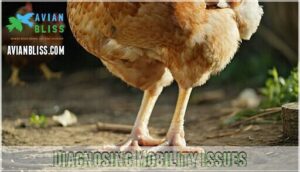
When you suspect leg weakness in your chicken, a systematic examination helps pinpoint the exact problem and guide treatment decisions.
Start by observing your bird’s behavior from a distance, then perform a gentle hands-on assessment to check for injuries, infections, or underlying conditions that might be causing the mobility issues, which can help identify the root cause of the mobility issues.
Physical Examination
When examining your chicken’s physical condition, approach calmly and secure the bird gently.
Start with leg inspection, checking for swelling, heat, or deformities.
Perform gait analysis by observing walking patterns.
Complete a thorough posture check, noting hunched stance or wing-dragging behavior.
Assess feather condition around legs and conduct a basic beak examination to rule out related health issues affecting mobility.
Checking for Injuries
Thoroughness during injury assessment can mean the difference between recovery and permanent disability.
Gently palpate each leg for heat, swelling, or unusual lumps that signal fractures or infections.
Look for cuts, puncture wounds, or scabs on feet and legs.
Check joints for abnormal positioning or range of motion restrictions.
Document any findings during your leg checks to track progression of chicken leg weakness and guide poultry leg weakness treatment decisions.
Monitoring Behavior
Watch your chicken’s daily routines to spot mobility problems early.
Look for changes in Movement Patterns like shorter walks or reluctance to roost.
Activity Levels drop when chicken leg weakness develops.
Notice if they avoid Social Interactions with the flock or show altered Posture Analysis – hunched backs signal discomfort.
Behavior Tracking helps identify unsteady gait treatment needs before symptoms worsen substantially.
Inspecting Living Conditions
Your poultry environment directly impacts chicken leg weakness.
Check coop cleaning schedules – dirty floors harbor bacteria causing infections. Examine floor quality for sharp objects or uneven surfaces that strain legs.
Poor ventilation issues create ammonia buildup, weakening respiratory systems and overall health.
Inadequate lighting effects limit vitamin D synthesis, essential for bone strength. Assess space allocation – overcrowding increases injury risks and stress-related unsteady gait treatment challenges, which can lead to leg weakness.
Ruling Out Diseases
After evaluating your chicken’s living conditions, you’ll need to rule out specific diseases causing leg weakness.
Marek’s disease commonly triggers chicken leg paralysis and unsteady gait in young birds.
Avian encephalomyelitis produces sudden balance loss and tremors.
Newcastle disease’s neurotropic strains cause wobbling movement with respiratory signs.
Disease testing through blood work and PCR assays helps identify pathogens.
Review your flock’s medical history and vaccine options.
Diagnostic tools like radiographic imaging detect internal issues affecting mobility and coordination.
Early detection of respiratory issues is vital for effective treatment and management of chicken leg weakness, which can be caused by Marek’s disease, Avian encephalomyelitis, and Newcastle disease.
Treatment and Recovery
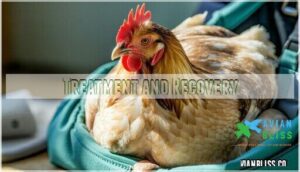
When you spot leg weakness in your chickens, quick action can make the difference between recovery and permanent disability.
Treatment focuses on addressing the root cause while providing supportive care to help your bird regain strength and mobility, which is crucial for its overall health and recovery.
Vitamin Supplements
Once you’ve diagnosed vitamin deficiency, targeted chicken vitamin supplements become your treatment cornerstone.
Start with poultry-specific vitamin supplements rather than generic options for ideal nutrient balance.
- PolyVitamin Drops for Infants (iron-free) – proven effective for chicken leg weakness treatment
- Vitamin B Complex – addresses neurological aspects of mobility issues
- Calcium-Phosphorus supplements – essential for bone strength and mineral interactions
- Vitamin D3 additions – improves calcium absorption and prevents further deficiency
Maintaining a balanced bird diet is vital for overall health and recovery.
Follow dosage guidelines carefully, as over-supplementation can create new imbalances affecting recovery outcomes.
Supportive Care
Beyond nutrient supplements, you’ll need to create a comfortable environment for your chicken’s recovery.
Provide soft bedding to cushion joints and prevent further injury. Make certain easy access to food and water at ground level.
Use heat lamps for warmth, which promotes healing and comfort measures. These therapeutic aid techniques support your chicken leg weakness treatment efforts effectively.
Proper chicken heat lamp systems are essential for maintaining a healthy environment and are a key part of chicken leg weakness treatment.
Isolation and Monitoring
Separate housing your affected bird from the flock creates a quiet environment that reduces stress and prevents injury from aggressive flockmates.
Place the chicken in a small, comfortable space where you can monitor eating, drinking, and mobility changes closely.
Keep detailed medical records of symptoms, treatments, and progress, which helps you track whether chicken leg weakness improves with treatment or worsens over time, allowing for close observation of progress.
Addressing Underlying Conditions
Identifying root causes helps target your treatment approach effectively.
Metabolic disorders like hypocalcemia require feed adjustments and calcium supplementation. Nutrient deficiencies need specific vitamins – B complex for nerve function, D3 for bone health.
Disease management involves antibiotics for bacterial infections or antivirals when appropriate.
Leg rehabilitation through gentle muscle therapy and supervised movement accelerates healing in cases where chicken leg weakness stems from injury rather than systemic illness.
Proper nutrition also involves understanding Vitamin Supplements to support overall health.
Euthanasia Considerations
Sometimes the toughest decision shows the deepest compassion. When chicken leg weakness severely impacts quality of life despite treatment, euthanasia becomes a mercy killing consideration.
When your bird can’t stand, sometimes letting go is the kindest stand you can take
Animal welfare takes precedence over prolonged suffering, making humane killing the kindest choice for irreversible chicken health issues.
- Quality of life assessment: Monitor eating, drinking, and social interaction daily
- Pain indicators: Watch for vocalization, isolation, or inability to reach food/water
- Treatment response: Allow 2-3 weeks for vitamin supplements and supportive care
- Mobility decline: Consider euthanasia if chicken can’t stand or move independently
- Veterinary consultation: Seek professional guidance for humane killing methods and timing
Preventing Leg Weakness
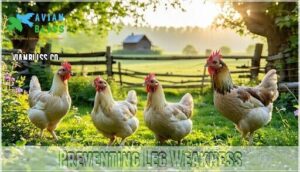
You can prevent most leg weakness problems by providing proper nutrition and maintaining a safe environment for your flock.
Simple changes like ensuring adequate calcium, vitamin D, and B-complex vitamins while keeping coops clean and spacious will help your chickens stay mobile and healthy throughout their lives.
Proper Nutrition
Preventing chicken leg weakness starts with a Balanced Diet containing 16-18% protein and proper Calcium Deficiency prevention through 3.5-4% dietary calcium.
Vitamin Levels matter—supplement D3, B2, and niacin to avoid Chicken Vitamin Deficiency.
Quality Feed Quality and consistent Mineral Intake support strong bones and prevent Nutritional Deficiencies in your flock.
Ensuring the right chicken feed is essential for the overall health of the chickens.
| Nutrient | Function |
|---|---|
| Protein (16-18%) | Muscle development and repair |
| Calcium (3.5-4%) | Bone strength and structure |
| Vitamin D3 | Calcium absorption and bone health |
Safe Living Environment
Your coop’s foundation matters more than you might think for preventing chicken leg weakness.
Choose soft flooring options like sand, straw, or rubber mats over concrete to reduce joint stress.
Make certain proper ventilation systems prevent dampness that weakens bones.
Install adequate lighting solutions and well-designed nesting boxes at appropriate heights to minimize jumping injuries and support overall poultry health management.
A healthy bird environment relies on ecosystem services to maintain biodiversity and ecological balance.
Regular Health Checks
Check your chickens weekly through Weight Monitoring and Daily Observations.
Handle each bird gently during Flock Inspection, examining legs for swelling, heat, or tenderness.
Health Screening catches early signs of chicken leg weakness before they worsen.
Look for changes in posture, gait, or reluctance to move during routine chicken handling sessions, which is crucial for Daily Observations.
Avoiding Overcrowding
Dense coops create a breeding ground for stress, disease, and chicken leg weakness.
When your flock doesn’t have enough space, birds compete for resources and trample each other.
Proper space management requires four square feet per bird in the coop and ten square feet in the run.
Good coop design includes adequate ventilation systems to prevent moisture buildup and maintains sanitation practices that reduce infection risks causing poultry health issues.
Providing Adequate Exercise
Regular exercise strengthens your chickens’ legs and prevents mobility issues.
Create exercise routines by encouraging free range time and outdoor activities that promote natural movement.
Install play equipment like perches at varying heights to build muscle strength.
Social interaction during these activities keeps birds active and engaged, reducing chicken leg weakness risks through consistent poultry exercise habits.
Frequently Asked Questions (FAQs)
Why do chickens have a lame leg?
Countless culprits can cripple your chicken’s leg.
You’ll find injury, disease, nutritional deficiencies, genetics, or age causing lameness.
Check for swelling, infections, or vitamin deficiencies—especially calcium and vitamin D3 shortages.
Do GS2 chickens have a poor gait?
Yes, GS2 broiler chickens display noticeable gait defects that show reduced walking abilities without actual lameness. You’ll spot definite walking issues that don’t prevent movement or resource competition.
How to prevent mobility issues in chickens?
Provide balanced nutrition with adequate calcium, vitamin D, and protein.
Maintain clean, dry coops with proper flooring. Avoid overcrowding.
Select breeds less prone to leg issues. Monitor regularly for early intervention.
What causes leg problems in chickens?
Surprisingly, up to 90% of commercial broiler chickens develop leg problems by processing age.
You’ll find genetics, nutrition deficiencies, infections like Marek’s disease, injuries, and environmental factors all contribute to your flock’s mobility issues, including leg problems.
Why are chicken legs paralyzed?
Chicken legs become paralyzed due to Marek’s disease, spinal injuries, vitamin deficiencies, neurological disorders, or infections. You’ll notice sudden weakness, inability to stand, or dragging limbs requiring immediate veterinary attention.
Is a chicken a leg injury?
Like a wobbly dancer struggling to find rhythm, leg weakness doesn’t always mean injury. You’re seeing neurological issues, vitamin deficiencies, diseases like Marek’s, or metabolic problems causing that unsteady gait.
Why is my chicken weak and wobbly?
Your chicken’s weakness and wobbliness likely stems from vitamin deficiencies, neurological issues like Marek’s disease, or leg injuries. Check for swelling, provide vitamin supplements, and consult a vet promptly.
Why is my chicken having trouble walking and standing?
Something’s gone wrong when your bird struggles to stay upright. You’re likely seeing vitamin deficiency, Marek’s disease, or injury affecting their nervous system and balance coordination.
What causes leg weakness in chickens?
Nutritional deficiencies, particularly calcium and vitamin D, commonly cause leg weakness. Marek’s disease, injuries, genetic factors, poor housing conditions, and age-related joint deterioration also contribute to mobility problems.
How to tell if a chicken has neurological issues?
Watch for head tilting, loss of balance, tremors, or seizure-like movements. You’ll notice unsteady walking, difficulty standing, or unusual postures. Check if they’re alert but can’t coordinate movements properly.
Conclusion
Like a sturdy tree whose roots determine its stability, your flock’s leg health reflects the foundation you’ve provided.
Chicken leg weakness unsteady gait doesn’t have to become permanent damage when you act quickly.
You’ve learned to spot the warning signs, identify root causes, and implement targeted treatments.
Whether it’s vitamin supplements for deficiencies, environmental changes for breed-specific needs, or supportive care for injuries, early intervention makes the difference.
Your chickens depend on your vigilance and prompt action to maintain their mobility and quality of life.
- https://www.newlifeonahomestead.com/reasons-my-chicken-is-limping/
- https://www.jahankaveh.com/en/paralysis-in-chickens/
- https://www.merckvetmanual.com/poultry/disorders-of-the-skeletal-system-in-poultry/infectious-skeletal-disorders-in-poultry
- https://www.welfarequalitynetwork.net/media/1119/wqr13.pdf
- https://pmc.ncbi.nlm.nih.gov/articles/PMC10404785/