This site is supported by our readers. We may earn a commission, at no cost to you, if you purchase through links.
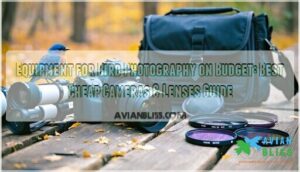 You’ll need equipment for bird photography on budget that balances performance with affordability.
Start with a crop sensor DSLR or mirrorless camera – they multiply your lens reach effectively, making distant birds appear closer. Pair it with a 70-300mm telephoto lens for versatility.
Buy refurbished from reputable dealers to save 30-40% while getting quality gear. Essential accessories include a sturdy tripod for sharp shots during long waits and weather protection for outdoor adventures.
Focus on autofocus speed over megapixels since birds move fast. With smart shopping, you can build a capable kit under $1,000 that captures stunning results.
The right combination of features and timing can transform your birding adventures into professional-quality photography.
Table Of Contents
Key Takeaways
- Choose crop sensor cameras – You’ll get a 1.5x telephoto boost that turns a 300mm lens into a 450mm reach, making distant birds appear closer without spending extra on longer lenses.
- Buy refurbished gear from reputable dealers – You’ll save 30-40% on quality equipment while getting warranty protection, allowing you to build a capable kit for under $1,000.
- Prioritize autofocus speed over megapixels – You’ll capture sharp images of fast-moving birds more consistently, since tracking performance matters more than resolution for successful bird photography.
- Invest in essential accessories first – You’ll need a sturdy tripod for sharp telephoto shots and weather protection for your gear, as these basics prevent more missed opportunities than expensive camera upgrades.
Budget Camera Options
You don’t need to spend thousands on a professional camera to start capturing amazing bird photos.
The shift to mirrorless systems has created fantastic deals on DSLR cameras, making crop sensor models and refurbished options incredibly affordable for beginners who want sharp, detailed shots without breaking the bank.
DSLR Vs Mirrorless Cameras
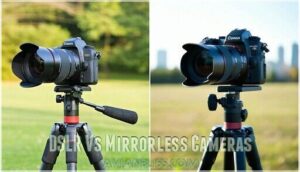
When weighing your options for budget bird photography, you’ll find DSLRs offer better bang for your buck than entry-level mirrorless cameras.
Here’s why DSLRs shine for affordable birding gear:
- Lower upfront costs – Entry-level bird camera options start around $400 versus $500 for mirrorless
- Extensive lens compatibility with cheaper used telephoto glass for superior image quality
- Better ergonomics and longer battery life, though you’ll sacrifice autofocus performance and video capabilities compared to mirrorless systems.
Considering the DSLR versus mirrorless debate, DSLRs present a cost-effective entry point.
Crop Sensor Cameras for Bird Photography
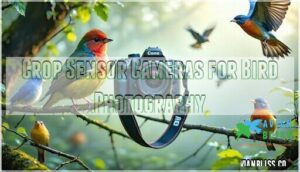
Crop sensor cameras often deliver exceptional value for budget bird photography, providing extra reach without breaking the bank.
Crop sensors turn your budget into telephoto magic—more reach, less cash.
You’ll get a 1.5x telephoto boost with your existing lens, turning that affordable 300mm into an effective 450mm powerhouse.
Many bird photographers value cameras with fast burst modes to capture the perfect shot.
| Feature | Crop Sensor Advantage | Budget Impact |
|---|---|---|
| Sensor Reach | 1.5x-1.6x multiplier effect | Smaller lenses needed |
| Lens Size | Compact telephoto options | Lower cost investment |
| Cost Savings | Entry-level bodies under $900 | More gear for less money |
These cropped advantages make your affordable birding gear stretch further, giving you professional-level image quality without the premium price tag, and providing a significant cost savings with entry-level bodies.
Refurbished and Used Camera Options
Savvy photographers know that used camera equipment and refurbished gear offer incredible value for photography on a budget.
Check seller ratings carefully when buying secondhand camera lens options, as depreciation rates create bargains from photographers upgrading to mirrorless systems.
Warranty periods are shorter with refurbished models, but grey market alternatives provide additional savings with proper inspection checklist verification.
Affordable Lens Choices
You’ll find that choosing the right telephoto lens makes all the difference between blurry distant shots and crisp bird portraits that capture every feather detail.
The good news is that you don’t need to spend thousands on professional glass to get impressive results, especially when you understand which focal lengths and features matter most for your budget.
Telephoto Lenses for Bird Photography
You’ll need a telephoto lens with focal length between 400-600mm for effective bird photography.
Budget telephoto lenses like the Canon RF 800mm f/11 ($779) or Nikon 200-500mm f/5.6 ($1,400) offer excellent image stabilization and lens coatings.
These cheap telephoto lens options provide manual focus backup and lens versatility when autofocus struggles. Budget zoom lens models deliver reliable performance for dedicated birders.
A key feature for capturing birds in motion is fast autofocus.
Prime Vs Zoom Lenses for Beginners
When choosing between prime lenses and zoom lenses for bird photography, beginners often face a classic trade-off between image quality and lens versatility.
Prime lenses deliver sharper results at fixed focal lengths, while budget zoom lens options provide flexibility across different distances.
Your beginner budgets typically favor zoom lenses since they cover multiple focal length ranges in one purchase. However, you can find a suitable telephoto option if you shop carefully.
However, the learning curve with prime lenses teaches better composition skills, making you move closer to subjects rather than relying on zoom convenience.
Essential Gear for Birders
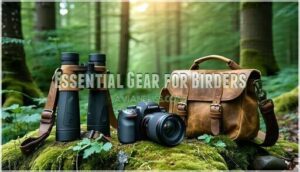
Your camera and lenses are just the beginning of your bird photography journey, and the right accessories can make the difference between missed shots and stunning captures.
Beyond your core equipment, you’ll need binoculars for spotting birds, sturdy support for sharp images, and protective gear to keep everything working in challenging outdoor conditions.
Binoculars and Field Guides
Your birdwatching equipment arsenal isn’t complete without quality binoculars and field guides.
Compact 8×42 binoculars offer perfect magnification explained balance under $150, while porro prism designs deliver superior optical quality at budget prices.
Field guide apps like Merlin Bird ID provide free digital alternatives for identifying birds, complete with audio calls that sharpen your observation skills and support ethical birding practices during your bird photography adventures.
Tripods and Remote Shutter Releases
A sturdy tripod transforms bird photography from a shaky gamble into sharp success.
You’ll capture crisp images during long waits while reducing fatigue from heavy telephoto lenses.
Remote shutter releases eliminate camera shake, letting you photograph skittish birds without spooking them through movement.
Weather sealing is also essential for outdoor reliability.
- Tripod Stability anchors your setup against wind gusts and uneven terrain
- Gimbal Heads provide smooth tracking for birds darting between branches
- Lightweight Options won’t exhaust you during mile-long hikes to prime locations
- Remote Types range from simple cable releases to wireless smartphone apps
- Vibration Reduction keeps images tack-sharp even with heavy affordable gear
Weather Covers and Protective Gear
Weather-resistant accessories safeguard your budget equipment from nature’s harsh elements, extending gear longevity substantially.
Rain protection through waterproof bags prevents costly water damage, while dust defense shields delicate camera mechanisms from abrasive particles.
Temperature extremes can freeze batteries or overheat sensors, making insulated cases essential for photography accessories.
Affordable gear deserves weatherproof camera bag protection just like expensive equipment.
Camera Settings and Techniques
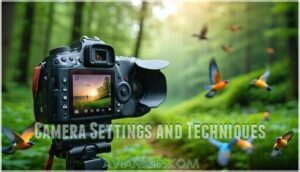
You’ll need to master your camera’s technical settings to capture sharp, well-exposed bird images consistently.
Understanding autofocus modes, frame rates, and sensor capabilities transforms your budget equipment into a powerful bird photography tool, allowing for consistent results.
Autofocus Speed and Frame Rate
Fast autofocus speed and high frame capture rate transform your budget equipment into a tracking birds powerhouse.
You’ll want cameras offering at least 5-7 frames per second in burst mode, paired with multiple focus points for precise subject tracking.
Modern autofocus modes adapt quickly to moving subjects, while decent low light performance keeps your affordable camera birds photography sharp during golden hour sessions.
Sensor Size and Resolution for Bird Photography
Resolution isn’t everything, but understanding sensor size transforms your bird photography game completely.
Full-frame sensors deliver exceptional dynamic range and low-light performance, while crop sensors boost your effective focal length—making that 300mm lens behave like 450mm.
Higher megapixel count means greater cropping potential without sacrificing image detail, allowing you to capture stunning image quality even when birds won’t cooperate with close approaches.
To freeze birds in flight, consider using fast shutter speeds for the best results.
Lighting and Composition Tips
When Golden Hour light bathes your subjects, you’ll capture stunning warmth that transforms ordinary shots into masterpieces.
Position birds using Rule of Thirds for dynamic composition, while Leading Lines guide viewers’ eyes naturally through your frame.
Create dreamy Background Blur with wider apertures, and don’t forget Fill Flash for shadowy details—these budget photography techniques prove that lighting and composition matter more than expensive gear for exceptional wildlife images.
Budget Friendly Strategies
You don’t need to break the bank to start capturing stunning bird photos.
Smart shopping strategies can help you build a capable setup for under $2,000 by exploring refurbished gear, last year’s models, and the thriving used equipment market.
Buying Last Year’s Model or Refurbished
Smart bird photographers know that yesterday’s flagship becomes today’s bargain. You’ll find significant savings when manufacturers push new models, making previous generations affordable alternatives.
Yesterday’s flagship camera becomes today’s best value buy for bird photographers on a budget.
This approach requires careful model comparisons to understand what features you’re trading off.
Here are three key strategies for finding camera deals:
- Check manufacturer refurbished programs – These offer warranties (though shorter at 90 days) and verified quality at 20-30% savings
- Target last year’s DSLR models – The mirrorless shift created excellent opportunities for Canon 7D Mark II and Nikon D500 systems
- Research resale value trends – Some models hold value better, indicating long-term reliability and performance
Consider warranty length differences and potential hidden costs like accessories. Seller reputation matters when buying through online marketplaces, as secondhand equipment varies in condition.
Refurbished gear from authorized dealers provides the best balance of savings and protection for budget-conscious photographers.
Renting or Buying Used Equipment
Countless photographers discover that renting gear offers incredible rental benefits for testing expensive equipment before committing.
Photography lens rentals let you try professional lenses for specific trips, while rent-to-buy programs help spread costs.
When buying used gear, check seller ratings carefully on online marketplaces and inspect secondhand equipment thoroughly. Consider warranty options when available, as used condition can vary substantially between sellers.
You can also find eco-friendly options when buying used, which is a great alternative.
Comparing Prices and Finding Deals
Price tracking tools help you snag the best deals on budget lenses and used gear.
Compare refurbished vs used options across multiple retailers, watching for seasonal sales up to 35% off. Consider rent-to-buy programs and grey market risks carefully.
Join photography forums for real-time discount alerts on affordable bundles, maximizing your cost-saving strategies through community insights.
Frequently Asked Questions (FAQs)
How to clean telephoto lenses safely in field conditions?
Use a lens cleaning cloth and brush to remove dust first.
For stubborn spots, apply lens cleaning solution to the cloth, not directly on glass.
Work from center outward in gentle circular motions, this ensures a clean lens without stubborn spots.
Conclusion
Starting your bird photography journey is like planting a seed – with the right equipment for bird photography on budget, you’ll watch your skills bloom into stunning captures.
You don’t need expensive gear to photograph amazing birds.
Focus on crop sensor cameras, telephoto lenses around 70-300mm, and buying refurbished equipment from trusted dealers.
A sturdy tripod and weather protection complete your essential kit.
Smart shopping and prioritizing autofocus speed over megapixels will maximize your results without breaking the bank, allowing you to achieve stunning captures.
- https://www.adobe.com/creativecloud/photography/discover/crop-sensor-vs-full-frame.html
- https://willgoodlet.com/blog/full-frame-v-crop-whats-the-difference/
- https://amateurphotographer.com/buying-advice/best-cameras-for-bird-photography/
- https://www.archivemarketresearch.com/reports/crop-sensor-camera-508034
- https://www.datainsightsmarket.com/reports/crop-sensor-camera-1280665