This site is supported by our readers. We may earn a commission, at no cost to you, if you purchase through links.
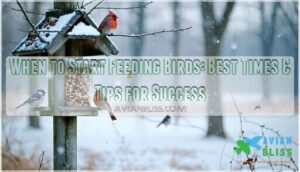 You’ll want to start feeding birds when natural food sources become scarce, typically beginning in mid-November and continuing through March.
This timing coincides with colder temperatures when insects disappear and seeds become harder to find. Wait until after the first hard frost – this signals that birds have finished their natural foraging season and won’t become overly dependent on your offerings.
Focus your efforts during winter months when birds burn more calories maintaining body heat. Avoid summer feeding, as it can interfere with natural behaviors and breeding patterns.
However, there’s an exception for hummingbird nectar, which you can provide year-round in warmer climates.
The key is supporting birds when they truly need help, not creating dependency during abundant seasons when they should be learning essential survival skills and maintaining their wild instincts.
Table Of Contents
- Key Takeaways
- Feeding Birds Basics
- When to Start Feeding
- Winter Feeding Essentials
- Autumn Feeding Considerations
- Bird Feeding Seasons
- Feeder Placement Strategies
- Feeder Maintenance Tips
- Creating Bird Friendly Environment
- Factors Influencing Feeding
- Year Round Feeding Considerations
- Frequently Asked Questions (FAQs)
- What month should you start feeding birds?
- When should I not put a bird feeder out?
- What diseases can spread through dirty feeders?
- How do weather patterns affect feeding schedules?
- Which birds migrate versus stay year-round?
- What water sources work best in winter?
- How does urban versus rural location matter?
- Conclusion
Key Takeaways
- Start feeding after the first hard frost – Wait until mid-November when temperatures drop below freezing and natural food sources become scarce, rather than starting too early and creating dependency.
- Focus on winter months only – Provide supplemental feeding from November through March when birds burn 30% more calories for body heat, then stop to allow natural foraging behaviors to resume.
- Use high-energy foods during cold snaps – Offer calorie-dense options like black-oil sunflower seeds, suet cakes, and mixed seed blends when temperatures drop below 5°F or snow covers the ground.
- Maintain clean feeders regularly – Clean your feeders every two weeks with hot water and a 10% bleach solution to prevent salmonella and other diseases that spread rapidly through contaminated food sources.
Feeding Birds Basics
You’ll want to understand bird feeding basics before setting up your first feeder to avoid common mistakes that harm local bird populations.
Proper timing matters because starting too early can disrupt natural foraging behaviors, while waiting for the right environmental signals guarantees you’re truly helping birds when they need it most, which is crucial for maintaining their natural behaviors.
Natural Food Sources
Bird food-webs demonstrate remarkable complexity during autumn months.
Natural food sources like seed availability from mature plants, fruit sources including berries and nuts, and insect hibernation patterns create abundant foraging opportunities.
Berry production peaks before winter, while nutrient cycling helps seeds remain accessible.
Understanding these natural food sources helps you time winter feeding appropriately, supporting healthy birdwatching habits without disrupting caching food behaviors.
Importance of Timing
Timing matters more than you think when starting your bird feeding schedule.
Seasonal changes and cold weather create natural food scarcity, triggering the perfect moment to help.
Start feeding when temperatures drop below 5°F and frost covers the ground – this signals genuine need.
Birds rely on your consistent winter bird feeding during harsh conditions, making proper timing essential for winter survival and successful bird migration support.
Avoiding Dependency
Over-feeding creates artificial dependency that disrupts natural foraging behaviors.
When you provide food too early or extend feeding beyond natural scarcity periods, birds lose their instinctive search patterns.
This dependency prevention requires stopping bird feeding as spring arrives, allowing natural balance to resume.
Artificial prolonging feeding undermines bird habitats’ seasonal feeding cycles, weakening their survival skills when natural food sources return, which is a threat to their ability to adapt to natural scarcity periods.
When to Start Feeding
Cold snaps and frosty mornings signal the perfect feeding schedule for your backyard visitors.
Start your winter bird care when temperatures drop below 5°F or snow covers the ground. This cold weather timing makes it possible for you to meet genuine food scarcity needs without disrupting natural foraging behaviors.
Bird migration patterns and seasonal adaptation make late fall ideal for when to feed birds. Your winter preparation should coincide with the first hard frost, when insects disappear and seeds become buried.
Bird feeding times that align with nature’s calendar create the most effective bird feeding seasons for supporting wildlife survival. Understanding winter bird feeding strategies is vital for attracting various species to your yard.
Winter Feeding Essentials
Once winter arrives and temperatures drop below freezing, you’ll need to switch from basic birdseed to calorie-dense foods that help birds survive harsh conditions.
High-energy options like black-oil sunflower seeds, suet cakes, and mixed seed blends containing nuts provide the fat and protein birds need to maintain their body heat through cold nights, utilizing high-energy options effectively.
High Energy Foods
Winter weather demands energy-rich nutrition to help birds survive harsh conditions.
Your feathered visitors need foods packed with high-fat content to maintain their body temperature and energy reserves during cold snaps.
Focus on these nutrient-dense options for maximum calorie boost:
- Suet cakes – Provide concentrated fat and protein for sustained energy
- Black-oil sunflower seeds – Offer superior energy source with easy-to-crack shells
- Unsalted peanuts – Deliver essential fats and proteins birds crave
- Nyjer seeds – Supply goldfinches with their preferred energy-rich meal
These foods match birds’ increased energy needs during bird feeding seasons when natural resources become scarce.
The quality of suet cake products is vital for superior nutrition.
Seed Mixtures
Quality seed mixtures form the backbone of successful winter bird feeding.
Black oil sunflower seeds attract over a dozen species, while premium blends containing safflower, millet, and peanuts provide essential nutrients.
You’ll want mixtures with 10-15% protein content, avoiding cheap blends with excessive fillers like milo that birds discard, creating waste underneath your feeders.
Choosing the right birdseed blends can make a significant difference in the effectiveness of your bird feeding efforts with the right premium blends and understanding of essential nutrients.
Suet Cakes
You’ll discover suet cakes are nutritional powerhouses that provide essential fats and proteins for winter survival.
These high-energy treats attract woodpeckers, nuthatches, and chickadees when natural food sources disappear.
Choose commercial suet recipes or make homemade versions with rendered fat, seeds, and nuts.
Proper cake types guarantee birds get concentrated nutrition they need during harsh weather conditions.
Autumn Feeding Considerations
Autumn presents a critical decision point for bird enthusiasts: when should you begin supplementing natural food sources.
You’ll want to wait for the first frost as your reliable signal, since this marks when insects become scarce and natural seeds start declining in availability, which is a key moment to consider supplementing.
First Frost Signal
The first frost acts as nature’s alarm clock, signaling when you should start your feeding routine.
Research shows bird activity near feeders jumps 37% within a week of that initial cold snap.
This frost timing marks when natural food sources drop by 25%, making your backyard station a critical winter survival resource for local species preparing for the challenging months ahead, which is triggered by the first frost.
Natural Food Scarcity
As autumn progresses, natural food scarcity becomes increasingly evident across ecosystems.
Diminishing seed availability signals critical timing for supplemental feeding interventions.
- Frost signals mark the shift when insects become dormant and unavailable
- Seed availability drops dramatically as plants complete their reproductive cycles
- Winter needs intensify as birds require 30% more calories for thermoregulation
- Food shortage peaks during late autumn when natural food sources reach minimum levels
Avoiding Early Feeding
Many birds can handle autumn just fine without your help.
Starting too early disrupts their natural timing and creates unnecessary bird dependency on artificial food sources.
Wait for scarce resources signals like frost before beginning feeding cycles.
Early intervention prevents birds from developing essential foraging skills, potentially harming their long-term survival when winter bird feeding ends.
Understanding proper winter bird feeding techniques is vital for maintaining a healthy bird population, and you can learn more about it through this winter bird feeding link, which provides insights into winter bird feeding ends and how to support birds during this period, ensuring their long-term survival.
Bird Feeding Seasons
Understanding when birds need supplemental feeding most helps you provide targeted support during critical periods.
You’ll find that timing your feeding efforts around temperature extremes, migration windows, and late winter scarcity maximizes your impact on local bird populations, particularly during critical periods.
Temperature Extremes
Temperature extremes trigger your birds’ survival instincts, making feeders their lifeline when Mother Nature throws a cold snap their way.
When frost timing coincides with temperature drops below 5°F, wintering birds burn calories faster than a campfire burns kindling.
Winter feeding becomes critical during harsh winter conditions and heavy snow, while mild temperatures mean you can ease up on refills, helping birds survive the harsh winter.
Migration Patterns
Peak migration timing varies dramatically across North America’s four major flyways, with GPS tracking revealing that 22% of songbirds alter their traditional migration routes mid-journey.
You’ll witness the most dramatic seasonal movements during September when bird populations can drop by 50% in just one week.
Migration patterns that’ll transform your feeding strategy:
- Atlantic Flyway – Coastal corridors guide over 350 species through your backyard
- Mississippi Flyway – River valleys create natural highways for hungry travelers
- Central Flyway – Mountain topography concentrates up to 60 species per square mile
- Pacific Flyway – Western routes support critical stopover nutrition needs
- Urban green spaces attract 8-10 times more migrants than concrete jungles
Late Winter Feeding
Late winter marks the critical period when birds face their greatest survival challenges.
After heavy snow depletes natural food sources, you’ll notice increased activity at feeders as birds desperately seek calories.
Despite spring shift approaching, thawing challenges create inconsistent foraging opportunities.
Nutritional needs remain high until foraging resurgence begins.
Your continued support during feeding birds in winter timing proves essential before first cold weather ends completely, and this support is crucial for their survival challenges.
Feeder Placement Strategies
You’ll need to position your feeders carefully to create a safe feeding environment that protects birds from predators, weather, and window strikes.
Strategic placement considers multiple factors including distance from cover, weather protection, and collision prevention to guarantee visiting birds can feed safely and comfortably.
Predator Safety

Position your feeders twelve feet from brush piles or dense vegetation where cats and other predators hide.
Install feeder guards and safety nets around ground-level stations to create predator protection zones. Cat deterrents like motion-activated sprinklers work effectively near feeding areas.
Proper bird feeder placement prevents common bird feeding mistakes by ensuring adequate bird shelter while maintaining predator control through strategic spacing and safety measures.
Effective bird feeder guards, such as those using feeder guard systems, can provide additional protection for the birds and create a safe environment with strategic spacing.
Wind and Rain Protection
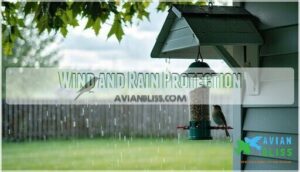
Beyond predator concerns, your bird feeder placement must account for weather elements that can spoil food and deter visitors. Sheltered feeders positioned with proper wind breaks and rain guards guarantee consistent bird access during harsh conditions.
- Install feeder sheds or overhangs to create dry feeding zones
- Position feeders on the lee side of buildings for natural wind breaks
- Use baffles and domes as effective rain guards for seed protection
- Create storm protection by clustering feeders near sturdy structures
Window Collision Prevention
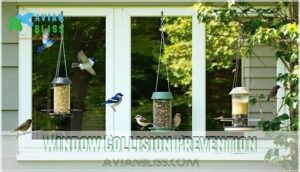
Position feeders more than 30 feet from windows or closer than 3 feet to prevent deadly bird collisions.
You can apply window decals, collision films, or glass markings to make surfaces visible.
Bird netting creates a protective barrier, while window alerts help birds recognize obstacles.
These simple bird safety measures substantially reduce window collisions and support bird conservation efforts.
Feeder Maintenance Tips
Once you’ve established your feeding routine, proper maintenance guarantees both bird health and feeder longevity.
Clean feeders every two weeks with hot water and a 10% bleach solution to prevent harmful bacteria from spreading among your feathered visitors.
Regular Cleaning

Feeder sanitizing isn’t just good housekeeping—it’s bird health insurance. Clean feeders regularly with hot water to prevent salmonella outbreaks and disease transmission.
Cleaning schedules matter: wash feeders every two weeks during winter, more frequently in wet conditions. Bird feeder maintenance includes scrubbing away grime buildup and ensuring water quality remains fresh.
This simple bird feeding basics practice reduces contamination risks substantially.
Seed Storage
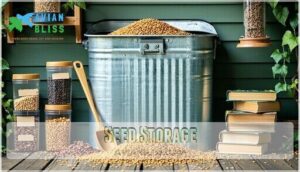
Store bird seed in airtight containers to maintain seed quality and prevent moisture damage.
Metal bins work best for pest control, keeping rodents and insects away from your supply.
Check expiration dates regularly since most seed mixes have a six-month shelf life under dry conditions.
Proper bird seed storage saves money and guarantees your backyard bird feeding remains effective throughout the season, which is crucial for maintaining a backyard bird feeding routine.
Feeder Hygiene
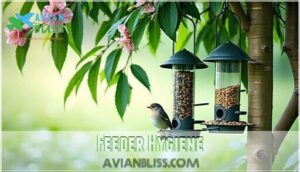
Clean feeders regularly with hot water to prevent salmonella and other avian diseases that spread rapidly through contaminated food sources.
Disease prevention becomes your top priority when wet spring conditions can spoil seed in just three days.
Proper feeder sanitizing using metal feeders helps retain warmth while reducing dangerous mold growth that threatens bird health throughout winter months, which is crucial for disease prevention.
Creating Bird Friendly Environment

Beyond feeding, you can transform your yard into a natural bird sanctuary through strategic habitat improvements.
Plant native fruit bushes like hollies or mountain ash to provide year-round food sources, while leaving sections of your garden undisturbed creates shelter and access to natural seeds.
Planting Fruit Bushes
Planting fruit bushes transforms your yard into a natural food source that supports bird populations year-round.
Berry-producing plants like hollies, mountain ash, and cottoneasters provide essential nutrients when insects become scarce.
Smart garden layout and proper soil preparation guarantee these bird-friendly plants thrive, creating sustainable habitat.
- Watch cardinals and robins feast on bright red holly berries during January’s coldest days
- Enjoy the sweet satisfaction of knowing your garden feeds hungry families through harsh winters
- Create a living legacy that attracts colorful songbirds for generations to come
Leaving Garden Areas Fallow
Natural refuge creation starts with understanding bird behavior patterns.
You can leave fallow garden areas untouched during autumn, allowing wildflower seeds to scatter naturally.
These spaces become essential garden refuge zones where birds discover abundant natural food sources.
Seed preservation occurs when you resist tidying these areas, creating natural shelter for overwintering species while supporting ideal bird feeding timing.
Creating natural shelter for overwintering species is crucial, and by doing so, you are also supporting the natural food sources that these birds need to survive.
Installing Nest Boxes
Nest boxes aren’t just feeders—they’re year-round sanctuaries that provide essential winter refuges for birds.
Strategic nest box placement transforms your yard into prime bird habitat while supporting wildlife conservation efforts.
- Mount boxes 5-15 feet high on poles or trees
- Face entrance holes away from prevailing winds
- Clean boxes annually to prevent disease transmission
- Provide natural nesting materials like twigs nearby
By considering ideal nest box placement strategies, you can create a welcoming environment for various bird species, which is crucial for their year-round survival.
Factors Influencing Feeding

Several key factors determine when you should start feeding birds in your backyard.
Weather conditions, local bird species, and natural food availability all work together to signal the right timing for supplemental feeding.
Weather Conditions
Weather conditions serve as nature’s alarm clock for bird feeding decisions.
Temperature drops below freezing, frost timing, and snow cover signal when natural food sources become scarce.
Cold snaps and winter storms create urgent feeding needs, while seasonal changes guide your feeding schedule throughout the year, and serve as a signal for natural food sources.
Bird Species Diversity
Since bird species diversity directly impacts feeding success, understanding your local bird population helps optimize feeder placement and food selection.
Different species exhibit unique feeding patterns, with varied beak shapes determining seed preferences and habitat diversity influencing species variation.
Urban feeders attract over half of local bird species, creating opportunities for observing feather colors during bird migration seasons while supporting local biodiversity.
To maximize the effectiveness of these feeders, it’s vital to evaluate the right bird feeder types for your specific needs, considering factors like local biodiversity and bird migration seasons to ensure the best results for your bird feeder placement.
Food Availability
Food availability shapes your bird feeding season more than any calendar date.
During scarcity periods when natural food sources like seeds and insects disappear, birds desperately need your feeders.
You’ll notice seasonal changes affect different seed types – sunflower seeds become essential when native plants stop producing.
Monitor nutrient needs carefully, as birds require high-energy foods during harsh weather.
Smart feeder setup timing matches these natural cycles perfectly.
Understanding bird behavior patterns is essential for effective bird feeding strategies.
Year Round Feeding Considerations
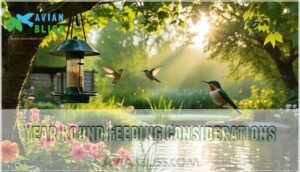
While most bird feeding focuses on winter survival, you can actually maintain feeders throughout the year with some important adjustments to your approach.
Summer feeding requires special consideration since natural food sources are abundant, but hummingbirds and goldfinches still benefit from targeted supplemental feeding during warmer months.
Summer Feeding Exceptions
While most summer bird feeding poses risks, certain species require specialized care during warmer months.
Heat and humidity create perfect conditions for mold growth and disease transmission, making careful management essential for summer bird feeding success.
Here are four key summer feeding exceptions:
- Hummingbird Care – Maintain nectar feeders with fresh sugar water every 2-3 days, cleaning thoroughly to prevent fermentation that can harm these high-metabolism birds.
- Goldfinch Diet – Continue offering nyjer seed until natural thistles mature, as goldfinches depend on this specialized food source during their late breeding season.
- Heat Hydration – Prioritize fresh water sources over food, replenishing birdbaths daily since hydration becomes more critical than summer supplements during extreme temperatures.
- Emergency Feeding – Provide temporary support during drought conditions or severe weather when natural food sources become unexpectedly scarce, monitoring local wildlife rehabilitation guidelines.
Hummingbird Feeding
Hummingbirds require specialized feeding attention throughout their active months.
You’ll need to maintain nectar feeders from spring through fall, matching hummingbird migration patterns in your area.
Mix sugar water using a 4:1 ratio of water to white sugar—avoid honey or artificial sweeteners.
Position feeders in shaded spots to prevent fermentation, and clean feeders every few days in hot weather to prevent harmful mold growth.
Goldfinch Feeding
Goldfinches have specific dietary needs that differ from other backyard birds.
You’ll want to offer nyjer seeds in specialized thistle feeders with small ports that accommodate their delicate beaks.
These finches prefer fresh nyjer over stale seeds, so replace supplies regularly.
During finch migration periods, goldfinches rely heavily on these protein-rich seeds to fuel their journeys, making consistent feeding particularly important for supporting these colorful visitors.
Frequently Asked Questions (FAQs)
What month should you start feeding birds?
You’ll want to start feeding birds in late fall, typically November, when temperatures drop below freezing and natural food sources become scarce after the first frost signals winter’s arrival.
When should I not put a bird feeder out?
Studies show feeding during disease outbreaks increases transmission rates by 49% among bird populations.
You shouldn’t put feeders out during local avian disease outbreaks, extreme summer heat that spoils seed rapidly, or when you can’t maintain consistent cleaning schedules, as this can lead to disease outbreaks and other issues, including consistent cleaning.
What diseases can spread through dirty feeders?
Dirty feeders spread salmonella, which causes lethargy and death in birds. You’ll also see avian pox, conjunctivitis, and aspergillosis from moldy seeds. Regular cleaning prevents these outbreaks.
How do weather patterns affect feeding schedules?
Weather patterns dramatically transform your feeding strategy like a meteorological conductor orchestrating bird behavior.
Start feeding when temperatures drop below freezing and natural food sources become snow-covered or ice-locked, typically late fall through winter’s end, as this is when birds most need supplemental food.
Which birds migrate versus stay year-round?
Different bird species follow distinct migration patterns based on their biological needs and food sources.
Cardinals, chickadees, and woodpeckers typically stay year-round, while robins, warblers, and hummingbirds migrate seasonally to warmer regions with abundant resources, exhibiting distinct patterns.
What water sources work best in winter?
You think only flowing water works? Wrong! Heated birdbaths prevent freezing while shallow dishes with fresh water daily keep birds hydrated when natural sources freeze solid.
How does urban versus rural location matter?
Urban environments require more frequent feeder cleaning due to pollution and disease transmission, while rural locations offer natural food sources but may need consistent winter feeding schedules.
Conclusion
Ironically, knowing when to start feeding birds requires patience—waiting until they actually need your help.
The ideal timing for when to start feeding birds begins after the first hard frost signals natural food scarcity, typically mid-November through March.
During these critical winter months, your feeders become essential energy stations that support avian metabolism when calories are scarce.
Remember, you’re supplementing their diet during harsh conditions, not creating year-round dependency that disrupts natural foraging behaviors and survival instincts.