This site is supported by our readers. We may earn a commission, at no cost to you, if you purchase through links.
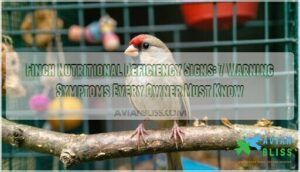 When you notice finch nutritional deficiency signs, you’re looking at your bird’s body sending distress signals that shouldn’t be ignored.
Weight loss, dull feathering, and faded plumage colors are telltale indicators something’s amiss with their diet.
Lethargy, poor reproductive performance, and respiratory issues often point to specific vitamin deficiencies—particularly vitamins A, D3, E, and B-complex.
Mineral imbalances show up as thin eggshells, pale skin, and bone problems.
Watch for stress lines on feathers, changes in drinking habits, and unusual behavioral shifts.
Think of these symptoms as your finch’s way of waving a red flag before serious health complications develop, indicating a need to review their diet for potential nutritional deficiency signs and address mineral imbalances.
Table Of Contents
- Key Takeaways
- Common Finch Nutritional Deficiency Signs
- Specific Vitamin Deficiency Symptoms
- Mineral Deficiency Indicators in Finches
- Behavioral and Physical Changes to Watch For
- Preventing and Addressing Deficiencies
- Frequently Asked Questions (FAQs)
- Are finch health problems common?
- What do finches eat?
- How do you keep a finch healthy?
- How do you know if a finch has a respiratory infection?
- What should I do if my Finch is sick?
- How do you know if a finch is egg bound?
- How much food do finches need daily?
- What are the symptoms of malnutrition in birds?
- What is one of the primary signs of nutrient deficiency?
- What does a malnourished bird look like?
- Conclusion
Key Takeaways
- Watch for physical warning signs like sudden weight loss, dull feathering, and faded plumage colors—these indicate your finch isn’t getting proper nutrition before serious complications develop.
- Monitor specific vitamin deficiency symptoms including respiratory issues and eye problems (vitamin A), weak bones and muscle twitching (vitamin D3), neurological problems (vitamin E), and poor growth with reduced disease resistance (B-complex vitamins).
- Look for mineral deficiency indicators such as thin eggshells and bone problems (calcium), pale plumage and fatigue (iron), stunted growth (zinc), and thyroid enlargement (iodine).
- Prevent deficiencies by providing a varied diet beyond seeds alone—include fresh leafy greens, fruits, protein sources during breeding/molting, and calcium supplements while monitoring your bird’s weight weekly to ensure proper nutrition and overall health.
Common Finch Nutritional Deficiency Signs
Recognizing early warning signs of nutritional deficiencies can prevent serious health complications in your finches.
You’ll need to monitor specific physical and behavioral changes that indicate your bird isn’t getting essential vitamins, minerals, and nutrients from their diet, which is crucial for preventing serious health issues related to diet.
Weight Loss or Poor Weight Gain
Sudden finch weight loss or poor weight gain signals inadequate nutrition that demands immediate attention.
When nutrient deficits create malnutrition effects, your bird’s metabolism struggles with poor digestion and dietary imbalances.
Monitor daily weight changes—healthy finches maintain consistent body mass.
Nutritional deficiencies often manifest through gradual weight decline before other symptoms appear, making regular monitoring your first line of defense against malnutrition effects.
Dull or Abnormal Feathering
Your finch’s feathers tell a story about their health. Poor feather condition signals nutritional deficiencies that can’t be ignored. Dull, brittle plumage often indicates protein, vitamin A, or amino acid shortages affecting feather development.
Watch for these red flags:
- Feather texture becomes rough or brittle instead of smooth and glossy
- Molting problems include delayed or incomplete feather replacement cycles
- Feather loss occurs outside normal molting periods, creating patchy areas
These changes develop gradually, so regular observation helps catch deficiencies early.
Changes in Plumage Color
Vibrant red, yellow, and orange hues gradually fade when your finch lacks essential nutrients like vitamin A and carotenoids.
Feather discoloration appears as muted hues replacing brilliant colors, while pigment loss creates patchy, washed-out patterns.
Color fading often signals vitamin deficiency before poor feather condition develops, making early detection essential for your bird’s health.
Poor Reproductive Performance
Beyond missed breeding opportunities, nutrient deficiencies severely compromise your finch’s reproductive health through multiple pathways affecting hormonal balance and physical capability.
- Egg Binding – Calcium deficiency prevents proper muscle contractions needed for egg laying, creating life-threatening blockages
- Infertility Causes – Vitamin E deficiency damages reproductive tissues, while inadequate protein reduces sperm quality and hormone production
- Hatch Failure – Poor maternal nutrition creates weak embryos with developmental abnormalities that prevent successful hatching
- Molting Problems – Breeding stress combined with nutrient deficiencies disrupts normal feather replacement cycles, weakening birds further
These issues collectively underscore the importance of proper nutrition for the health and reproductive success of finches.
Lethargy and Reduced Activity
Activity levels drop dramatically when finch lethargy signals underlying nutrient deficiencies or metabolic disorders.
Your bird’s reduced movement, decreased foraging behavior, and prolonged perching indicate compromised nutrient absorption affecting cellular energy production.
Bird lethargy often stems from vitamin B-complex deficiencies that disrupt metabolic pathways.
Low energy manifests through reluctance to fly, sing, or interact socially, which are clear signs of fatigue causes requiring immediate attention.
These fatigue causes require immediate dietary evaluation and potential veterinary assessment to restore normal finch health signs, addressing the underlying issues of metabolic disorders.
Specific Vitamin Deficiency Symptoms
When vitamin levels drop below ideal thresholds, your finch’s body systems begin failing in predictable patterns that manifest as specific clinical symptoms.
Understanding these distinct vitamin deficiency presentations allows you to identify problems early and implement targeted nutritional interventions before permanent damage occurs, which is crucial for maintaining your finch’s health through targeted nutritional interventions.
Vitamin a Deficiency—Respiratory Issues and Eye Problems
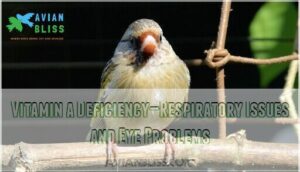
Spotting vitamin A deficiency requires sharp eyes—your finch’s respiratory health and vision depend on adequate vitamin A levels.
Deficient birds develop squamous metaplasia in respiratory tracts, causing thickened mucus membranes and impaired airway clearance that leads to wheezing and labored breathing.
- Respiratory Issues: Watch for increased breathing rates, wheezing, and bacterial pneumonia from compromised airways
- Eye Problems: Look for dry, crusty eyes (xerophthalmia), conjunctival swelling, and white cheesy plaques around eyelids
- Vision Impairment: Notice cloudiness, corneal swelling, or behavioral changes suggesting reduced visual acuity in your finch
Understanding respiratory health issues is essential for identifying these symptoms early on.
Vitamin D3 Deficiency—Weak Bones and Muscle Twitching
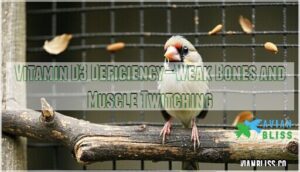
While respiratory issues signal vitamin A problems, vitamin D3 deficiency creates skeletal nightmares you can’t ignore.
Your finch’s bones become fragile, leading to pathologic fractures and deformed beaks.
Muscle twitching occurs as calcium absorption plummets, disrupting nerve conduction.
Vitamin D deficiency can lead to bone health issues that affect birds and humans alike.
| Bone Health Signs | Muscle Function Issues |
|---|---|
| Soft, deformed bones | Muscle twitching (myoclonus) |
| Pathologic fractures | Weakness and ataxia |
| Beak abnormalities | Tremors and collapse |
| Growth retardation | Poor muscle tone |
| Spine curvature |
Falls from perches.
Hypocalcaemia develops when vitamin D3 can’t facilitate proper calcium absorption, creating a nutrient imbalance that affects everything from bone density to reproductive success.
Vitamin E Deficiency—Neurological Abnormalities
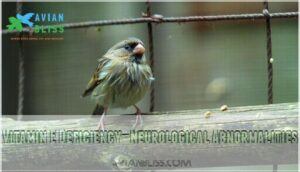
Vitamin E deficiency creates devastating neurological signs in finches, acting like a biological short-circuit in their nervous systems.
This antioxidant powerhouse protects delicate brain tissue from oxidative damage, and without it, encephalomalacia develops—literally "brain softening."
You’ll notice abnormal head movements, loss of coordination, and seizure-like episodes as avian neurology breaks down.
These finch health issues progress rapidly once nutritional deficiencies take hold.
B-Complex Deficiency—Poor Growth and Reduced Disease Resistance

B-Complex deficiencies devastate finch health, causing growth stunting with juveniles showing 40% lower body mass.
Disease susceptibility skyrockets as leukocyte production drops 22%, increasing bacterial infections by 60%.
Poor growth becomes evident through delayed fledging and incomplete feathering.
Your finch’s nutrient absorption suffers, creating cascading nutritional deficiencies that compromise immune function and development.
Mineral Deficiency Indicators in Finches
Mineral deficiencies in finches create distinct physical symptoms that you’ll recognize once you know what to look for.
These deficiencies often develop gradually, making early detection essential for preventing serious health complications that can affect your bird’s bones, organs, and reproductive system, as well as impact overall health due to mineral deficiencies.
Calcium Deficiency—Thin Eggshells and Bone Issues
Calcium deficiency creates serious health risks for your finches, particularly affecting bone integrity and reproductive success.
You’ll notice thin-shelled eggs that crack easily, indicating insufficient calcium sources in their diet.
Soft bones develop as avian osteoporosis weakens their skeletal system, while egg binding becomes life-threatening for breeding females.
These mineral deficiencies compromise overall bone health, requiring immediate dietary intervention with proper calcium supplementation.
Iron, Zinc, and Iodine Imbalances
Beyond calcium issues, three critical mineral imbalances can wreak havoc on your finch’s health.
Iron deficiency causes pale plumage and chronic fatigue, while zinc deficiency stunts growth and creates frizzled feathers.
Iodine deficiency triggers thyroid enlargement and labored breathing.
These mineral interactions affect nutrient synergy, making nutritional deficiencies compound quickly when multiple elements are imbalanced simultaneously.
Understanding iodine deficiency symptoms is essential for maintaining your finch’s overall health.
Symptoms of Trace Mineral Deficiencies
Spotting trace mineral troubles isn’t just about playing detective—it’s about recognizing subtle changes that signal deeper nutritional imbalances affecting your finch’s health.
- Iron deficiency manifests through pale skin coloration and reduced energy levels, while copper excess can interfere with zinc absorption
- Zinc toxicity symptoms include poor feather quality and compromised immune function, often triggered by galvanized cage materials
- Manganese overload disrupts calcium absorption, leading to weakened bone structure and developmental issues in young birds
Gout and White Pustules
High protein diets can trigger gout in finches, where uric acid crystallizes in joints and tissues.
You’ll notice white pustules on toes and feet that contain pasty urate deposits.
These lesions often accompany polyuria and polydipsia as kidney damage progresses.
Hyperkeratosis may develop alongside pustule formation, creating visible deformities that worsen mobility over time.
Behavioral and Physical Changes to Watch For
Beyond the obvious signs of nutritional deficiency, finches exhibit subtle behavioral and physical changes that can indicate developing health problems before they become severe.
You’ll need to watch for these warning signs carefully, as finches instinctively hide illness until advanced stages make concealment impossible, which can lead to severe health issues.
Stress Lines on Feathers
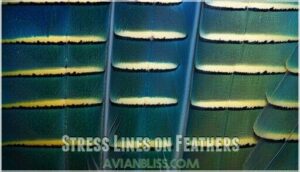
Horizontal bands across individual feathers signal that your finch experienced severe nutritional stress during feather growth.
These stress lines appear when protein, vitamins, or minerals drop below critical levels during molting problems.
Poor feather health from vitamin deficiencies creates weak spots that show up as visible lines, making plumage quality deteriorate and increasing avian stress behaviors like feather plucking.
Recognizing early signs of feather plucking is essential, as it can be related to feather plucking stress, which affects the overall feather health and may lead to feather plucking.
Loss of Footprint and Hyperkeratosis
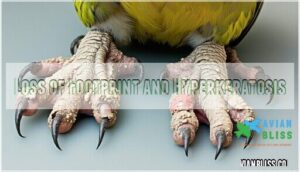
Your finch’s feet tell a story about their nutritional health.
Hyperkeratosis creates thick, scaly skin buildups on foot pads and toes, while vitamin A deficiency causes loss of normal foot texture patterns.
These foot lesions often accompany beak issues and other skin problems.
Mineral deficiencies, particularly calcium deficiency, worsen hyperkeratosis symptoms, making your bird’s feet look crusty and uncomfortable.
Polyuria and Polydipsia
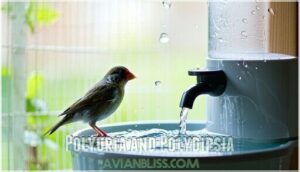
Through careful observation, you’ll notice increased water intake (polydypsia) and excessive urine output (polyuria) signaling potential kidney issues or nutritional deficiencies.
These fluid balance disruptions often stem from vitamin or mineral deficiencies affecting your finch’s internal systems.
Monitor water consumption patterns closely, as dehydration signs may paradoxically accompany these symptoms, creating a concerning cycle with potential kidney issues.
Obesity or Sudden Weight Loss
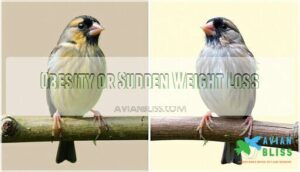
Weight fluctuations signal serious nutritional deficiencies requiring immediate attention.
Malnutrition manifests through dramatic body condition changes that compromise your bird’s health and longevity.
Critical Weight-Related Warning Signs:
- Rapid weight loss – Your finch’s breast muscle shrinks visibly, creating a sharp keel bone you can feel easily
- Finch obesity – Excess fat deposits around the abdomen restrict movement and breathing capacity substantially
- Diet imbalance – Poor nutritional choices lead to unhealthy weight gain or dangerous muscle wasting
- Sudden weight loss – Stress-induced appetite changes cause dramatic body condition deterioration within days
Monitor your bird’s weight weekly using a gram scale.
Healthy feeding practices and proper diet management prevent these dangerous extremes through consistent portion control.
Muted Feather Coloration
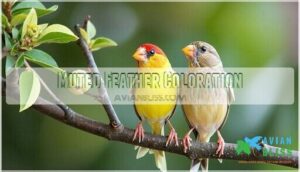
Vibrant plumage reflects your finch’s overall health status, but feather pigmentation problems signal underlying issues.
Vitamin A deficiency causes dramatic color fading in yellow and red feathers, while plumage dulling indicates poor finch nutrition.
Beak discoloration often accompanies these changes, creating a washed-out appearance that screams "help me!"
| Deficiency Type | Color Changes | Associated Symptoms |
|---|---|---|
| Vitamin A | Muted yellows/reds | Respiratory issues, eye problems |
| General Malnutrition | Overall fowl coloration loss | Weight loss, lethargy |
| Mineral Imbalance | Patchy feathering | Poor growth, weak bones |
Nutritional deficiencies rob your bird’s natural brilliance, but proper supplementation restores that magazine-cover shine.
Preventing and Addressing Deficiencies
Once you’ve identified nutritional deficiencies in your finches, prevention becomes your most powerful tool against future health complications.
You’ll need to implement a thorough approach that combines dietary diversification, strategic supplementation, regular health monitoring, and professional veterinary guidance to maintain ideal nutritional status in your birds.
Importance of a Varied Diet
Beyond just seeds, your finch’s dietary balance determines whether they’ll thrive or simply survive.
Research shows finches fed varied diets experience 60% fewer nutritional deficiencies and demonstrate 25% better feather quality compared to those on mono-seed diets.
Essential components for ideal finch nutrition:
- Multiple seed types – Rotate millet, canary grass seed, and niger to prevent picky eating habits
- Fresh leafy greens – Spinach, kale, and romaine provide vitamins absent in seeds alone
- Seasonal fruits – Small apple and berry pieces offer natural vitamins and behavioral enrichment
- Protein sources – Egg food or insects during molting and breeding seasons
- Calcium supplements – Cuttlebone guarantees strong bones and healthy egg production in females
This food variety approach improves calcium bioavailability by 18% while reducing feather abnormalities substantially. Your bird’s immune system responds with 32% better antibody production when offered diverse nutrient intake rather than monotonous feeding patterns. A well-balanced finch food mix is vital for maintaining prime health in finches.
Role of Supplements and Fresh Foods
Supplements fill gaps where seed rotation and dietary variety fall short.
Fresh fruits provide natural vitamins, while calcium supplements and mineral blocks prevent bone weakness in laying females.
Protein sources like egg food support molting phases.
Fresh vegetables deliver antioxidants that processed foods can’t match.
Even high-quality finch diets need targeted vitamin supplements to combat nutrient deficiencies effectively.
Owners can also consider using natural bird food to provide essential nutrients for their birds, ensuring they receive the necessary dietary variety and natural vitamins.
Monitoring Bird Health and Weight
Consistent Health Checks are your early warning system against nutritional deficiencies before they become serious bird health issues. Regular monitoring helps you catch problems when they’re still manageable.
- Weigh your finches weekly – Track Bird Weight changes using a digital gram scale, noting any fluctuations over 5-10% that might signal calcium deficiency or other mineral deficiency issues.
- Examine Feather Condition monthly – Look for stress bars, dull coloration, or brittle feathers that indicate nutritional deficiencies affecting overall finch health.
- Inspect Beak Health regularly – Check for overgrowth, discoloration, or flaking that suggests underlying nutrition problems requiring adjusted Nutrition Plans.
- Document behavioral changes – Record appetite, activity levels, and social interactions to identify patterns linked to specific deficiencies.
Accurate bird weight measurements are essential for detecting early signs of nutritional deficiencies in finches.
When to Consult an Avian Veterinarian
Professional avian veterinarians possess specialized avian expertise to diagnose nutritional deficiencies through diagnostic bloodwork and thorough health checks.
Schedule emergency care if you notice severe respiratory distress, muscle twitching, or seizures—these bird health issues indicate critical vitamin deficiency or mineral deficiency.
Regular vet visits provide nutrition counseling, helping prevent costly complications before symptoms escalate into life-threatening conditions.
Avian owners can benefit from proper Avian Vet Care to guarantee the well-being of their birds.
Frequently Asked Questions (FAQs)
Are finch health problems common?
Research shows 80% of captive finches experience nutritional deficiencies at some point.
You’ll find health issues aren’t inevitable, but poor diets create problems.
Seed-only diets lack essential vitamins and minerals, causing respiratory infections, weak bones, and poor feathering in your birds.
What do finches eat?
Finches thrive on a varied diet including high-quality seed mixes, fresh vegetables like leafy greens, small fruits, and protein sources during breeding seasons, complemented by calcium supplements for peak health.
How do you keep a finch healthy?
Maintaining marvelous finch health requires providing varied, vitamin-rich diets beyond seeds alone.
You’ll need fresh vegetables, quality pellets, protein sources, clean water, calcium supplements, proper housing, and regular veterinary checkups for peak wellness.
How do you know if a finch has a respiratory infection?
You’ll notice difficulty breathing, open-mouth breathing, wheezing sounds, nasal discharge, tail bobbing with each breath, reduced activity, fluffed feathers, and sitting on the cage bottom instead of perching normally.
What should I do if my Finch is sick?
Something’s wrong when your feathered friend stops singing and sits fluffed up.
Immediately isolate the sick finch, maintain warmth around 80-85°F.
Contact an avian veterinarian promptly for proper diagnosis and treatment.
How do you know if a finch is egg bound?
You’ll notice your finch straining, sitting low with tail bobbing, and showing distress. She can’t pass the egg, appears lethargic, and may have a swollen abdomen or visible egg outline.
How much food do finches need daily?
You’ll need approximately one to two teaspoons of high-quality seed mix per finch daily, adjusting portions based on their activity level, breeding status, and seasonal molting requirements.
What are the symptoms of malnutrition in birds?
Malnutrition symptoms in birds include poor feather quality, weight loss, respiratory infections, swollen eyes, weak bones, soft-shelled eggs, neurological issues, reduced reproduction, and increased disease susceptibility requiring immediate dietary intervention.
What is one of the primary signs of nutrient deficiency?
Imagine a vibrant canary suddenly appearing dull and listless—weight loss often serves as the first red flag that something’s wrong nutritionally.
You’ll spot this primary deficiency sign when your bird’s body begins breaking down muscle and fat reserves to compensate for inadequate nutrients.
What does a malnourished bird look like?
You’ll notice poor feather quality, weight loss, dull plumage colors, and lethargy in malnourished birds.
They often display stress lines on feathers, weakened bones, and increased susceptibility to infections and diseases.
Conclusion
Like telegraphists once decoded urgent messages through crackling static, you must decode your finch’s nutritional distress signals before they become life-threatening emergencies.
Recognizing finch nutritional deficiency signs early—from weight loss and dull feathering to respiratory issues and behavioral changes—allows you to intervene with dietary adjustments, supplements, or veterinary care.
Don’t wait until symptoms worsen; your bird’s survival depends on your vigilance and prompt action when these warning signs appear, as early recognition and prompt action are crucial for the bird’s well-being.
- https://birdsupplies.com/blogs/news/143338247-why-vitamin-d-for-birds-is-so-important
- https://www.veterinairesaucanada.net/ressources-associees/metabolic-bone-disease-or-rickets-in-birds/
- https://www.merckvetmanual.com/poultry/nutrition-and-management-poultry/vitamin-deficiencies-in-poultry
- https://pmc.ncbi.nlm.nih.gov/articles/PMC6422984/
- https://www.dvm360.com/view/how-i-diagnose-and-manage-nutritional-disease-birds-proceedings