This site is supported by our readers. We may earn a commission, at no cost to you, if you purchase through links.
 You’ll recognize avian flu symptoms birds display through respiratory distress like sneezing and nasal discharge, along with conjunctivitis and ocular drainage that impairs vision.
Infected birds often show gastrointestinal issues, neurological signs including head tilting and tremors, plus sudden lethargy.
Highly pathogenic strains can cause death within 48 hours at 90-100% mortality rates, while low pathogenic variants produce milder symptoms.
The virus spreads through contaminated feces and respiratory secretions, making early detection essential since environmental contamination persists for weeks.
Understanding these warning signs becomes your first line of defense against devastating flock losses.
Table Of Contents
Key Takeaways
- You’ll spot respiratory symptoms first – watch for repeated sneezing, nasal discharge ranging from clear to blood-tinged, and wheezing sounds that worsen with activity or stress.
- Eye problems signal serious infection – conjunctivitis causes visible redness and swelling around your bird’s eyes, while thick ocular discharge can impair their vision.
- Highly pathogenic strains kill within 48 hours – you might not see warning signs before sudden death occurs, with mortality rates reaching 90-100% in affected flocks.
- Early detection prevents devastating losses – since the virus spreads through contaminated feces and respiratory secretions before symptoms appear, you’ll need strict biosecurity measures and daily health monitoring to protect your flock.
What is Avian Flu in Birds?
Avian flu, scientifically termed avian influenza, represents a viral infection that affects birds through Type A influenza viruses with varying pathogenicity levels.
You’ll encounter two primary classifications: highly pathogenic avian influenza (HPAI) strains like H5N1 that cause severe disease and mortality, versus low pathogenic variants that produce milder symptoms in infected flocks.
Definition and Etymology of Avian
When discussing avian flu symptoms, understanding the term "avian" helps you grasp the scope of bird health issues.
Derived from Latin "avis" meaning bird, this scientific terminology encompasses all bird-related phenomena. The word’s Avian Origins trace back to 1865-1870, establishing its place in Bird Classification systems.
Here are three key aspects of Avian Terminology:
- Clinical precision – "Avian influenza" specifically identifies bird flu viruses affecting poultry and wild birds
- Scientific accuracy – Latin Roots provide universal understanding across veterinary and medical fields
- Diagnostic clarity – Etymological Analysis shows how "avian" distinguishes bird diseases from mammalian infections
Types of Avian Influenza Viruses
Avian influenza viruses belong to the Influenza A virus family, classified by two surface proteins: hemagglutinin (H) and neuraminidase (N).
You’ll encounter sixteen H subtypes and nine N subtypes creating various combinations like H5N1.
These virus strains constantly undergo flu mutations, making avian subtypes particularly challenging to track.
Bird viruses can jump between species, with some influenza types affecting both wild and domestic birds differently.
High Pathogenic Vs Low Pathogenic Strains
Understanding the difference between these two categories can protect your flock from devastating losses.
Highly Pathogenic Avian Influenza strains like H5N1 cause severe Bird Flu symptoms with mortality outcomes reaching 90-100% in poultry.
Low pathogenic strains produce milder symptoms with markedly lower infection rates and deaths, making strain classification vital for determining appropriate response measures and pathogenicity factors.
Effective avian flu management is key to preventing the spread of the disease and reducing its impact on bird populations, ensuring effective management.
Common Symptoms of Avian Flu in Birds
Recognizing avian flu symptoms early can save your flock from devastating losses and prevent widespread transmission.
You’ll need to watch for specific respiratory, ocular, and neurological signs that distinguish this highly contagious disease from common poultry ailments.
Respiratory Signs (Sneezing, Nasal Discharge)
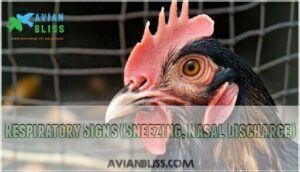
Recognizing respiratory issues in your feathered friends can mean the difference between early intervention and devastating flock losses.
When avian influenza strikes, respiratory symptoms often appear first, serving as vital warning signs for vigilant bird owners.
Watch for these key respiratory indicators:
- Sneezing fits that occur repeatedly throughout the day
- Nasal discharge ranging from clear to blood-tinged secretions
- Avian cough accompanied by wheezing sounds during breathing
- Bird wheezing that worsens with physical activity or stress
- Difficulty breathing with open-mouth respiration patterns
These bird flu symptoms can affect up to 80% of your flock during active outbreaks, making early detection essential for containment efforts.
Understanding avian flu risks is critical to protecting your birds from this highly contagious disease.
Ocular Symptoms (Conjunctivitis, Ocular Discharge)
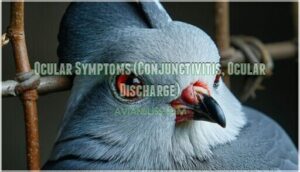
Your bird’s eyes tell a revealing story when avian influenza strikes.
Eye infections become readily apparent as conjunctivitis develops, causing visible redness and swelling around avian eyes.
Pink eye symptoms mirror those you’d recognize in humans, while ocular discharge ranges from clear to thick, cloudy secretions.
Bird vision may become impaired as ocular symptoms progress alongside respiratory symptoms during avian influenza outbreaks.
Gastrointestinal and Neurological Symptoms
When your feathered friend starts experiencing digestive distress, you’re witnessing Avian Influenza’s sneaky attack on multiple body systems.
Abdominal pain and gastro issues often accompany respiratory symptoms, creating what looks like stomach flu in birds.
Watch for neurological signs including head tilting, tremors, or coordination problems – these indicate the Influenza A virus has potentially caused brain infection, requiring immediate veterinary attention.
Sudden Death Without Warning Signs
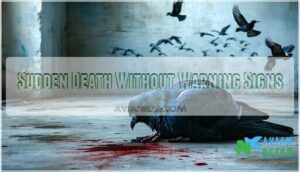
With highly pathogenic strains, avian collapse can strike like lightning—birds appear healthy one moment, then succumb within hours.
Sudden death often becomes the first and only warning sign you’ll observe, making early detection nearly impossible through clinical observation alone.
- Mortality rates can reach 90-100% in affected flocks within 48 hours
- Bird autopsy reveals severe internal hemorrhaging and organ failure
- Avian influenza diagnosis requires laboratory confirmation since warning signs are absent
How Avian Flu Spreads Among Birds
Understanding how avian flu spreads between birds is essential for protecting your flock from this highly contagious virus.
The transmission occurs primarily through infected birds shedding the virus in their feces and respiratory secretions, which then contaminate the environment and spread to healthy birds through direct contact or shared resources, involving complete concepts of virus shedding and environmental contamination, and the key factor of infected birds.
Transmission Through Feces and Secretions

Infected birds shed virus through feces and respiratory secretions, creating a contamination nightmare for poultry owners.
Viral shedding occurs before symptoms appear, making early detection challenging. Fecal transmission spreads rapidly through shared water sources, while respiratory tract infections release airborne particles.
Environmental contamination persists on surfaces for days. Implementing strict biosecurity measures prevents this silent spread of avian influenza throughout your flock.
Understanding avian flu prevention is essential to protecting your birds from infection, and is a key part of avian flu prevention methods.
Role of Wild Birds and Migration

Migration patterns transform wild reservoirs into global avian vectors, spreading bird flu across continents.
Waterfowl, raptors, and shorebirds carry avian influenza along major flight routes without showing symptoms.
These bird carriers can travel thousands of miles, introducing new strains to domestic flocks, which helps in understanding wild birds’ role to predict outbreaks during peak migration seasons.
The spread of avian flu is largely facilitated by avian superhighways, which enable the virus to reach new regions quickly, following the major flight routes and using wild reservoirs.
Environmental Contamination and Flock Outbreaks

Once environmental exposure occurs through contaminated surfaces, avian influenza spreads rapidly throughout your flock.
Infected birds shed virus via respiratory secretions and feces, creating widespread soil contamination and water pollution that threatens neighboring flocks.
Critical contamination pathways include:
- Airborne transmission from respiratory droplets during close contact
- Flock management equipment sharing contaminated tools between coops
- Waste disposal improper handling of infected bird droppings
- Water sources shared drinking systems spreading bird flu transmission
- Soil contamination from infected feces remaining viable for weeks
Complications and Risks for Bird Populations

Beyond the immediate health concerns for individual birds, avian flu outbreaks can devastate entire populations and create far-reaching consequences you mightn’t expect.
The virus doesn’t just affect sick birds—it threatens economic stability, poses zoonotic risks to humans, and impacts wildlife conservation efforts differently across species.
Mortality Rates and Economic Impact
When bird flu strikes your flock, you’re looking at devastating financial consequences.
Highly pathogenic avian influenza can wipe out entire operations, with mortality rates reaching 100% in affected poultry.
The economic loss extends beyond your farm—wholesale prices spike up to 18% during outbreaks.
Government compensation helps, but many farmers face unrecoverable revenue losses totaling billions annually across the industry.
The impact of climate change on bird populations, including climate change effects, further exacerbates the vulnerability of bird populations to diseases like avian flu.
Zoonotic Potential and Human Cases
Though rare, avian influenza poses zoonotic risks you shouldn’t ignore.
Case surveillance reveals concerning patterns in animal-to-human transmission events.
Key zoonotic disease concerns include:
- Human transmission occurs through direct contact with infected birds
- Virus mutation can increase pandemic potential over time
- Infection control requires strict biosecurity measures around flocks
- Public health monitoring tracks each human case globally
- Human-to-human transmission remains extremely limited but monitored
Bird flu surveillance systems detect these crossover events early.
Impact on Wild Vs Domestic Birds
Wild birds serve as natural reservoirs for avian influenza, carrying viruses across continents through migration patterns without showing symptoms.
Domestic flocks face higher mortality rates when exposed, as they lack natural immunity.
Wildlife surveillance reveals that waterfowl and shorebirds spread H5N1 through their droppings along flyways.
Your backyard chickens can’t escape like their wild counterparts, making domestic flock management and bird conservation efforts critically important for preventing devastating outbreaks.
Prevention and Monitoring in Bird Flocks

You play a critical role in preventing avian flu by implementing strict biosecurity protocols and monitoring flock health daily.
Don’t let a single sneeze go unnoticed—early detection and rapid response are essential for minimizing disease spread and protecting both birds and humans, which is crucial for preventing avian flu.
Biosecurity Measures and Safe Handling
Implementing robust biosecurity protocols forms your first line of defense against avian influenza transmission.
You’ll need Personal Protective Equipment including masks, gloves, and dedicated footwear when handling birds.
Establish strict Farm Hygiene practices by disinfecting equipment between uses and maintaining separate tools for each flock.
Control Animal Handling procedures by limiting visitor access and quarantining new birds.
Proper Waste Management prevents environmental contamination—dispose of bedding and droppings safely away from healthy flocks.
Using proper bird mask protection is essential in preventing the spread of avian flu.
Surveillance and Early Detection Strategies
You’ll want to monitor your flock using Enhanced Testing protocols that detect Avian Influenza before symptoms appear.
Rapid Response systems alert you within hours of potential Bird Flu exposure through real-time Virus Tracking.
Public Monitoring networks share Outbreak Alerts across regions, enabling Early Detection through coordinated Surveillance efforts that protect entire communities from widespread infections.
These efforts are essential for understanding bird population trends.
Proper Disposal and Cleaning Practices
Proper carcass disposal and disinfecting surfaces form the cornerstone of effective biosecurity protocols against avian influenza.
When bird flu strikes your flock, immediate waste management prevents viral spread to healthy birds.
Follow these critical PPE usage and disposal steps:
- Double-bag infected carcasses in leak-proof containers before removal
- Apply EPA-approved disinfectants to all contaminated surfaces and equipment
- Dispose of bedding and feed from affected areas as infectious waste
- Sanitize protective gear thoroughly after each use in quarantine zones
These poultry disease prevention measures stop the bird flu virus dead in its tracks.
Consider using specialized poultry waste bags for safe handling.
Role of Vaccination and Veterinary Care
Veterinary protocols form your strongest defense against avian influenza outbreaks. Regular health assessments by qualified avian veterinarians enable early detection and treatment options.
Vaccine efficacy varies by strain, but preventative care through biosecurity integration creates thorough protection for your flock’s bird health. Avian veterinarians can administer preventative flu shots.
| Vaccination Strategy | Veterinary Protocol |
|---|---|
| Pre-exposure prophylaxis | Quarterly health screenings |
| Strain-specific vaccines | Emergency response plans |
| Booster scheduling | Diagnostic testing protocols |
| Efficacy monitoring | Treatment documentation |
Professional avian veterinary care guarantees proper vaccine administration and monitors your birds’ immune response to potential avian flu treatment interventions.
Frequently Asked Questions (FAQs)
How long can a bird live with avian flu?
Birds won’t survive long with highly pathogenic avian flu—death often occurs within 48 hours.
They can cause death in 90% to 100% of infected chickens in as little as 48 hours.
However, birds that contract a low pathogenic strain of the bird flu will recover within a couple weeks.
Can birds recover from avian flu infections?
Approximately 90% of infected birds don’t survive highly pathogenic avian influenza strains.
However, you’ll find that some birds can recover from low-pathogenic variants with supportive care, though recovery rates remain limited and virus shedding continues.
How long does avian flu survive in environment?
Environmental survival duration depends on temperature and moisture conditions.
You’ll find the virus persists longer in cool, wet environments – potentially weeks in water or contaminated surfaces, but dies quickly in hot, dry conditions within hours to days.
Do all bird species show same symptoms?
Though you’d expect uniform reactions, different bird species display varying avian influenza symptoms.
Waterfowl might carry the virus asymptomatically, while poultry typically show severe respiratory distress, conjunctivitis, and sudden death.
Species-specific immune responses create this diagnostic puzzle.
Can backyard chickens get avian flu naturally?
Yes, your backyard chickens can naturally contract avian flu through contact with infected wild birds, contaminated water sources, or virus-laden droppings.
The highly pathogenic strain spreads easily among domestic poultry flocks, which is a critical aspect of domestic poultry health.
What age birds are most vulnerable?
Like young saplings in a storm, juvenile birds face heightened vulnerability to avian influenza.
Young chicks (4-6 weeks old) show particularly high mortality rates, making them the most susceptible age group for severe disease outcomes.
Conclusion
Ironically, while we’ve spent considerable time identifying avian flu symptoms birds display, the most effective approach remains preventing exposure entirely.
You can’t treat what you don’t catch early—respiratory distress, conjunctivitis, and neurological signs demand immediate veterinary attention.
Environmental contamination persists weeks after infected birds pass through, making vigilant monitoring your strongest defense.
Remember: early detection saves flocks, but prevention saves headaches.
Watch closely, act quickly, and don’t second-guess suspicious symptoms in your birds.
- https://www.merckvetmanual.com/poultry/avian-influenza-in-poultry-and-wild-birds/avian-influenza-in-poultry-and-wild-birds
- https://www.aphis.usda.gov/livestock-poultry-disease/avian/avian-influenza
- https://extension.umn.edu/poultry-health/avian-influenza-basics-noncommercial-poultry-flock-owners
- https://www.sciencedirect.com/science/article/pii/S016622362300190X
- https://www.sciencenews.org/article/bird-mammal-brain-outbreak-influenza