This site is supported by our readers. We may earn a commission, at no cost to you, if you purchase through links.
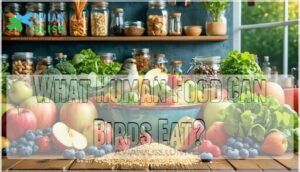 You can safely share many kitchen foods with birds, including fresh fruits like berries, bananas, and citrus (seeds removed), cooked grains such as brown rice and plain oatmeal, and vegetables like carrots and leafy greens.
Birds also enjoy small amounts of hard cheese, cooked eggs, and unsalted nuts.
However, you must avoid toxic foods like avocado, chocolate, onions, and anything with salt or sugar.
Understanding what human food can birds eat requires knowing their unique digestive needs and portion requirements. The trick isn’t just knowing which foods are safe, but how to prepare and serve them properly.
Table Of Contents
Key Takeaways
- You can safely share many kitchen foods with birds – including fresh fruits like berries and bananas (seeds removed), cooked grains such as brown rice and oatmeal, vegetables like carrots and leafy greens, plus small amounts of hard cheese, cooked eggs, and unsalted nuts.
- You must avoid toxic foods that can kill birds – never feed them avocado, chocolate, onions, garlic, or anything with salt, sugar, or artificial additives, as these can cause serious poisoning, organ failure, or death even in small amounts.
- You’ll need to follow proper portion control and preparation – limit human food treats to 10% of their total diet, remove all seeds and pits from fruits, cook grains plain without seasoning, and always serve food at room temperature.
- You should introduce new foods gradually and watch for reactions – start with tiny portions of one new food at a time, monitor for signs like lethargy, digestive issues, or behavioral changes, and remove any uneaten food within two hours to prevent bacterial growth.
Why Some Human Foods Are Safe for Birds
You might wonder if sharing your snack with your feathered friend is safe, and the good news is that many human foods can actually benefit birds when chosen carefully.
Understanding which kitchen scraps are bird-friendly requires knowing how their unique digestive systems process different nutrients compared to ours, which is a key factor in determining what foods are safe.
Nutritional Needs of Birds
Unlike humans who can handle processed foods, your feathered friends need specific nutrients that match their natural diet.
Bird nutrition revolves around three essential components:
- Protein sources for muscle development and feather growth
- Vitamin needs including A, D, and B-complex for immune function
- Seed benefits providing healthy fats and carbohydrates for energy
Understanding bird dietary needs helps you choose healthy bird treats from your kitchen that support their well-being.
Differences Between Bird and Human Digestion
Bird anatomy creates unique digestive challenges compared to humans.
Your feathered friends lack teeth, so they can’t chew food like you do.
Their faster metabolic rates require quick nutrient absorption through specialized digestive enzymes.
Birds’ shorter digestive tracts process food rapidly, making gut health essential.
Understanding these differences helps you choose birdsafe human foods while avoiding toxic foods for birds.
Things to Keep in Mind
Remember that food safety and bird nutrition go hand-in-hand when sharing kitchen scraps.
While many human foods meet birds’ dietary needs, you must follow feeding guidelines carefully.
Toxic foods for birds can cause serious harm, so research safe bird food options thoroughly.
Always avoid feeding birds anything questionable to prevent accidental poisoning, and be aware of toxic foods.
What Human Food Can Birds Eat?
You’ll be surprised to learn that many kitchen staples can safely become bird treats when prepared properly.
From fresh fruits and vegetables to plain grains and unsalted nuts, your pantry likely holds several bird-friendly options that can supplement their diet in moderation.
Safe Fruits for Birds
Fresh fruits offer excellent nutrition for your feathered friends when prepared properly.
Many common kitchen fruits provide essential vitamins and antioxidants that support bird health. Always remove seeds and pits before serving, as these can be toxic.
- Berry benefits – Blueberries, strawberries, and raspberries pack antioxidants
- Citrus fruits – Oranges and tangerines (peeled) provide vitamin C
- Tropical options – Bananas, mangos, and pineapple offer natural sweetness
Bird-Friendly Vegetables
Dark leafy greens like spinach and kale pack vitamin A for strong immunity and bright feathers.
Cruciferous vegetables such as broccoli and cauliflower offer cancer-fighting nutrients. Root vegetables like carrots provide beta-carotene for healthy plumage.
Steam or chop vegetables finely for easy digestion. Always wash thoroughly and serve plain without seasoning for best bird nutrition and veggie safety.
Understanding bird friendly options is vital for creating a balanced diet for birds.
Whole Grains and Bread Options
Cooked grains provide excellent nutrition for birds when prepared properly.
Brown rice, quinoa, and barley should be cooked plain without salt or seasonings.
Whole wheat bread works in tiny portions, but avoid processed varieties with additives.
Oatmeal and unsweetened cereal like plain Cheerios make safe treats.
Always serve cooked grains at room temperature and remove uneaten portions within two hours, ensuring the grains are safe.
Safe Nuts and Seeds
Nuts and seeds pack healthy fats and proteins that birds crave.
You’ll want to offer these treats unsalted and unroasted for maximum almond safety and walnut benefits.
Proper seed storage keeps these birdsafe nuts fresh and nutritious.
- Sunflower seeds scattered like tiny golden coins across your palm
- Pumpkin seeds gleaming orange-white after Halloween carving sessions
- Raw almonds split into perfect halves revealing creamy white centers
- Crushed walnuts releasing their rich, earthy aroma into kitchen air
- Peanuts still wearing their papery brown shells like tiny wrapped gifts
Occasional Proteins Birds Can Eat
When you want to offer protein for birds, cooked chicken and boiled eggs top the list.
These protein sources support feather growth during molting.
Plain fish protein like salmon provides omega-3s, while lean beef works in tiny portions.
Mealworms make excellent treats.
Always cook meat for birds thoroughly, removing bones and seasoning completely, to provide a safe and healthy source of protein.
Grains and Bread: Which Are Safe?
You’ll find that grains and bread can be safe treats for your feathered friends when you choose the right types and serve them properly.
The key is selecting whole grain options and avoiding processed foods loaded with salt, sugar, or preservatives that can harm birds.
Good Grain Options for Birds
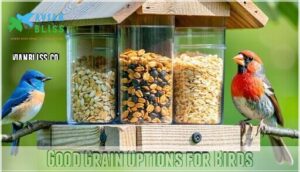
Grains pack serious nutritional punch for your feathered friends when you pick the right ones. Brown rice stands out as a top choice, offering complex carbohydrates that fuel active birds throughout their day.
- Brown Rice – Cook plain without salt or seasonings for easy digestion
- Whole Grain Cereals – Choose unsweetened options like plain Cheerios or similar O-shaped varieties
- Oatmeal – Serve cooked and cooled, avoiding flavored packets with sugar or artificial additives
- Quinoa – This protein-rich grain provides essential amino acids when thoroughly cooked
- Barley – Offer cooked barley in small portions as an occasional nutrient-dense treat
Bread Types and Portion Control
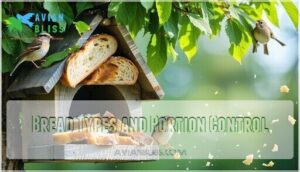
Whole grain bread offers better bird nutrition than white bread, but portion control remains key for bread safety.
Stale bread works well since it’s easier to break into bird-sized pieces. These birdsafe human foods from your kitchen scraps should follow your bird feeding guide‘s recommendations.
To fully appreciate the risks of nutrient deficiencies when feeding birds bread is vital for their health.
| Bread Type | Safety Level | Serving Size |
|---|---|---|
| Whole wheat | Best choice | Thumbnail-sized pieces |
| Multigrain | Good option | Small crumbs only |
| White bread | Use sparingly | Tiny portions |
Remember that bread shouldn’t exceed 10% of any bird’s diet, regardless of type, and it’s crucial to consider bird feeding guide recommendations for a balanced diet, ensuring the birds’ overall health and well-being.
Cooking and Serving Tips
Before cooking grains for your feathered friend, always rinse thoroughly to remove dust and debris. Cook plain rice, oats, or quinoa without salt, butter, or seasonings that could harm birds.
Let cooked grains cool completely before serving. Cut bread into small, bite-sized pieces to prevent choking.
Remove uneaten portions within two hours to maintain food safety and prevent bacterial growth.
Additionally, providing a balanced diet that includes a proper bird seed mix is essential for the overall health of birds, and to ensure they receive all necessary nutrients for a happy life with proper care.
Can Birds Eat Dairy and Eggs?

You might wonder whether birds can safely consume dairy products and eggs from your kitchen.
While birds have specific dietary needs that differ from humans, some dairy and protein options can be offered safely in small amounts.
Safe Dairy Products in Moderation
Most birds can’t digest lactose well, but small amounts of certain dairy products won’t hurt them.
Small amounts of dairy won’t harm birds, but their lactose intolerance means moderation is key
Hard cheeses like cheddar or Swiss contain minimal lactose and make safer occasional treats.
Plain yogurt with live cultures offers digestive benefits when given sparingly.
Skip milk, cream, and flavored dairy entirely—these dairy alternatives protect your bird’s sensitive digestive system.
Eggs and Other Animal Proteins
Hard-boiled eggs provide excellent protein source variety and calcium for your feathered friends.
You’ll find eggs offer complete amino acids that support healthy feathers and muscle development.
Cook eggs thoroughly using safe preparation methods – never serve raw eggs due to salmonella risk.
Remove shells completely before serving small portions, and consider your bird species needs when determining quantity, as moderation prevents digestive upset from rich protein.
Foods to Avoid in This Category
Several dairy and protein sources pose serious health risks you shouldn’t ignore. Raw or unpasteurized dairy products can harbor dangerous bacteria, while processed meats contain harmful preservatives and excessive sodium levels that damage bird kidneys.
One should also avoid feeding birds avocado, as it contains persin, a toxin that can cause heart failure.
Never offer these risky options:
- Soft cheeses – mold and bacteria create digestive nightmares
- Flavored yogurts – sugar overload disrupts healthy gut bacteria
- Deli meats – salt and nitrates poison small bird systems
Stick with plain, cooked options instead.
Feeding Wild Birds: What’s Okay to Share?
When you’re watching birds in your backyard, you might wonder if that leftover toast or fruit scraps could make a good treat for your feathered visitors.
Sharing certain human foods with wild birds can be safe and nutritious, but you’ll need to know which foods help and which ones harm before tossing anything outside.
Safe Human Foods for Wild Birds
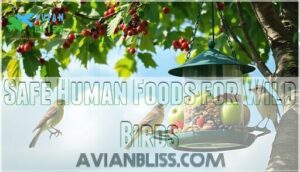
You can safely offer wild birds many kitchen scraps that mirror their natural foraging habits.
Fresh fruits like apples and berries, plain cooked grains, unsalted nuts, and chopped vegetables work well.
These birdsafe fruits and birdsafe vegetables support backyard birdwatching while providing seasonal foods.
Always make certain nuts and seeds for birds remain unsalted and fresh.
Tips for Outdoor Feeding
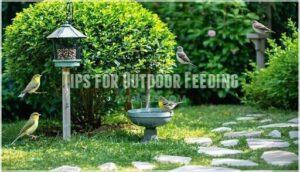
Strategic feeder placement transforms your backyard into a bird-friendly haven while ensuring their safety and health. Position feeders away from windows and provide multiple escape routes for quick exits. Consider using a sturdy support system for your feeders.
- Feeder Placement: Mount feeders 3-10 feet from cover like shrubs for predator protection, but far enough to prevent ambush attacks
- Water Sources: Place shallow dishes near feeding areas and refresh daily to prevent bacterial growth and maintain hygiene practices
- Seasonal Adjustments: Clean feeders weekly with diluted bleach solution, especially during wet months when mold spreads rapidly through bird food
Foods to Never Feed Wild Birds
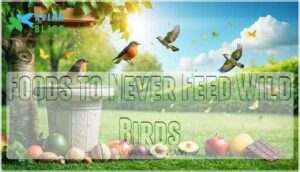
While proper feeding helps wild birds thrive, certain toxic ingredients can be deadly.
Never offer chocolate, avocado, or onions – these contain compounds that cause serious poisoning. Processed foods, salty snacks, and sugary treats damage their delicate systems.
Raw beans pose choking and digestive risks. Bird food safety means avoiding these toxic foods birds can’t process, protecting our feathered friends from harm.
How to Introduce Human Foods to Birds
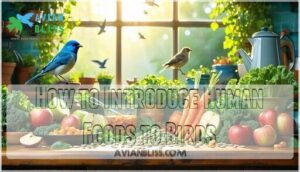
When you’re ready to share human foods with your bird, start slowly and watch carefully for any negative reactions.
Proper portion control and gradual introduction help guarantee your feathered friend enjoys these treats safely without digestive upset.
Tips for Safe Feeding
Introducing human food for birds requires careful attention to bird food safety and gradual introduction practices.
Start with tiny portions to monitor reactions before expanding their diet.
Follow these essential bird feeding tips:
- Food Prep: Wash, chop, and remove seeds from fruits
- Portion Control: Offer tablespoon-sized servings maximum
- Hygiene Practices: Remove uneaten food within two hours
Always introduce one birdsafe food at a time when feeding wild birds.
Portion Sizes by Bird Type
Small birds like budgies need 1-2 teaspoons of human food daily, while medium birds such as cockatiels can handle 1-2 tablespoons.
Large birds including African greys require 2-4 tablespoons per day.
These daily amounts should represent only 10% of their total diet, ensuring proper bird portion control alongside their regular bird species diet, which is crucial for large birds.
Monitoring for Reactions
Watch your bird closely after introducing new foods.
Changes in eating habits, energy levels, or social interaction can signal problems. Monitor these key signs:
- Allergy Symptoms – sneezing, wheezing, or swollen eyes
- Digestive Issues – vomiting, diarrhea, or loss of appetite
- Behavioral Changes – lethargy, aggression, or hiding
- Stool Consistency – unusual color, texture, or frequency
Document bird food reactions and schedule vet consultation if concerning symptoms persist, ensuring proper bird food adjustments for individual needs.
Hygiene and Food Safety
Clean surfaces prevent bacteria from reaching your feathered friends.
Always wash produce thoroughly and remove any spoilage before serving.
Store bird food separately from human food to avoid cross-contamination, and clean feeders regularly with hot, soapy water.
To further protect your birds, implement regular cage cleaning routines.
| Safety Practice | Action Required | Frequency |
|---|---|---|
| Wash Produce | Rinse fruits and vegetables under cool water | Before each feeding |
| Remove Spoilage | Check for mold, soft spots, or discoloration | Every time you prepare food |
| Safe Storage | Keep bird foods in sealed containers away from human food | Ongoing |
| Avoid Cross-Contamination | Use separate cutting boards and utensils for bird food preparation | Every preparation session |
| Clean Feeders | Scrub with hot soapy water and rinse thoroughly | Weekly or after spoiled food |
The key to maintaining a healthy environment for your birds is to follow these safety practices and ensure clean surfaces and safe storage.
By doing so, you can prevent the spread of bacteria and keep your feathered friends healthy, which is crucial for their well-being and requires regular cleaning.
Foods That Are Toxic to Birds
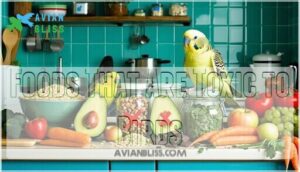
While many human foods are safe for birds, some common kitchen staples can be deadly to your feathered friends.
Understanding which foods to avoid completely can save your bird’s life and prevent serious health emergencies.
Common Toxic Foods to Avoid
While introducing new foods can be rewarding, certain human foods pose serious toxic foods risks to birds.
Understanding harmful bird foods helps you avoid dangerous mistakes that could cost your feathered friend’s life.
- Avocado toxicity affects all bird species – the persin compound causes heart failure and respiratory distress within 24 hours
- Chocolate dangers stem from theobromine and caffeine, leading to seizures, heart problems, and death even in small amounts
- Onion/Garlic risks include hemolytic anemia from sulfur compounds that rupture red blood cells and damage the liver
Salty snacks, raw beans, and other bird food toxins require complete avoidance for bird safety.
Moldy bread is also dangerous because of potential toxin exposure.
Signs of Food Toxicity in Birds
Recognizing bird food toxicity symptoms can save your feathered friend’s life.
Quick action after poisoning can mean the difference between life and death for your bird.
Birds experiencing poisoning may show lethargy, vomiting, seizures, feather changes, and appetite loss within hours of consuming harmful bird foods.
| Physical Symptoms | Behavioral Changes | Severe Warning Signs |
|---|---|---|
| Vomiting or regurgitation | Lethargy and weakness | Seizures or tremors |
| Diarrhea or loose droppings | Loss of appetite | Difficulty breathing |
| Feather plucking or ruffling | Unusual quietness | Loss of coordination |
Bird dietary risks vary by toxin type.
Chocolate poisoning causes rapid heartbeat and hyperactivity before collapse.
Avocado toxicity leads to respiratory distress and fluid accumulation.
Salt poisoning triggers excessive thirst and neurological symptoms.
Toxic foods affect birds differently than humans due to their faster metabolism and smaller body size, making even tiny amounts potentially fatal.
What to Do in Case of Poisoning
If you suspect bird poisoning, contact an avian vet immediately.
Remove the toxic food source and identify what your bird consumed. Don’t induce vomiting unless specifically instructed.
Provide supportive care by keeping your bird warm, calm, and hydrated. Quick action saves lives when toxins threaten bird health, so never delay professional veterinary consultation for suspected poisoning cases, as it can be crucial for saving lives.
Frequently Asked Questions (FAQs)
Can a bird eat human food?
Surprisingly, birds can safely enjoy many human foods! You can share fruits like apples and berries, vegetables like carrots and spinach, plus cooked grains and unsalted nuts in moderation.
What can a bird eat?
Birds can safely eat various fruits like apples, berries, and melons (seeds removed), vegetables such as carrots, spinach, and broccoli, plus cooked grains, unsalted nuts, and plain proteins in moderation.
What do pet birds eat?
Pet birds thrive on specially formulated pellets as their primary diet.
You can supplement with fresh fruits like apples, berries, and melons, plus vegetables such as carrots, broccoli, and leafy greens in moderation.
Can birds eat fruit?
Yes, you can safely offer birds various fruits.
Remove seeds and pits first, as they’re toxic.
Apples, berries, melons, and grapes provide excellent nutrition and antioxidants that boost immune health naturally.
Can birds eat grains?
You can safely feed birds cooked grains like brown rice, oats, and quinoa. Whole wheat bread works in tiny amounts, but avoid processed varieties with salt or sugar added.
Do birds eat meat?
Feathered friends can enjoy protein-packed treats from your kitchen.
You’ll find cooked chicken, hard-boiled eggs, plain fish, and lean beef work wonderfully.
These protein sources support healthy feather development and energy when served unseasoned in small portions.
What human food is safe for birds?
You can safely offer birds fresh fruits like apples, bananas, and berries, plus vegetables such as carrots, broccoli, and leafy greens. Include cooked grains, unsalted nuts, and plain proteins sparingly.
Why put potatoes on a bird table?
Like Goldilocks testing porridge, you shouldn’t put potatoes on bird tables.
Raw potatoes contain solanine, which is toxic to birds.
Cooked potatoes without seasoning can be offered safely, but they’re not particularly nutritious for our feathered friends.
Can birds eat frozen foods safely?
Frozen foods can pose risks for birds.
You’ll need to thaw them completely and make certain they’re at room temperature before serving.
Frozen items can cause digestive issues and potentially harm their delicate systems.
How often should birds get human food?
You should offer human food treats to your bird no more than once or twice per week.
These treats shouldn’t exceed 10-15% of their total diet, keeping portions small and age-appropriate for ideal health.
Conclusion
Successfully sharing safe scraps strengthens your bond with feathered friends while supporting their health.
Remember that knowing what human food can birds eat means understanding proper preparation, portion control, and potential risks.
Start slowly with small amounts of bird-approved foods like fresh fruits, cooked grains, and vegetables.
Always research species-specific dietary needs, remove seeds from citrus fruits, and avoid toxic items completely.
Your careful attention to feeding guidelines guarantees happy, healthy birds who’ll appreciate these nutritious treats from your kitchen.