This site is supported by our readers. We may earn a commission, at no cost to you, if you purchase through links.
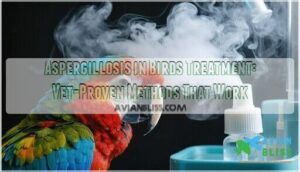 When aspergillosis in birds treatment becomes necessary, you’re facing a serious fungal infection that requires immediate veterinary intervention.
Voriconazole serves as the first-line antifungal medication, often delivered through nebulization for direct respiratory targeting. Your vet might prescribe itraconazole or combination therapies for resistant cases.
Treatment isn’t just about medication—you’ll need to eliminate mold sources, maintain humidity below 60%, and provide supportive care including nutritional support and stress reduction.
Recovery takes several months with careful monitoring for relapse. The key lies in catching it early and addressing both the infection and environmental factors that allowed it to flourish in the first place.
Table Of Contents
- Key Takeaways
- Key Features of Aspergillosis in Birds
- Diagnosing Aspergillosis in Avian Patients
- Effective Treatment Strategies for Birds
- Managing Challenges in Avian Aspergillosis Treatment
- Preventing Aspergillosis and Environmental Control
- Frequently Asked Questions (FAQs)
- Can aspergillosis be cured in birds?
- How to prevent aspergillosis in birds with home remedies?
- What is the best treatment for Aspergillus?
- How to diagnose aspergillosis in birds?
- What costs are involved in treating aspergillosis?
- Can aspergillosis be transmitted between different birds?
- How long do birds survive without treatment?
- Are there any natural remedies for aspergillosis?
- What emergency care should owners provide immediately?
- Conclusion
Key Takeaways
- Act fast with voriconazole nebulization – You’ll need immediate veterinary intervention using voriconazole as a first-line treatment, often delivered directly to the respiratory system through nebulization for maximum effectiveness.
- Eliminate environmental mold sources – You must control humidity below 60%, remove moldy bedding and feed immediately, and improve ventilation to prevent reinfection from fungal spores.
- Prepare for long-term treatment – You’re looking at several months of antifungal therapy with regular monitoring, as aspergillosis rarely cures completely and requires sustained management to prevent relapse.
- Combine medical and supportive care – You’ll need to provide nutritional support, stress reduction, and temperature control alongside antifungal medications to boost your bird’s immune system and maximize recovery chances.
Key Features of Aspergillosis in Birds
You’ll encounter aspergillosis most often in waterfowl, raptors, and poultry, where Aspergillus fumigatus creates life-threatening respiratory infections.
That can progress from acute respiratory distress to chronic, debilitating disease.
Understanding whether you’re dealing with acute exposure from moldy grain or chronic infection from prolonged spore inhalation will determine your treatment approach and prognosis expectations.
Common Aspergillus Species in Birds
You’ll encounter three primary Aspergillus species causing aspergillosis in birds: A. fumigatus, A. flavus, and A. niger.
These bird pathogens thrive in warm, moist environments like moldy grain and bedding.
Understanding fungus identification helps you recognize that A. fumigatus dominates avian mycology cases, while the others create opportunistic fungal infection in birds scenarios.
This fungal ecology knowledge guides your diagnostic approach for avian aspergillosis treatment decisions.
Bird Species Most at Risk
Waterfowl face the highest aspergillosis risk, particularly ducks and geese feeding on moldy agricultural waste.
Raptors like hawks and eagles show significant species vulnerability due to their hunting behavior near contaminated environments.
Gulls frequently develop avian aspergillosis from scavenging in landfills where fungal spores thrive.
Bird migration patterns expose multiple species to diverse fungal ecology across different regions, increasing infection rates.
Respiratory and Systemic Manifestations
Aspergillosis in birds manifests through distinct respiratory and systemic pathways that you’ll recognize during clinical examination.
Fungal pneumonia develops as Aspergillus spores colonize air sacs, creating characteristic granulomatous lesions.
Systemic infection occurs when organisms breach respiratory barriers, spreading hematogenously to multiple organ systems.
Key manifestations include:
- Respiratory failure from air sac obstruction and pulmonary consolidation
- Hepatic and splenic granulomas indicating systemic infection
- Neurological signs when fungal toxins cross the blood-brain barrier
- Ocular involvement presenting as mycotic keratitis in severe cases
Bird respiratory infection severity depends on spore load and host immunity.
Aspergillosis symptoms range from subtle dyspnea to acute respiratory distress, making early recognition essential for treatment success.
Acute Vs. Chronic Aspergillosis
You’ll notice dramatic differences between acute and chronic aspergillosis in birds regarding disease progression and treatment outcomes.
Acute aspergillosis develops rapidly when birds inhale massive fungal loads from moldy grain, causing severe bird mortality within days.
The overwhelming infection rate leaves little time for effective avian aspergillosis treatment.
Chronic aspergillosis progresses slowly through prolonged exposure to lower spore counts, creating debilitating bird respiratory infections that respond better to intervention despite challenging prognoses.
Understanding respiratory disease causes is essential for developing effective treatment plans for aspergillosis in birds.
Diagnosing Aspergillosis in Avian Patients
Diagnosing aspergillosis in your avian patient requires a systematic approach combining clinical observation with laboratory confirmation.
You’ll need to recognize the subtle respiratory signs early, then use imaging and tissue sampling to confirm what you suspect, which involves a combination of clinical observation and laboratory confirmation.
Clinical Signs and Physical Examination
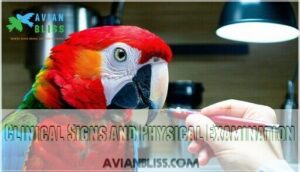
Spotting aspergillosis starts with recognizing subtle changes in your bird’s daily routine and physical condition. Respiratory Issues often manifest first, making careful observation essential for early detection.
Key clinical signs to monitor include:
- Respiratory distress – labored breathing, open-mouth breathing, or tail bobbing
- Behavioral changes – decreased appetite, lethargy, or reduced vocalization
- Physical Symptoms – weight loss, poor feather condition, or nasal discharge
- Neurological signs – head tilting, tremors, or loss of coordination in severe cases
During examination, you’ll assess respiratory rate, body condition, and overall demeanor to guide appropriate Diagnostic Tests for suspected avian disease treatment.
Diagnostic Imaging Techniques
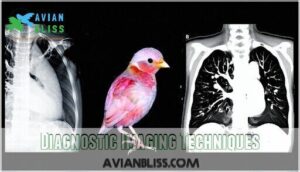
X-rays reveal cloudy air sacs and lung lesions in birds with aspergillosis in birds.
CT scans provide detailed cross-sectional views of respiratory tract abnormalities.
Ultrasound imaging helps detect fluid accumulation and organ changes.
These diagnostic imaging modalities guide treatment decisions by revealing infection severity and location in respiratory diseases in birds.
Histopathology and Fungal Culture

Definitive diagnosis requires tissue analysis through histopathology and fungal culture methods.
You’ll observe branching septate hyphae in tissue sections using microscopy techniques.
Laboratory testing involves fungal isolation from affected organs, confirming aspergillosis in birds.
Culture methods on Sabouraud’s dextrose agar grow characteristic colonies within days, enabling species identification for targeted bird fungus infection treatment protocols, which is crucial for effective treatment protocols.
Effective Treatment Strategies for Birds
When treating aspergillosis in birds, you’ll need a thorough approach that combines targeted antifungal therapy with supportive care to maximize your patient’s chances of recovery.
Success depends on early intervention, proper drug selection, and addressing both the infection and underlying predisposing factors that allowed the fungus to take hold, which requires a comprehensive understanding of the disease and its treatment.
Antifungal Medications and Protocols
Once you’ve confirmed aspergillosis diagnosis, drug selection becomes your next critical step.
Voriconazole stands as your first-line choice, offering superior efficacy with 0-6% resistance rates at 12-18 mg/kg twice daily.
Itraconazole remains widely used at 5-10 mg/kg daily, though resistance monitoring shows concerning 21% failure rates.
Combination therapies using voriconazole plus echinocandins target severe cases effectively.
Nebulization therapy with amphotericin B provides localized treatment for respiratory involvement.
Dosage strategies require species-specific adjustments – African greys need reduced itraconazole doses due to toxicity risks.
In some cases, therapeutic drug monitoring may be required to optimize efficacy and minimize toxicity.
Routes of Drug Administration
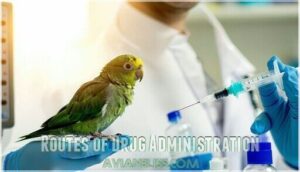
You’ll administer antifungal medications through several routes, each offering distinct advantages for aspergillus treatment.
Nebulization therapy delivers medications directly to respiratory tissues, while oral medications provide systemic coverage.
Parenteral options guarantee reliable absorption in severely ill birds, and topical application works for localized infections.
Topical application and granuloma injection target specific lesions, with the latter targeting specific lesions.
Your veterinarian will select the best route based on infection location and bird health treatment needs, considering the advantages of each method for effective treatment.
Supportive Care and Stress Reduction
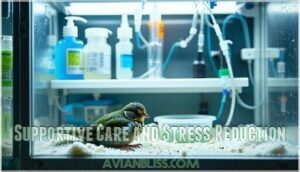
While administering antifungal medications addresses the pathogen directly, supportive care forms the foundation of successful aspergillosis management.
Your bird’s compromised immune system requires thorough support to combat this opportunistic infection effectively.
- Environmental Enrichment: Maintain ideal humidity (40-60%) and provide clean, dust-free housing to prevent additional respiratory irritation
- Nutritional Support: Offer high-quality, easily digestible foods rich in vitamin A to boost immune function and tissue repair
- Minimize Handling: Reduce stress-induced immunosuppression by limiting unnecessary procedures and maintaining quiet surroundings
- Temperature Control: Provide supplemental heat (80-85°F) to reduce metabolic demands during recovery from avian diseases
Surgical and Endoscopic Interventions
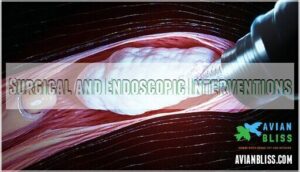
When medical therapy alone can’t break through stubborn infections, surgical resection and bronchoscopy offer targeted solutions.
These interventions excel at granuloma removal and lesion debridement when fungal masses obstruct airways.
| Intervention Type | Primary Application |
|---|---|
| Endoscopic debridement | Air sac granuloma removal |
| Sinus lavage | Foreign body extraction |
| Air sac cannulation | Respiratory distress relief |
| Bronchoscopy | Tracheal lesion access |
| Surgical resection | Obstructive mass removal |
Success rates reach 70-80% in companion birds when combining mechanical removal with systemic antifungals, making these procedures valuable weapons against aspergillosis.
In some cases, azole drugs may be used systemically to combat the infection.
Duration and Monitoring of Therapy
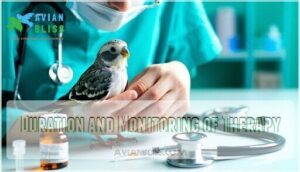
Treatment length for bird aspergillosis typically extends several months, requiring careful monitoring to guarantee success.
You’ll need to watch for relapse signs while checking for resistance development and potential toxicity from antifungal drugs. Poor ventilation consequences can increase fungal exposure, so monitoring the bird’s environment is also key.
Here’s your essential monitoring protocol:
- Weekly blood work – Monitor liver function and kidney values during treatment
- Monthly radiographs – Track lesion resolution and detect new granulomas
- Behavioral assessments – Watch for appetite changes, respiratory distress, or lethargy
- Weight monitoring – Document consistent weight gain as treatment progresses
- Fungal culture testing – Confirm clearance before discontinuing bird medication
Managing Challenges in Avian Aspergillosis Treatment
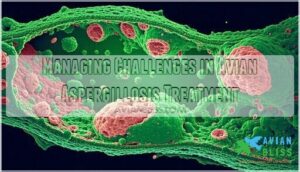
While antifungal therapy can save your bird’s life, treatment failures occur frequently due to drug-resistant Aspergillus strains and challenging physiological factors.
You’ll face significant obstacles including azole resistance rates up to 26% globally, poor prognosis in acute cases, and the constant risk of reinfection if environmental sources aren’t eliminated, which is a critical factor in reinfection.
Drug Resistance and Azole-Resistant Strains
Azole resistance poses a growing threat you can’t ignore, with resistance rates climbing to nearly 10% in recent decades.
Agricultural fungicides create resistant strains that birds encounter in crop fields, developing cross-resistance to medical antifungals.
PCR testing for cyp51A mutations helps detect resistance early, while combination therapies replace failed azole treatments in your patients.
Prognosis and Factors Affecting Outcomes
Several severity factors determine your bird’s aspergillosis prognosis.
Immune status, species variation, and chronicity impact treatment response substantially.
Young birds face 90% mortality rates, while early diagnosis reduces death risk by 30%.
Raptors experience worse outcomes than parrots in bird aspergillosis cure attempts.
Bird health treatment success depends on disease stage – advanced cases show only 25% recovery rates.
Implementing effective environmental management is vital for reducing spore load and improving treatment response with early diagnosis.
Reinfection and Chronic Cases
Reinfection remains a significant challenge because you’re often battling persistent sources in the bird’s environment alongside a compromised immune response.
Understanding recurrence factors helps you develop effective long-term management strategies that prioritize your bird’s quality of life.
Chronic aspergillosis reinfection risks include:
- Hidden fungal reservoirs lurking in ventilation systems
- Weakened immunity leaving your bird defenseless
- Incomplete treatment allowing spores to resurface
- Environmental contamination creating endless exposure cycles
- Stress-induced relapses undermining recovery progress
Treatment Limitations in Poultry and Wild Birds
While chronic cases offer some hope for recovery, poultry and wild birds face significant treatment barriers.
Commercial poultry operations can’t justify expensive antifungal drugs with Limited Efficacy against established aspergillosis infections. Drug Availability remains restricted, and Route Challenges make medication delivery impractical in large flocks.
| Treatment Barrier | Impact on Management |
|---|---|
| Economic Factors | Cost-prohibitive for commercial operations |
| Species Variation | Different susceptibility patterns |
| Drug Availability | Limited antifungal options approved |
| Route Challenges | Difficult mass medication delivery |
| Limited Efficacy | Poor outcomes in advanced cases |
Wild birds present unique challenges since capturing affected individuals for treatment proves nearly impossible.
Most fungal infection treatment focuses on prevention rather than cure, making environmental management your primary tool against this devastating bird disease cure limitation.
Preventing Aspergillosis and Environmental Control
Prevention starts with controlling the fungal environment that creates aspergillosis in the first place.
You’ll need to address both immediate habitat conditions and broader environmental factors that allow Aspergillus spores to flourish and spread resistance.
Reducing Mold Exposure in Bird Habitats
Environmental mastery starts with controlling moisture levels below 60% using dehumidifiers and enhanced airflow systems.
Implement HEPA Air Purification to remove 99% of airborne spores while establishing strict Cleaning Protocols for daily cage maintenance.
Proper Food Storage prevents moldy grain contamination, while Water Sanitation through biweekly sterilization eliminates biofilm buildup.
Consider habitat dehumidifier options to maintain ideal conditions.
Replace organic bedding weekly and immediately remove contaminated materials like agricultural waste to achieve effective mold prevention through thorough Habitat Ventilation strategies.
Husbandry and Biosecurity Measures
Proper husbandry protocols form your strongest defense against aspergillosis outbreaks in avian populations.
You’ll need consistent cleanliness protocols and strategic waste disposal systems to eliminate fungal growth opportunities.
- Ventilation strategies: Install exhaust fans and maintain airflow rates above 6 air changes per hour
- Feed management: Store grain in moisture-proof containers below 14% humidity levels
- Quarantine procedures: Isolate new birds for 30-45 days with separate air systems
- Contaminated materials: Remove wet bedding within 24 hours and avoid crop waste exposure
Environmental Surveillance and One Health Approach
When outbreaks strike, integrated environmental surveillance transforms bird health monitoring through real-time spore detection and resistance tracking.
Smart sensors monitor fungicide contamination while avian vectors spread resistant strains globally.
One Health collaboration between veterinary and public health sectors reduces aspergillosis by 28% through coordinated surveillance.
Global warming amplifies these challenges, making proactive environmental monitoring essential for protecting both wildlife health and preventing zoonotic diseases from fungal infections in birds, which is critical for overall wildlife health.
Role of Birds in Fungal Resistance Spread
Migratory birds serve as living highways for Aspergillus resistance, carrying azole-resistant strains across continents through their natural flight patterns.
These avian dispersal networks create environmental reservoirs that threaten both agricultural systems and bird health worldwide.
When infected birds move between contaminated farm fields and pristine habitats, they’re basically spreading fungal disease birds can’t escape.
Birds can be indicators of habitat quality, reflecting the health of the ecosystems they inhabit.
This agricultural impact means resistance vectors now follow migratory patterns, turning bird mortality into a global concern for Aspergillus management.
Frequently Asked Questions (FAQs)
Can aspergillosis be cured in birds?
Aspergillosis can be treated in birds, but it’s rarely cured completely.
You’ll need prolonged antifungal therapy lasting months, with success depending on early detection, infection severity, and your bird’s immune status.
How to prevent aspergillosis in birds with home remedies?
Like medieval apothecaries mixing potions, you can’t rely on home remedies for aspergillosis prevention.
Instead, maintain proper ventilation, eliminate moldy feed and bedding, reduce humidity below 60%, and guarantee clean environments to prevent fungal spore exposure effectively.
What is the best treatment for Aspergillus?
You’ll benefit most from voriconazole as the most effective first-line treatment, though amphotericin B remains an alternative when voriconazole isn’t suitable or available for your specific condition.
How to diagnose aspergillosis in birds?
You’ll need compatible clinical signs plus lab confirmation to nail down the diagnosis. Look for respiratory distress, weight loss, and those telltale white-to-yellow plaques in airways during necropsy or endoscopy.
What costs are involved in treating aspergillosis?
Treating avian aspergillosis isn’t cheap—you’ll face a financial storm. Expect $500-2,000+ for diagnostics, months of antifungal medications ($100-400 monthly), potential surgery, and ongoing veterinary monitoring visits.
Can aspergillosis be transmitted between different birds?
Aspergillosis spreads through airborne spores, not direct bird-to-bird transmission. You won’t see it pass between healthy birds like a contagious disease would spread through your flock.
How long do birds survive without treatment?
A 12-week-old mallard duckling found weak on contaminated grain fields died within 48 hours despite appearing healthy initially.
Without treatment, you’ll typically see birds survive 2-7 days in acute cases, while chronic infections allow weeks to months of gradual decline before death occurs, often due to chronic conditions.
Are there any natural remedies for aspergillosis?
Natural remedies can’t effectively treat aspergillosis in birds. You’ll need veterinary-prescribed antifungals like itraconazole or amphotericin B. Environmental improvements and supportive care help, but proper medication remains essential for survival.
What emergency care should owners provide immediately?
Like a bird caught in a storm seeking shelter, you’ll need to act swiftly.
Move your bird to a quiet, well-ventilated area immediately. Reduce stress by dimming lights and minimizing handling.
Contact an avian veterinarian urgently for antifungal treatment guidance.
Conclusion
Despite concerns that antifungal treatments might stress birds further, effective aspergillosis in birds treatment actually reduces physiological burden by eliminating the underlying infection.
Success depends on your commitment to thorough management combining targeted antifungal therapy, environmental modifications, and supportive care. You’ll need patience—recovery typically spans months with careful monitoring for relapses.
Early intervention with voriconazole nebulization, coupled with humidity control and mold elimination, substantially improves outcomes in affected birds.
- http://strl.uthscsa.edu/fungus
- https://doi.org/10.1093/mmy/myv067
- https://pubmed.ncbi.nlm.nih.gov/26316211/
- https://scholar.google.com/scholar_lookup?journal=Med.%20Mycol.&title=Aspergillus%20and%20aspergillosis%20in%20wild%20and%20domestic%20animals:%20A%20global%20health%20concern%20with%20parallels%20to%20human%20disease&author=S.%20Seyedmousavi&author=J.%20Guillot&author=P.%20Arn%C3%A9&author=G.S.%20De%20Hoog&author=J.W.%20Mouton&volume=53&publication_year=2015&pages=765-797&pmid=26316211&doi=10.1093/mmy/myv067&
- https://www.thepoultrysite.com/publications/diseases-of-poultry/212/aspergillosis