This site is supported by our readers. We may earn a commission, at no cost to you, if you purchase through links.
 You’ll recognize finch common health issues through key warning signs that your bird’s body language reveals.
Fluffed-up feathers mean your finch can’t regulate its body temperature properly, while lethargy and sitting at the cage bottom signal potential illness.
Watch for changes in droppings – diarrhea or unusual colors indicate digestive problems.
Loss of appetite and labored breathing suggest serious conditions like air sac mites or bacterial infections.
Egg binding in females creates life-threatening emergencies requiring immediate vet care.
Scaly face mites cause crusty lesions that compromise your bird’s mobility.
Prevention beats treatment every time through proper cage hygiene, balanced nutrition, and stress reduction.
Early detection makes all the difference between a quick recovery and watching your feathered friend struggle with advanced disease, which is why recognizing signs like labored breathing and loss of appetite is crucial for proper cage hygiene and overall health, including dealing with air sac mites.
Table Of Contents
- Key Takeaways
- Recognizing Signs of Illness in Finches
- Common Finch Diseases and Conditions
- Preventing Finch Health Problems
- Parasite Control and Management
- When Professional Care is Needed
- Frequently Asked Questions (FAQs)
- Are finch health problems common?
- Are finches prone to respiratory infections?
- Do finches hide problems?
- What should I do if my Finch is sick?
- How do you keep a finch healthy?
- Do Gouldian finches have iodine deficiency?
- Can finches recover from serious illnesses naturally?
- How often should finches visit veterinary checkups?
- What medications are safe for home treatment?
- Do finches need special lighting for health?
- Conclusion
Key Takeaways
- Watch for early warning signs – You’ll catch problems before they become serious by monitoring fluffed feathers, lethargy, changes in droppings, and loss of appetite daily.
- Maintain strict cage hygiene – You’re preventing most diseases by cleaning cages weekly, replacing water daily, and removing wet food within hours to stop bacterial growth.
- Don’t delay veterinary care – You’ll save your finch’s life by contacting an avian vet immediately when you notice labored breathing, egg binding, or persistent symptoms lasting over 48 hours.
- Focus on prevention over treatment – You’re reducing illness risks by 40% through balanced nutrition, stress reduction, proper quarantine of new birds, and regular health checks.
Recognizing Signs of Illness in Finches
Your finch’s behavior tells a story about its health, and learning to read these subtle signals can mean the difference between early treatment and serious illness.
Watch for changes in activity levels, posture, eating habits, and physical appearance, as these often indicate underlying health problems before they become critical, which can be addressed through early treatment.
Lethargy and Reduced Activity
When your finch shows finch lethargy or reduced activity levels, it’s often the first red flag that something’s wrong.
These weakness signs can indicate various finch health problems, from finch stress problems to serious bird respiratory issues.
Watch for these lethargy triggers and inactivity factors:
- Sitting motionless for extended periods instead of their usual hopping and exploring
- Reduced singing or vocalizations compared to their normal chatty behavior
- Staying at food dishes without actually eating, showing fatigue causes affecting appetite
Recognizing these signs is vital for maintaining good bird health checks to prevent further complications.
Fluffed-Up Feathers
When you notice your finch puffing up like a feathered balloon, don’t dismiss it as cute behavior.
Fluffed-Up Feathers signal your bird’s struggling to retain body heat, often indicating illness or stress.
Healthy finches maintain sleek feather positioning for ideal temperature regulation.
Persistent fluffing beyond normal preening suggests finch health problems requiring immediate attention.
Monitor for accompanying finch stress problems like reduced activity or appetite changes.
Changes in Droppings
Healthy finch droppings analysis reveals important clues about your bird’s digestive system.
Watch for diarrhea signs like watery consistency or unusual dropping color changes from normal brown-green to yellow, red, or black.
Fecal analysis shows that proper poop texture should be firm with clear urine output.
Monitor finch droppings analysis daily, as finch diseases often manifest through bird health issues affecting waste elimination first, which can be detected through daily monitoring.
Loss of Appetite and Weight Loss
When your finch suddenly turns its beak away from favorite seeds, you’re witnessing early Starvation Signs that demand immediate attention.
Food Aversion often signals underlying finch diseases or finch digestive problems, creating a dangerous cycle where Malnutrition Risks compound rapidly.
Weakness Factors from finch weight loss can progress within days, making finch nutrition problems critical to address before permanent damage occurs.
Labored Breathing and Wheezing
Breathing difficulties in your finch signal serious respiratory health concerns that demand immediate attention.
When your bird displays labored breathing, wheezing sounds, or rhythmic tail bobbing, respiratory infections or air sac mite infestations may be compromising their tracheal function.
These avian respiratory diseases progress rapidly, making early detection essential for successful treatment outcomes.
Eye Discharge and Swelling
Swollen eyes with crusty discharge signal serious eye infections like conjunctivitis or mycoplasmal conjunctivitis in your finch.
These bird eye problems can progress rapidly, causing blepharitis and potential vision loss if untreated.
You’ll notice red, irritated tissue around the eyes with thick, discolored discharge, and eye swelling often indicates bacterial infections requiring immediate veterinary attention to prevent permanent damage.
Sitting on The Cage Bottom
When your finch chooses the cage bottom over higher perches, it’s signaling serious Weakness Signs that demand immediate attention.
This unusual Cage Behavior indicates potential finch health issues ranging from finch respiratory infections to finch bacterial infections.
Watch for these critical Bottom Dwellers warning signs:
- Finch Posture changes – hunched or unsteady positioning
- Sitting Habits shifts – prolonged ground-level positioning
- finch parasites effects – reduced coordination and balance
- finch illnesses progression – inability to maintain normal perch grip
This behavior often signals advanced illness requiring veterinary intervention.
Common Finch Diseases and Conditions
While finches appear hardy, they’re susceptible to several serious health conditions that can progress rapidly without proper recognition and treatment.
Understanding these common diseases helps you protect your birds through early detection and appropriate veterinary intervention, which is crucial for their well-being and survival, emphasizing the importance of proper recognition.
Air Sac Mite Infestations
Microscopic air sac mites can devastate your finch flock, particularly Gouldian Finches who show extreme vulnerability.
These tiny invaders silently destroy your finch’s ability to breathe, making early detection crucial for survival
These respiratory parasites spread rapidly through mite transmission during feeding and courtship behaviors. Diagnosis methods include observing labored breathing and detecting moving specks in the trachea.
Treatment options require immediate veterinary intervention with medications like Moxidectin. Prevention strategies focus on quarantine protocols and environmental hygiene to combat these deadly finch parasites.
It’s essential to understand air sac mites to effectively manage the health of your finch flock.
| Symptom Category | Observable Signs |
|---|---|
| Early Stage | Reduced singing, mild lethargy |
| Progressive | Wheezing, tail bobbing movements |
| Severe | Open-mouth gasping, voice loss |
| Critical | Airway blockage, sudden death |
Avian Gastric Yeast (AGY)

When your finch continues eating but still loses weight, AGY symptoms might be the culprit behind this puzzling contradiction.
Avian Gastric Yeast creates digestive disorders that prevent proper nutrient absorption, leaving undigested seeds in droppings despite normal appetite.
This fungal treatment requires immediate veterinary attention since finch digestive health deteriorates rapidly, and AGY affects gut health severely.
Making it one of the most deceptive bird health issues plaguing finch illnesses today.
Coccidiosis and Bacterial Infections
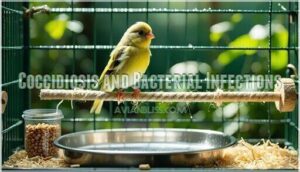
Without proper sanitation, these gut invaders wreak havoc on your finch’s digestive system.
Coccidiosis affects 25% of captive populations during stress, while bacterial infections cause 15-30% mortality rates in flocks.
Key infection control measures:
- Daily cage cleaning reduces contamination by 75%
- Laboratory fecal tests confirm diagnosis in 92% of cases
- Quarantine protocols prevent cross-contamination between birds
Egg Binding in Females
Egg-binding emergencies strike breeding females when eggs become trapped inside their bodies, creating life-threatening situations requiring immediate veterinary intervention.
You’ll notice distressed females straining repeatedly, breathing laboriously, and displaying visible lumps near their vents.
These reproductive health crises demand urgent professional care, as delayed treatment often proves fatal for affected birds.
Scaly Face and Leg Mites
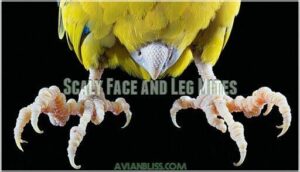
Commonly affecting caged finches, scaly face and leg mites create crusty, proliferative lesions that can seriously compromise your bird’s mobility.
These Knemidokoptes mites cause progressive scaly legs, feather loss around the face, and characteristic honeycomb-patterned growths that worsen without prompt mite treatment intervention.
- Thick, crusty "tassel-like" growths covering your finch’s legs and feet
- Scaly face mites creating white film progressing to horn-like beak deformities
- Leg swelling and lameness preventing normal perching and movement
Early detection of leg mite issues is essential for effective treatment and prevention of long-term damage, which can lead to serious health issues if not addressed promptly.
Iodine Deficiency
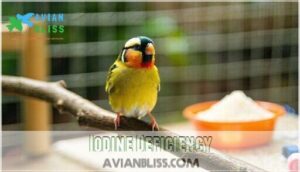
Since Australian finches have higher iodine requirements, iodine deficiency strikes species like Gouldians particularly hard.
You’ll notice poor feather health, respiratory issues, and telltale baldness on your bird’s head.
This condition affects nutrient absorption and can cause breeding problems.
Crushed oyster shell or iodine supplements usually resolve the issue within three weeks, restoring your finch’s vibrant plumage and overall health.
Preventing Finch Health Problems
Prevention forms the foundation of finch health, requiring consistent attention to their environment and care routine.
You’ll substantially reduce disease risks by maintaining proper hygiene, nutrition, and stress management practices that support your birds’ natural immune systems, which is crucial for their overall well-being and can be achieved by following proper care guidelines.
Cage Cleanliness and Hygiene
Clean cages prevent disease outbreaks that devastate finch flocks.
Daily waste removal and weekly cage disinfection eliminate harmful bacteria and parasites.
Replace water containers every 24 hours to maintain water quality.
Sanitize perches, toys, and feeding stations using bird-safe cleaners.
Proper finch hygiene practices include removing wet food within hours to prevent mold growth and bacterial contamination.
Regular use of a bird cage cleaner is essential for maintaining a healthy environment.
Daily waste removal and proper finch hygiene practices are crucial for preventing disease outbreaks.
Balanced Diet and Nutrition
Proper finch nutrition forms the foundation of disease prevention, with balanced diets reducing illness by up to 40%. Smart seed selection and nutritional supplements address common deficiencies that weaken immune systems.
A well-planned finch diet should include a good finch seed mix to promote overall health.
- Seed Selection: Choose high-quality mixed seeds over single-type varieties, ensuring protein comprises 12-20% of daily intake for superior feather quality and growth.
- Nutrient Supplements: Add calcium sources like cuttlebone and mineral blocks to prevent egg binding, plus vitamin A through fresh greens to combat respiratory problems.
- Fresh Fruits: Offer carrots and berries for carotenoids that enhance feather pigmentation, limiting fruit to 20% of total diet to avoid sugar-related disorders.
Stress Reduction and Enrichment
Creating a stress-free environment helps prevent finch behavioral issues and stress-related illnesses.
You’ll want to focus on Environmental Enrichment by adding varied perches, swings, and foraging opportunities that encourage natural behaviors.
Proper Cage Design with adequate space prevents overcrowding while Noise Reduction techniques like maintaining consistent routines support finch stress reduction.
These Calming Techniques substantially improve your birds’ overall wellbeing.
Quarantine Practices for New Birds
Quarantine new birds for 30-45 days before introducing them to your existing flock.
This isolation period prevents disease transmission and allows thorough disease screening.
During bird acclimation, monitor for symptoms like lethargy, respiratory issues, or abnormal droppings.
Proper finch quarantine and isolation methods protect your entire collection from potential health threats.
Seasonal Considerations
Seasonal changes create unique challenges for finch health and flock dynamics throughout the year.
During molting season, you’ll need enhanced nutrition and stress reduction, while breeding cycles require careful temperature control and humidity management.
Winter months demand extra vigilance against respiratory issues, and summer heat can trigger dehydration.
Implement seasonal care adjustments to maintain healthy finch health through preventive strategies targeting each season’s specific risks.
Understanding bird behavior seasonal patterns is vital for providing appropriate care and environment for finches throughout the year, ensuring healthy finch populations and promoting overall well-being.
Parasite Control and Management
Parasites pose a constant threat to your finch’s health, making consistent monitoring and prevention essential for maintaining a thriving flock.
You’ll need to establish regular inspection routines and implement proven control strategies to protect your birds from both internal and external parasitic infestations, as well as internal ones.
Routine Health Checks
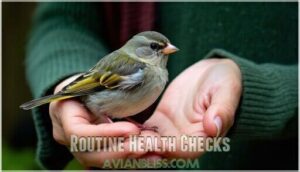
Weekly finch health checks catch problems early, preventing serious illnesses from developing.
Examine each bird’s beak inspection for cracks or overgrowth, assess feather condition for parasites or damage, and perform dropping analysis to identify digestive issues.
Monitor weight changes through behavior observation, watching for lethargy or reduced activity.
These routine health checks form the foundation of effective finch health management and bird health monitoring systems, which is crucial for preventing serious illnesses and ensuring the overall well-being of the birds, thus preventing serious illnesses.
External Parasite Prevention
Three essential steps protect your finches from external parasites through consistent mite control and parasite inspection routines.
- Weekly cage sanitizing removes parasite eggs and larvae from perches, toys, and feeding areas
- Daily bird hygiene checks help spot finch mites, feather mites, and early parasitic infections
- Monthly deep cleaning eliminates hidden pest management threats in cage corners and crevices
- Quarantine new accessories prevents introducing finch parasites through contaminated equipment
- Regular feather inspections catch mites before they spread throughout your flock
Effective finch care involves using a mite spray product to prevent infestations.
Internal Parasite Treatment
Unlike external pests, intestinal worms and parasitic infections require targeted parasite medication for effective mite control.
Praziquantel tackles tapeworms while fenbendazole addresses roundworms in your finch’s digestive system.
These anti parasite treatments, administered through deworming methods like medicated water, restore intestinal health.
Regular fecal testing guides parasitic control timing, preventing drug resistance that undermines bird parasites treatment effectiveness.
Early Intervention and Vet Care
Recognizing finch health issues early saves lives and prevents costly Emergency Care situations.
Quick Vet Visits allow for proper Medical Diagnosis before conditions worsen.
Your avian vet can provide Bird First Aid guidance and establish Avian Therapy protocols.
Professional bird health monitoring catches problems that home observation might miss, ensuring effective veterinary care and better outcomes for your finches, through proper Medical Diagnosis and Avian Therapy.
Reducing Reinfection Risks
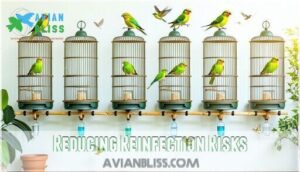
Thorough sanitation protocols form your strongest defense against reinfection cycles in finch colonies.
Clean all cage surfaces, perches, and feeding equipment with bird-safe disinfectants after treating parasites.
Replace porous materials like wooden perches that harbor microscopic eggs.
Quarantine methods should isolate treated birds for two weeks minimum, ensuring complete parasite elimination before reintroducing them to healthy flocks.
Effective parasite control methods are essential for preventing the spread of disease in domestic bird populations, using complete parasite elimination and quarantine methods to ensure a healthy flock, and following effective control strategies.
When Professional Care is Needed
While many finch health issues can be managed at home with proper care, certain situations demand immediate professional intervention.
Knowing when to contact an avian veterinarian can mean the difference between a quick recovery and a tragic loss.
Warning Signs Requiring a Vet
Several finch health issues demand immediate veterinary attention.
Respiratory issues like persistent wheezing, open-mouth breathing, or clicking sounds indicate serious infections requiring professional treatment.
Feather plucking beyond normal preening suggests parasites or stress-related disorders.
Beak problems including bleeding, growths, or inability to eat need clinical diagnosis.
Dropping changes lasting over 48 hours—especially blood-streaked or watery feces—signal internal complications.
When these bird symptoms appear, emergency care prevents finch disease symptoms from becoming fatal avian health problems.
Recognizing bird health warnings is essential for providing timely and effective care to prevent serious complications, which is a critical aspect of avian health problems and requires immediate veterinary attention.
Emergency Situations
When your finch faces a life-threatening crisis, immediate emergency care becomes vital.
When crisis strikes your finch, every second counts
Swift urgent intervention can mean the difference between recovery and tragedy during these critical moments.
Here are five finch emergency situations requiring immediate rescue techniques:
- Severe breathing distress – Open-mouth breathing or gasping needs instant avian emergency response
- Egg binding complications – Visible straining without egg passage requires emergency veterinary intervention
- Traumatic injuries – Bleeding, broken bones, or predator attacks demand immediate bird first aid
- Seizures or paralysis – Neurological symptoms indicate serious crisis management needs
- Shock or collapse – Unconscious birds need rapid emergency care protocols
Quick crisis management saves lives during these urgent situations.
When to Euthanize
Sometimes the kindest choice for a suffering finch is letting go.
When quality of life deteriorates beyond recovery—severe pain, inability to eat, drink, or move—euthanasia becomes a compassionate option.
Veterinarians assess euthanasia criteria based on the bird’s condition, prognosis, and suffering level.
This difficult decision prioritizes your finch’s dignity and prevents prolonged distress when curative treatments fail.
Keeping Avian Vet Contact Information
Having an avian vet’s contact information readily available can mean the difference between life and death during a finch health emergency.
Don’t wait until crisis strikes to search for qualified Bird First Aid professionals.
Store these Vet Contact Info details immediately:
- Primary avian vet – Regular checkups and Finch Health Records management
- Emergency clinic – 24/7 Vet Emergency services for critical situations
- Backup specialist – Secondary option for Avian Care Tips and complex finch illnesses
Keep phone numbers programmed in your phone and posted near your bird’s cage for quick access during veterinary care situations.
Frequently Asked Questions (FAQs)
Are finch health problems common?
Yes, you’ll likely encounter health issues with your finches.
Common problems include respiratory infections, parasites like air sac mites, digestive troubles, and nutritional deficiencies.
With proper care and early detection, most conditions are treatable and preventable.
Are finches prone to respiratory infections?
You’ll find respiratory problems strike finches quite frequently.
Poor ventilation, dusty environments, and stress weaken their delicate airways, making them vulnerable to infections.
That cause wheezing, labored breathing, and clicking sounds.
Do finches hide problems?
Finches instinctively mask illness symptoms to avoid appearing weak to predators or flock mates.
You’ll need to watch carefully for subtle changes in behavior, appetite, or posture since they won’t show obvious distress until severely compromised, which can be a significant challenge in maintaining their health and requires careful observation of their overall behavior.
What should I do if my Finch is sick?
Like a smoke alarm chirping at 3 AM, sick finches need immediate attention.
Isolate your bird, provide warmth, make certain fresh water and food access.
Then contact an avian veterinarian immediately—finches deteriorate quickly.
How do you keep a finch healthy?
Maintain your finch’s health by providing fresh water daily, quality seed mix, clean cages weekly, stable temperatures, proper lighting.
Quarantine new birds, and schedule regular vet checkups for early problem detection, including regular vet checkups to ensure your finch receives proper care.
Do Gouldian finches have iodine deficiency?
Yes, Gouldian finches commonly develop iodine deficiency due to their higher nutritional needs. You’ll notice telltale signs like head baldness, poor feather quality, and respiratory issues requiring immediate supplementation.
Can finches recover from serious illnesses naturally?
While finches can’t recover from serious illnesses naturally, you’ll often see remarkable resilience with minor issues.
Their bodies naturally fight off mild respiratory infections and digestive upsets, but severe conditions like air sac mites or egg binding absolutely require veterinary intervention to survive, as they cannot recover from these issues naturally.
How often should finches visit veterinary checkups?
You’ll want to schedule annual wellness checkups for your finches, though twice-yearly visits work better for senior birds or those with chronic conditions requiring ongoing monitoring.
What medications are safe for home treatment?
You shouldn’t attempt home treatment with medications – finches need veterinary-prescribed treatments for safety.
Only provide supportive care like warmth, quiet environment, and easy access to food and water until professional help arrives.
Do finches need special lighting for health?
Like a plant stretching toward sunlight, your feathered friends require proper lighting for ideal health.
You’ll need full-spectrum UV lighting for 10-12 hours daily to support vitamin D synthesis, calcium absorption, and natural circadian rhythms.
Conclusion
Your vigilance today determines whether finch common health issues become manageable concerns or devastating losses tomorrow.
Recognizing early symptoms like fluffed feathers, labored breathing, and appetite changes enables swift intervention before conditions worsen.
Maintaining proper cage hygiene, providing balanced nutrition, and scheduling regular vet checkups creates the foundation for healthy birds.
Don’t wait for obvious distress signals—proactive care and quick professional consultation make the difference between recovery and tragedy in your feathered companions.
- https://www.fabfinches.co.uk/product-help-guides/help-with-your-finches/treating-air-sac-mites/
- https://www.omlet.us/guide/finches_and_canaries/finch_health/parasites/
- https://pubmed.ncbi.nlm.nih.gov/1548805/
- https://www.ladygouldianfinch.com/respiratory-infection-or-air-sac-mites.aspx
- https://www.birds-online.de/wp/en/birds-online-english/health-and-diseases/parasitic-infestations/air-sac-mites/