This site is supported by our readers. We may earn a commission, at no cost to you, if you purchase through links.
 You can explore bird watching locations accessible by public transportation across major US cities, from Central Park’s 200+ migrating species via subway to Prospect Park’s 230+ bird varieties near multiple train lines.
Forest Park in St. Louis connects through MetroLink for 212 species, while Philadelphia’s Fairmount Park offers 240+ birds along SEPTA routes.
National wildlife refuges like Jamaica Bay reach via Broad Channel Station, and urban greenways create car-free corridors through cities.
Transit apps help coordinate dawn birding with schedules, while compact gear makes transport easy.
These accessible hotspots prove you don’t need wheels to witness remarkable biodiversity—sometimes the best birding adventures start at the nearest bus stop, where you can see 200+ migrating species, 230+ bird varieties, and enjoy car-free corridors, all while using public transportation, and having a great birding adventure.
Table Of Contents
- Key Takeaways
- Top Bird Watching Locations Near Transit
- How to Plan Birding Trips Without a Car
- Regional Bird Watching Destinations by Transit
- Bird Watching Groups and Guided Field Trips
- Tips for an Enjoyable Transit-Based Birding Experience
- Frequently Asked Questions (FAQs)
- Where can I go bird watching?
- Where can I find a good birding spot?
- Where can I find bird watching hotspots?
- What is bird watching?
- Where can I find bird watching groups?
- What is a local Birding Website?
- What backup transit options exist during service disruptions?
- How do weather conditions affect transit birding schedules?
- Which binoculars work best for public transportation birding?
- Can wheelchairs access most transit-connected birding locations?
- Conclusion
Key Takeaways
- You’ll find exceptional bird watching destinations accessible via public transportation in every major US city, from Central Park’s 200+ species via subway to wildlife refuges reachable by bus and ferry connections.
- Planning successful transit-based birding trips requires using transit apps to coordinate dawn departures, packing lightweight gear like compact binoculars, and building flexibility into your schedule for weather delays.
- Major birding hotspots near transit include Prospect Park (230+ species), Jamaica Bay Wildlife Refuge via A train, Forest Park through MetroLink, and Golden Gate Park near multiple transit hubs.
- You can enhance your car-free birding experience by joining local Audubon Society events designed around public transportation, connecting with fellow transit birders for equipment sharing, and supporting local businesses near birding destinations.
Top Bird Watching Locations Near Transit
You’ll discover that exceptional bird watching destinations exist within reach of public transportation systems across the United States.
From urban parks accessible by subway to wildlife refuges connected by bus routes, car-free birding opens up diverse ecosystems and species you might otherwise miss.
This allows for diverse ecosystems to be explored, giving you a wider range of bird species to observe.
City Parks Accessible by Bus or Train
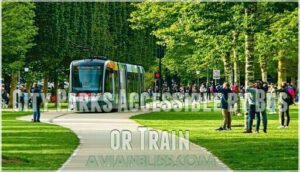
When urban birding calls, city parks accessible by public transport offer the perfect escape.
You’ll find Prospect Park in Brooklyn hosts 230+ species near multiple subway lines, while Forest Park in St. Louis connects via MetroLink with 212 bird varieties.
Urban parks accessible by subway reveal surprising avian diversity just minutes from downtown
Green spaces like Fairmount Park span Philadelphia’s SEPTA network, supporting 240+ species along transit routes and park trails.
National Wildlife Refuges Near Transit Routes
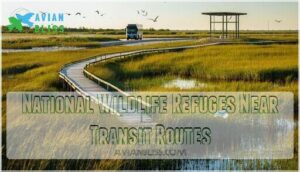
National Wildlife Refuges offer world-class bird habitats within reach of public transport.
These protected eco tourism destinations provide unmatched refuge access via nearby transit routes and bus routes.
Here are five transit-accessible refuges for urban wildlife enthusiasts:
- Jamaica Bay Wildlife Refuge (NY) – A train ride to Broad Channel Station
- Patuxent Research Refuge (MD) – Bus routes plus internal electric tram
- Cape May National Wildlife Refuge (NJ) – Regional bus connections during migrations
- Occoquan Bay National Wildlife Refuge (VA) – Transit hubs within walking distance
- Chincoteague National Wildlife Refuge (VA) – Seasonal local transit from train stations
Many refuges, like the Jamaica Bay Wildlife Refuge, offer excellent wildlife viewing opportunities for visitors.
Urban Greenways and Trails via Public Transport
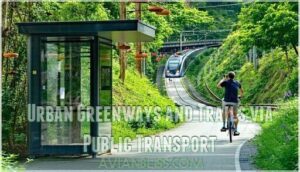
Many urban greenways connect major transit hubs, offering excellent trail access without car dependency.
You’ll discover urban birds along bike trails and green corridors that weave through cities.
These birding locations often link bus routes and train stations, creating seamless connections.
Popular bird watching spots include converted rail-trails and waterfront paths accessible via public transport systems, making them ideal for those who enjoy urban birds and want to use public transport.
Notable Birding Hotspots in Transit-Friendly Regions
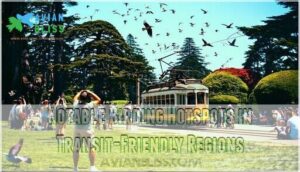
Beyond urban trails, several premier bird sanctuaries and wildlife areas offer exceptional transit access.
You’ll find hotspots like Central Park’s Ramble in New York, accessible via subway, hosting over 200 species during bird migration seasons.
Chicago’s Montrose Point connects easily through public transport, while San Francisco’s Golden Gate Park provides urban birding near transit hubs.
These eco tourism destinations make car-free wildlife viewing achievable, offering a unique experience in places like Golden Gate Park.
How to Plan Birding Trips Without a Car
Planning birding trips without a car requires strategic use of transit apps and flexible timing to reach the best bird watching spots.
You’ll need to pack light, plan for delays, and research transit-accessible locations that maximize your chances of spotting diverse species.
Using Transit Apps and Maps for Birding
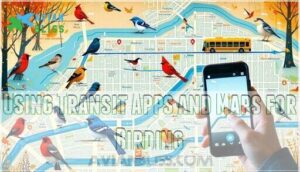
Breaking down transit to birding locations doesn’t have to drain your energy. Modern transit apps transform your smartphone into a navigation powerhouse for car-free bird watching adventures.
These digital guides streamline route planning and help you discover accessible birding trails through public transport networks. By utilizing reliable birding app tools, birders can enhance their overall experience with better species identification and tracking.
Essential transit birding tools include:
- Transit and Citymapper apps for real-time schedules and multimodal route planning
- Google Maps for step-by-step directions to bird watching spots
- Merlin Bird ID integration with eBird for tracking species at transit-accessible locations
- Local metro apps for system-specific departure times and service alerts
Timing Birding Outings With Transit Schedules
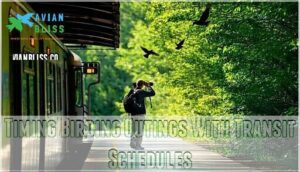
Perfect timing transforms your birding adventures from frustrating transit nightmares into smooth nature escapes.
Strategic timing transforms public transit into your birding superpower
Schedule Optimization around peak bird activity (dawn and dusk) while coordinating with metro lines and ferry schedules creates seamless experiences. Route Mapping through Birding Apps reveals ideal departure times for bird watching locations accessible by public transportation.
| Time Factor | Planning Strategy |
|---|---|
| Dawn Chorus | Catch first trains/buses by 5:30 AM |
| Evening Activity | Plan return trips before 7 PM service cuts |
| Weather Windows | Check forecasts 24 hours ahead |
| Seasonal Patterns | Match migration times with weekend schedules |
Time Management becomes your secret weapon when you sync transit timetables with bird behavior patterns.
Consider investing in compact birding binoculars for enhanced portability on your transit-based birding trips. Most bike trails connect to transit hubs, extending your reach without car dependency.
Packing Essentials for Public Transit Birding
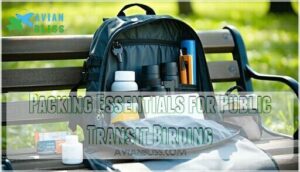
Smart packing makes transit-based birding adventures flow smoothly.
You’ll want gear that’s portable yet thorough for those longer journeys to birding spots without constant car access.
- Binocular Harness – Distributes weight evenly across shoulders, preventing neck strain during extended public transportation rides to remote birding locations
- Compact Field Guides – Regional bird identification books or waterproof field cards that fit easily in backpacks for quick species reference
- Transit Pass – Monthly or day passes often save money compared to individual fares when visiting multiple birding spots regularly
- Weather Protection – Lightweight rain jacket and sun hat since you can’t retreat to a car when conditions change unexpectedly
- Basic First-Aid Kit – Band-aids and pain relievers for minor injuries during longer walks to access prime bird watching areas.
A comfortable harness is essential for carrying binoculars.
Regional Bird Watching Destinations by Transit
You’ll find birding spots across every region of the United States that connect to public transit systems.
From coastal refuges reachable by ferry to prairie preserves accessible by bus, these destinations prove you don’t need a car to enjoy quality bird watching experiences.
East Coast Birding Spots on Public Transport
The East Coast offers exceptional coastal birding opportunities through public transportation.
Jamaica Bay Wildlife Refuge welcomes you via NYC’s A train, hosting 330+ species.
Boston’s ferry routes provide island access to coastal migrants.
Cape May Point connects through NJ Transit buses, showcasing 250+ species during peak migratory flyways.
Urban sanctuaries like Prospect Park offer convenient subway access to diverse bird watching locations.
Midwest Birding Trails Accessible by Bus or Train
How can you explore the Midwest’s diverse bird life without owning wheels?
The region’s Prairie Transit Trails and Lakefront Birding opportunities shine through strategic public transportation connections.
Chicago’s lakefront trail parallels multiple transit lines, while Milwaukee’s Oak Leaf system connects thirty-five parks via city buses.
Kansas City and St. Louis offer Great Missouri Birding Trail segments accessible through urban transit, creating Accessible Migration Corridors for car-free birding adventures across diverse Midwest landscapes.
Western US Birding Locations Near Transit
Western US offers diverse Transit-Accessible Habitats along Western Migration Routes.
Easily accessible by public transportation, the lagoon is a great location for viewing coastal birds in San Francisco.
The Presidio’s Crissy Marsh wetlands, located along the Golden Gate Promenade Trail and Bay Trail provide excellent Urban Bird Sanctuaries for Coastal Birding.
Cities can host a surprising amount of avian life, with over 60% of species found in North America.
Desert Birding opportunities exist throughout California’s transit networks, connecting bird watching enthusiasts to diverse western ecosystems for Coastal Birding and Urban Bird watching.
Southern Birding Festivals and Parks on Transit Lines
Moving from the western United States, the South offers abundant birding festivals and parks connected by public transportation options.
You’ll find seasonal birding events like the Whooping Crane Festival in Texas accessible via regional transit networks. Oklahoma tourism and travel highlights showcase premier bird watching destinations.
- Festival Transit Options: Major southern birding festivals coordinate with local bus systems and provide shuttle services from transit hubs to event locations
- Park Accessibility: State and national parks offer public transportation connections, with some providing dedicated birding shuttles during peak migration seasons
- Southern Species: Event logistics include guided trips to observe region-specific birds like roseate spoonbills and painted buntings via organized transit groups
Bird Watching Groups and Guided Field Trips
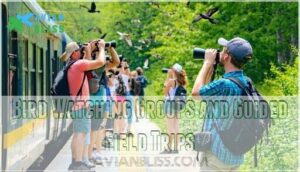
You don’t have to tackle birding alone when you’re relying on public transportation.
Joining organized birding groups and guided field trips opens up new locations and teaches you skills that make every outing more rewarding, whether you’re catching the bus to a local nature center or taking the train to a regional wildlife refuge.
Finding Local Audubon Society Events via Transit
Most major cities offer Audubon Society chapters that design bird watching events around public transportation options.
You’ll find Transit Accessibility through their online event schedules, which highlight meetup locations near bus stops and train stations.
These Audubon Partnerships create Community Engagement opportunities for Car-Free Birding enthusiasts seeking accessible birding communities nationwide, including Oklahoma’s urban areas.
Joining Birding Walks and Classes Accessible by Bus
Beyond Audubon Society events, you’ll find birding walks and classes designed for public transportation users.
Many birdwatching communities organize group outings near bus stops, making Beginner Birding Skills accessible to everyone.
Here’s how to join transit-friendly birding groups:
- Check Accessible Event Calendars – Local libraries and community centers post birding classes near bus routes
- Ask about Group Transit Discounts – Many birding communities negotiate reduced fares for group trips
- Connect with Local Guide Expertise – Experienced birders often know which public transportation options work best for reaching prime spots
These organized walks eliminate Bus Route Planning stress while building your birding knowledge alongside fellow enthusiasts who understand car-free challenges.
Networking With Car-Free Birders and Groups
Finding fellow car-free birders opens doors to carpooling options and shared equipment opportunities.
Local birding communities offer valuable local knowledge while providing group safety during field trips.
Through skill sharing, experienced birders teach transit-friendly routes to prime birding trails.
These connections transform solo adventures into collaborative experiences, where public transportation options become stepping stones to deeper birding friendships and enhanced learning.
Birding enthusiasts can also improve their skills by referencing a comprehensive bird watching travel guide to learn bird calls.
| Connection Method | Benefits |
|---|---|
| Local Facebook groups | Real-time ride sharing, equipment loans |
| eBird community forums | Route advice, seasonal hotspot updates |
| Audubon chapter meetups | Structured group outings, mentor matching |
| Transit birding hashtags | Social media connections, trip coordination |
| Library bulletin boards | Neighborhood carpools, gear exchanges |
Tips for an Enjoyable Transit-Based Birding Experience

Transit-based birding requires flexibility since buses run late and weather changes plans quickly.
You’ll maximize your success by staying adaptable with timing and focusing on accessible locations that offer multiple species in one spot.
Staying Flexible With Weather and Schedules
Weather Contingency plans keep your birdwatching adventures on track when storms roll in. Check forecasts before heading out, but don’t let drizzle dampen your spirits—many species stay active in light rain.
Schedule Adjustments become your best friend when buses run late or trains break down. Alternative Locations within walking distance of transit stops provide backup options when your primary birding trails become inaccessible due to Seasonal Changes or unexpected closures.
Time Management means arriving early and building buffer time into your public transportation options, utilizing Schedule Adjustments and Alternative Locations to ensure a smooth experience, and remembering that Weather Contingency plans are crucial for success, while also considering Time Management.
Maximizing Bird Sightings Per Trip
Early morning trips yield 30-50% more species sightings when dawn activity peaks.
Combine multiple habitats on single routes to boost diversity by 40%. Target Peak Migration hotspots during peak weeks for triple variety.
Use Birding Apps with real-time data to increase success rates by 25%. Plan stops at water bodies, meadows, and woods within walking distance for 15+ species per hour.
Consider purchasing real-time birding products to enhance your experience.
Safety, Comfort, and Supporting Local Communities
Prioritize Safe Routes and follow proper Birding Etiquette to protect yourself and wildlife.
Support Local Businesses near transit stops to strengthen birding communities. Choose Accessible Trails that welcome all ability levels.
Your public transportation options create environmental benefits while fostering Community Engagement. In places like Oklahoma, birding supports local economies and builds lasting connections with fellow enthusiasts.
To further aid conservation, consider planting native species to provide essential food and shelter.
Frequently Asked Questions (FAQs)
Where can I go bird watching?
You can bird watch almost anywhere – start in your neighborhood, then explore local parks, nature centers, and trails. National wildlife refuges, state parks, and birding hotspots offer diverse species.
Where can I find a good birding spot?
Start local – your neighborhood parks, nature centers, and nearby trails offer surprising diversity.
Use eBird.org to find hotspots with recent sightings, then explore state birding trails designed by experts for easy access to discover complete concepts.
Where can I find bird watching hotspots?
Like discovering treasure in Brooklyn’s Prospect Park, you’ll find incredible birding hotspots using eBird.org’s location search, local Audubon chapters, national parks, and state birding trail guides.
That reveal species-rich destinations.
What is bird watching?
Bird watching involves observing and identifying wild birds in their natural habitats using binoculars, field guides, and apps like Merlin Bird ID.
You’ll spot different species, learn their behaviors, and connect with nature while developing identification skills and contributing to citizen science through platforms like eBird.
Where can I find bird watching groups?
Freedom opens new pathways when you’re ready to spread your wings and connect with fellow enthusiasts.
You’ll find over 400 local Audubon chapters nationwide, plus check your ZIP code for nearby field trips and classes that’ll launch your birding adventure into flight.
What is a local Birding Website?
eBird.org serves as your go-to local birding website, offering real-time sightings, hotspot maps, and community observations.
You’ll find state-specific data, county breakdowns, and seasonal trends that’ll reveal your area’s hidden birding gems with just a few clicks.
What backup transit options exist during service disruptions?
Nearly 45 million Americans identify as birders. During service disruptions, you’ll need backup transportation options like bikes, ride shares, or buses. Keep cash handy and build extra time.
How do weather conditions affect transit birding schedules?
Rain, snow, and extreme temperatures can delay buses and trains, forcing you to reschedule birding trips. Check weather forecasts beforehand and always carry backup transit route options.
Which binoculars work best for public transportation birding?
Your binocular choice could make or break your transit birding adventure.
Compact 8×32 or 8×42 models work best – they’re lightweight, offer sharp images, and won’t strain your neck during long bus rides or subway transfers.
Can wheelchairs access most transit-connected birding locations?
Wheelchair access varies substantially by location and transit system.
Metro Transit is dedicated to providing accessible bus and rail services for all community members including those with disabilities, but birding sites themselves often lack thorough accessibility features.
Conclusion
Nearly 75% of urban birders live within two miles of excellent bird watching locations public transportation can reach.
Whether you’re catching dawn migrations in Central Park or exploring prairie wetlands via MetroLink, these accessible spots prove remarkable birding doesn’t require a car.
Your next adventure begins with checking transit schedules and packing lightweight binoculars.
Remember to support local communities and stay flexible with weather changes for the best experience.
- https://www.newyorkbyrail.com/bird-watching-on-the-rail-line/
- https://nycbirdalliance.org/events-birding/birding-resources/birding-by-subway
- https://dcbirdalliance.org/birding-dc
- https://shebirds.com/blog/f/birding-by-bus-how-one-car-less-urban-birder-gets-around
- https://www.manomet.org/publication/birding-public-transit-boston-south-shore/