This site is supported by our readers. We may earn a commission, at no cost to you, if you purchase through links.
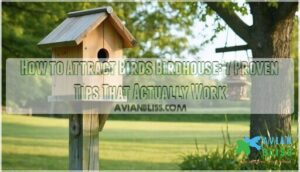 You’ll attract birds to your birdhouse by selecting natural cedar or pine construction with species-specific entrance holes—1.25 inches for bluebirds, 1.125 inches for wrens.
Position the house 5-6 feet high, facing away from prevailing winds, and maintain 60 feet distance from feeders to minimize disturbances.
Use earth-toned colors like muted browns and greens that blend naturally into the environment while avoiding bright hues that attract predators.
Make certain proper ventilation holes, drainage, and hinged panels for easy cleaning, as the secret lies in understanding each species’ unique nesting preferences and creating conditions that mirror their natural habitat choices.
Table Of Contents
Key Takeaways
- Match entrance holes to your target species – use 1.125 inches for wrens and chickadees, 1.25 inches for bluebirds, and avoid holes larger than 1.5 inches to prevent unwanted species from taking over
- Choose natural cedar or pine construction with proper ventilation – you’ll get better nesting success with untreated wood that breathes naturally, plus add drainage holes and hinged panels for easy annual cleaning
- Position strategically at 5-6 feet high facing northeast to southeast – this protects from afternoon heat and prevailing winds while keeping the house accessible for maintenance and away from feeders by at least 60 feet
- Create a complete habitat with native plants and water sources – you’ll triple your success rate by adding bird baths, native berry bushes, and maintaining 70% native plant coverage rather than relying on the birdhouse alone
How Do Birdhouses Attract Birds?
Attracting birds to your birdhouse requires understanding three fundamental principles that determine nesting success rates.
You’ll need proper materials, correct sizing, and strategic design features that mimic natural cavity conditions birds instinctively seek.
What Makes a Birdhouse Appealing
Birds find themselves drawn to birdhouses that mirror their natural habitat preferences.
Successful birdhouses replicate the cozy, secure conditions birds naturally seek for raising their families
Your birdhouse design should incorporate specific elements that create an irresistible nesting opportunity:
- Proper ventilation holes that maintain ideal temperature regulation
- Species-specific entrance dimensions matching territorial requirements
- Natural wood textures that provide secure grip surfaces
- Strategic interior depth allowing comfortable nesting materials arrangement
Effective bird attraction depends on understanding avian behavioral patterns and bird habitat requirements for successful attracting birds to yard initiatives.
Importance of Proper Materials
Natural Wood Selection stands as your first defense against nest failure.
You’ll want untreated cedar or pine with proper Ventilation Systems built in.
Avoid chemically treated lumber and toxic adhesives that trap moisture, creating temperature spikes.
Material Safety demands natural wood preservatives like linseed oil over synthetic paints.
Durable Finishes mean weatherproofing without compromising breathability for successful nesting, using methods that ensure breathability.
Role of Size and Design
Size and design principles directly influence which species you’ll attract.
Birdhouse dimensions must match target bird species—chickadees need 1.25-inch entrance holes, while bluebirds require 1.5 inches.
Proper nesting space, ventilation systems, and sloped roof design create ideal environments.
Well-planned birdhouse building incorporates these specifications, ensuring successful birdhouse placement and installation attract desired species effectively.
Understanding bird house designs is vital for attracting the right bird species to your backyard, and considering birdhouse dimensions and proper nesting space is crucial for a successful birdhouse placement.
Which Birds Will Nest in Your Birdhouse?
Different bird species have specific nesting preferences that determine whether they’ll choose your birdhouse.
Understanding which species frequent your region and their unique requirements will help you select or modify birdhouses to attract your desired feathered residents.
Common Species by Region
Regional habitat diversity shapes which species you’ll attract through backyard birding efforts.
Your geographic range determines available bird species identification opportunities, with bird migration patterns influencing seasonal occupancy rates in birdhouse plans.
Consider these regional species distribution patterns:
- North America: Eastern Bluebirds (23 million population) and House Wrens (190 million) dominate suburban areas, while Tree Swallows prefer water-adjacent locations
- Europe: Great Tits and European Robins exceed 100 million each, readily adopting nest boxes in gardens and woodlands
- Asia: Oriental Magpie-Robins and Red-vented Bulbuls thrive in urban settings, utilizing wall cavities and elevated structures
- Australia: Laughing Kookaburras and Rainbow Lorikeets adapt well to artificial nesting sites in coastal regions
Bird friendly plants and consistent water sources enhance attraction success across all regions.
Understanding common backyard birds is essential for creating an effective birdhouse plan.
Matching Birdhouse to Bird Species
Successful bird species identification starts with matching specific birdhouse designs to each bird’s nesting preferences.
Bluebirds need 1.5-inch entry holes and 12-15 square inches of floor space, while chickadees require smaller 1.125-inch openings with 4×4-inch floors.
Understanding species compatibility and bird behavior helps you select appropriate birdhouse plans that actually work for your target species.
To increase the chances of attracting specific birds, consider the importance of proper bird house designs in creating an ideal nesting environment.
Special Tips for Attracting Desired Birds
You’ve got options beyond standard birdhouses to attract specific species.
Position bluebird boxes 15 feet apart to encourage tree swallow coexistence while deterring house sparrows.
Grow berry bushes and native plants for natural feeding strategies.
Cardinals prefer low shrubs for nesting materials, while providing shallow water sources creates ideal habitat creation.
These bird watching tips boost your bird feeding success dramatically.
How to Choose The Best Birdhouse
Selecting the right birdhouse involves understanding what birds actually need versus what looks appealing to humans.
The best birdhouses use natural wood construction, precise entry hole dimensions, and essential safety features that directly influence nesting success rates.
Natural Vs. Artificial Materials
Choose natural wood over artificial materials for maximum birdhouse success.
Sustainable woods like cedar and pine provide natural textures birds prefer, while eco-friendly options guarantee material safety.
These biodegradable materials breathe naturally, preventing moisture buildup that plastic alternatives trap.
Quality birdhouse materials require minimal birdhouse maintenance compared to synthetic versions that crack and fade, making natural choices superior for long-term birdhouse installation.
Using cedar birdhouses can be a great way to attract birds to your yard.
Entry Hole Size and Dimensions
Precise hole diameter determines which bird species will call your birdhouse home.
The right entrance hole size acts as your species filter—too big invites trouble, too small keeps everyone out
Match entrance size to your target birds: 1.125 inches attracts chickadees and wrens, while 1.5 inches welcomes bluebirds and tree swallows.
Larger 2-inch openings invite woodpeckers but may attract unwanted species.
Proper nesting depth of 6-8 inches above the floor enhances fledgling safety and deters predators from reaching nest contents.
Understanding the importance of birdhouse entrances is vital for attracting the desired bird species and ensuring their safety and the role of entrance size.
Safe and Natural Colors
Natural wood tones work best for birdhouse colors, as they blend seamlessly into the environment and don’t attract predators.
Earth-toned color schemes using natural dyes create bird friendly structures that appeal to cavity-nesting species.
Avoid bright paint alternatives like reds or yellows—they’re flashing neon signs to hawks and cats.
Color theory suggests muted greens and browns help attract birds to garden spaces by mimicking natural bird habitat creation.
When selecting colors, consider using safe paint options to guarantee the birdhouse remains a healthy environment for its occupants, and choose colors that promote a natural habitat.
Features for Easy Cleaning and Safety
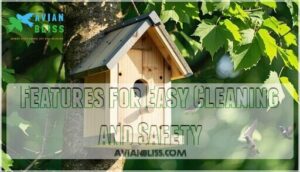
Beyond choosing the right colors, your birdhouse needs practical features that guarantee bird safety and your convenience.
Well-designed ventilation systems prevent overheating, while hinged panels make cleaning simple after each breeding season.
Essential safety features include:
- Ventilation holes near the roof to regulate temperature and prevent moisture buildup
- Removable or hinged panels for thorough cleaning between broods
- Drainage holes in the floor to eliminate standing water
- Predator guards like extended roofs and smooth pole mounts.
Proper birdhouse ventilation is vital for maintaining a healthy environment.
These features create safer nesting environments while making birdhouse maintenance manageable for attracting birds year after year.
Where is The Best Place to Hang a Birdhouse?
Proper birdhouse placement substantially impacts occupancy rates, with height and orientation affecting nesting success by up to 60%. Strategic positioning involves considering species-specific requirements, territorial spacing, and protection from environmental threats.
Ideal Height and Orientation
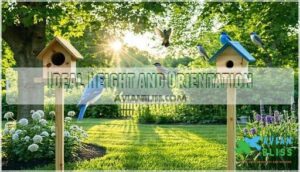
Position your birdhouse at species-specific mounting heights: bluebirds prefer 5-6 feet, while purple martins need 10-18 feet elevation.
Orient the entrance hole facing northeast to southeast, avoiding hot afternoon sun exposure and prevailing winds.
This directional facing protects nestlings from overheating and reduces storm damage to the roof angle, which is a complete concept and helps in species-specific mounting.
Distance From Feeders and Other Birdhouses
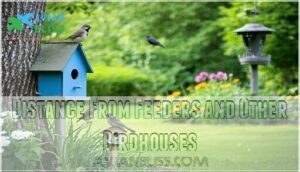
Keep birdhouses at least 60 feet from feeders to minimize nest disturbances during feeding frenzies.
Space multiple birdhouses 30-50 feet apart to respect territorial boundaries – crowding creates competition that drives birds away.
This strategic birdhouse spacing prevents aggressive encounters while allowing different species to coexist peacefully in your yard.
Protecting From Predators and Weather
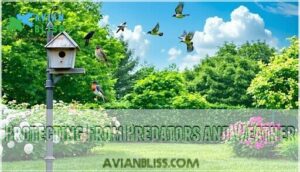
Smart placement shields nests from nature’s twin threats: hungry predators and harsh weather.
Strategic positioning with proper predator guards and weather proofing creates sanctuary spaces where birds can raise their young successfully.
- Install metal pole baffles and entrance hole extenders to block raccoons, snakes, and cats from reaching nest boxes
- Mount birdhouses 5+ feet high with overhanging roofs and proper birdhouse ventilation to prevent overheating during storms
- Use nest camouflage techniques like natural wood finishes and strategic placement near dense shrubs for storm protection
These protective measures increase nest success rates substantially, helping you attract birds while supporting essential bird conservation efforts in your backyard habitat.
By considering the ideal hanging bird house locations, you can further enhance the safety and attractiveness of your birdhouses, which is crucial for creating a backyard habitat that fosters wildlife preservation.
What Extra Steps Attract More Birds?
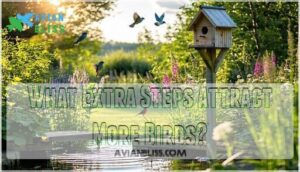
Beyond providing the perfect birdhouse, you’ll need to create a complete habitat that meets birds’ essential survival needs.
Strategic landscaping with native plants, reliable water sources, and proper maintenance practices can triple your nesting success rates compared to using birdhouses alone.
Landscaping With Native Plants and Shrubs
Native gardening transforms your yard into a bird magnet.
Local ecosystem plants support up to eight times more bird diversity than exotic ornamentals.
Choose shrub selection like serviceberry and winterberry holly for natural interest.
Plant diversity creates multi-layered habitats – oak trees host 530 caterpillar species that feed nestlings.
Bird friendly landscaping with 70% native coverage guarantees how to attract birds year-round through bird attracting plants supporting bird conservation.
Providing Water and Food Sources
Water features and bird feeders work together to create an irresistible bird habitat.
Install shallow bird baths or fountains—moving water attracts 70% more species than still sources.
Position feeders with sunflower seeds and suet 60 feet from birdhouses to prevent territorial conflicts.
Quality water sources support daily hydration while supplementary food comprises only 9% of nestling diets, making natural food sources equally important.
Maintenance and Community Engagement
Beyond providing sustenance and hydration, regular birdhouse upkeep guarantees long-term bird conservation success.
Annual cleaning prevents disease transmission while fostering local engagement through community outreach initiatives that draw attention to wildlife protection efforts.
- Schedule fall cleaning sessions to remove old nesting materials and parasites
- Document species observations to contribute valuable data for bird conservation research
- Share bird feeding tips with neighbors to create neighborhood-wide habitat corridors
- Organize community workshops teaching proper birdhouse types selection and maintenance techniques
Frequently Asked Questions (FAQs)
How often should I clean my birdhouse?
Clean your birdhouse annually after the breeding season, typically by mid-August. For species that have multiple broods like bluebirds, you’ll want to clean between broods after fledglings leave the nest.
Can birdhouses be used year-round safely?
Like a faithful sentinel standing guard through changing seasons, your birdhouse offers year-round sanctuary when properly maintained.
Yes, they’re safe for continuous use—providing winter shelter while requiring annual cleaning and predator barrier maintenance for ideal avian protection.
What tools are needed for birdhouse installation?
You’ll need a drill with bits, screws or mounting hardware, a level for proper alignment, and a screwdriver. Consider pole-mounting systems or tree-attachment brackets for secure installation.
How do I repair damaged birdhouses?
Damaged birdhouses crumble like forgotten promises, but you can breathe new life into them.
Replace rotted wood panels, tighten loose screws, reseal joints with exterior wood glue.
Apply fresh weatherproofing treatment annually.
When is the best time to install?
Install birdhouses during late winter or early spring, ideally between February and March. This timing allows birds to discover and claim territories before nesting season begins in April and May.
Conclusion
Consider backyard birder Sarah Thompson, who increased her nesting success rate from 20% to 85% simply by switching to cedar houses with proper ventilation and species-specific entrance holes.
Successfully learning how to attract birds to a birdhouse requires combining proper construction materials, strategic placement, and understanding species preferences.
Your birdhouse becomes irresistible when you match entrance hole dimensions to target species, position it 5-6 feet high facing away from prevailing winds, and maintain adequate distance from feeders.
Regular cleaning and native plant landscaping complete the formula for consistent nesting success seasons.
- https://grammar.collinsdictionary.com/easy-learning/how-do-you-give-commands-and-orders-in-english
- https://blog.collinsdictionary.com/how-do-we-create-our-corpus-examples/
- https://www.audubon.org/content/marlene-pantin
- https://www.sialis.org/habitat/
- https://nestboxlive.com/blog/20-common-backyard-birds-in-north-america/