This site is supported by our readers. We may earn a commission, at no cost to you, if you purchase through links.
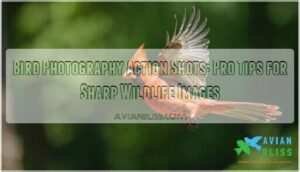 Capturing sharp bird photography action shots requires fast autofocus cameras like the Sony A9 III or Canon EOS R3, telephoto lenses of 400mm or longer, and shutter speeds between 1/1000-1/5000 seconds.
You’ll need continuous autofocus mode and high burst rates to track erratic flight patterns. Set your ISO between 100-400 for bright conditions or 1600-6400 in low light.
Use apertures around f/5.6 for sharp focus while maintaining fast shutter speeds. Master panning techniques by smoothly following the bird’s trajectory and anticipate movement by studying behavioral cues like head tilts before takeoff.
The real magic happens when technical precision meets split-second timing and intimate knowledge of your feathered subjects’ habits.
Table Of Contents
- Key Takeaways
- Essential Camera Gear for Bird Action Shots
- Ideal Camera Settings for Birds in Motion
- Mastering Techniques for Capturing Flight
- Creative Approaches to Bird Action Photography
- Best Locations and Timing for Bird Action Shots
- Identifying and Photographing Iconic Bird Species
- Post-Processing Tips for Stunning Results
- Practicing Ethical and Responsible Bird Photography
- Frequently Asked Questions (FAQs)
- Conclusion
Key Takeaways
- Master your camera settings – You’ll need shutter speeds between 1/1000-1/5000 seconds, continuous autofocus mode, and high burst rates to freeze wing motion and track erratic flight patterns effectively.
- Choose the right gear – You’ll want a fast autofocus camera like the Sony A9 III or Canon EOS R3, plus telephoto lenses of 400mm or longer to capture sharp details from a respectful distance.
- Perfect your tracking technique – You’ll improve your success rate by studying bird behavior patterns, anticipating movement through behavioral cues like head tilts, and practicing smooth panning motions.
- Time and location matter – You’ll get the best action shots during peak activity periods like spring migration and early morning hours, positioning yourself near feeding areas and flight paths where birds naturally congregate.
Essential Camera Gear for Bird Action Shots
Success in bird photography action shots starts with selecting the right equipment for sharp, fast-moving subjects.
You’ll need a camera body with rapid autofocus, a telephoto lens of at least 400mm, and proper support gear to handle the demands of wildlife photography.
Recommended Cameras for Fast Action

You’ll need a mirrorless camera that handles fast Frame Rate and Buffer Capacity for bird photography.
The Sony A9 III shoots 120 fps with blackout-free viewing. Canon EOS R3 delivers 30 fps raw bursts with excellent Weather Sealing. Nikon Z9 produces 20 fps with a high Megapixel Count sensor.
Choose cameras with larger Sensor Size for better low-light performance when photographing birds in various bird habitats. Consider the Sony A9 III options for superior performance in capturing fast movements.
Choosing The Best Telephoto Lenses

When selecting telephoto lenses for bird photography, focal length determines your reach while lens speed affects performance in challenging conditions.
These features directly impact your ability to capture sharp images of various bird species across different bird habitats.
Essential lens considerations for bird watching success:
- Focal Length: 400mm minimum for small birds, 300-400mm adequate for larger species
- Image Stabilization: Provides up to 8.5 stops compensation for handheld shooting
- Lens Speed: f/5.6 or wider apertures guarantee reliable autofocus performance
- Build Quality: Weather sealing protects against harsh outdoor conditions
- Autofocus Performance: Fast tracking essential for birds in flight
Modern zooms like 100-400mm offer versatility while prime lenses deliver maximum sharpness.
Many photographers find telephoto zoom lenses offer the best balance of versatility and affordability.
Accessories for Stability and Support
Heavy tripods anchor your camera during those pivotal moments when birds dive for fish or soar overhead.
Gimbal heads let you track fast-moving species smoothly across the sky. Monopods offer quick mobility for bird watching expeditions through varied habitats.
Beanbags stabilize telephoto lenses on car windows or fences. These stabilizers make the difference between sharp action shots and blurry disappointments.
Investing in a specialized support system enhances image quality by providing a stable base for your camera, which is crucial for capturing fast-moving species.
Ideal Camera Settings for Birds in Motion
Getting your camera settings right makes the difference between blurry disappointments and sharp action shots that capture every feather detail.
You’ll need to balance three key settings—shutter speed, aperture, and ISO—while using the right focus modes to track fast-moving birds.
Shutter Speed and Aperture Guidelines
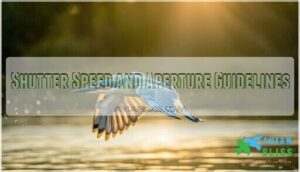
Getting the right shutter speed and aperture settings can make or break your bird action shots.
For birds in flight, use shutter speeds between 1/1000 and 1/5000 to freeze those rapid wing beats.
Set your aperture around f/5.6 to maintain sharp focus on the bird while creating pleasant background blur.
Shutter Priority mode works best since you’ll prioritize stopping motion over depth of field considerations.
Continuous Autofocus and Burst Modes
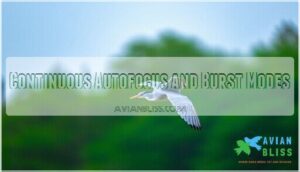
Configure your camera’s AF Area Modes to single-point or zone focusing for precise bird tracking.
Activate continuous autofocus (AI Servo/AF-C) to maintain sharp focus as birds move. Set Focus Tracking Sensitivity to medium for consistent results with erratic flight patterns.
Use high Burst Mode Speed to capture multiple frames per second. Monitor Buffer Capacity during extended sequences to avoid missing critical moments with fast-flying bird species, utilizing precise bird tracking techniques.
ISO Settings for Varying Light Conditions

Understanding ISO performance transforms your bird photography from mediocre to magnificent.
You’ll need to adjust ISO settings based on lighting conditions and your camera’s capabilities to capture sharp bird images while managing noise levels effectively.
- Sunny Day ISO: Keep ISO 100-400 for crisp images of bird species in bright habitats
- Low Light ISO: Push to 1600-6400 when birdwatching during dawn or dusk hours
- ISO and Noise: Higher ISOs create grain that degrades feather detail and color accuracy
- ISO Dynamic Range: Lower settings preserve highlight and shadow details in contrasting light
- ISO Auto Mode: Set maximum limits to maintain control while tracking moving birds automatically
Mastering Techniques for Capturing Flight
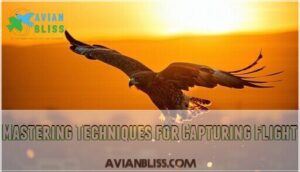
Capturing birds in flight requires mastering timing and tracking techniques that separate amateur shots from professional results.
Mastering bird flight photography means reading the moment before it happens and staying ready to capture pure magic
You’ll need to combine smooth panning motions with precise autofocus settings to freeze those split-second moments when wings create perfect compositions, which involves techniques.
Tracking Birds in Flight
Through thick forests and across open meadows, tracking birds in flight requires smooth camera movement and steady hands.
You’ll master flight patterns by observing species behavior before they take off.
Weather influence affects bird movements, so adjust your tracking technology accordingly.
Practice following flying birds with continuous focus while identifying each species.
Your bird ID skills improve as you anticipate their paths and maintain steady pursuit through the viewfinder.
Anticipating Movement and Behavior
Reading signals from birds transforms your photography success rate dramatically.
Understanding bird behavior before they move is everything in flight photography
Watch for behavioral patterns like head tilts before takeoff or wing positioning changes that signal imminent flight.
Study specific flight paths birds use regularly around feeding areas or roosting sites.
Notice how hunting techniques vary between species – hawks circle before diving while herons freeze before striking.
Bird communication through calls often announces group movements, helping you predict action, and dramatically improves your ability to capture key moments, with behavioral patterns and imminent flight signals being crucial.
Using Pre-release and High-Speed Capture
Pre-release capture lets you grab frames before pressing the shutter completely, perfect when bird wings beat faster than your reflexes.
Set your camera to Buffer Priority mode and use high Frame Rate settings with fast Memory Cards to capture split-second moments.
Lighting Impact affects how quickly your camera processes each frame, so adjust accordingly.
Watch Subject Behavior patterns – birds telegraph their flight intentions through subtle movements before takeoff.
To improve focus, consider using AI Servo mode to capture split-second moments with better accuracy, and adjust your camera settings for optimal results in fast environments.
Creative Approaches to Bird Action Photography
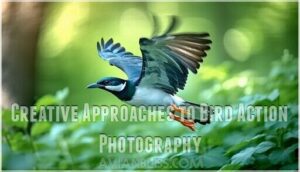
Beyond technical precision lies the art of turning bird action into visual poetry.
You can transform ordinary moments into extraordinary images by mastering motion blur, freezing peak drama, and composing shots that tell compelling stories.
Motion Blur With Slow Pan Techniques
Slow panning transforms bird flight into artistic streaks of color and motion.
Master this technique by practicing smooth camera movements that follow your subject’s path.
- Shutter speeds between 1/15-1/20 seconds create perfect wing blur
- Background choice matters – busy backgrounds become distracting streaks
- Subject speed affects blur intensity – faster birds need quicker pans
- Panning practice on predictable flight paths builds muscle memory
The key is matching your camera’s movement to the bird’s trajectory while maintaining focus on the head.
Freezing Dramatic Moments
Capturing birds requires Perfect Timing and Instant Capture techniques.
When you spot dramatic action, like a hawk’s talons extending or wings spreading mid-dive, fire your camera immediately.
The Decisive Moment happens fast with flying birds.
Use burst mode to grab multiple frames during peak action.
Focus on Storytelling Elements like intense expressions or dynamic feather positions that showcase the bird’s power and grace through strong Composition Focus.
Artistic Composition in Action Shots
Beyond freezing peak action, artistic composition transforms ordinary bird shots into compelling visual stories.
You’ll create depth by positioning birds along leading lines like branches or shorelines.
Apply the rule of thirds, placing your subject’s eye at intersection points rather than dead center.
Composition Techniques for Dynamic Bird Photography:
- Leading lines – Use branches, water edges, or flight paths to guide viewers’ eyes toward your bird
- Rule of thirds – Position birds at power points where grid lines intersect for stronger visual impact
- Negative space – Leave breathing room around flying birds to show movement direction and context
- Framing elements – Use tree branches, rocks, or foliage to create natural borders around your subject
- Background clarity – Blur distracting elements while keeping habitats recognizable to tell the bird’s environmental story
Smart framing showcases both individual feathers and surrounding habitats.
When wings spread wide during takeoff, negative space becomes your ally – it emphasizes the bird’s power while providing visual balance that makes viewers pause and appreciate the moment.
Best Locations and Timing for Bird Action Shots
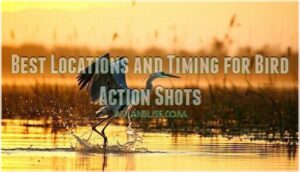
Finding the perfect spot and time can make the difference between ordinary snapshots and stunning action shots that capture birds at their most dynamic.
Success comes from understanding migration patterns, seasonal behaviors, and choosing locations where birds naturally engage in active behaviors like hunting, feeding, or territorial displays.
Top Bird Photography Destinations
The world’s best birding destinations offer unparalleled opportunities for action photography.
Colombia leads global hotspots with over 1,900 species, while Costa Rica’s 878 species attract photographers to cloud forests.
Local favorites include Bosque del Apache for crane blast-offs and Australia’s endemic parrots.
Islands like Madagascar are known for their high endemic species counts.
National Parks and State Parks provide infrastructure like photo blinds for ideal shooting conditions.
| Destination | Key Species | Best Season | Photography Focus | Infrastructure |
|---|---|---|---|---|
| Colombia | 1,900+ species | Year-round | Cloud forest endemics | Eco-lodges, guided tours |
| Costa Rica | 878 species | Nov-Apr | Quetzals, hummingbirds | Photography tours, blinds |
| Bosque del Apache, NM | Cranes, geese | Oct-Feb | Blast-off action shots | Auto tour loops, platforms |
| Hokkaido, Japan | Sea eagles, cranes | Dec-Mar | Winter courtship dances | Guided cruises, heated blinds |
| Australia | Endemic parrots | Sep-Mar | Bowerbird displays | Specialized photo workshops |
Understanding Seasonal Bird Activity
Understanding seasonal bird activity means timing your shoots when birds are most active and displaying dynamic behaviors.
Bird activity peaks during spring and early summer due to breeding seasons and increased energy demands.
Here’s when you’ll find the best action opportunities:
- Spring Migration (March-June) – Birds engage in courtship displays and territorial behavior
- Breeding Seasons – Frequent feeding flights and nest-building create constant motion
- Fall Migration (August-November) – Large flocks and dramatic flight formations appear
- Winter Feeding Habits – Cold temperatures drive aggressive foraging behavior in resident species
Morning hours offer peak activity as birds maximize daylight for feeding.
Molting periods create unique photo opportunities when species display different plumages.
Understanding these migration patterns and roosting behavior helps you position yourself where birds naturally congregate.
Each habitat supports different species with varying seasonal peaks.
Planning Shoots Around Migration and Feeding
Migration Patterns and Feeding Behaviors drive your shooting schedule.
Time visits around bird migration periods when species concentrate at specific locations. Research Seasonal Changes to predict when birds arrive and depart.
Study Habitat Selection preferences – waterfowl gather at wetlands while raptors follow thermals.
Weather Impact affects timing substantially. Winter Migration brings diverse species together at feeding stations, creating incredible action opportunities, influenced by Seasonal Changes.
Identifying and Photographing Iconic Bird Species
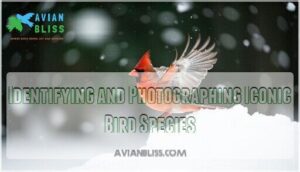
Mastering iconic bird species requires understanding their unique behaviors and habitats to capture compelling action shots.
You’ll discover how northern cardinals, raptors, and colorful corvids each demand different photographic approaches for stunning results.
Northern Cardinal in Action
Cardinal flight patterns showcase their quick bursts between cover and feeding areas.
These vibrant red males perform dramatic takeoffs, especially during mating displays and winter activity around feeders.
You’ll catch their best action shots during feeding frenzies in urban cardinal habitats.
- Crimson wings spread wide against morning sunlight as they launch from seed feeders
- Males puffing their chest feathers during territorial displays near nesting sites
- Quick darting movements between bare winter branches with snow falling
- Bright red crests raised high while competing for prime perching spots
- Powerful wingbeats creating motion blur as they chase away competing birds
Capturing Birds of Prey in Flight
Raptors like Bald Eagles and Red-tailed Hawks showcase incredible Flight Patterns during their hunts.
You’ll witness powerful wingbeats reaching 30 mph as they execute dramatic talon-first dives. Their Hunting Techniques vary—American Kestrels hover while Sharpshinned Hawks dart through trees.
Study each species’ behavior for better Raptor Identification. Consider Habitat Considerations when positioning yourself, and remember Ethical Concerns about maintaining respectful distances during these magnificent aerial displays.
To freeze the action, consider using fast shutter speeds.
Photographing Colorful Jays and Owls
Blue Jays showcase brilliant azure feathers during rapid woodland sprints, while Owls demonstrate silent nocturnal flight patterns.
These species demand specific techniques for successful bird photography:
- Jay Plumage shots: Capture their aggressive feeding bursts at dawn using fast shutter speeds
- Owl Behavior documentation: Use wide apertures for low-light conditions during dusk hunts
- Nocturnal Photography settings: High ISO prevents motion blur in dim environments
- Habitat Considerations: Position near woodland edges where Jays and Owls naturally hunt
Ethical Concerns require maintaining proper distances from sensitive species.
Post-Processing Tips for Stunning Results
Even the sharpest action shot can benefit from careful post-processing to bring out its full potential.
You’ll transform good captures into stunning images through noise reduction, color enhancement, and strategic sharpening techniques.
Noise Reduction and Sharpening
High ISO settings create noise artifacts that obscure feather details and wing textures in bird photography.
Modern sharpening methods like unsharp mask and clarity adjustments recover lost detail without amplifying grain.
Software comparison reveals Topaz Photo AI excels at bird anatomy enhancement while Lightroom handles batch processing efficiently.
Apply noise reduction first, then selective sharpening to wings and feathers for superior results.
Enhancing Color and Detail in Action Shots
After reducing noise, you’ll want to boost your bird images through targeted adjustments.
Color Correction brings out natural plumage tones while Detail Enhancement sharpens feather textures.
Apply Clarity Adjustments to make wings pop against backgrounds.
Use Vibrance Control for subtle color boosts and Saturation Balance to prevent oversaturation.
Focus on the bird’s eyes and wing details first, then adjust Habitat elements to complement your flying birds without overpowering the main subject, using techniques like Color Correction.
Recommended Editing Software
Your editing software choice shapes your bird photography workflow.
Professional options like Adobe Lightroom and Capture One offer robust workflow integration and batch processing capabilities. AI enhancement tools like Luminar Neo streamline complex edits across diverse bird species and habitat conditions.
Selective editing allows precise adjustments.
- Software Cost: Balance budget with features – Affinity Photo offers professional tools without subscription fees
- Plugin Compatibility: Seamless integration with existing workflows maximizes your wingspan of creative possibilities
- Batch Processing: Handle hundreds of flight shots efficiently, preserving precious editing time
Practicing Ethical and Responsible Bird Photography
Capturing birds in action requires more than just technical skill—it demands respect for the wildlife you’re photographing.
Your responsibility extends beyond getting the perfect shot to ensuring you don’t harm the very subjects that make your images possible, which is a crucial aspect of capturing birds in action and requires responsibility.
Maintaining Distance and Minimizing Disturbance
After perfecting your images through post-processing, maintaining proper distance becomes your next priority for bird wellbeing.
Ethical guidelines require staying far enough away to avoid altering natural behaviors. Responsible practices protect both birds and their habitats during your birding excursion.
| Bird Type | Minimum Distance | Key Indicators |
|---|---|---|
| Songbirds | 10-15 feet | Calm feeding, normal calls |
| Raptors | 50-100 feet | Relaxed posture, no alarm calls |
| Waterbirds | 25-50 feet | Continued foraging behavior |
| Nesting Birds | 100+ feet | No defensive displays |
| Owls | 75+ feet | Eyes remain closed during day |
Watch for stress signals like rapid head movements or alarm calls. If birds flush repeatedly, you’re too close.
Habitat protection means avoiding trampling vegetation or blocking flight paths. These minimizing impact strategies guarantee successful birding tours while preserving natural ecosystems for future bird watch opportunities.
Avoiding Harmful Attractants and Calls
While birds might seem attracted to your playback calls, these sounds can seriously stress wildlife and disrupt their natural behaviors.
Ethical attractants like native plants work better than artificial methods for responsible birding.
To minimize disturbance, consider using telephoto lenses for bird photography.
- Avoid using recorded bird calls during breeding seasons when birds are most vulnerable
- Skip playback near sensitive species like owls that expend precious energy responding
- Choose natural habitat improvements over artificial feeding stations for bird wellbeing
- Research call limitations at nature preserve locations before your birding opportunity
- Focus on bird ID through visual observation rather than sounds that impact their habitat
Using these guidelines will help promote responsible birding and reduce the negative impact on bird populations.
Respecting Habitats and Conservation Guidelines
You can’t preserve what you don’t protect.
Follow marked trails and respect buffer zones around nesting areas to maintain Habitat Preservation.
Check Conservation Status before photographing sensitive species.
Many Coastal Habitat areas require permits for photography.
Practice Minimal Impact techniques by avoiding trampling vegetation in critical Habitats of Birds.
Support Conservation Awareness through ethical practices that prioritize Species Protection over perfect shots.
Frequently Asked Questions (FAQs)
How do weather conditions affect bird action photography?
Weather dramatically impacts your bird action shots.
Strong winds create flight challenges but dynamic poses.
Overcast skies provide even lighting, eliminating harsh shadows.
Rain forces birds into sheltered areas, limiting opportunities but creating dramatic backdrops when it clears.
What backup equipment should photographers always carry?
Murphy’s Law strikes hardest when you’re chasing that perfect shot, so pack extra batteries, memory cards, and lens cloths. A backup camera body saves the day when equipment fails unexpectedly.
How to photograph birds at water sources effectively?
Position yourself near shorelines during early morning or late afternoon when birds are most active.
Use a longer lens to maintain distance and avoid spooking them.
Wait patiently at drinking spots.
What safety precautions are needed in remote locations?
Remote areas become survival puzzles where preparation matters most.
Always tell someone your exact location and return time. Carry emergency supplies, first aid kit, GPS device, and extra batteries.
Check weather forecasts and wildlife warnings beforehand.
How to handle aggressive territorial bird behavior?
Stay calm and slowly back away when birds dive or swoop.
Don’t run or make sudden movements. Keep your camera lowered and avoid eye contact.
Most territorial displays are bluffs meant to scare, not harm you, and are typically a bluff.
Conclusion
Ironically, the most challenging part of bird photography action shots isn’t the technical complexity—it’s developing patience while birds refuse to cooperate with your carefully planned compositions.
You’ve learned the camera settings, mastered panning techniques, and studied flight patterns.
Now you can consistently capture sharp bird photography action shots that showcase nature’s aerial ballet.
Remember that every blurred wing and missed focus teaches valuable lessons.
With dedicated practice and respect for wildlife, you’ll transform fleeting moments into stunning photographs that celebrate birds in their natural element.
- https://lenscraft.co.uk/photography-tutorials/bird-photography-settings/
- https://en.canon-cna.com/pro/stories/best-kit-bird-photography/
- https://www.nickdalephotography.com/blog/how-i-photograph-birds
- https://www.digitalcameraworld.com/buying-guides/best-lenses-for-bird-photography
- https://digital-photography-school.com/10-incredible-bird-photography-tips-beginners/