This site is supported by our readers. We may earn a commission, at no cost to you, if you purchase through links.
 If you’ve ever wondered about bird breeding characteristics explained, here’s the scoop: birds spring into action when longer days and abundant food tell them it’s go-time.
Sunlight signals their hormones, so suddenly even the quietest robins start belting tunes or building nests like architects on a deadline.
Diet loaded with protein and minerals gives their young a head start.
Each species does things its own way—think solo nesters versus social flockers—with unique dances or rituals.
Parental teamwork varies, too, and some even rope in extra helpers.
Stick around; in the wild world of birds, there’s much more than meets the eye, with unique dances and parental teamwork.
Table Of Contents
Key Takeaways
- You’ll see that increased daylight and better food supplies kick off bird breeding by sparking key hormonal changes.
- Each bird species handles courtship and nesting differently, from flashy dances to group parenting strategies.
- Birds carefully pick their nesting spots and time hatching to maximize chick survival and food availability.
- Habitat loss and climate shifts are disrupting breeding cycles, making conservation of nesting sites more critical than ever.
Key Triggers of Bird Breeding
You’ll find that bird breeding starts with a few key triggers, including changes in daylight, food supply, and hormone levels.
Bird breeding kicks off when daylight grows, food is plentiful, and hormones spark the cycle of new life
These factors work together to signal when birds are ready to begin their breeding cycle.
Photoperiod and Seasonal Cues
In the sphere of bird breeding, longer daylight hours act like nature’s alarm clock, stirring up breeding cycles and circannual rhythms.
Here’s what daylight does for birds:
- Initiates Bird Reproduction Methods
- Triggers Seasonal Migration
- Sets Migration Patterns
- Sparks Ornithology Research
- Influences Environmental Triggers in Bird Behavior
The annual changes in daylength are controlled by photoperiod signals that play a vital role in regulating bird reproduction.
Role of Nutrition in Breeding
As daylight shifts signal breeding season, nutrient availability takes center stage.
Birds need high-protein breeding diets and quality foods stuffed with minerals and vitamins to fuel reproduction.
Studies in ornithology research show food quality and timely nutritional supplements boost clutch size, hatching, and chick survival.
Energy reserves from rich diets are the engine of healthy bird breeding and nesting.
Understanding avian nutritional requirements is essential for optimizing breeding outcomes and ensuring the overall health of the birds, which relies on quality foods.
Hormonal Changes and Breeding Readiness
In the context of bird breeding, hormone regulation sets the stage for readiness.
You’ll notice these key steps in the process:
- Increased daylight triggers hormone release.
- Hormones activate reproductive organs.
- Fertility factors boost mating rituals.
- Birds show avian characteristics for mate attraction.
Understanding bird anatomy and breeding cycles helps you master bird identification and reproductive health in species diversity.
Species-Specific Breeding Triggers
Once hormones kick in, you’ll notice each bird species responds differently to breeding cues.
Some rely on food abundance, while others wait for longer daylight. Mating rituals, nesting instincts, and flock behavior are unique to each bird species.
Courtship displays can range from simple songs to elaborate dances. Bird identification gets easier as species diversity shows up in bird breeding and nesting habits.
Understanding the complex bird mating systems is essential for insights into their breeding behaviors and to understand how each species has its own mating rituals, nesting instincts, and flock behavior.
Bird Reproductive Strategies Explained
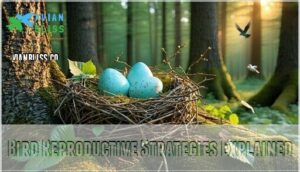
You’ll find that birds use a range of reproductive strategies, from the timing of egg laying to how they care for chicks.
Each method helps maximize the survival of their young, depending on factors like climate, food, and nesting site.
Egg Laying and Incubation Patterns
After seasonal cues set the stage, birds get busy with egg formation and picking the right nesting materials.
Each bird species has its own rhythm—some lay several eggs, others just one or two.
Incubation periods can vary, impacting brood size and hatching rates.
Bird nesting behaviors tracked by Ornithology Resources or programs like NestWatch also reveal surprising population studies.
Clutch Size and Nesting Site Selection
After you’ve learned about laying and incubating eggs, it’s time to look closer at clutch size and nesting site selection.
Birds weigh clutch limits, egg size, and where they’ll build. Nest architecture and nesting materials can decide brood survival.
Tools like NestWatch, Bird Cams, and Bird Academy help monitor bird nesting and inform bird population studies without disturbing the nest.
Understanding bird nesting habits is essential for effective conservation efforts and informed birdwatching practices.
Synchrony of Hatching and Chick Survival
After clutch size and nesting pick the drama begins—Hatching Synchrony can tip the balance for future Nesting Success or heartbreak.
Perfect timing means more Brood Survival and higher Fledging Rates.
When it’s off, Chick Mortality rises.
Here’s why you’ll care:
- Peaks in food match hatching
- Older chicks thrive sooner
- Reduces competition
- Lowers risk exposure
- Tracked in NestWatch bird population studies
Patterns of Parental Care in Birds
You’ll notice that bird parents use different methods for raising their young, from both parents helping at the nest to only one stepping up or a group pitching in.
These patterns affect everything from nest building to how chicks get fed and protected, shaping survival and success for each species.
Biparental Care and Its Prevalence
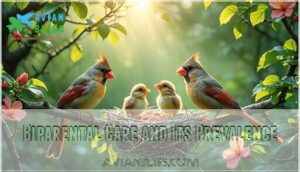
If you’ve ever watched a pair of birds trade shifts at the nest, you’ve seen biparental care in action. Both parents chip in—from nest defense to chick rearing—boosting breeding success and Parental Investment.
This teamwork, highlighted in Bird Watching and Ornithology Studies, showcases Cooperative Parenting and shapes Avian Anatomy across Bird Evolution History.
Understanding parental care products is essential for appreciating the nuances of biparental care in birds.
| Bird | Parental Investment | Breeding Success |
|---|---|---|
| Cardinal | High | Consistent |
| Barred Owl | Shared Duties | Strong |
| Blue Jay | Equal | Variable |
| Red-tailed Hawk | Division of Labor | Reliable |
| Great Horned Owl | Alternating Roles | Effective |
Female-Only and Male-Only Care

While biparental care is typical, you’ll see some birds take the path of Solo Parenting.
Female Care dominates in about 8–10% of species, while Male Care shows up rarely.
These care patterns aren’t random—they reveal unique sex roles shaped by avian anatomy and evolution history. Bird Watching and Ornithology Studies often highlight these fascinating twists in bird family life.
Cooperative Breeding in Social Species
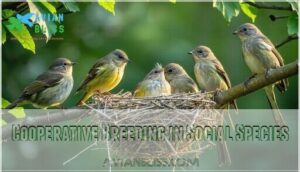
Cooperative nesting is at the heart of social bonding and group dynamics in many bird colonies.
Within these social species, helpers—often previous offspring—join in feeding chicks and defending nests.
Ornithology studies show that shared duties improve fledgling survival.
Tools like Bird Cams and NestWatch help you track these fascinating social partnerships in action, revealing hidden teamwork.
Offspring Provisioning Behaviors
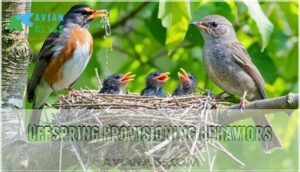
Sharing food isn’t just about snack time—it’s a critical piece of Nestling Care and Fledgling Support.
You’ll see parents hustling all day, splitting meals to match each chick’s needs. This Parental Investment often shapes brood reduction if food runs low.
Tools like NestWatch, Bird Cams, Bird Academy, Project FeederWatch, and Living Bird Magazine document these feeding strategies in wild nests.
The availability of bird feeding options can substantially impact the survival rates of birds in various environments.
Diversity in Bird Breeding Across Species
You’ll see that bird breeding isn’t one-size-fits-all—species use different strategies adapted to their habitats, from urban parks to dense forests.
By looking at these differences, you can better understand how each bird faces challenges like finding food, choosing mates, and protecting their young.
You can gain insight into the unique ways birds address these challenges by examining the differences in their breeding strategies.
Case Studies of Common North American Birds
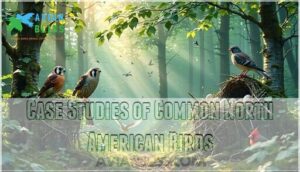
Bird Migration and nesting habits look different across North American favorites.
The American Kestrel’s hunting pairs split nest duties, while the Northern Cardinal builds deep in thickets.
Redtailed Hawks fiercely guard their large stick nests. Blue Jay flocks cooperate on defense but not nesting.
Don’t overlook Mourning Doves—simple nests, rapid feather growth, and slim beak shapes set their breeding style apart.
Understanding bird species diversity is essential for effective conservation efforts.
Flightless Vs. Flying Bird Breeding Differences
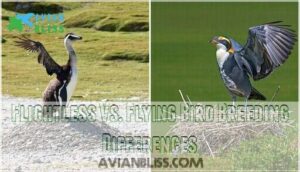
When you compare flightless and flying birds, their Flight Patterns and Breeding Cycles really set them apart.
Flightless birds stick to the ground, showing unique Nesting Habits like ground scrapes, while flying birds build elevated nests.
Feather Growth and bird wings evolve differently too—flightless species lose Flight Adaptations, shaping distinct Mating Rituals, Bird Flight Mechanics, and reproductive strategies.
Adaptations in Extreme Environments

You’ve seen how flightless birds approach breeding. Now, let’s step into tough places where you need serious grit.
In ornithology, birds fine-tune breeding for survival, using unique Flight Adaptations and Bird Flight Mechanics.
Here’s how they cope: Understanding bird seed options like desert bird seeds is essential for their survival.
- Desert Adaptations
- Arctic Breeding cycles
- High Altitude nesting
- Tropical Habitats timing
- Extreme Migration patterns
Bird Breeding and Conservation Implications
When you look at bird breeding patterns, you’ll see how changes in habitat and climate put entire populations at risk.
Understanding these processes helps you recognize why conserving breeding sites is critical for long-term survival of bird species, which is a key aspect of breeding patterns.
Impact of Habitat and Climate Change
When you look at bird breeding differences across species, it’s clear that Habitat Loss and Climate Shift are shaking things up.
Ecosystem Disruption and Environmental Degradation force Species Migration, often shifting Bird Migration Patterns out of sync.
Climate Change Impact lowers Conservation Status for many. Responsive Habitat Conservation can help, but keeping up with their new patterns challenges even the best Wildlife Conservation Status efforts.
Bird Monitoring and Citizen Science Programs
Ever wondered how Bird Tracking and Nest Monitoring shape conservation?
You can jump into Citizen Science through Project FeederWatch, Bird Academy, and NestWatch—just a few gateways for curious minds.
Use Bird ID tools, try Feather Analysis, or explore Migration Patterns with online courses.
Every sighting you log adds essential data, turning everyday moments into real progress for bird research.
Understanding the importance of bird conservation efforts is essential for developing effective strategies to protect bird populations and support citizen science.
Importance of Protecting Breeding Habitats
Among the tangled roots and quiet corners of a marsh, Habitat Preservation matters most for birds.
When Breeding Grounds shrink or Nesting Sites vanish due to shifting Environmental Factors, birds struggle.
Conservation Efforts like NestWatch or birdwatching projects help track Bird ID and Conservation Status.
By protecting these spaces, you give birds the freedom and safety they need to thrive, which is crucial for their Breeding Grounds.
Frequently Asked Questions (FAQs)
How do birds choose their breeding partners?
Birds don’t swipe left, but they size up feathers, song quality, and territory like Olympic judges.
You’ll notice they lean on courtship dances, calls, nest-building skills, and even food gifts to pick partners who boost chick survival.
What role do vocalizations play in bird courtship?
When you hear a bird sing or call, you’re witnessing courtship in action.
Males often use complex songs or unique sounds to attract mates, show off their health, and stake claim to territory—all essential for successful pairing.
These behaviors are crucial for the birds’ survival and reproduction, and they play a significant role in the ecosystem.
How do birds prevent inbreeding within populations?
Think of a city with many neighborhoods—birds avoid “family gatherings” by recognizing relatives through songs, calls, and scents.
This helps them pick distant mates, spreading genes and keeping populations healthy, much like careful matchmaking in a small town.
What are the effects of parasites on bird breeding?
Parasites can really throw a wrench in breeding plans—they drain energy, lower reproductive success, and sometimes change the timing of nesting.
If you’re a parent bird, expect fewer eggs and less healthy, slower-growing chicks.
How do urban environments affect bird breeding cycles?
Life in the city is a roller coaster—bright lights confuse mating schedules, noise disrupts courtship songs, and fragmented habitats make good nesting spots scarce.
You’ll see urban birds sometimes breed earlier, but tough conditions can lower their success rates, making urban birds a notable example of adaptation.
Conclusion
Much like a well-choreographed symphony, bird breeding characteristics explained reveal nature’s precision.
You’ll notice each species times nesting, courtship, and chick care with scientific coordination, driven by light, hormones, and nutrition.
By understanding these triggers and parental strategies, you gain insight into avian resilience and vulnerability.
Your awareness of these behaviors sheds light on conservation needs, empowering you to help safeguard habitats.
Next time you spot a nest, you’ll appreciate the science behind every careful choice.
- https://en.wikipedia.org/wiki/Breeding_behaviors_of_birds
- https://pmc.ncbi.nlm.nih.gov/articles/PMC2596859/
- https://www.nature.com/articles/s41467-023-42767-5
- https://amoywg.org/wp-content/uploads/2011/11/Kersten-and-Brenninkmeijer-1995-growth-fledging-success-survival-juvenile-ostralegus.pdf
- https://www.merriam-webster.com/dictionary/environment