This site is supported by our readers. We may earn a commission, at no cost to you, if you purchase through links.
 You can restore feathers using gentle, natural methods that won’t damage their delicate keratin structure. Start by washing them in lukewarm water with mild dish soap or baby shampoo – this removes dirt without breaking down the protein fibers.
For pest control, freeze feathers at 0°F for 48 hours or use a 50/50 alcohol-peroxide solution. Essential oils like cedar or lavender add protection while deterring insects.
Always air dry away from direct sunlight to prevent fading and brittleness. Steam can help reshape bent feathers back to their natural form.
The key to cleaning bird feathers naturally lies in understanding what damages them and what protects them – knowledge that’ll save your collection from common mistakes, using natural methods and preserving their delicate form.
Table Of Contents
Key Takeaways
- Use gentle washing methods – Clean feathers with lukewarm water and mild dish soap or baby shampoo to remove dirt without damaging the delicate keratin structure.
- Control pests naturally – Freeze feathers at 0°F for 48 hours or use a 50/50 alcohol-peroxide solution to eliminate bugs and parasites without harsh chemicals.
- Dry and store properly – Air dry feathers away from direct sunlight to prevent fading, then store them in airtight containers with natural repellents like cedar or lavender oils.
- Check legal requirements first – Verify that you are allowed to collect and keep the feathers, as most wild bird feathers are protected by federal law and require permits.
Feather Structure and Initial Handling
Before you start cleaning feathers, you’ll need to understand what you’re working with and how to handle them safely.
Feathers are made of keratin—the same tough protein in your fingernails—but they’re still vulnerable to damage from pests, mold, and improper handling, so taking the right first steps protects both the feathers and your health.
Protect your feathers like precious artifacts—keratin may be tough, but proper care prevents costly damage
Feather Composition and Why It Matters
Bird feathers aren’t just pretty decorations—they’re made of keratin, the same tough protein in your fingernails.
Despite their material toughness, feathers face constant threats from pest damage, sunlight effects, and natural feather degradation. Understanding keratin structure helps you choose the right feather cleaning methods for long-lasting results.
Key factors affecting feather care:
- Sunlight weakens keratin fibers and causes fading over time
- Pests like mites and beetles can destroy entire collections quickly
- Moisture creates perfect conditions for mold growth and deterioration
Assessing Feather Condition Before Cleaning
Before diving into feather cleaning, you’ll want to play detective and examine each specimen carefully.
Look for damage identification markers like tiny holes, loose fluff, or brittle sections that signal infestation signs from beetles or mites.
Check your feather type‘s structural integrity—flight feathers need special attention compared to downy ones.
Notice any color fading or unusual odors that might indicate mold or decay.
This initial assessment guides your bird feather collection maintenance approach, ensuring your feather care routine targets specific issues rather than using a one-size-fits-all cleaning method.
Maintaining feather health also relies on proper preening habits.
Isolating and Preparing New Feathers
After you’ve checked your feathers for damage, it’s time to quarantine new additions to your bird feather collection.
This new feather quarantine prevents contamination of your existing collection and guarantees proper initial pest control. Start your cleaning feathers process by isolating newcomers completely from stored specimens.
- Freeze at 0°F for 48 hours – freezing best practices require repeating after 24-hour break
- Try alcohol peroxide soak – 50/50 mixture kills bugs in 30 minutes
- Check feather source legality – verify compliance with migratory bird laws
- Inspect for tiny holes – signs of beetle damage need immediate attention
- Set up isolation area – separate workspace for sanitizing feathers safely
Natural Cleaning Methods for Bird Feathers
You’ll find that cleaning bird feathers naturally preserves their delicate structure while removing dirt, oils, and potential contaminants safely.
These gentle methods use common household items like mild soap, essential oils, and proper drying techniques to restore feathers without harsh chemicals that can damage their keratin fibers.
Gentle Washing With Mild Soap or Shampoo
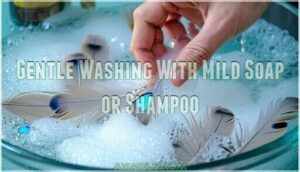
Most cleaning starts with choosing the right soap selection for your feathers.
Dawn soap or baby shampoo work best because they’re gentle on delicate keratin structures.
Mix your chosen soap with lukewarm water—hot water can damage the feather’s natural oils.
Use proper washing technique by gently rubbing from base to tip, following the feather’s natural direction.
This cleaning method removes dirt without breaking barbs.
Many people specifically seek Dawn for feather care for delicate keratin structures.
Thorough residue removal requires multiple rinses to prevent soap buildup that attracts more dirt later, ensuring proper washing technique and using lukewarm water.
Using Essential Oils for Added Protection

Adding essential oils to your feather cleaning routine provides bug repellency and enhanced feather sheen.
Cedar essential oil and lavender offer excellent scent preferences while deterring pests.
For application methods, add 2-3 drops to cleaning water or dab oil-soaked cloths near stored feathers.
Using natural bug repellents guarantees that feathers used in arts and crafts remain in good condition.
These oil types create natural barriers against insects while maintaining proper feather care and maintenance through natural feather cleaning approaches.
Rinsing, Drying, and Reshaping Techniques

Thoroughly rinse feathers with clean water to remove all soap residue, which can attract dirt later.
For Air Drying, place feathers on paper towels away from direct sunlight.
Use a Hair Dryer on low heat for faster Drying Feathers without damage.
Steam Preening works magic—hold misshapen feathers over a tea kettle’s steam, then gently preen back into shape for proper Feather Care and Maintenance.
Machine Washing and Safe Drying Tips

While gentle hand washing works best for most bird feathers, machine washing can work in emergencies if you’re extra careful. Only use front-load washers on delicate cycles with cool water and mild soap. Always protect your feathers properly during the process. Some machines even offer specialized delicate cycles for fragile items.
- Pillowcase Protection: Place feathers in knotted pillowcases or zippered covers to prevent loss during washing
- Dryer Settings: Use lowest heat or air-dry settings only—high heat permanently damages keratin structure
- Double Bagging: Secure zippered ends with safety pins to minimize feather escape during cycles
- Fluffing Feathers: Add large bath towels (never tennis balls) to cushion gentle tumbling action
- Feather Maintenance: Run multiple 40-50 minute drying cycles until completely dry to prevent mold growth
Safe Pest and Parasite Removal
Finding bugs and parasites in your feathers isn’t just gross—it’s a real threat to your collection and health.
You’ll need effective methods that kill these unwanted hitchhikers without damaging the delicate keratin structure of your feathers.
Freezing Feathers to Eliminate Insects

Freezing feathers works like putting bugs in a deep freeze—they can’t survive the cold shock. You’ll need freezer temperatures of 0°F (-18°C) or colder for this method to work effectively.
| Step | Duration | Temperature |
|---|---|---|
| Initial freeze | 48 hours | 0°F (-18°C) |
| Room temp break | 24 hours | Room temperature |
| Second freeze | 48 hours | 0°F (-18°C) |
This freeze-thaw cycle kills different bug life stages that might resist single freezing. Most feather types handle this treatment well, though delicate specimens need extra care during feather storage afterward.
Alcohol and Hydrogen Peroxide Solutions

When other methods fall short, mixing isopropyl alcohol with hydrogen peroxide creates a powerful sanitizing solution.
This medical-grade combination tackles both bacteria and achieves viral inactivation while brightening your feathers naturally. For broader protection, consider antiparasitic medications for birds.
Here’s your step-by-step approach:
- Solution ratios: Mix equal parts rubbing alcohol and hydrogen peroxide
- Immersion time: Soak feathers for 30 minutes minimum
- Medical grade: Use pharmacy-quality products, not lab-grade chemicals
- Feather brightening: Expect natural whitening without brittleness
Avoiding Harsh Chemicals and Bleach
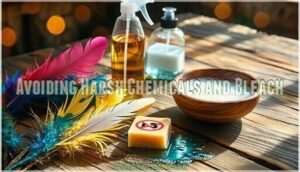
While alcohol and hydrogen peroxide solutions offer effective sanitization, you’ll want to steer clear of harsh chemicals that can damage your feathers.
Bleach might seem like a powerful cleaning agent, but it weakens keratin fibers and strips natural colors from feathers.
| Safe Options | Harsh Chemicals to Avoid |
|---|---|
| Warm sudsy water with dish soap | Bleach solutions |
| Mild hand soap mixtures | Ammonia-based cleaners |
| Essential oils (cedar, lavender) | Strong detergents |
| Borax for preservation | Industrial solvents |
| Natural alternatives only | Chemical pesticides |
Safe sanitization protects both you and your feathers.
Cleaning feathers for crafts requires gentle soaps that won’t compromise their structure.
Sanitizing bird feathers naturally maintains their integrity while eliminating harmful pathogens.
Additional Parasite Control Methods
Beyond traditional cleaning, you’ll find additional methods that pack a serious punch.
Diatomaceous earth works like nature’s sandpaper, dehydrating parasites on contact when dusted directly onto feather bases.
Cedar shavings naturally repel insects while UV exposure from controlled sunlight kills stubborn mites.
Herbal repellents containing lavender or rosemary provide ongoing protection without harsh chemicals.
Storing and Preserving Clean Feathers

Once you’ve cleaned your feathers thoroughly, proper storage becomes essential for maintaining their condition and preventing future infestations.
You’ll need to create an environment that keeps moisture, pests, and harmful light away from your preserved feathers.
Choosing The Right Storage Containers
Proper storage containers act like protective shields for your cleaned feathers.
You’ll want airtight containers to lock out moisture and pests that love to munch on keratin.
Here’s your container checklist:
- Plastic vs. fabric: Choose rigid plastic boxes over fabric bags for better protection and easy labeling methods
- Container size: Match your container to your collection—cramped feathers lose their shape faster than ice cream melts
- Display options: Clear containers let you admire your Bird Feather Safety handiwork while keeping Feather Crafts materials pristine
To maintain feather integrity, consider proper airtight feather storage.
Using Borax and Other Natural Preservatives
Borax stands as your go-to natural preservative for long-term storage of bird feathers and skins.
Apply a 1/8 to 1/4 inch layer both under and over wings, working granules into every crevice near tail feathers.
Salt and alum offer traditional alternatives, though borax provides superior keratin protection and pest deterrence without harsh chemicals.
Preventing Mold, Mites, and Sunlight Damage
Once you’ve prepared your feathers with borax, protecting them from environmental threats becomes your next priority. Three main enemies can destroy your collection: moisture that breeds mold, tiny mites that feast on keratin, and UV rays that fade colors.
Here’s your defense strategy:
- Store feathers in air tight containers with silica gel packets for moisture control
- Keep storage areas dark – sunlight breaks down keratin proteins over time
- Use rubbing alcohol wipes on container surfaces before sealing
- Maintain cool, dry conditions (below 70°F with low humidity)
- Position containers away from windows and heat sources
Mold prevention starts with completely dry feathers – even slight dampness invites fungal growth. Mite control requires sealed environments since these microscopic pests can squeeze through surprisingly small gaps. Sunlight protection means treating your feathers like old photographs – darkness preserves their vibrant colors and structural integrity.
Storage solutions work best when you think of them as creating a hostile environment for pests while maintaining perfect conditions for feathers. Your feather sanitation methods should include wiping down containers with alcohol before use. Never rush the drying process with a blow dryer on high heat, as this can make feathers brittle and more susceptible to future damage.
Routine Inspections and Re-treatment
Even well-stored feathers need regular check-ups to catch problems early.
You’ll want to examine your collection monthly, looking for damage signs like tiny holes or loose fluff that signal pest activity. During these storage reviews, refreeze suspicious feathers and consider preventative refreezing every six months.
Here’s your inspection schedule:
| Inspection Type | Frequency | Action Items |
|---|---|---|
| Visual Check | Monthly | Look for damage signs, infestation checks |
| Deep Storage Review | Quarterly | Borax reapplication, container cleaning |
| Preventative Treatment | Bi-annually | Refreezing cycle, hydrogen peroxide soak |
For removing parasites during routine maintenance, use your trusted feather sanitation methods: rubbing alcohol solutions or gentle dishwashing detergent washes work perfectly.
Legal and Safety Considerations

Before you start cleaning feathers, you need to understand the legal and health rules that protect both wildlife and your family.
Federal laws strictly prohibit collecting feathers from most wild birds, while certain pathogens and parasites can pose real health risks if you don’t handle feathers properly.
Laws on Feather Collection and Use
Before you start crafting with those beautiful feathers you’ve cleaned and stored, you’ll need to navigate some tricky legal waters.
The Migratory Bird Act makes possession of most native North American bird feathers illegal without permits.
Here’s what you need to know about Legal Feather Harvesting:
- Migratory bird feathers from over 800 species require federal permits – even naturally molted ones
- Raptor Feather Laws strictly prohibit eagle and owl feathers for non-Native Americans
- Domesticated Bird Exceptions allow chicken, turkey, and peacock feathers for crafting
- Legal Craft Feathers include gamebird feathers from licensed hunting activities
- International Shipping Rules require sanitization certificates for feather products crossing borders
Health Risks and Proper Sanitization
Wild birds carry zoonotic diseases like salmonella, West Nile virus, and influenza that can jump to humans.
Wild birds pack diseases that can jump straight to you—handle with serious caution
You’ll want proper disinfection using a 50/50 mixture of rubbing alcohol and hydrogen peroxide for thirty minutes.
This combo beats alcohol vs. peroxide alone, and boiling feathers briefly works too, plus it loosens grime.
Skip Dawn or Woolite here—focus on sanitizing first, as mite prevention requires stronger measures than borax alone, and Orange oil won’t cut it for pathogens.
Safe Handling for Crafts and Collections
Once you’ve sanitized your feathers with hydrogen peroxide and borax, proper handling becomes vital for successful Crafting with Feathers projects.
Ethical Sourcing guarantees you’re working with legal materials, while smart Handling Precautions protect both you and your Collection Display.
Here’s your essential Crafting Safety checklist:
- Wear gloves when handling recently cleaned feathers to prevent skin irritation
- Use clean tools and workspace to avoid recontamination during Feather Art projects
- Store craft feathers separately from raw specimens using sealed containers with Woolite-treated materials
- Add orange oil drops to storage areas for natural pest deterrence and pleasant scent
International Shipping and Regulatory Tips
Shipping feathers internationally requires careful preparation and documentation. Customs declarations must specify exact bird species, cleaning methods, and legal origin.
Many countries restrict imports, demanding permits and sanitization proof before allowing entry. Due to the risk of spreading disease, it’s also important to bear in mind avian influenza precautions when shipping feathers.
| Requirement | Details |
|---|---|
| Shipping Permits | Form 3-177 required for U.S. wildlife crossings |
| Import Restrictions | EU bans many wild feathers; Australia needs permits |
| Sanitization Proof | Document freezing/cleaning methods for customs |
| Legal Feathers | Domestic birds (chicken, turkey) safest for crafting |
Always verify destination country rules before shipping your fly tying materials or taxidermy supplies.
Frequently Asked Questions (FAQs)
Can I clean feathers found in nature?
Like finding treasure on the beach, you’ll want to check if those feathers are legal to collect first.
Many wild bird feathers are federally protected, but you can safely clean domestic bird feathers using gentle soap and water, which is a complete concept to consider when handling feathers.
How often should feathers be cleaned?
You should clean feathers whenever they look dirty or after they’ve been handled a lot.
If they’re in storage, check them every few months for dust or bugs.
Think of it like spring cleaning—just for feathers!
What causes feathers to lose their color?
Ironically, while feathers naturally protect birds from harsh elements, they’re quite vulnerable to fading.
Sunlight’s UV rays break down pigments, bleach weakens keratin fibers, and age gradually strips away vibrant colors you’d hope would last forever, due to the effects of sunlight.
Are synthetic cleaning products ever necessary?
Synthetic products aren’t always necessary, but they’re sometimes your best bet.
Natural methods work well for basic cleaning, but sanitizing requires alcohol-based solutions to kill dangerous pathogens and parasites that could harm you.
How do I restore damaged feather barbules?
Steam damaged barbules over a tea kettle’s spout, then gently preen them back into shape with your fingers.
You’ll work from the feather’s base toward the tip, coaxing separated strands to reconnect naturally.
Conclusion
Feathers damaged by harsh chemicals versus those cleaned naturally show the stark difference proper care makes.
When you’re cleaning bird feathers naturally, you’re preserving both their beauty and structural integrity for years to come.
Your gentle approach using mild soaps, essential oils, and careful drying protects the delicate keratin while eliminating pests and parasites.
Remember to check local laws before collecting, store feathers properly in sealed containers, and inspect them regularly.
With these natural methods, you’ll maintain stunning feather collections that last, and by doing so, ensure the delicate keratin is preserved.
- http://www.primitivearcher.com/smf/index.php?topic=40091.0
- https://response.restoration.noaa.gov/training-and-education/education-students-and-teachers/find-best-way-clean-oil-bird-feathers.html
- https://www.reddit.com/r/SASSWitches/comments/otfvqy/cleaning_found_feathers_for_safe_use/
- https://daragallery.wordpress.com/2013/07/22/sanitizing-feathers-for-crafts/
- https://www.pigeons.biz/threads/cleaning-feathers.72098/