This site is supported by our readers. We may earn a commission, at no cost to you, if you purchase through links.
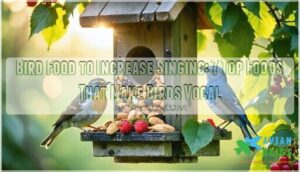 You can dramatically boost your backyard birds’ singing activity with the right bird food to increase singing. Well-fed birds sing up to 35% more during breeding season when you offer high-energy options like sunflower seeds (5.3 kcal/g), suet, and premium blends with real fruit and nuts.
These foods fuel the metabolic demands of vocalization, which requires as much energy as a daily workout. Morning feeding schedules work best since they fuel the dawn chorus when birds are most vocal.
Food scarcity forces birds to prioritize survival over singing, so consistent nutrition keeps those melodies flowing year-round with the help of high-energy options.
Table Of Contents
- Key Takeaways
- How Nutrition Impacts Bird Singing
- Top Bird Foods to Boost Song Activity
- Best Bird Seed Mixes for Songbirds
- Feeding Strategies for More Vocal Birds
- Choosing Bird Food for Backyard Song
- Frequently Asked Questions (FAQs)
- What is the best wild bird seed to feed birds?
- How do you feed wild birds a healthy diet?
- What are the most popular backyard bird food ingredients?
- Do bird feeders attract birds?
- How much protein do Songbirds eat?
- How do you attract bluebirds to a bird feeder?
- Can bird food improve singing year-round?
- Do different foods affect song quality?
- How much food increases bird vocalization?
- Which birds respond best to feeding?
- Conclusion
Key Takeaways
- You’ll boost bird singing by up to 35% during breeding season when you provide high-energy foods like sunflower seeds (5.3 kcal/g), suet, and premium blends with nuts and fruit
- Morning feeding schedules work best since they fuel the dawn chorus when birds naturally vocalize most vigorously to attract mates and defend territory
- Food scarcity forces birds to prioritize survival over singing, with vocal activity dropping dramatically after just four hours without adequate nutrition
- Premium no-waste seed blends with hulled sunflower seeds, peanuts, and dried fruits provide maximum nutritional value while reducing cleanup and attracting the most vocal songbird species
How Nutrition Impacts Bird Singing
If you’ve ever wondered why your backyard feels quiet during certain times of the year, it’s likely because your feathered visitors aren’t getting the nutrition they need to fuel their songs.
Well-fed birds sing up to 35% more during breeding season, as their bodies require significant energy reserves to produce those melodious calls that make mornings so delightful.
A bird’s breakfast determines your backyard’s soundtrack – fuel them right, and they’ll serenade you all day long
The Dawn Chorus and Birdsong Behavior
You’ve witnessed the dawn chorus phenomenon – that spectacular morning concert when dozens of bird species fill the air with song simultaneously.
This Social Birdsong serves multiple purposes beyond simple territorial announcements.
Males use singing as a status update, basically broadcasting "I’ve got food!" to attract potential mates while signaling their fitness through Environmental Influence on their vocal performance.
Energy Needs for Vocalization
Bird song requires significant energy—think of it as your backyard birds’ daily workout. The Metabolic Song Cost burns calories like a marathon, with vocalization efficiency depending heavily on high energy food sources. Proper nutrition provides the energy boost needed for Songbird Stamina, especially during dawn chorus performances when Dietary Impact matters most for maintaining their vocal prowess.
Ensuring they receive adequate vitamin and mineral requirements is also essential for their overall health.
Effects of Food Scarcity on Singing
When food becomes scarce, your backyard transforms into a silent stage. Research shows that fasting effects kick in after just four hours, causing a dramatic singing decline in birds. Without adequate calorie impact from nutritious sources, undirected singing behaviors plummet as birds conserve energy for survival.
Hungry birds go silent—just four hours without food transforms your melodious backyard into nature’s quiet theater
This resource reduction forces them to prioritize foraging over vocal displays, leaving you with fewer melodious mornings until proper food returns. The idea that birds must choose between vocal displays and survival highlights the critical nature of food scarcity in altering their behavior.
Top Bird Foods to Boost Song Activity
If you want your backyard birds to sing more frequently and vibrantly, the secret lies in offering them high-energy foods that fuel their vocal performances.
Well-fed birds produce up to 35% more songs during breeding season, transforming your yard into a natural concert hall filled with melodious choruses.
High-Energy Seeds and Nuts
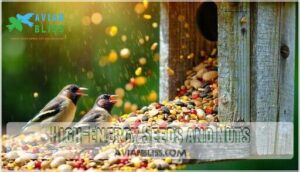
Premium sunflower seeds pack 5.3 kcal/g, making them nutritional powerhouses for vocal birds. Black oil sunflower seed types contain 40% fat, while peanut health benefits include 50% fat content that boosts singing stamina.
Safflower seed uses include deterring squirrels while delivering essential calories. Consider buying quality birdseed for ideal results. These high-energy nuts and seeds fuel those dawn chorus performances you’ll hear outside your window, which are a result of vocal birds.
Suet and Protein-Rich Foods
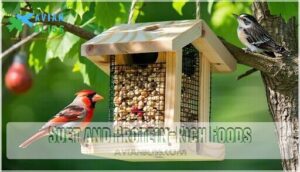
Looking beyond seeds and nuts, you’ll find suet serves as the ultimate fuel for vocal birds. This rendered animal fat, blended with protein sources like mealworms and peanuts, delivers the healthy fat protein combination that powers intensive singing.
The high fat content supports muscle performance needed for complex vocalizations, while insect protein aids vocal tract development. It’s important to use suet feeders and avoid spreading fats directly on tree limbs, to ensure the birds can eat safely and efficiently, providing them with the ultimate fuel for vocal birds.
Fruit and Natural Sugars
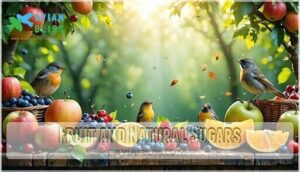
Feeding songbirds fruit provides natural sugars that fuel their vocal performances throughout the day. Fresh berries, dried fruits, and orchard fruits deliver quick energy bursts that keep birds singing longer and more frequently. It’s important to note that some fruits are toxic to certain bird species.
- Berry varieties like raisins, cranberries, and blueberries offer concentrated nutrition songbirds crave
- Orchard fruits such as diced apples and pears provide natural ingredients for sustained energy
- Dried fruits including papaya and cherries deliver healthy food options without spoilage concerns
- Sugar sources from fruit support the high metabolic demands of constant vocalization
- Fruit benefits include vitamins and antioxidants that enhance overall bird health and singing stamina
Best Bird Seed Mixes for Songbirds
You’ll find that the right seed mix can transform your backyard into a vibrant concert hall where birds sing more frequently and enthusiastically.
Premium blends containing high-energy ingredients like sunflower hearts, nuts, and real fruit provide the nutritional fuel songbirds need to maintain their vocal performances throughout the day.
Premium No-Waste Blends
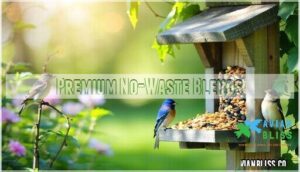
Why choose premium no-waste blends over standard wild bird food? These shell-free benefits include 100% edible content, reducing ground mess while maximizing nutritional value. Superior ingredient quality features hulled sunflower seeds, diced peanuts, and tree nuts. Waste reduction saves money since you’re not paying for inedible shells. Attracting robins becomes easier with accessible, premium bird feed designed specifically for songbirds. These blends offer 100% edible content, ensuring no waste. Many consumers are now switching to no waste birdseed for cleaner yards.
| Blend Feature | Standard Mix | Premium No-Waste |
|---|---|---|
| Edible Content | 50% (shells included) | 100% waste free ingredients |
| Protein Level | 15-18% | 25%+ for songbird health |
| Fat Content | 20-25% | 30-45% high energy |
| Ground Cleanup | Heavy shell debris | Minimal mess |
| Cost Efficiency | Pay for waste | Pure nutrition value |
Seed Mixes With Fruit and Nuts
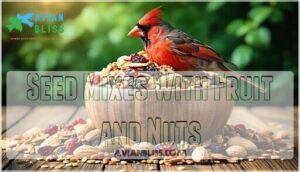
Creating diverse seed blends enriched with Premium Ingredients like raisins, papaya, and cherries transforms your backyard into a songbird symphony. These Mix Variety combinations provide essential Fruit-Nut Benefits—proteins from nuts fuel vocal energy while natural sugars from fruit sustain extended singing sessions.
Quality birdseed featuring sunflower seeds, peanuts, and dried fruit will Attract Robins, cardinals, and finches with their irresistible combination of flavors and nutrition. For ideal bird health, consider black oil sunflower seeds within the mix, which is a key part of Attract Robins and other birds.
Squirrel-Resistant and Shell-Free Options
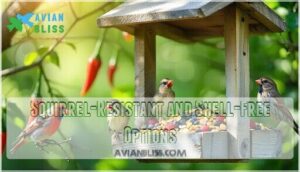
Shell-free bird food eliminates the hassle of cleanup while keeping squirrels at bay. These premium blends feature hulled sunflower seeds and spicy deterrents that frustrate hungry squirrels without harming songbirds. Your feeder stays cleaner, and birds get maximum nutrition from every kernel.
- Spicy Deterrents: Hot pepper-treated seeds repel squirrels while attracting cardinals and finches
- No-Mess Feeding: Hulled sunflower seeds prevent germination and reduce ground waste by 90%
- Shell-Free Benefits: Birds expend less energy cracking shells, leaving more for vocal displays
Feeding Strategies for More Vocal Birds
Creating the right feeding strategy transforms your backyard into a concert hall where well-nourished birds sing with greater frequency and intensity.
You’ll need to take into account feeder placement, feeding schedules, and seasonal food adjustments to maximize the vocal activity that makes your garden come alive with song.
Feeder Types and Placement
Strategic feeder placement transforms backyard birds into vocal performers. Position your feeders 5-6 feet high near natural perches where birds feel secure enough to announce their presence through song. Many factors influence optimal feeder height for different species.
| Feeder Type | Best Height | Ideal Placement |
|---|---|---|
| Tube feeders | 4-6 feet | Near shrubs for quick escape routes |
| Hopper feeders | 5-7 feet | Open areas with 10-foot visibility radius |
| Platform feeders | 3-5 feet | Ground level or elevated on posts |
| Suet feeders | 6-8 feet | Tree trunks or sturdy wooden posts |
Weather protection matters—covered feeders keep seeds dry and birds comfortable during feeding sessions.
Timing and Frequency of Feeding
Morning bird food schedules make all the difference in encouraging vocal performances from your feathered friends. Fill feeders consistently before dawn to fuel the morning chorus, when birds naturally sing most vigorously.
Maintain regular feeding times throughout the day, as supplemental feeding increases song output by 35% during breeding seasons. Your routine establishment creates predictable food sources that support consistent supply for ideal frequency singing behaviors, which can be enhanced by regular feeding times and supplemental feeding.
Seasonal Adjustments for Singing
Birds adjust their energy needs throughout the year, making seasonal feeding essential for sustained singing. During breeding season, you’ll hear more vocalizations as birds defend territory and attract mates.
Switch to high-protein foods like mealworms in spring. Winter feeding requires energy-rich suet and sunflower seeds when natural food becomes scarce. Migration patterns influence song activity, so boost nutrition during these periods to support vocal birds weathering seasonal changes.
Choosing Bird Food for Backyard Song
You’ll get the best results when you match your bird food selection to the specific species that visit your backyard, since different birds have distinct dietary preferences and singing patterns. Focus on attracting naturally vocal species like cardinals, finches, and wrens by offering their preferred foods, which will create a more melodious and active feeding environment.
To maximize the effect, consider the types of birds you want to attract, as different birds have unique needs.
Matching Food to Local Bird Species
Identifying your Regional Food Preferences helps you select the right wild bird food for local bird species. Different backyard birds thrive on Habitat-Specific Foods that match their Native Bird Diets, so understanding Local Seed Availability makes certain you’re offering what they naturally crave in your area.
- Cardinals and finches flock to black oil sunflower seeds – it’s like offering them their favorite comfort food
- Goldfinches go crazy for nyjer seeds – watch them perform acrobatic feeding displays that’ll make you smile
- Woodpeckers can’t resist suet and peanuts – these protein powerhouses fuel their energetic drumming and calls
To keep birds healthy, remember to provide fresh seeds regularly.
Attracting Colorful and Melodious Birds
Everyone knows that certain birds bring both brilliant colors and beautiful songs to your backyard. Attracting finches with thistle seed draws vibrant goldfinches, while hummingbird nectar brings ruby-throated visitors whose chirps complement flower gardens.
Native plants provide natural food sources, and birdbath benefits include hydration that keeps colorful songbirds singing. Quality bird food with high nutritional value supports vocal energy needs.
Ensuring Balanced Nutrition for Wild Birds
Balanced nutrition prevents Nutritional Deficiencies that reduce singing frequency. You’ll need Dietary Variety featuring essential nutrients like proteins, fats, and vitamins for peak vocal performance.
- Provide multiple nutrition sources – Combine seeds, nuts, fruits, and suet for complete dietary needs
- Ensure Safe Feeding practices – Clean feeders weekly and rotate nutritional content regularly
- Offer fresh Water Sources – Place shallow dishes near feeding areas for hydration
- Choose Organic Options – Select pesticide-free foods supporting long-term health and vocal strength
Frequently Asked Questions (FAQs)
What is the best wild bird seed to feed birds?
Hulled sunflower seeds top the list, attracting 88 of 98 bird species with their high fat content and easy digestibility.
You’ll see cardinals, finches, and grosbeaks flocking to feeders filled with these premium kernels that won’t sprout beneath your feeder.
How do you feed wild birds a healthy diet?
Like a symphony needs diverse instruments, you’ll create avian harmony by offering variety.
Mix hulled sunflower seeds, black oil sunflower seeds, and peanut hearts in quality feeders, ensuring fresh water is always available for peak bird health.
What are the most popular backyard bird food ingredients?
You’ll find hulled sunflower seeds top the popularity list, attracting 88 of 98 bird species.
Black oil sunflower seeds, peanut hearts, cracked corn, and suet round out the favorites that’ll transform your yard into a feathered paradise.
Do bird feeders attract birds?
Yes, bird feeders absolutely attract birds by offering consistent food sources.
Research shows supplemental feeding increases singing by 35% during breeding seasons, as well-fed birds vocalize more frequently to signal their fitness and resource access to potential mates.
How much protein do Songbirds eat?
Songbirds require 12-20% protein in their diet, varying by species and season.
You’ll find they need more protein during breeding and molting periods when they’re building eggs, feeding chicks, or growing new feathers.
How do you attract bluebirds to a bird feeder?
Picture bluebirds as selective diners—they won’t visit traditional seed feeders. You’ll need platform feeders or ground feeding with mealworms, suet, and berries.
Position feeders near open spaces with scattered perches for their hunting style.
Can bird food improve singing year-round?
Quality bird food boosts singing year-round by providing essential energy birds need for vocalizations.
High-fat seeds like sunflower hearts and peanuts fuel increased song output, with studies showing 35% more singing during breeding seasons when supplemental feeding occurs, which can be considered as supplemental feeding.
Do different foods affect song quality?
Absolutely transformative nutrition creates dramatic improvements in vocal performance. High-fat foods like sunflower seeds and peanuts boost energy reserves, enabling birds to produce stronger, more sustained songs with richer tonal qualities and increased frequency ranges.
How much food increases bird vocalization?
Studies show supplementary feeding increases bird vocalization by up to 35% during breeding seasons.
You’ll notice birds sing more vigorously when you provide high-energy foods like sunflower seeds, peanuts, and nuts consistently at feeders.
Which birds respond best to feeding?
Like iron filings drawn to a magnet, certain birds gravitate toward feeders with remarkable enthusiasm.
Goldfinches, cardinals, chickadees, and nuthatches respond most dramatically to supplemental feeding, often increasing their dawn chorus by 35%.
Conclusion
As the saying goes, "you’re what you eat," and this principle holds especially true for our feathered friends. Strategic feeding transforms quiet backyards into vibrant concert halls filled with melodious birdsong.
By providing the right bird food to increase singing—from energy-dense sunflower seeds to protein-rich suet—you’ll create an acoustic paradise that benefits both birds and listeners. Consistent nutrition fuels their vocal performances year-round, ensuring your garden becomes nature’s most enchanting symphony.
- https://lyricbirdfood.com/store/products/Delite-High-Protein-Wild-Bird-Suet__25-46852.aspx
- https://www.chewy.com/morning-song-sunflower-suet-wild-bird/dp/954678
- https://www.nativebirdcare.org/blog/killing-songbirds-with-fats-suet-pb
- https://www.petmd.com/bird/feeding-birds-in-your-backyard
- https://santarosa.wbu.com/young-bird-nutritional-needs