This site is supported by our readers. We may earn a commission, at no cost to you, if you purchase through links.
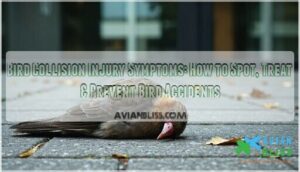 When you spot a bird after a collision, look for these bird collision injury symptoms: dazed behavior, inability to fly, drooping or dragging wings, and sitting motionless on the ground. You’ll often see disheveled feathers, visible blood, or the bird lying on its side.
Head trauma shows up as closed eyes, excessive sleeping, and poor coordination. The bird might seem stunned, have trouble balancing, or show no response to your approach.
Internal injuries aren’t always visible, but labored breathing and lethargy are red flags. Don’t mistake shock for minor injury—even birds that seem "fine" can have serious internal damage that proves fatal without proper care.
Table Of Contents
- Key Takeaways
- Common Bird Collision Injuries
- Key Symptoms of Collision Injury
- Recognizing Head and Concussion Symptoms
- Immediate Actions for Injured Birds
- Preventing Bird Collisions and Injuries
- Bird Rehabilitation and Recovery
- Frequently Asked Questions (FAQs)
- How do I know if my bird has a head injury?
- How do you know if a bird has a wing injury?
- What happens if a bird has head trauma?
- Do birds have concussions?
- What happens if a bird crashes into a house?
- What happens if a bird eats a head injury?
- Can birds die from minor window collisions?
- How long before injured birds show symptoms?
- Do baby birds have different collision symptoms?
- What causes birds to fly into windows?
- Conclusion
Key Takeaways
- You’ll spot injured birds through immediate signs like dazed behavior, inability to fly, drooping wings, and sitting motionless on the ground with disheveled feathers or visible blood.
- Head trauma shows up as closed eyes, excessive sleeping, poor coordination, and lack of response to your approach—don’t assume the bird is just "resting" as concussion symptoms can be life-threatening.
- Even birds that seem fine after a collision can have serious internal injuries, so watch for labored breathing and lethargy that indicate hidden damage requiring immediate professional care.
- Create a safe, quiet environment in a dark space and contact wildlife rehabilitation immediately—avoid DIY treatments, forced feeding, or heat lamps that can worsen the bird’s condition.
Common Bird Collision Injuries
When a bird collides with a window or another hard surface, you’ll often notice injuries like head trauma, broken bones, or visible wounds. Recognizing these common problems early helps you respond quickly and get the bird the care it needs.
Head Trauma and Concussions
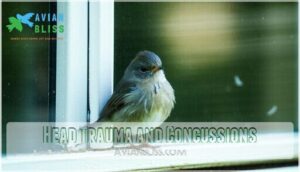
Spotting head trauma or concussion in birds means watching for signs like dazed birds, temporary drowsiness, and balance issues. You’ll notice concussion symptoms such as excessive sleeping or closed eyes. Avoid using infrared lamps unless a vet advises. Concussion medication may help, but only under professional care.
Birds with head injury need:
- Quiet, dark space
- Minimal handling
- Observation for vomiting
- Vet evaluation
Broken Bones and Wing Fractures
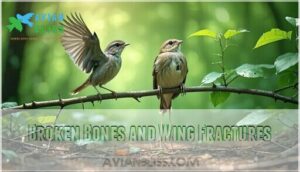
If you’ve ever seen an injured bird with a drooping wing or odd stance, you’re likely spotting signs of wing injuries or leg fractures. Fracture types vary, but the healing process depends on early care. Rehabilitation success and flight restoration hinge on quick action.
Check the table below for key details:
Cuts, Punctures, and Internal Injuries
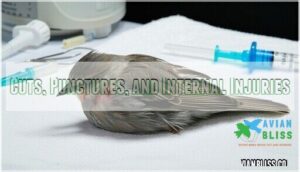
Broken bones aren’t the only worry—cuts, punctures, and internal injuries can be just as dangerous. Watch for blood, visible wounds, or odd posture. Internal bleeding hides beneath feathers, often causing collapse or labored breathing.
Remember:
- Wound Severity impacts recovery.
- Infection Risks skyrocket with punctures.
- Internal Bleeding needs urgent help.
Cat or dog bites are common, so antimicrobial therapy is often essential. Pain management and scarring effects matter, too.
Disheveled Feathers and Blood
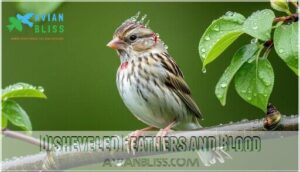
Blood and disheveled feathers serve as clear visual indicators of bird collision trauma. When birds can’t groom properly due to injury, their feathers become matted and unkempt.
Blood significance varies – minor cuts may heal naturally, while excessive bleeding suggests serious internal damage requiring immediate professional intervention for proper injury severity assessment. A broken blood feather can also cause significant bleeding and requires prompt attention.
Key Symptoms of Collision Injury
You’ll recognize injured birds by watching for specific physical and behavioral changes that indicate trauma. Key symptoms include limping, dragging wings, inability to fly, disorientation, vomiting, swelling around the eyes, and wings held at uneven angles.
Limping or Dragging Wings
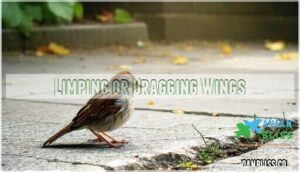
When you notice an injured bird limping or dragging a wing, you’re witnessing clear signs of injury that demand immediate attention. Wing Injury Severity can range from minor sprains to complete fractures. Limp Causes often include bone breaks, muscle damage, or nerve trauma from collisions.
A drooping wing or limping gait signals urgent trauma requiring immediate professional care.
Feather Damage often accompanies these injuries, making flight impossible.
Post-Collision Care requires professional intervention, as behavioral changes indicate pain and distress affecting the bird’s survival chances.
Inability or Difficulty Flying
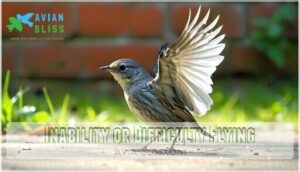
When a bird can’t get airborne after a collision, you’re witnessing potential flight muscle damage or wing injuries that ground these aerial acrobats. Watch for these critical signs:
- Complete inability to fly despite frantic attempts
- Erratic, uncontrolled flight patterns with frequent crashes
- Wing asymmetry – one wing held differently than the other
- Balance issues when perched or walking
- Post-collision weakness affecting takeoff ability
Feather impairment and internal trauma often cause these flight problems, requiring immediate professional intervention.
Lethargy, Disorientation, and Aggression
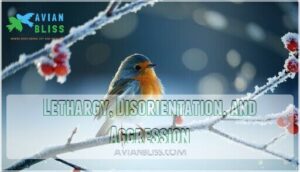
After flight difficulties, you’ll notice dramatic behavioral changes in injured birds. Lethargy becomes apparent as they sit motionless for extended periods, showing little response to nearby movement. Disorientation manifests through confusion about surroundings, walking in circles, or appearing lost.
Post-trauma stress can trigger unusual aggression toward humans or other birds. These neurological impacts from head injury indicate potential bird concussions requiring immediate professional attention.
Vomiting and Difficulty Breathing
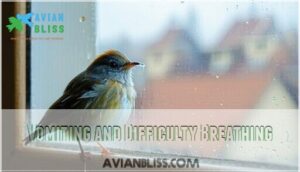
Two critical symptoms signal serious internal damage after bird collisions. Vomiting occurs when head injury disrupts brain function, creating aspiration risk and potential toxin ingestion concerns. Difficulty breathing indicates lung damage or air sac rupture from impact trauma. These behavioral changes suggest metabolic issues requiring immediate veterinary attention, as respiratory compromise can quickly become fatal without proper oxygen support.
Many birds suffer from window collision injuries, especially during migration.
Swelling, Bulging Eyes, and Asymmetric Wings
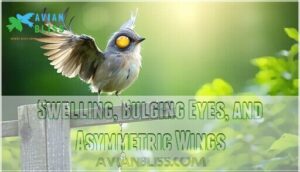
You’ll spot Eye Swelling and Bulging Eyes as telltale signs of head injuries after bird collisions. Wing Asymmetry occurs when birds hold wings at different angles, indicating fractures or nerve damage. These symptoms help with Immediate Assessment of Injury Severity.
Recognizing symptoms like eye injuries requires quick action since head injuries can worsen rapidly without professional care.
Recognizing Head and Concussion Symptoms
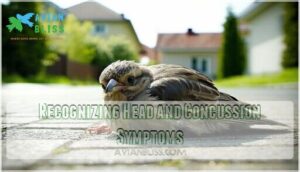
Head trauma from collisions can leave birds stunned and disoriented, making them vulnerable on the ground where predators might find them.
You’ll notice concussion symptoms like excessive sleeping with eyes closed, poor coordination, and reduced appetite that usually resolve within hours to days with proper care.
Dazed or Stunned Behavior
When a bird hits a window or vehicle, you’ll often notice immediate Post-Collision Confusion that manifests as dazed behavior. The bird may sit motionless on the ground, appearing stunned with symptoms of Temporary Disorientation.
These Neurological Effects from concussion cause Delayed Reactions to your presence, indicating serious Cognitive Impairment requiring immediate professional attention.
Sleeping Excessively and Closed Eyes
When dealing with concussion symptoms, you’ll notice affected birds sleeping excessively with their eyes closed for extended periods. This drowsiness indicates varying concussion severity and requires immediate attention. Recognizing symptoms early improves recovery outcomes.
Watch for these key signs:
- Sleep duration extending beyond normal rest periods
- Reduced appetite accompanying excessive lethargy
- Eyes remaining closed even during daylight hours
- Drowsiness preventing normal alertness responses
- Lethargy replacing typical active behaviors
Place the bird in a darkened room with stable temperature conditions.
Coordination and Balance Problems
Injured birds often display noticeable coordination problems and balance issues following head trauma. You’ll observe ataxia signs like stumbling, tilting to one side, or difficulty perching properly. These symptoms indicate potential neurological damage affecting the bird’s vestibular system.
Watch for unsteady movements, inability to maintain upright posture, or circling behavior. Such balance assessment reveals the severity of the head injury and helps determine appropriate recovery strategies for the bird’s rehabilitation needs.
Loss of Appetite and Temporary Health Issues
Following a head collision, you’ll notice birds with concussions often refuse food and display reduced feeding behavior. These mild concussions create temporary symptoms that usually resolve within days.
Watch for these appetite and health changes:
- Reduced Feeding – Birds ignore their favorite foods and water sources
- Short-Term Illness – Lethargy and weakness appear alongside vomiting episodes
- Appetite Recovery – Normal eating patterns gradually return as healing progresses
- Temporary Symptoms – Health problems like coordination issues fade with proper rest
Immediate Actions for Injured Birds
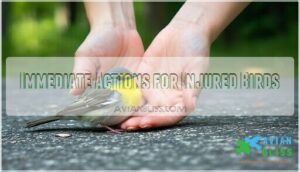
Finding an injured bird after a collision can be distressing, but your quick response can make the difference between recovery and permanent harm. The first few minutes are critical for providing proper care and ensuring the bird gets professional help when needed.
Providing a Safe, Quiet Environment
Once you’ve identified concussion symptoms, create a safe space that reduces stress for the injured bird. Place it in a darkened room away from noise, pets, and foot traffic. Temperature control matters—keep the area warm but not hot. A cardboard box lined with soft cloth works well. Consider using a specialized bird enclosure for improved safety.
Minimize handling to prevent further trauma. Monitor the bird’s behavior quietly from a distance, watching for changes that indicate worsening injury or signs of recovery progress.
Gentle Handling and Transport Tips
Two hands work better than one when capturing an injured bird—approach slowly from behind using both hands or a soft cloth. Handle gently to minimize stress during transfer techniques. It’s vital to follow gentle handling techniques to avoid further harm.
Choose a ventilated cardboard box lined with soft materials for container choice. Secure transport requires a dark, quiet environment away from drafts. This gentle transport method creates a safe space until veterinary assistance provides immediate care.
When to Contact Wildlife Rehabilitation
Contact wildlife rehabilitation when you spot signs of injury like bleeding, inability to fly, or unusual behavior. Severity assessment determines urgency – don’t wait if injury indicators are present, as delay consequences can worsen the bird’s condition.
- Visible bleeding or open wounds
- Wing dragging or asymmetrical positioning
- Inability to stand or maintain balance
- Labored breathing or distressed vocalizations
Wildlife rehabilitation centers have specialized resources and legal obligations to provide proper veterinary assistance for injured wildlife.
What Not to Do After a Collision
Avoid DIY treatment attempts, as improper feeding or handling can worsen head injury symptoms. Don’t delay care by waiting to see if behavior improves. Skip heat lamps, which can cause overheating.
Restrict handling to minimize stress. Never force food or water on a dazed bird.
Immediate care means getting veterinary assistance, not becoming the doctor yourself.
Preventing Bird Collisions and Injuries
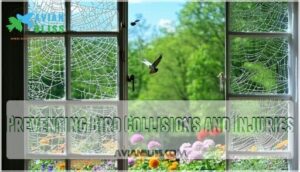
You can substantially reduce bird collisions by making simple changes around your home and yard. Strategic window treatments, proper feeder placement, and lighting adjustments create safer environments that protect birds from common hazards.
Bird-Safe Window Solutions
You can dramatically reduce window collisions with proper window film options and strategic decal placement tips. Apply UV-reflective decals using the 2×4 rule—spacing them 2 inches vertically and 4 inches horizontally—to cut strikes by 75%. External netting systems positioned 2-3 inches from glass block reflections effectively.
Cost considerations show DIY solutions averaging $2-5 per square foot, making window collision prevention affordable for most homeowners. Building design impacts collisions, with low-rise buildings prevalent in many strikes.
Bird-Friendly Landscaping and Feeder Placement
Creating bird-friendly landscaping reduces window collisions while supporting local wildlife. Strategic feeder distance and native plantings provide natural shelter options that keep birds safe.
- Native plantings offer natural food sources and reduce reliance on feeders near windows
- Feeder distance of 30+ feet from glass surfaces gives birds escape room from predators
- Water sources and shelter options create safe zones away from collision-prone areas
Smart bird-friendly landscaping with proper safe bird feeder placement promotes bird safety naturally. Careful planning guarantees optimal feeder location.
Reducing Outdoor Lighting and Predators
Light pollution disrupts nocturnal bird navigation, causing disorientation and collisions. Turn off unnecessary outdoor lights after 11 PM, especially during migration seasons. Install motion sensors and warm-toned LED fixtures pointing downward.
For predator deterrents, maintain clean yards and secure garbage bins. Pet management involves keeping cats indoors—they kill billions of birds annually.
Community outreach helps neighbors understand these habitat modification strategies.
Seasonal Considerations and Migration Safety
Migration season brings peak collision risks as billions of birds navigate unfamiliar territories twice yearly. Spring and fall migrations create dangerous bottlenecks near urban areas where light pollution disorients travelers.
Weather impacts like storms and fog worsen visibility, increasing head injuries and unusual behavior in disoriented birds. Monitor for lethargy and flight changes during these critical periods when habitat availability forces birds into risky flight paths.
Bird Rehabilitation and Recovery
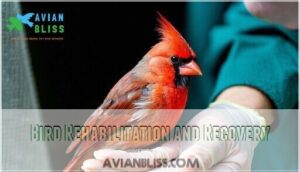
When a bird survives the initial trauma of a collision, professional rehabilitation becomes critical for its recovery and eventual return to the wild. Licensed wildlife rehabilitators provide specialized medical care, proper nutrition, and safe housing that injured birds need to heal completely before release.
Professional Care and Specialized Treatment
Wildlife rehabilitation centers provide the specialized care injured birds need through professional expertise. An avian veterinarian will assess head injury treatment requirements and prescribe medication when necessary. Staff create a safe environment with controlled temperature and minimal stress. These facilities have the proper equipment and knowledge for successful recovery.
Heat therapy requires veterinary assistance to avoid complications. Many centers need bird rehabilitation supplies to continue their important work.
Release Criteria and Recovery Timeline
Most birds require 36 days for full recovery before release readiness signs emerge. Release readiness depends on complete flight capacity, normal behavior, and injury severity factors. Rehabilitation duration varies by species – passerines recover in 23-46 days, while corvids need up to 84 days. Proper ventilation is also critical during this period.
Post-release monitoring guarantees successful reintegration into wild habitats after gradual reintroduction steps.
Supporting Bird Conservation Efforts
Everyone can make a difference through targeted conservation actions that protect birds from head injuries and support their recovery. Your efforts create lasting impact through these approaches:
- Habitat Preservation – Support local land trusts protecting nesting areas
- Reducing Pesticides – Choose organic gardening methods that prevent poisoning
- Citizen Science – Monitor bird behavior and report injury recovery data
- Funding Conservation – Donate to wildlife rehabilitation centers treating symptoms
- Policy Advocacy – Contact representatives about bird-safe building regulations
Educating Others and Citizen Science Involvement
Share your bird injury discoveries through Community Awareness initiatives that educate neighbors about recognizing signs of injury and head injuries in local wildlife.
Join Educational Programs at rehabilitation centers, where you’ll learn to identify symptoms and support injury recovery efforts.
Participate in Volunteer Opportunities involving Citizen Reporting of injured birds, while advocating for Conservation Advocacy that transforms individual behavior into community-wide protection measures.
Frequently Asked Questions (FAQs)
How do I know if my bird has a head injury?
Window strikes kill 60 million birds annually in the U.S. You’ll notice head injury signs like dazed sitting, eyes closed frequently, poor balance, vomiting, lethargy, and reduced appetite after collisions.
How do you know if a bird has a wing injury?
If you spot a bird limping, dragging a wing, or holding its wings unevenly, that’s a red flag. Blood, swelling, or an inability to fly also point to a possible wing injury needing quick attention.
What happens if a bird has head trauma?
Like a short-circuited computer, a bird’s head trauma disrupts normal functions. You’ll notice dazed behavior, closed eyes, poor coordination, vomiting, and excessive sleeping. The bird sits motionless, struggling with balance and appetite loss.
Do birds have concussions?
Yes, birds can get concussions from collisions with windows, cars, or other objects. You’ll notice symptoms like dazedness, closed eyes, poor coordination, reduced appetite, and difficulty maintaining balance after impact.
What happens if a bird crashes into a house?
Ironically, your feathered visitor gets a crash course in physics. The bird may suffer a concussion, broken bones, or internal injuries.
You’ll see dazed behavior, disheveled feathers, or inability to fly normally.
What happens if a bird eats a head injury?
I need to clarify your question – it seems there may be a typo. Birds can’t "eat" a head injury, but they can suffer head injuries from collisions.
If you meant what happens when a bird has a head injury, they’ll show symptoms like disorientation, closed eyes, drowsiness, and difficulty maintaining balance.
Can birds die from minor window collisions?
Even seemingly gentle taps against glass can shatter a bird’s delicate world. Yes, birds can die from minor window collisions due to concussions, internal injuries, or delayed complications that aren’t immediately visible.
How long before injured birds show symptoms?
Bird injury symptoms usually appear immediately after window collisions. You’ll notice disorientation, bleeding, or inability to fly right away. Some concussion signs like lethargy may develop within hours.
Do baby birds have different collision symptoms?
Young fledglings show similar symptoms—dazed behavior, closed eyes, inability to fly—but they’re more fragile than adults. You’ll notice they can’t coordinate movement properly and may seem unusually quiet or motionless after impact.
What causes birds to fly into windows?
Windows appear transparent to birds, creating invisible barriers they can’t detect. Reflections of sky, trees, or habitat confuse them into thinking there’s open flight space ahead.
Conclusion
Statistics show that up to one billion birds die from building collisions annually in North America alone. Recognizing bird collision injury symptoms quickly can mean the difference between life and death for these vulnerable creatures.
You’ve learned to identify key warning signs like dazed behavior, wing injuries, and coordination problems. Remember that even birds appearing unharmed may have serious internal damage requiring professional care.
By creating bird-safe environments and knowing proper rescue techniques, you’re helping protect wildlife while contributing to conservation efforts in your community.
- https://journals.plos.org/plosone/article/file?id=10.1371%2Fjournal.pone.0306362&type=printable
- https://www.earth.com/news/more-than-a-billion-birds-are-killed-in-window-collisions-each-year/
- https://www.torontowildlifecentre.com/wildlife-emergency-rescue-hotline/sick-injured-wild-animal/small-bird/bird-hit-window/
- https://now.fordham.edu/science/bird-deaths-from-window-collisions-are-undercounted-researcher-says/
- https://www.mnbirdcoalition.org/window-collisions