This site is supported by our readers. We may earn a commission, at no cost to you, if you purchase through links.
 Your parrot’s beak is basically their Swiss Army knife—made of keratin like your fingernails, it’s constantly growing and acts as hands, teeth, and climbing gear all rolled into one. Healthy beaks should be smooth, properly aligned, and show steady growth without cracks or overgrowth.
You’ll want to watch for warning signs like discoloration, flaking, or difficulty eating, which often signal nutritional deficiencies or underlying health issues.
The secret to maintaining ideal beak health involves providing a balanced diet rich in vitamins A and D, along with plenty of chewing opportunities through toys and natural branches. There’s actually a lot more to keeping that impressive tool in tip-top shape than most bird parents realize.
Table Of Contents
Key Takeaways
- Watch your parrot’s diet closely – You’ll need a balanced mix of pellets, fresh vegetables, and controlled seeds since seed-only diets cause 70% of beak problems through vitamin A and calcium deficiencies.
- Provide natural wear opportunities – You should offer untreated wood perches, chew toys, and mineral blocks so your parrot’s beak naturally stays the right length without needing trimming.
- Monitor for early warning signs – You’ll want to check weekly for color changes, cracks, flaking, eating difficulties, or asymmetrical growth that signal nutritional issues or health problems.
- Know when to call the vet – You need immediate professional help for bleeding, sudden shape changes, eating problems, or visible trauma since beak injuries heal better with prompt treatment.
What is a Parrot’s Beak?
Your parrot’s beak isn’t just for cracking seeds—it’s a multi-tool that acts as hands, teeth, and even a third foot rolled into one remarkable structure.
Your parrot’s beak is nature’s ultimate Swiss Army knife—handling everything from delicate grooming to powerful nut-cracking with remarkable precision
Understanding what makes a healthy beak tick can help you spot problems early and keep your feathered friend feeling their best.
Beak Vs. Bill: Terminology Explained
You’ll hear both "beak" and "bill" when discussing your parrot’s facial features – they’re the same thing! These bird anatomy terms are completely interchangeable, though ornithologists (bird scientists) usually prefer "bill" in professional settings.
Here’s what you should know about these ornithology terms:
- Beak definitions describe the pointed mouth structure covering upper and lower jaws
- Bill usage refers to the exact same feature, just different terminology
- Bird beak and bird bills are synonymous – no functional difference exists
- Facial features include nostrils positioned at the bill’s base
Beak Anatomy and Structure
Your parrot’s beak isn’t just a pretty facial structure—it’s a marvel of bird anatomy. This complex jaw formation consists of upper and lower mandibles covered in keratin, the same protein in your fingernails. The nostril placement sits dorsally at the base, while continuous keratin production keeps the beak growing throughout your bird’s life. Think of it as nature’s Swiss Army knife in constant self-repair mode.
Proper beak care tips are essential for maintaining your parrot’s overall health and preventing beak problems.
Functions Beyond Feeding
While your parrot’s beak does much more than crack seeds, it’s actually a Swiss Army knife of bird anatomy. These adaptable tools handle everything from grooming rituals to romantic displays, proving that form truly follows function in nature’s design.
Your feathered friend’s beak serves multiple purposes beyond mealtime:
- Beak Preening – Like a built-in comb, parrots use their beaks to clean and arrange feathers, maintaining waterproofing and insulation.
- Nest Building – Acting as precision tools, beaks gather twigs, strip bark, and shape nesting materials with exceptional dexterity.
- Mate Attraction – Colorful beaks serve as billboards for health and genetic fitness, while gentle nibbling strengthens pair bonds.
- Defense Mechanisms – A parrot’s beak delivers powerful bites (up to 400 PSI in macaws) and intimidating displays against threats.
- Social Interaction – Through beak positioning, touching, and vocalizations, these adaptations enable complex communication within flocks.
Understanding these beak functions helps you recognize normal behaviors versus concerning changes in your bird’s daily activities.
Types of Parrot Beaks and Their Uses
Your parrot’s beak isn’t just a pretty face accessory—it’s a multi-tool that’s perfectly designed for their lifestyle and diet. Whether your feathered friend has a generalist beak for handling various tasks or a specialist one adapted for specific foods, understanding these differences helps you provide better care and spot potential problems early.
Generalist Vs. Specialist Beaks
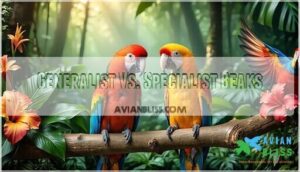
Your parrot’s beak falls into two main categories based on beak specialization and adaptive evolution. Generalist beaks, like those on cockatiels and budgerigars, handle multiple tasks with their medium-length, moderately curved design. These adaptable tools reflect morphological variations that support diverse dietary influences across different ecological niches.
Specialist beaks, such as macaws’ powerful curves or lories’ slender nectar-feeding bills, excel at specific functions but sacrifice flexibility for efficiency in their chosen bird species characteristics.
The shape and size of a parrot’s beak are a result of an evolutionary compromise that affects its overall health and functionality.
Beak Adaptations for Different Diets

Nature’s designed parrots with specialized beak adaptations perfectly matched to their feeding habits. Seed-eating parrots sport strong, conical beaks that crack tough shells like nutcrackers. Insect-catching species have slim, pointed bills for precise prey capture. Nectar-feeding birds develop long, slender beaks reaching deep into flowers. Some parrots even show filter-feeding traits or chiseling behavior for specialized diets.
Understanding the role of beak shape variations is essential in determining a parrot’s dietary needs and adaptations.
Evolutionary Changes in Parrot Beaks
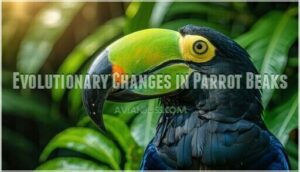
Climate change has triggered fascinating morphological shifts in parrot species worldwide. Research shows beak surface area increased 4-10% as temperatures rise, demonstrating notable beak adaptation to thermal stress. These changes highlight how genetic factors drive species divergence, with some populations developing larger beaks for heat dissipation.
Your parrot’s descendants might sport different bird beak designs entirely, showcasing evolution’s clever solutions to environmental challenges through modified avian anatomy and bird behavior.
Key Signs of Healthy and Unhealthy Beaks
You’ll want to know what a healthy beak looks like so you can spot problems before they become serious. Think of your parrot’s beak like your fingernails—it should look smooth, feel strong, and grow at a steady pace without any weird bumps or color changes.
Normal Beak Appearance and Growth
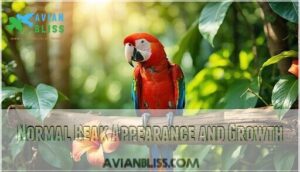
Understanding your parrot’s healthy beak development helps you spot problems early. A normal bird beak shows consistent keratin formation with smooth surfaces and proper beak symmetry. Growth patterns vary by species, but healthy avian anatomy maintains these characteristics:
- Beak coloration remains consistent without unusual darkening or pale spots
- Beak adaptations align with your bird’s natural diet and behaviors
- Growth rate stays steady without rapid overgrowth or flaking
- Surface texture appears smooth with minor natural ridges from normal wear
Bird beak types differ, but all healthy beaks share these fundamental traits.
Early Warning Signs of Beak Problems
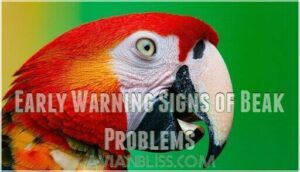
Subtle changes in your bird’s beak can signal trouble brewing beneath the surface. Watch for Overgrowth Symptoms like excessive length or thickness, unusual color changes, or asymmetrical growth patterns. Beak Deformities may appear as twisted or misshapen formations, while small cracks could indicate potential Beak Fractures.
Flaking, discoloration, or soft spots often suggest Fungal Infections or Nutrient Deficiencies affecting beak strength and structure.
Common Beak Disorders in Parrots
Several common beak disorders affect parrots regularly. Overgrowth is often caused by nutritional deficiencies and liver disease, and it appears in 18% of captive birds. Scissor beak affects 8-12% of young parrots, causing a lateral misalignment. Mandibular prognathism creates an "underbite" in 5% of birds. Psittacine beak and feather disease virus (PBFD) has a 16.3% prevalence, leading to beak deformities and keratin disorders. Beak fractures resulting from trauma affect 15-22% of cases.
Regular beak care checks are essential to identify and address these issues early on.
Essential Beak Care and Maintenance Tips

You’ll want to focus on three key areas to keep your parrot’s beak in top shape: proper nutrition, natural wear opportunities, and regular monitoring.
Think of beak care like maintaining your own fingernails—with the right tools and attention, most of the work happens naturally.
Diet’s Role in Beak Health
Your parrot’s feeding habits directly impact their bird beak health. Seed diets alone create nutritional gaps, leading to soft or overgrown beaks. Smart owners prioritize food variety—pellets, fresh veggies, and controlled seed-eating.
Calcium intake and vitamin supplements support strong keratin production. Think of nutrient balance as your bird’s beak insurance policy against costly vet visits.
A balanced diet that includes high-quality parrot food pellets is essential for maintaining ideal beak health.
Environmental Enrichment and Natural Wear
Think of environmental stimulation as your parrot’s personal gym membership. Natural perches made from untreated wood, chew toys, and mineral blocks provide essential beak exercise. These tools promote natural wear patterns, preventing overgrowth without beak trimming. Different textures keep your bird engaged while maintaining healthy beak health through daily use.
Providing parrots with parrot chew toys is vital for their overall beak health and development.
Routine Home and Veterinary Checks
Regular home checks keep your bird’s beak in top shape. Weekly beak inspection helps catch problems early—look for color changes, cracks, or uneven growth.
Schedule annual veterinary care for professional health monitoring using specialized diagnostic tools. Your vet can spot subtle issues you might miss and provide guidance suited to your bird’s needs.
Proper beak maintenance involves using the right beak care tools to prevent overgrowth and damage.
Preventing and Addressing Beak Problems
Prevention is your best defense against beak problems, starting with proper nutrition and environmental management.
While some beak issues require immediate veterinary attention, many can be avoided through proactive care and recognizing early warning signs.
Nutritional Deficiencies and Their Impact
Without proper nutrition, your parrot’s beak can quickly deteriorate. Vitamin deficiencies and mineral imbalances create a domino effect—poor nutrient absorption leads to visible malnutrition effects within weeks.
- Vitamin A deficiency: Creates dry, flaky surfaces and white pustules
- Calcium shortage: Results in soft, rubbery beaks that crack easily
- Zinc problems: Causes abnormal scaling and poor healing
Dietary disorders from seed-eating-only diets affect over 70% of parrots, transforming their feeding habits and seed-cracking ability into daily struggles. Understanding beak health issues is essential for preventing these problems.
Environmental and Physical Risk Factors
Beyond poor nutrition, your parrot’s cage environment poses hidden dangers to beak health. Contaminant exposure from household cleaners, pesticides, or non-stick cookware can trigger abnormal growth patterns. Trauma impact from accidents or inappropriate perch materials creates lasting deformities. Climate adaptation challenges arise when temperature fluctuations stress your bird’s system, while cramped cage environments limit natural beak maintenance behaviors.
| Risk Factor | Impact on Beaks |
|---|---|
| Chemical cleaners near cage | Toxic exposure causing growth abnormalities |
| Wrong perch diameter/texture | Prevents natural wear, causes pressure sores |
| Accidents/falls | Physical trauma leading to permanent deformities |
| Poor ventilation | Respiratory stress affecting overall beak health |
When to Seek Veterinary Care
Five emergency situations demand immediate emergency care: bleeding beak injury, eating difficulties, sudden shape changes, discoloration with lesions, and beak trauma from accidents.
Veterinary checks twice yearly catch problems early, while avian surgery may be needed for severe cases.
Don’t wait—bird beaks heal better with prompt professional intervention.
Frequently Asked Questions (FAQs)
Can parrot beaks regenerate after severe injury?
Yes, parrot beaks can regenerate after severe injury, but it’s a slow process. The keratin structure rebuilds gradually over months, though complete restoration depends on damage severity and your bird’s overall health.
How often should beak trimming be done?
You shouldn’t trim your parrot’s beak unless it’s overgrown due to health issues. Most healthy parrots naturally wear down their beaks through chewing and daily activities, making trimming unnecessary.
What causes beak color changes in parrots?
Beak color changes usually stem from nutritional deficiencies, liver disease, hormonal fluctuations, or aging. You’ll notice shifts from vitamin A deficiency, protein imbalances, or underlying health issues affecting keratin production and pigmentation.
Are beak supplements necessary for indoor parrots?
Most indoor parrots don’t need beak supplements if you’re providing a balanced diet with pellets, fresh vegetables, and fruits. Proper nutrition naturally promotes healthy keratin production for strong beaks without extra additives.
Can stress affect parrot beak growth patterns?
Chronic stress disrupts your parrot’s hormone balance, potentially causing irregular beak growth, overgrowth, or brittleness.
Stress hormones like cortisol interfere with keratin production, leading to structural weaknesses that affect normal wear patterns.
Conclusion
Think of your parrot’s beak like a carpenter’s favorite chisel—it needs proper care to stay sharp and functional. Maintaining beak health for parrots isn’t rocket science, but it does require attention to diet, environment, and early warning signs.
You’ve got the tools now: watch for changes, provide proper nutrition with vitamin-rich foods, offer plenty of chewing opportunities, and don’t hesitate to call your avian vet when something looks off. Your feathered friend’s beak will thank you for it.
- https://parrotsupplies.co.za/blogs/chloes-story/the-marvel-of-a-parrot-s-beak-structure-composition-and-function
- https://www.parrotproblemsolving101.com/beak-care
- https://pmc.ncbi.nlm.nih.gov/articles/PMC12108240/
- https://www.gardenwildlifehealth.org/portfolio/beak-abnormalities/
- https://beaksandfeathers.co.za/the-connection-between-beak-deformities-and-diet/