This site is supported by our readers. We may earn a commission, at no cost to you, if you purchase through links.
 When your bird starts sneezing with discharge, you’re seeing early warning signs of respiratory distress. Avian sneezing discharge symptoms vary from clear mucus indicating environmental irritants to yellow or green discharge signaling bacterial infections like chlamydiosis. Viral pathogens cause discharge in 92% of infected flocks, while fungal diseases affect vitamin A-deficient birds.
Watch for frequency changes, discharge color shifts, and accompanying symptoms like wheezing or lethargy. Open-mouth breathing and tail bobbing require immediate veterinary attention.
Environmental irritants, nutritional deficiencies, and poor ventilation often trigger these symptoms. Understanding these warning signs could mean the difference between early treatment success and serious complications.
Table Of Contents
- Key Takeaways
- What is Avian Sneezing and Discharge?
- Common Causes of Sneezing in Birds
- Species Susceptibility to Respiratory Disease
- Recognizing Symptoms of Respiratory Illness
- How Veterinarians Diagnose Bird Respiratory Issues
- Home Care Steps for Sneezing Birds
- When to Seek Veterinary Attention
- Treatment Options for Avian Respiratory Disease
- Preventing Respiratory Problems in Birds
- Frequently Asked Questions (FAQs)
- Conclusion
Key Takeaways
- Watch for discharge color changes – Clear mucus signals early irritation or viral infection, while yellow or green discharge indicates bacterial infection requiring immediate veterinary attention.
- Monitor sneezing frequency and patterns – Occasional sneezing is normal, but persistent episodes lasting over 24-48 hours combined with discharge suggest respiratory disease that needs professional treatment.
- Don’t ignore breathing difficulties – Open-mouth breathing, tail bobbing, wheezing, or clicking sounds are emergency symptoms that require immediate veterinary care to prevent life-threatening complications.
- Address environmental triggers quickly – Poor ventilation, dust, aerosols, and vitamin A deficiency commonly cause respiratory issues, so you’ll need to improve air quality and nutrition while seeking medical treatment.
What is Avian Sneezing and Discharge?
When you hear your bird sneezing repeatedly or notice discharge from their nostrils, you’re witnessing potential signs of respiratory illness that shouldn’t be ignored.
Avian sneezing involves the forceful expulsion of air through the nasal passages, while discharge can range from clear and watery to thick and colored, each indicating different underlying health conditions.
Definition of Avian Sneezing
Avian sneezing represents a natural respiratory reflex in birds, serving as their body’s defense mechanism against irritants and pathogens. Unlike mammals, bird anatomy features unique respiratory system characteristics that make sneezing patterns distinctly different.
When your feathered friend sneezes, their avian physiology activates specialized air sacs to expel foreign particles, dust, or infectious agents from nasal passages and respiratory tract, protecting against potential avian diseases.
Types of Nasal Discharge in Birds
Clear discharge from your bird’s nasal passages often indicates early viral infections or environmental irritants. Yellow mucus suggests bacterial involvement, while green nasal secretions usually signal severe respiratory diseases. Watery secretion appears with allergens or dust exposure. Thick sputum blocks upper airways, requiring immediate attention.
Understanding discharge colors helps identify whether your bird’s respiratory tract needs veterinary intervention or environmental changes.
Normal Vs. Abnormal Sneezing
Occasional sneezing happens naturally when your bird encounters dust or adjusts to temperature changes. However, persistent sneezing patterns lasting more than 24 hours signal potential respiratory health concerns.
Watch for sneezing triggers like drafts or aerosols affecting avian behavior. Normal bird wellness includes infrequent, dry sneezes without discharge, while respiratory diseases produce frequent sneezing with colored discharge from the respiratory tract.
Common Causes of Sneezing in Birds

When your bird starts sneezing, you’re likely dealing with one of four main culprits that affect respiratory health.
Understanding these common causes helps you identify the problem quickly and take appropriate action to protect your feathered friend’s wellbeing.
Infectious Diseases (Bacterial, Viral, Fungal)
Infectious agents pose serious threats to your bird’s respiratory system. Bacterial infections like Chlamydiosis affect up to 13% of captive birds, while Mycoplasma strikes over 50% of house finches.
Bacterial infections strike hard—Chlamydiosis hits 13% of captive birds while Mycoplasma devastates over half of house finches
Viral pathogens, including avian influenza, cause discharge in 92% of infected flocks.
Fungal diseases link to 4-10% of chronic cases, especially in vitamin A-deficient birds facing compromised avian immunology and growing microbial resistance.
Environmental Irritants and Allergens
Environmental factors often catch bird owners off guard, yet they’re significant contributors to avian respiratory tract issues. Dust control becomes critical since particles irritate sensitive air sacs. Allergen sources include aerosol sprays, cigarette smoke, and cleaning products releasing toxic fumes. Poor ventilation systems trap these environmental irritants, creating perfect conditions for respiratory diseases. Air pollution from scented candles or cooking fumes also triggers sneezing episodes in susceptible birds.
Understanding respiratory health issues is essential for identifying potential causes of sneezing in birds.
Nutritional Deficiencies (e.g., Vitamin A)
Poor nutrition hits your bird’s respiratory system hard. Vitamin A deficiency weakens mucous membranes, making your feathered friend more susceptible to infections and persistent sneezing.
Dietary imbalances create a domino effect—malnutrition effects compromise immune function while respiratory diseases take hold.
Proper avian nutrition with nutrient supplements can strengthen your bird’s natural defenses against these health challenges.
Parasitic Infestations
Parasitic infestations create serious respiratory problems you can’t ignore. Air sac mites commonly attack finches and canaries, causing persistent sneezing and discharge. Feather lice and avian malaria also trigger respiratory symptoms.
These air sac parasites burrow deep into your bird’s breathing system, making lower respiratory tract infections likely. You’ll need antiparasitic drugs for effective parasite control against these stubborn mite infestations.
Species Susceptibility to Respiratory Disease

Different bird species show varying levels of vulnerability to respiratory infections, with some facing markedly higher risks than others. Finches and canaries are particularly susceptible to air sac mites, while parrots often struggle more with vitamin A deficiency-related respiratory issues.
High-Risk Bird Species
Recognizing which bird species face higher respiratory disease risks helps you protect your feathered friends more effectively. Certain species show greater susceptibility to sneezing and discharge due to genetic factors, anatomy, and environmental sensitivities.
Here are the top high-risk bird species for respiratory issues:
- Cockatiels and budgerigars – Most prone to upper respiratory infections
- African grey parrots – Frequent chronic rhinitis and sinusitis cases
- Doves and pigeons – Higher infection rates than most psittacines
- Pionus parrots – Increased aspergillosis complications
- Lovebirds and macaws – Increased chronic respiratory inflammation
These species require extra attention for Parrot Health monitoring and Canary Care principles. Understanding chronic respiratory disease is vital for providing proper care and preventing infections in high-risk species.
Unique Risks for Finches, Canaries, Parrots
Different bird species face unique respiratory challenges that you’ll want to recognize early.
| Species | Common Respiratory Issues | Key Warning Signs |
|---|---|---|
| Finches | Air sac mites, dusty seed sensitivity | Tail bobbing, open-mouth breathing |
| Canaries | Aspergillosis, vitamin A deficiency | Voice changes, labored breathing |
| Cockatiels | Psittacosis, powder down irritation | Head shaking, crusty nostrils |
| Budgerigars | Bacterial sinusitis, drafts | Clicking sounds, nasal discharge |
| Macaws | Aspergillus, nutritional deficiencies | Reduced vocalization, lethargy |
Finch respiratory systems are particularly sensitive to airborne particles, while canary health depends heavily on proper avian nutrition.
Parrot behavior often masks early respiratory disease symptoms until conditions become severe.
Age and Environmental Factors
Age creates vulnerability in avian respiratory systems, particularly affecting young and elderly birds. Juvenile birds face higher risks from respiratory diseases due to developing immune systems, while seniors struggle with declining defenses.
Poor habitat quality, air pollution, and climate change worsen these age-related susceptibilities. Overcrowded nesting conditions and stressful flock interactions compromise respiratory tract health, making vitamin A deficiency and environmental toxins especially dangerous.
Recognizing Symptoms of Respiratory Illness
When your bird starts sneezing frequently, you’re witnessing the first warning sign of potential respiratory illness that requires immediate attention. Understanding the specific patterns of sneezing, discharge characteristics, and accompanying symptoms will help you determine whether your feathered friend needs veterinary care or simple environmental adjustments.
Sneezing Frequency and Patterns

Healthy birds sneeze occasionally to clear their nasal passages, but watch for concerning sneezing triggers that signal respiratory diseases. Monitor these respiratory rhythms:
- Frequency shifts – Normal birds sneeze 2-3 times daily; persistent sneezing cycles indicate upper respiratory tract irritation
- Pattern analysis – Clustering sneezes suggest environmental irritants affecting avian breath patterns
- Timing correlation – Morning sneezing often links to overnight cage contamination or poor ventilation
Types and Colors of Discharge

Your bird’s nasal discharge color tells an important story about their health. Clear discharge often signals mild irritation from dust or early viral infection, while yellow mucus indicates bacterial infection developing in the upper respiratory tract. Green nasal secretions suggest severe bacterial infection requiring immediate veterinary attention. When evaluating avian health, understanding respiratory emergency procedures is vital for effective care.
| Discharge Type | Appearance | Likely Cause |
|---|---|---|
| Clear/Watery | Transparent, thin consistency | Environmental irritants, early viral infection |
| White/Mucoid | Thick, creamy texture | Chronic inflammation, mild fungal infection |
| Yellow/Green | Purulent, thick secretion | Bacterial infection in respiratory tract |
Think of discharge like your bird’s internal alarm system – watery discharge whispers "minor problem," while thick, colored secretions shout "serious bacterial infection ahead!" When respiratory diseases progress from clear to yellow or green, you’re watching the upper respiratory system battle increasing bacterial loads that demand professional treatment.
Associated Signs (Wheezing, Clicking, Lethargy)
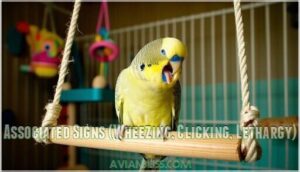
Beyond sneezing, you’ll notice several concerning respiratory sounds that signal trouble brewing. Your feathered friend might develop audible wheezing, clicking noises during breathing, or show lethargy symptoms that accompany respiratory diseases in the respiratory tract.
Watch for these warning signs:
- Audible wheezing – raspy sounds that indicate breathing difficulties and potential avian flu complications.
- Clicking noises – sharp sounds from the respiratory tract suggesting serious respiratory disease in birds.
- Lethargy symptoms – decreased activity levels often accompanying difficulty breathing episodes.
- Open-mouth breathing – desperate gasping that screams "help me now" to attentive owners.
How Veterinarians Diagnose Bird Respiratory Issues
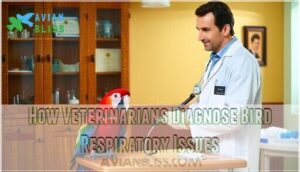
When you visit your vet for a bird with respiratory symptoms, they’ll start with a thorough physical exam and detailed history about your pet’s environment and recent changes. Sophisticated diagnostic tools like endoscopy allow veterinarians to visually examine the nasal passages and sinuses, while imaging and laboratory tests help identify the specific cause of your bird’s sneezing and discharge.
Physical Examination and History
Your vet will start by gathering your bird’s medical history and asking about recent changes in environment, diet, or behavior. During the physical exam, they’ll listen to breathing sounds, check nasal passages for discharge, and assess overall body condition.
Clinical signs like difficulty breathing or abnormal respiratory sounds help pinpoint respiratory disease. This thorough case presentation guides diagnostic techniques, as respiratory infections in avian patients require careful evaluation of the entire respiratory tract.
Endoscopy and Imaging
When your bird’s symptoms persist despite initial treatment, veterinary diagnostics take a deeper look inside. Endoscopic techniques allow direct visualization of your bird’s nasal passages and throat, revealing hidden obstructions or lesions that physical exams miss. Over 70% of chronic respiratory cases show specific findings through endoscopy.
Imaging studies like avian radiology and respiratory scans detect sinus problems in over 85% of cases. These diagnostic imaging tools help your vet pinpoint exactly what’s causing your bird’s respiratory disease, guiding targeted treatment plans for better outcomes. Understanding respiratory disease treatment is essential for effective management of your bird’s condition.
Home Care Steps for Sneezing Birds
When your bird shows signs of respiratory distress, immediate home care can stabilize their condition while you arrange veterinary treatment. These initial steps focus on isolation, environmental improvements, and nutritional support to help your feathered companion breathe easier.
Isolating The Sick Bird

First thing you’ll want to do is separate your sneezing bird from healthy flock mates immediately. Sick Bird Isolation prevents Upper respiratory infections from spreading through your aviary like wildfire. Set up a quiet, warm quarantine space away from other birds. This Isolation Techniques approach gives your feathered friend recovery time while protecting the rest of your flock from potential Respiratory disease in birds transmission.
Effective bird cage isolation requires careful consideration of bird cage designs to prevent disease spread.
Improving Cage Hygiene and Ventilation

Clean your bird’s cage thoroughly twice weekly using avian-safe disinfectants to eliminate bacterial buildup that contributes to respiratory disease. Position cages away from drafts while ensuring adequate air circulation through proper ventilation systems.
Maintain humidity levels between 50-60% and replace substrate daily. Good air quality control prevents irritants from accumulating in your bird’s respiratory tract and air sacs. Regular use of a cage cleaning product is essential for maintaining a healthy environment.
Dietary Adjustments and Vitamin Support

Proper avian nutrition plays a key role in supporting your bird’s immune system during respiratory illness. Vitamin A deficiency substantially increases susceptibility to respiratory disease in birds, making vitamin supplements particularly important.
Offer balanced diets rich in colorful vegetables like carrots and sweet potatoes for natural vitamin A. Consider veterinarian-approved nutrient therapy and dietary enrichment to strengthen your bird’s recovery process.
When to Seek Veterinary Attention

Recognizing when your bird needs professional medical attention can mean the difference between a quick recovery and a life-threatening emergency. You’ll want to contact your avian veterinarian immediately if you notice thick, colored discharge, persistent sneezing lasting more than 48 hours, or breathing difficulties.
Warning Signs of Serious Illness
Respiratory failure becomes life-threatening when your bird displays open-mouth breathing, extended neck posturing, or tail bobbing. Critical conditions include bilateral nasal discharge with blood, sudden weight loss, and multiple birds affected simultaneously.
Severe symptoms like audible wheezing, clicking sounds, and lethargy signal avian distress requiring emergency care. Respiratory diseases affecting the respiratory tract demand immediate veterinary intervention.
Risks of Delaying Treatment
Delaying veterinary care transforms minor respiratory tract infections into life-threatening emergencies. Mortality rates spike dramatically when bacterial infections progress to sepsis or fungal diseases invade deeper tissues.
Secondary infections often develop treatment resistance, making recovery harder and more expensive.
Organ damage from untreated vitamin A deficiency creates long-term consequences that compromise your bird’s quality of life permanently.
Information to Provide Your Vet
When preparing for your vet visit, gather your bird’s Medical History, including vaccination records and previous Health Records. Document the Symptom Timeline—when sneezing started, discharge color changes, and unusual Bird Behavior patterns. Note environmental factors like new foods or cage changes.
This Veterinary Preparation helps your avian veterinarian quickly diagnose respiratory disease, respiratory tract infections, or vitamin A deficiency requiring sinus aspirate testing.
Treatment Options for Avian Respiratory Disease
When your bird shows signs of respiratory illness, effective treatment depends on accurate diagnosis and targeted therapy. Your veterinarian will prescribe specific medications like antibiotics for bacterial infections or antifungal drugs for yeast overgrowth, while supportive care helps your feathered friend recover faster.
Prescription Medications (Antibiotics, Antifungals)
When bacterial or fungal infections strike your bird’s respiratory tract, targeted prescription medications become essential weapons against disease. Your veterinarian will select specific treatments based on diagnostic results and species considerations.
- Antibiotics like doxycycline combat bacterial infections, while enrofloxacin targets gram-negative pathogens effectively.
- Antifungal drugs including itraconazole treat aspergillosis, with amphotericin B reserved for severe cases.
- Anti-parasitic drugs address mite infestations causing persistent sneezing and discharge.
Proper avian pharmacology requires precise medication dosage to avoid antibiotic resistance while ensuring antimicrobial therapy success. Effective respiratory disease treatment is vital for saving your bird’s life.
Supportive Therapies
Beyond antibiotics and antifungal drugs, your bird needs supportive therapies to recover fully. Humidification therapy helps clear the respiratory tract, while nutritional supplements boost immunity. Environmental modifications and respiratory support create healing conditions for your feathered friend.
| Supportive Therapy | Purpose |
|---|---|
| Humidification Therapy | Soothes inflamed respiratory tract tissues |
| Nutritional Supplements | Provides vitamin A for immune function |
| Respiratory Support | Maintains oxygen levels during recovery |
| Environmental Modifications | Reduces stress and promotes healing |
| Herbal Remedies | Offers natural anti-inflammatory benefits |
Environmental and Nutritional Management
You’ll need to address your bird’s environment alongside medical treatment. Poor air quality control and inadequate ventilation systems often worsen respiratory disease symptoms. Vitamin A deficiency makes birds vulnerable to air sac mites and respiratory tract infections.
- Humidity Management: Maintain 40-60% humidity levels to prevent respiratory irritation
- Dietary Supplements: Provide vitamin A-rich foods and veterinary-approved supplements for nutrient balance
- Air Quality Control: Remove aerosols, dust, and smoke sources from your bird’s environment
Preventing Respiratory Problems in Birds
Prevention remains your most powerful tool against respiratory disease in pet birds. You’ll protect your feathered companion’s health through consistent cage maintenance, proper nutrition, and careful environmental management that eliminates common irritants before they cause problems.
Routine Cage Maintenance
Clean your bird’s cage daily to prevent respiratory disease buildup. Remove waste, food debris, and soiled bedding that harbor bacteria affecting air sacs and lungs.
Maintain proper ventilation systems and humidity control below 60%. Weekly deep sanitization protocols eliminate pathogens.
These cage cleaning tips create healthier environments, reducing avian sneezing and discharge episodes substantially.
Balanced Nutrition and Supplements
Proper nutrition acts like your bird’s immune system bodyguard, with vitamin A deficiency dramatically increasing respiratory vulnerability. Smart dietary management prevents most sneezing episodes through targeted nutritional support.
Essential nutritional strategies include:
- Vitamin A supplementation – Prevents upper respiratory tract inflammation in psittacine species
- Avian probiotics – Support healthy gut bacteria and immune function
- Mineral therapy – Guarantees proper metabolic processes and tissue repair
- Nutrient balance – Meets specific dietary needs based on bird characteristics
- Vitamin supplements – Fill gaps in commercial seed diets
Quality pellets provide balanced nutrition, while fresh vegetables deliver natural vitamins. Understanding avian terminology helps you select appropriate supplements for your bird’s species-specific requirements. A well-planned diet may involve Vitamin A supplements to address nutritional deficiencies.
Reducing Exposure to Irritants and Pathogens
Eliminating household toxins protects your bird’s delicate respiratory tract from harm. Remove aerosol sprays, cigarette smoke, and overheated cookware—these trigger fatal reactions. Install quality ventilation systems with HEPA air purification to control humidity and guarantee allergen removal.
Regular cage sanitizing prevents bacterial buildup. Avoid air drafts while maintaining fresh airflow to prevent avian respiratory disease and difficulty breathing. Understanding the causes of respiratory disease issues is vital for effective prevention and treatment.
Frequently Asked Questions (FAQs)
Can birds spread respiratory diseases to humans?
Yes, birds can spread respiratory diseases to humans through zoonotic transmission, including avian influenza and psittacosis. You’re exposed by inhaling contaminated dust from feathers and droppings.
How long does avian sneezing typically last?
Like a storm cloud passing overhead, your bird’s sneezing duration depends on the underlying cause. Mild irritant-related sneezing resolves within days, while bacterial infections require veterinary treatment lasting one to two weeks for complete recovery.
Are there seasonal patterns to bird sneezing?
Bird respiratory infections show clear seasonal peaks. Winter brings higher incidence rates in commercial poultry due to decreased ventilation and poor air quality.
You’ll notice more sneezing issues when colder months reduce airflow, creating perfect breeding conditions for pathogens.
What emergency medications help sneezing birds temporarily?
While you can’t fix this at home, saline solution gently flushes irritants from your bird’s nostrils temporarily. However, you’ll need veterinary antimicrobials and anti-inflammatories for effective treatment of underlying infections.
Do outdoor birds need different respiratory care?
Outdoor birds face greater respiratory challenges from environmental pathogens, pollutants, and weather extremes. They’ll need improved monitoring for infectious diseases, improved shelter from harsh conditions, and specialized veterinary care addressing wild-specific respiratory threats, which will require strengthened measures to boost their resilience.
Conclusion
Like a well-tuned smoke detector, recognizing avian sneezing discharge symptoms early protects your feathered companion from serious respiratory complications. Discharge color, frequency changes, and accompanying symptoms like open-mouth breathing signal when immediate veterinary intervention is necessary.
Environmental management, proper nutrition, and prompt medical attention form your defense against bacterial, viral, and fungal infections. By monitoring these warning signs and maintaining ideal cage conditions, you’ll safeguard your bird’s respiratory health effectively.
- https://docs.google.com/forms/d/1GAQr3Kn1cURCVHUA82hAga1Wv8DCH0IuqDLRUrOpN7M/viewform?ts=63f4f653&entry.1515682415=https://www.merriam-webster.com/dictionary%2Favian
- https://premium.britannica.com/mw-unabridged/?utm_source=mw&utm_medium=inline-def&utm_campaign=evergreen
- https://www.youtube.com/watch?v=xyPreIqbZW0
- https://www.dvm360.com/view/clinical-approach-nasal-discharge-proceedings
- https://www.auspigeonco.com.au/visible-indicators-of-health-in-the-head-and-throat.html