This site is supported by our readers. We may earn a commission, at no cost to you, if you purchase through links.

A single black oil sunflower seed can draw over 40 native bird species to your yard—yet most feeders sit half-empty because the setup drives birds away instead of welcoming them.
Window strikes, spoiled seed, and poorly placed feeders silently undermine what should be a thriving backyard habitat. The difference between a feeder birds ignore and one they return to daily comes down to a few specific decisions: what you hang, where you place it, and what you put inside.
This backyard bird feeding guide walks you through each step, so the birds you want to attract actually show up—and stay safe when they do.
Table Of Contents
- Key Takeaways
- Choosing The Best Bird Feeders
- Strategic Feeder Placement Tips
- Selecting Bird Food for Your Feeder
- Attracting a Variety of Bird Species
- Preventing Squirrels and Pest Problems
- Ensuring Bird Safety Around Feeders
- Maintaining Feeders for Bird Health
- Storing and Handling Bird Seed Properly
- Recognizing and Preventing Avian Diseases
- Supporting Bird Conservation Efforts
- Frequently Asked Questions (FAQs)
- How often should I feed backyard birds?
- What to feed birds in the backyard?
- When should I stop feeding birds seasonally?
- How do weather conditions affect bird feeding?
- What attracts unwanted birds to my feeders?
- Can bird feeding harm local ecosystems?
- How much should I spend on feeders?
- How do I attract birds in winter months?
- Can bird feeding affect local migration patterns?
- What water sources complement backyard bird feeders?
- Conclusion
Key Takeaways
- Black oil sunflower seeds attract the widest range of species — over 40 native birds — because their thin shells and high fat content (28–38%) make them easy and worth cracking for almost every feeder visitor.
- Feeder placement is as critical as food choice: keep feeders within 3 feet of windows or beyond 10 feet to prevent deadly collisions, and position them 10–15 feet from shrubs to give birds a clear escape route from predators.
- Cleaning feeders every two weeks with a 10% bleach solution — and pulling them down entirely during local disease outbreaks — is one of the most direct ways to keep visiting birds healthy and prevent illness from spreading.
- Spreading 8–12 feeders across two or three clusters, each stocked with different foods at different heights, draws more species and reduces the crowding that drives disease and attracts predators.
Choosing The Best Bird Feeders
The feeder you choose shapes everything—which birds show up, how often, and whether they feel safe enough to stay. Different designs work better for different birds, so picking the right one makes a real difference.
Pairing the right feeder with the best bird seed for wild birds turns casual visitors into regulars who actually stick around.
Here are the main types worth knowing about.
Hopper, Tube, Platform, and Suet Feeders
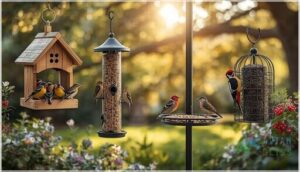
Each feeder type fulfills a different purpose. Hopper feeders hold several pounds of mixed seed and keep it dry under a built-in roof — great for bird attraction without daily refills. Tube feeders suit small songbirds and support smart seed selection like nyjer or sunflower.
Platform feeders welcome nearly every species. Suet feeders target woodpeckers and nuthatches, making feeder maintenance and wildlife conservation part of one practical setup. Maintaining bird feeders according to is essential for the health and safety of visiting birds.
Window Feeders for Close-Up Viewing
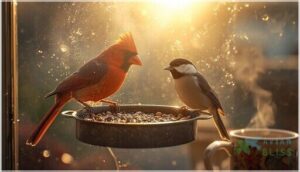
Want to watch backyard birds from just a foot away? Window feeders mount directly to glass using suction cups, placing you close enough to catch real bird behavior — seed cracking, grooming, even dominance displays.
That proximity also aids window collision prevention, since birds can’t build dangerous speed within 3 feet of the pane. For additional ideas, learn more about the benefits of. Smart feeder design and placement make bird watching genuinely personal.
Squirrel-Proof and Safe Feeder Options
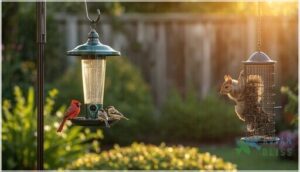
Squirrels can empty a feeder in hours, so choosing the right design matters. Weight-activated feeders close off seed ports when anything heavier than a songbird lands — usually around 2 to 4 pounds.
Cage-style feeders block squirrels physically with durable materials like powder-coated steel.
Add baffle systems on pole mounting setups, and squirrels don’t stand a chance.
Strategic Feeder Placement Tips

Where you put your feeder matters just as much as what you put in it. A poorly placed feeder can leave birds stressed, exposed, or crowded out before they even get a chance to eat.
Here are a few placement strategies that make a real difference.
Placement for Maximum Bird Safety
Where you place your feeder matters more than most people realize. Smart bird feeder placement keeps birds safe from window collisions — position feeders either within 3 feet of glass or beyond 10 feet to avoid the deadly middle zone.
Backyard bird feeding tips also call for open spots that support predator control, disease prevention through reduced crowding, and better weather protection year-round.
Height and Distance From Cover
Height shapes which bird species you’ll attract, so aim for 5 to 6 feet for most feeders — cardinals and finches feel right at home there.
For cover distance, a gap of 10 to 15 feet between bird feeders and nearby shrubs ensures bird safety while still giving birds a quick escape route.
Smart yard layout and backyard bird feeding tips like these make a real difference.
Reducing Predation and Crowding
Too many birds at one feeder spells trouble — crowding spreads disease fast and draws predators in close.
Spread out 8 to 12 feeders across two or three clusters, keeping each station at least several yards apart. This feeder placement approach doubles as a crowding solution and a predator deterrent, giving every bird a clear flight path to cover.
Selecting Bird Food for Your Feeder
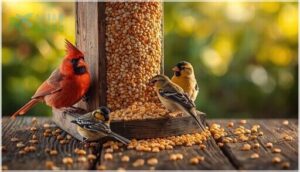
What you put in your feeder matters just as much as where you put it. Different seeds, fats, and foods attract different species, so knowing your options gives you a real edge.
Here’s a closer look at the best choices to stock your feeder with.
Black Oil Sunflower Seeds Benefits
Black oil sunflower seed is the workhorse of bird feeding — and for good reason. Each seed packs 28 to 38 percent fat, making it one of the most calorie-dense energy sources in birdseed.
That seed nutrition draws cardinals, chickadees, finches, and nuthatches to your feeder regularly. Thin shells mean even small birds crack them easily, boosting feeder efficiency and maximizing bird attraction across species.
Using Millet, Nyjer, Suet, and Peanuts
Each food pulls different birds to your yard. White proso millet draws sparrows, juncos, and doves to low tray feeders, while nyjer seeds in narrow-port Nyjer Feeders bring goldfinches and siskins.
Suet — whether commercial or homemade Suet Recipes mixing fat, peanut butter, and cornmeal — fuels woodpeckers and chickadees through cold snaps.
Unsalted peanuts round out Bird Nutrition for jays and nuthatches, but keep amounts small to prevent mold.
Offering Fruit, Nectar, and Mealworms
Fresh fruit opens your yard to orioles, catbirds, and tanagers — cut pieces smaller than half an inch so birds can swallow them safely.
For Nectar Recipes, mix one part white sugar with four parts water, skip the red dye, and refresh every two to three days for bird health.
Live mealworms, stored in wheat bran for proper Mealworm Storage, deliver protein-rich Bird Nutrition during breeding season.
Attracting a Variety of Bird Species
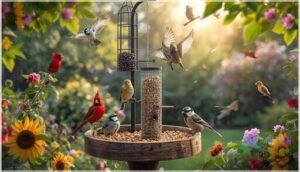
Different birds show up for different reasons, and food is usually at the top of that list. Once you know what each species is drawn to, setting up your feeders gets a lot more straightforward.
Here’s what you should think about regarding food preferences, station variety, and feeding through the seasons.
Food Preferences by Bird Type
Every bird has its own version of a perfect meal. Cardinals and house finches reach for black oil sunflower seed first, while American goldfinches stick almost entirely to nyjer seed. Woodpeckers and nuthatches rely on suet to meet their high-fat nutrient needs.
Robins and bluebirds skip birdseed altogether, preferring mealworms and fruit — a foraging behavior rooted in their insect-based bird diet.
Creating Diverse Feeding Stations
Knowing what each species prefers is just the starting point — the real difference comes from how you build your station. Feeder variety, feeding heights, and station layout all shape which birds show up.
- Use tube feeders at 5–6 feet for finches
- Set platform feeders at mid-level for doves and juncos
- Mount suet and peanut butter feeders at trunk height for woodpeckers
- Place ground trays near open sightlines for sparrows
- Spread feeders several feet apart to reduce crowding
Seasonal Feeding Strategies
Your feeding station layout sets the stage — but what you offer has to shift with the seasons. In winter, lean on suet feeders and black oil sunflower seed to help birds stay warm.
Spring Migration calls for nectar and fruit as birds pass through.
Summer Hygiene means checking seed every few days.
Autumn Preparation and Hummingbird Care round out smart year-round backyard bird feeding.
Preventing Squirrels and Pest Problems
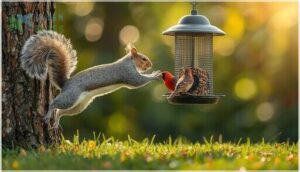
Squirrels are persistent, and if there’s seed within reach, they’ll find a way to it. The good news is that a few simple strategies can stop most of the raiding before it starts.
Here’s what works.
Using Baffles and Barrier Devices
Without the right barriers in place, squirrels can empty a feeder in hours. Pole baffles — cone-shaped or cylindrical guards mounted 4 to 5 feet high — stop squirrels from climbing up. Hanging dome baffles block them from dropping down.
For raccoons, long metal cylinder barrier devices around 28 inches tall do the job. Smooth surfaces and proper height are your best bird protection strategy.
Proper Seed Storage Solutions
Once the barriers are doing their job, don’t let poor storage undo your effort. Metal seed container options — like galvanized steel cans with locking lids — keep mice and squirrels out for good.
Moisture control methods matter too: store bird seed in a cool, dry spot off bare ground. Check regularly for clumping or off smells — that’s your freshness check right there.
Placement to Deter Unwanted Guests
Where you place your feeder matters just as much as what’s inside it. Smart yard layout stops squirrels before they even try.
- Keep feeders 10–12 feet from trees and fences
- Set pole placement at 7+ feet from any launch point
- Mount baffle installation at 4 feet on smooth poles
- Choose bird feeder selection with seed protection in mind
Ensuring Bird Safety Around Feeders
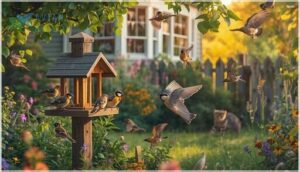
Setting up a feeder is only half the job — keeping birds safe once they arrive is the other half. Windows, cats, and nearby predators are the most common threats you’ll need to plan around. Here’s what you can do to address each one.
Reducing Window Collisions
Windows kill more birds than most people realize — but distance is your first line of defense for window collision prevention. Keep feeders within 3 feet of glass or beyond 25 feet, since the danger zone sits right in between.
Bird screens, UV patterns, and Window Decals applied to outer glass break up reflections, supporting bird health and safety for every species visiting your yard.
Keeping Cats Indoors
Cats are one of the biggest threats to backyard birds — domestic cats kill up to 4 billion birds in the U.S. every year. Keeping yours inside directly aids wildlife conservation and feline health simultaneously.
Domestic cats kill up to 4 billion birds yearly, making indoor cats one of the simplest conservation choices you can make
- Provide daily play for Cat Behavior and Indoor Enrichment
- Use window perches so cats watch birds safely
- Reduce disease risk, boosting Feline Health and Cat Safety
- Catios support animal welfare and environmental protection
- Combined with feeders, indoor cats aid Bird Health and Safety
Safe Distance From Predators
Predators rely on surprise, so distance is your best defense. Keep feeders 10 to 15 feet from shrubs or fences — that predator buffer gives birds time to spot and flee threats.
A feeder height of 5 to 6 feet, paired with open space around the pole, limits squirrel and cat access while supporting bird health, safety, and natural bird species attraction year-round.
Maintaining Feeders for Bird Health
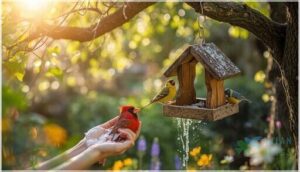
A clean feeder isn’t just good housekeeping — it’s one of the most direct things you can do to keep the birds in your yard healthy. Bacteria, mold, and old seed can spread disease faster than most people realize.
Here’s what you need to stay on top of it.
Cleaning Schedules and Methods
Clean feeders every two weeks — more often in wet weather or when bird traffic spikes. For hummingbird feeders, aim for weekly cleaning, or every one to three days in summer heat.
Your maintenance routines should start with full disassembly, dumping old seed debris away from the ground, then scrubbing with warm soapy water and dedicated cleaning tools. Rinse completely before air-drying to support avian health and safety.
Disinfecting Feeders and Hardware
Scrubbing alone won’t cut it — disinfecting is where real disease prevention happens. After washing, soak plastic and metal feeders in a 10% bleach solution for about 10 minutes. For hardware cleaning, dip hooks, chains, and perches in the same mix.
- Use one part bleach to nine parts water for feeder sanitizing
- Soak heavily soiled feeders up to 30 minutes
- Scrub ports and trays with a detail brush
- Rinse until no chemical smell remains, then air-dry completely
- Wipe shepherd’s hooks and pole arms with disinfectant solution
Managing Seed Debris and Waste
Once your feeders are disinfected, what falls beneath them matters just as much. Raking up seed shells and bird droppings at least weekly prevents moldy buildup that can sicken foraging birds. Seed tray benefits go beyond convenience — catchers reduce ground waste dramatically.
Here’s a quick debris management reference:
| Task | Frequency |
|---|---|
| Ground cleanup | Weekly |
| Seed tray emptying | Every 2–3 days |
| Post-rain debris check | After each storm |
| Discard spoiled seed | Immediately |
Smart seed selection and storage, combined with regular feeder maintenance and cleaning, keeps your bird feeder a safe, welcoming stop.
Storing and Handling Bird Seed Properly
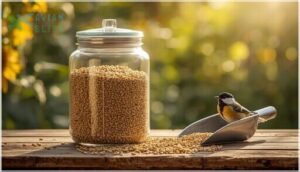
How you store your bird seed matters just as much as what you put in your feeder. Bad storage leads to mold, pests, and sick birds — none of which you want in your backyard.
Here’s what to keep in mind regarding containers, spoilage, and spotting seed that’s gone bad.
Choosing Secure Containers
Metal is your best friend for seed storage. Galvanized steel cans with locking mechanisms resist both rodent proofing challenges and weather resistance demands far better than plastic, which squirrels and mice chew through easily.
For solid container materials, look for smooth-sided bins holding 23 liters or more — enough for bulk seed storage without constant refills. Locking clamps keep raccoons and squirrels out reliably.
Preventing Mold and Spoilage
Storing seed correctly connects directly to mold prevention. Humidity is the real culprit — once moisture reaches your seed, spoilage starts fast.
For solid bird feeding best practices, follow these steps:
- Fill feeders halfway during humid weather so seed turns over within two to three days.
- Use tube feeders with drainage holes for moisture control.
- Store bulk seed at 40–70°F for humidity management.
- Apply feeder sanitizing routines every two weeks to stop mold prevention failures early.
Monitoring for Contaminated Seed
Even with good storage habits, contaminated seed can still slip through. Regular seed inspection protects bird health before problems spread.
| Warning Sign | What It Means | Action to Take |
|---|---|---|
| Clumpy or sticky seed | Moisture exposure | Discard immediately |
| Musty or sour smell | Mold detection alert | Replace full batch |
| Webbing or insects | Infestation present | Toss and sanitize feeder |
| Fluffed, lethargic birds | Possible avian diseases | Remove feeders 1–2 weeks |
| Birds rejecting seed | Contamination risks present | Audit and restock |
Weekly seed auditing is one of the simplest bird feeding best practices you can follow.
Recognizing and Preventing Avian Diseases
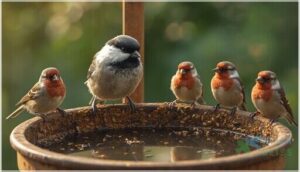
Sick birds at your feeder can spread illness to the rest of your flock fast, and catching the warning signs early makes all the difference. Knowing what to look for — and what to do — helps you protect every bird that visits your yard.
Here’s what you need to watch for and act on.
Spotting Signs of Sick Birds
A bird that looks “off” usually is. Changes in bird behavior and ecology are your first clue — watch for fluffed feathers, sluggish movement, or a bird sitting on the ground when it shouldn’t be.
Avian diseases often show up in feather conditions, respiratory issues like open-mouth breathing, or crusty, swollen eyes. Trust what you observe; early detection is everything for bird health.
Steps to Take During Disease Outbreaks
When disease outbreaks hit your area, act fast — take your bird feeder down for at least one to two weeks. This breaks the cycle of virus transmission by forcing birds to spread out and use natural food sources.
Check your local wildlife agency weekly for outbreak response updates, because disease monitoring helps protect bird safety and promotes broader wildlife conservation goals.
Importance of Feeder Hygiene
Hygiene is your feeder’s first line of defense against illness prevention. Dirty bird feeders let pathogens like salmonella, avian pox, and trichomoniasis spread fast between birds sharing the same perches. Consistent feeder maintenance and smart cleaning methods protect bird health year-round.
Here’s what solid feeder sanitation looks like in practice:
- Scrub bird feeders with warm, soapy water weekly.
- Disinfect using a 10% bleach solution for disease prevention.
- Rinse EcoClean Feeders thoroughly and air-dry completely before refilling.
- Rake seed debris and droppings from the ground twice weekly.
- Pair squirrel and cat deterrence with clean feeding zones to reduce stress crowding.
Supporting Bird Conservation Efforts
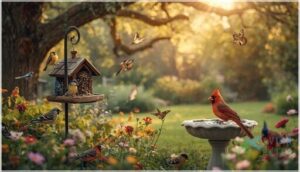
Feeding birds in your backyard does more than bring nature closer — it connects you to something bigger.
Small, consistent actions at home can support bird populations across entire regions. Here are a few ways to make your setup count for conservation.
Participating in Citizen Science Projects
Your backyard feeder can quietly contribute to real Bird Surveys that shape conservation policy. Programs like FeederWatch, run through the Cornell Lab of Ornithology, and the Great Backyard Bird Count turn everyday Bird Watching and Observation into Feeder Research that scientists rely on.
These Citizen Science Projects welcome any skill level.
| Citizen Project | What You Do |
|---|---|
| FeederWatch | Count feeder birds Nov–Apr |
| Great Backyard Bird Count | Watch birds 15+ min each February |
| eBird | Log sightings year-round |
Creating Wildlife-Friendly Gardens
Your feeder is just one piece of a larger puzzle. Thoughtful Garden Layout and Native Plantings turn your whole yard into a true backyard habitat.
- Plant 70% native species to support caterpillars and songbirds
- Add Water Features with shallow dishes and pebbles for safe drinking
- Create Wildlife Corridors using hedge gaps and connected plantings
- Layer trees, shrubs, and grasses for Biodiversity Conservation
Sustainable gardening practices make every corner count.
Responsible Feeding and Environmental Impact
Every seed you spill carries a cost. Excess hulls add nitrogen and phosphorus to soil, runoff reaches streams, and mold under feeders can poison the birds you’re trying to help. Sustainable Feeding means choosing waste-free mixes, sweeping up debris, and limiting feeder density so your yard stays in ecological balance — not out of it.
| Responsible Practice | Environmental Impact | Eco Friendly Swap |
|---|---|---|
| Seed mix with filler grains | Nutrient pollution, mold, pest attraction | Use hulled sunflower or nyjer only |
| Constant full feeders | Overcrowding, disease spread, habitat shift | Offer smaller, timed portions |
| Unswept ground debris | Soil chemistry change, rodent activity | Rake weekly, store seed in sealed metal bins. |
Environmental Stewardship isn’t complicated — it’s just feeding birds the way a wildlife-friendly garden already works: clean, intentional, and balanced.
Frequently Asked Questions (FAQs)
How often should I feed backyard birds?
Once a day works well for most bird feeders, though feeding frequency shifts with the seasons.
Winter and migration periods demand more frequent refill schedules, while summer’s natural abundance means topping off every few days is plenty.
What to feed birds in the backyard?
Black oil sunflower seeds are your best starting point — thin shells, high fat, and nearly every bird cracks them easily.
Add nyjer seed, peanuts, and suet to round out Bird Nutrition across species.
When should I stop feeding birds seasonally?
Backyard bird feeding tips shift with the seasons. Taper off in spring as insects return, maintain through winter dependence, and pause immediately for disease prevention if sick birds appear.
How do weather conditions affect bird feeding?
Cold weather drives birds to your feeders more often. Rain, wind, and seasonal shifts change what they need — high-fat seeds and dry, sheltered feeders keep them coming back safely.
What attracts unwanted birds to my feeders?
Cheap mixed seed, open platform feeders, and spilled grain on the ground are the biggest draws.
Starlings and grackles especially love exposed suet, peanuts, and sunflower seeds in wide, unguarded bird feeders.
Can bird feeding harm local ecosystems?
Yes, it can. Crowded feeders shift feeder ecology, fueling wildlife imbalance, seed pollution, and bird dependency.
Ecosystem disruption follows when invasive species dominate, undermining biodiversity and straining environmental sustainability across local habitats.
How much should I spend on feeders?
Start simple: a basic tube or hopper feeder runs $15–$ One or two feeders keep your initial feeder costs under $60, leaving room in your budget planning for ongoing seed expenses.
How do I attract birds in winter months?
Winter birding is a “flocking” good time!
Stock Cold Weather Feeders with black oil sunflower seed and suet cakes, keep Frozen Water Sources thawed, and birds will find your Snowy Landscape irresistible.
Can bird feeding affect local migration patterns?
Feeders don’t stop bird migration. Seasonal light changes drive migration triggers, not food supply.
Still, feeder effects on bird residency are real — some species shift seasonal patterns, reshaping urban wildlife communities over time.
What water sources complement backyard bird feeders?
Bird baths, moving water features, and heated baths all complement your bird feeder setup. Even a shallow pond draws more species. Keep water fresh, accessible, and close to your feeders.
Conclusion
The irony of backyard bird feeding is that the more you try to attract every species at once, the fewer birds actually stay.
This backyard bird feeding guide exists for one reason: to help you stop guessing and start seeing results. Clean feeders, the right seed, smart placement—none of it’s complicated, but all of it matters.
Get those details right, and your yard stops being a place birds pass through and becomes one they come back to.
- https://www.birdscanada.org/choosing-the-right-feeder-and-seed-a-guide-to-keeping-backyard-birds-healthy
- https://blog.nwf.org/2011/05/a-beginners-guide-to-backyard-bird-feeding/
- https://www.audubon.org/magazine/11-tips-feeding-backyard-birds
- https://www.kaytee.com/learn-care/wild-bird/value-of-wild-bird-ingredients
- https://www.petmd.com/bird/feeding-birds-in-your-backyard