This site is supported by our readers. We may earn a commission, at no cost to you, if you purchase through links.
 You’ll make a real difference when you offer black oil sunflower seeds and suet cakes during migration season. These high-fat foods are like premium fuel for birds making thousand-mile journeys—boosting their survival rates by 56%.
Place feeders 10-12 feet from cover for quick escapes, and keep them consistently stocked since migrating birds rely on predictable pit stops. Clean feeders weekly to prevent disease spread.
Think of your yard as a highway rest stop where exhausted travelers can refuel safely. **The timing of when you start feeding matters more than you might expect.
Table Of Contents
Key Takeaways
- Stock your feeders with black oil sunflower seeds and suet cakes during migration season—these high-fat foods boost bird survival rates by 56% and provide the premium fuel they need for thousand-mile journeys.
- Place feeders 10-12 feet from cover like trees or shrubs so birds can quickly escape predators, and maintain consistent feeding schedules since migrating birds rely on predictable pit stops for refueling.
- Clean your feeders weekly with a 10% bleach solution to prevent disease outbreaks that can devastate bird populations, and check daily for moldy or wet seeds that spoil in autumn weather.
- Don’t remove feeders too early—keep them stocked for 2-3 weeks after spotting your last migrating bird since stragglers still need support to complete their southern journey through November’s unpredictable weather.
Why Feeding Migrating Birds Matters
When you fill your feeders during migration season, you’re creating a vital refueling station that can mean the difference between life and death for exhausted travelers.
Research shows that birds with access to reliable food sources have 56% higher survival rates, making your backyard an essential pit stop on their remarkable journey south.
Your backyard feeder becomes a lifesaving gas station for birds flying thousands of miles
Energy Needs During Migration
During peak migration season, your feathered visitors undergo hyperphagia—basically nature’s version of carb-loading. These energy-hungry travelers need serious fuel efficiency to power thousands of miles of flight.
Here’s what migrating birds require:
- Caloric Intake increases by 40-100% during pre-migration
- Energy Sources focus on high-fat foods for maximum fuel
- Protein Options support muscle maintenance during long flights
- Migration Patterns dictate specific nutritional timing needs
- High Energy Food Options become essential for survival success
Understanding the role of food availability factors is vital for supporting birds during their journey.
Survival Benefits of Supplemental Feeding
Several studies prove that Supplemental Nutrition dramatically boosts bird survival rates during challenging Migration Patterns. Food supplementation led to 1.56 times higher annual survival of juveniles and 1.22 times higher survival of adults. Your strategic Feeding Strategies help birds maintain vital Energy Reserves when facing harsh weather conditions.
| Benefit Category | Survival Improvement | Key Impact |
|---|---|---|
| Juvenile Birds | 56% higher survival | Enhanced first-year success |
| Adult Birds | 22% higher survival | Better migration completion |
| Energy Reserves | Increased fat deposits | Improved weather resilience |
Impact on Bird Populations
Your backyard feeder isn’t just helping individual birds—it’s making a real difference across entire populations. Research shows that supplemental feeding during Migration Patterns can boost survival rates by up to 56%, helping offset Population Trends decline from Habitat Loss and supporting Migratory Bird Conservation efforts that maintain Species Diversity across migration corridors.
Best Foods for Migratory Birds
You’ll want to stock your feeders with high-fat, protein-rich foods that pack the energy punch migrating birds desperately need for their long journeys.
Think of it as setting up a roadside diner for travelers—black oil sunflower seeds, suet cakes, and dried mealworms become the fuel that keeps these incredible athletes airborne for thousands of miles.
High-Energy Seed Selection
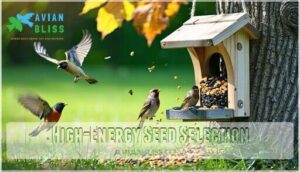
When choosing seed types for hungry migrants, black oil sunflower seeds pack the biggest energy punch. These "oilers" have thin shells and high-fat kernels that fuel long flights. Nyjer seeds attract finches specifically, while safflower seeds deter squirrels but still satisfy bird preferences.
Store your high-energy seeds in dry, secure containers to maintain their nutritional value throughout migration season. Understanding sunflower seed benefits is vital for selecting the right food for migratory birds.
Protein-Rich Options (Suet, Mealworms, Peanuts)
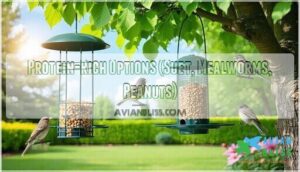
Beyond seeds, migrating birds crave high protein options that fuel their marathon journeys. Suet recipes packed with mealworms deliver concentrated energy when insects disappear. Mealworm benefits include rapid muscle recovery between flights. Peanut varieties offer essential fats and calcium.
These insect supplements and high protein seeds create the perfect migrating bird nutrition buffet, helping proteinrich foods power successful migrations. Understanding the best bird food options is vital for supporting birds during their migration.
Offering Native Berries and Fruits

Nothing beats Mother Nature’s buffet when supporting Fall Bird Migration. Migratory songbirds seek out native berries even when invasive fruits are abundant, making Native Berry Selection vital for Wildlife Friendly Gardening.
- Plant dogwood trees for high-fat berries that fuel migration
- Install Berry Bushes like elderberry for Seasonal Fruit Availability
- Maintain viburnums with proper Berry Bush Maintenance techniques
- Provide Fresh Water stations near Fruit Tree Planting areas
- Research Bird Migration Patterns for ideal Migrating Bird Support timing
Bird Feeder Strategies for Migration Season
You’ll need smart feeder strategies to help migrating birds refuel efficiently during their long journeys south.
Strategic placement, consistent maintenance, and species-specific approaches can transform your backyard into an essential rest stop that tired travelers desperately need.
Feeder Placement and Height
Perfect feeder height strikes a balance between bird visibility and safety. Position bird feeders 5-6 feet high to match most species’ feeding habits, while hummingbird feeders work best at 4-5 feet. Place all feeders 10-12 feet from trees or shrubs. This tree proximity gives birds quick escape routes but prevents predator ambushes.
Your yard layout matters – this height keeps backyard bird feeding convenient while offering suet feeders protection. Considering key bird feeder placement is vital for attracting various bird species.
Keeping Feeders Clean and Stocked
During migration season, your feeder maintenance becomes a lifeline for weary travelers. Clean feeders prevent disease outbreaks that can devastate bird populations, while consistent stocking ensures birds won’t find empty promises at your backyard pit stop.
Essential feeder maintenance steps:
- Weekly deep cleaning – Scrub with 10% bleach solution to eliminate harmful bacteria
- Daily seed checks – Remove moldy or wet seeds that spoil quickly in autumn weather
- Consistent refill schedules – Keep feeders topped off, especially during peak migration windows
Fresh water sources complement your feeding strategies perfectly. Regular cleaning backyard practices are vital for maintaining healthy bird feeders.
Supporting Different Bird Species
Different bird species have unique seed preferences and feeder designs that match their migratory patterns. You’ll attract greater bird species diversity by offering multiple feeder types at varying heights. Ruby-throated hummingbirds prefer nectar feeders, while American robins and dark-eyed juncos favor platform feeders for habitat creation.
| Bird Species | Preferred Food | Feeder Type | Height | Migration Timing |
|---|---|---|---|---|
| Ruby-throated Hummingbird | Nectar solution | Nectar feeder | 6-10 feet | Late summer |
| American Robin | Mealworms, berries | Platform feeder | Ground level | Early fall |
| Dark-eyed Junco | Mixed seeds | Hopper feeder | 3-5 feet | Mid-fall |
| Northern Cardinal | Sunflower seeds | Tube feeder | 4-6 feet | Year-round |
| White-throated Sparrow | Millet, nyjer | Ground feeder | Ground level | Late fall |
Supporting migrating bird habits requires understanding their specific needs during different migration phases.
Creating a Bird-Friendly Habitat
You’ll transform your yard into a migration highway when you plant native trees and shrubs that offer natural food sources and protective cover.
Think of it as building a roadside rest stop where weary travelers can refuel on berries, seeds, and insects while staying safe from predators.
Planting Native Trees and Shrubs

While feeders offer immediate energy, you can transform your Bird Friendly Yard into a long-term haven through Native Plant Selection.
Smart Tree Species Diversity and Shrub Habitat Creation provide year-round support for Migrating Bird Nutrition. Focus on Soil Preparation Methods for native oaks, serviceberries, and dogwoods.
This Ecosystem Restoration approach creates sustainable Wildlife Conservation that fosters Bird Species Habits naturally.
Providing Shelter and Safe Cover
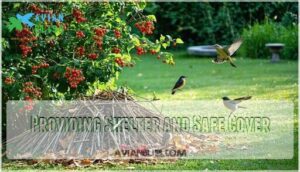
Beyond native plantings, you’ll need to create protective hideouts for weary travelers. Brush piles made from pruned branches offer ground-feeding birds safe cover from predators. Leave leaf litter under your tree canopy—it’s like a natural buffet and shelter combo.
Berry bushes create wildlife corridors that connect feeding areas. Garden structures near your birdbath provide quick escape routes when danger lurks overhead.
Avoiding Pesticides and Chemicals
Chemical-free zones protect your feathered visitors’ health and migration success. Recent studies show pesticides can cause reduced orientation in migrating birds, making them lose their course.
Your organic gardening efforts create safer habitats while promoting sustainable landscaping and eco-friendly practices. By implementing native plant strategies, you can create a bird friendly habitat that aids local wildlife.
- Choose natural pest control methods like companion planting
- Maintain chemical-free zones near fresh water sources
- Practice sustainable landscaping with native plants
- Support migrating bird nutrition through pesticide-free environments
Water Sources and Seasonal Maintenance Tips
You’ll need fresh water year-round since migrating birds require hydration just as much as food, and a heated birdbath prevents freezing during those unexpected cold snaps that can leave birds stranded.
Don’t rush to take down feeders in late fall—some stragglers need that extra support for weeks after the main migration wave passes through your area.
Using Bird Bath Outdoor Winter Heaters
Winter weather turns your bird bath into an ice rink, but heated de-icers keep fresh water flowing. A 50-watt heater placement near your birdbath prevents frozen pond conditions while supporting migrating birds and winter hummingbird visitors.
These thermostat-controlled units maintain proper water temperature without overheating, ensuring bird bath maintenance stays simple during fall bird feeding season.
Maintaining Fresh, Accessible Water
Through fall birdwatching season, fresh water becomes your feathered friends’ lifeline. Change birdbath water every two days to prevent bacteria buildup and maintain water quality.
Clean algae weekly using a stiff brush—no chemicals needed. **Position your bird bath near feeders but away from predators.
**
Shallow water (1-2 inches) works best for most species during their migration journey.
Timing Feeder Removal for Late Migrants
Don’t rush the Feeder Cleanup! Keep feeders stocked for 2-3 weeks after spotting your last migrating bird. Late Migrant Care means supporting Bird Exit Strategies for stragglers still making their southern journey.
These Post Migration Tips guarantee Migratory Bird Support through November’s unpredictable Migration Schedules. Your Fall Birdwatching patience helps late travelers fuel up before completing their epic adventure south. Providing the right bird food sources is vital for their survival during this period.
Frequently Asked Questions (FAQs)
Should I feed birds year-round or seasonally?
Some folks think birds are helpless without constant handouts, but they’re actually quite resourceful! You should feed year-round for best results, supporting migration and harsh weather survival.
How do weather conditions affect migration feeding?
Storms force you to double your food supplies. Cold fronts drain their energy reserves faster, making your feeders lifelines when they’re struggling against harsh winds.
Thunderstorms can blow birds hundreds of miles off course or force them to hunker down and stay put for days.
What feeder capacity works best for migration?
Choose feeders holding 2-4 pounds of seed capacity. You’ll refill them less often during peak migration when hundreds of birds arrive daily, ensuring consistent food availability for energy-starved travelers.
Can feeding birds alter their migration routes?
Breadcrumbs on nature’s GPS can shift the map entirely. While your backyard feeders won’t make birds abandon their ancient routes, research reveals that consistent garden feeding has helped some species like Blackcaps evolve new migration patterns.
How far should feeders be from windows?
Position feeders within three feet of windows or beyond thirty feet away. This prevents deadly collisions—birds can’t gain enough speed up close, while distant feeders avoid dangerous reflection zones.
Conclusion
Ironically, the smallest gestures often create the biggest impact—your simple bird feeding tips during migration can mean the difference between life and death for countless travelers. You’ve learned that black oil sunflower seeds and suet provide essential energy, proper feeder placement ensures safety, and consistent maintenance prevents disease.
These aren’t just feeding stations—they’re lifelines connecting fragmented habitats across continents. Every seed you offer helps preserve migration routes that have existed for millennia, proving that backyard conservation truly matters.
- https://www.beyourownbirder.com/2025/09/09/best-foods-for-migrating-birds/
- https://www.lyricbirdfood.com/birding-hub/migration/feeding-birds-during-migration/
- https://www.perkypet.com/articles/how-to-prepare-your-yard-for-fall-migration
- https://www.allaboutbirds.org/news/where-to-put-your-bird-feeder/
- https://www.reddit.com/r/birdfeeding/comments/1gc67pp/any_suggestions_to_get_migratory_birds_to_feeders/