
This site is supported by our readers. We may earn a commission, at no cost to you, if you purchase through links.
 When your bird’s scratching like crazy and losing feathers, you’re dealing with microscopic mites that have made your feathered friend their home. Effective bird mange treatment options include veterinarian-prescribed anti-parasitic medications, bird-safe insecticidal sprays, and thorough environmental cleaning.
You’ll need to treat both your bird and their habitat since these pesky parasites thrive in dirty, humid conditions. Isolate infected birds immediately and disinfect cages, perches, and toys with veterinary-approved cleaners.
The treatment process isn’t just about killing the current mites—it’s about breaking their lifecycle completely. Success requires combining medical intervention with thorough habitat management, as treating only your bird while ignoring contaminated surroundings is like fighting fire with a water gun.
Table Of Contents
- Key Takeaways
- What Causes Mange in Birds?
- Recognizing Symptoms of Bird Mange
- Diagnosing Mite Infestations in Birds
- Bird Mange Treatment Options Explained
- Managing The Environment for Recovery
- Preventing Future Mange Outbreaks
- Frequently Asked Questions (FAQs)
- How is sarcoptic mange treated?
- How are mange & mites treated?
- How do you get rid of mange?
- How do you know if a bird has mange?
- How do you treat a bird mite?
- Can you feed a wild animal a mange mite?
- How long does bird mange treatment typically take?
- Can mange spread from birds to humans or pets?
- Whats the cost range for professional mange treatment?
- Are there any side effects from mange medications?
- Conclusion
Key Takeaways
- You’ll need to combine prescription medications with thorough environmental disinfection to eliminate both mites and their eggs from your bird’s habitat.
- Isolate infected birds immediately and maintain strict quarantine protocols for 30 days when introducing new birds to prevent spreading mites to healthy flocks.
- Treatment takes 30-40 days for complete resolution, so you must continue the full prescribed duration even after symptoms disappear to prevent resistant mite populations.
- Watch for secondary bacterial infections in scratched areas and implement ongoing surveillance with weekly visual inspections to catch future outbreaks early.
What Causes Mange in Birds?
You’ll encounter mange in your birds when microscopic mites infiltrate their feathers and skin, creating irritation that leads to feather loss and crusty lesions.
These parasites spread through direct contact between birds, contaminated environments, and poor hygiene conditions that create perfect breeding grounds for mite populations to flourish.
Common Mite Species Affecting Birds
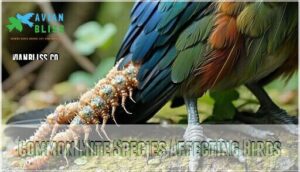
Several mite species target birds with surgical precision. Scaly Face Mites burrow under the skin, creating honeycomb crusts around beaks and legs—classic Knemidokoptic mange. Red Mites feed nocturnally on blood, causing anemia. Air-Sac Mites infiltrate respiratory systems, triggering breathing problems. Chorioptic Mites damage feathers through constant surface feeding.
Each species shows distinct preferences for specific bird types and body regions. Some mites, like the northern fowl mite, can substantially impact egg production.
Risk Factors and Transmission Routes
Mites spread like wildfire when birds live in cramped conditions. You’ll see outbreaks happen fast when cage hygiene breaks down or when you skip quarantine protocols for newcomers. Birds can also be affected by internal and external parasites.
- Overcrowding Effects: Close contact in tight spaces lets mites jump between birds effortlessly
- Contact Spread: Direct bird-to-bird transmission through preening, nesting, or shared perches
- New Introductions: Untreated birds can infect entire flocks within days of arrival
- Bird Hygiene: Poor cleaning routines create perfect breeding grounds for parasitic mites
Environmental Contributors to Infestations
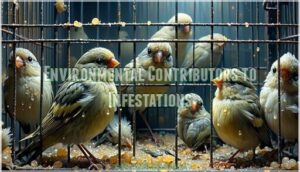
Your bird’s living conditions create the perfect storm for mite infestations. Overcrowding effects and poor hygiene standards turn cages into mite breeding grounds. High humidity levels above 60% help these tiny pests thrive, while dirty environments provide endless hiding spots.
Contact risks increase when you introduce new birds without proper protocols, spreading mites faster than gossip at a bird convention.
Recognizing Symptoms of Bird Mange
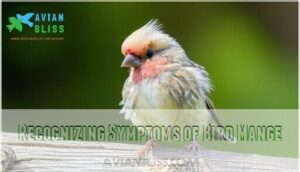
You’ll need to spot mange symptoms early to start effective treatment before the infestation worsens. Watch for crusty skin patches, excessive scratching, feather loss around the head and neck, and behavioral changes like decreased appetite or restlessness in your birds.
Visible Signs on Feathers and Skin
You’ll notice feather abnormalities before other symptoms appear. Infected birds develop patchy feather loss, especially around the head and neck areas. The skin beneath shows irritated, reddened patches that often feel warm to touch.
Key visual indicators include:
- Crusty patches on legs, feet, and around the beak area
- Color changes in skin tone, shifting from normal pink to angry red
- Skin lesions with scaly, flaky textures that worsen over time
Feather mites cause significant feather damage, creating broken quills and irregular molting patterns. This skin condition progresses quickly without treatment.
Behavioral Changes in Infected Birds
Watch for dramatic behavioral shifts when mites torment your bird. Infected birds become withdrawn, showing social isolation from flockmates they once enjoyed.
You’ll notice appetite changes as discomfort overwhelms their desire to eat. Restlessness signs include pacing and inability to settle comfortably.
Vocalization changes occur—some birds become unusually quiet, while others vocalize excessively from frustration.
Sleep disturbances follow as constant itching and excessive scratching interrupt rest cycles, leading to visible fatigue and feather damage.
Species-specific Symptoms
Different species show distinct patterns when mites strike. Canaries develop Feather Canary Mange with crusty lesions around their beak and eyes. Raptors get Raptor Leg Mange, causing scaly buildup on their powerful legs. Parrots face Parrot Beak Mange with white, chalky patches. Pigeons suffer Pigeon Respiratory Mange, wheezing like tiny asthmatics. Waterfowl experience Waterfowl Feather Loss, creating patchy bald spots across their bodies.
Different bird species develop unique mange patterns that reveal the mite’s devastating impact across feathered populations
Regular inspections can help with recognizing signs of these issues.
Diagnosing Mite Infestations in Birds
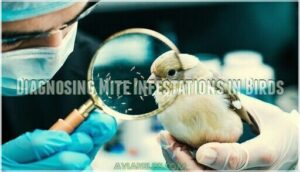
You’ll need to confirm your bird actually has mites before starting treatment, since other skin conditions can look similar. A proper diagnosis involves examining your bird’s skin and feathers under magnification, and sometimes getting lab tests to identify the specific mite species causing the problem.
Physical Examination Techniques
When examining your bird for mange, start with visual inspections of feathers and skin around the head, neck, and legs. Use gentle palpation techniques to feel for crusty lesions or thickened skin patches.
Conduct a thorough feather assessment, checking for broken quills or irregular molt patterns. Lesion examination reveals telltale signs like scaling or inflammation.
Physical examination should include checking between toes and under wings where mites often hide.
Laboratory and Microscopic Identification
Your vet will collect skin scraping samples from affected areas for microscopic examination. Lab techniques reveal microscopic mites through detailed analysis, ensuring diagnostic accuracy.
Proper sample collection from crusty lesions helps with mite species ID. Veterinary consultation provides expert microscopic analysis for precise mite identification and diagnosis of your bird’s condition.
Differentiating Mange From Other Skin Conditions
Accurate mite identification requires distinguishing mange from lookalike conditions. Fungal infections usually show circular patches, while bacterial dermatitis presents with pustules and discharge. Nutritional deficiencies cause generalized feather quality issues, and allergies produce widespread irritation. Feather plucking creates clean-cut damage patterns.
Through careful visual inspections, skin scraping, and microscopic examination, you’ll spot mite-specific symptoms like burrows and live parasites that confirm your diagnosis.
Bird Mange Treatment Options Explained
You’ve got several proven treatment options when your bird develops mange, ranging from veterinary-prescribed medications to carefully selected natural remedies.
The key is choosing the right approach based on your bird’s species, the severity of the infestation, and whether secondary bacterial infections have developed.
Bird-safe Insecticidal Sprays and Medications
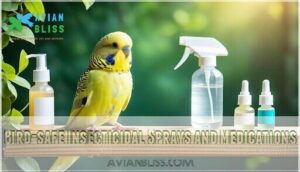
When treating mite infestations, pyrethrin-based medicated sprays offer proven results with excellent safety profiles. You’ll find permethrin and fluralaner particularly effective against resistant mites. Follow strict dosage guidelines and safe handling procedures during spray application.
Topical solutions containing moxidectin provide targeted treatment while minimizing side effects. Always monitor for medication resistance patterns. For a safe option, consider using SCATT for mite treatments.
Natural Remedies and Their Effectiveness

Natural remedies offer gentler alternatives for bird mite control, though results vary by species and infestation severity. Consider these options:
- Neem oil – Apply diluted solutions for feather mite treatment
- Apple cider vinegar – Add to water for immune system support
- Aloe vera gel – Soothes irritated skin naturally
- Essential oils – Use bird-safe varieties sparingly
Probiotics support overall health during recovery. Many owners use neem oil products for their birds. Always consult your avian veterinarian before trying herbal treatments.
Treating Secondary Bacterial Infections
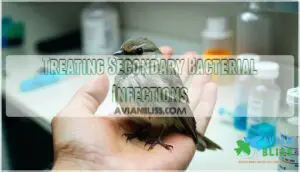
Open wounds from mange scratching create perfect entry points for bacterial infections in your feathered friends. **Secondary bacterial infections can quickly overwhelm infected birds without prompt intervention.
**
You’ll need targeted antibiotic choices based on culture results, not guesswork. Monitor for antibiotic resistance while supporting recovery with probiotic supplements.
Clean wounds daily with saline solution and boost immunity through proper nutrition.
Managing The Environment for Recovery

You’ll need to create a clean, controlled environment to support your bird’s recovery from mite infestations. This involves thorough cage disinfection and proper isolation protocols for affected birds.
Additionally, strategic habitat modifications are necessary to eliminate mite breeding sites and reduce their survival rates.
Cleaning and Disinfecting Cages and Habitats
After selecting your bird-safe treatment protocol, environmental management becomes your next battlefield against mites. Thorough cage cleaning removes mite eggs and disrupts their reproductive cycle. Use diluted bleach solutions or veterinarian-approved household cleaner for effective cage disinfection methods. To guarantee a truly sanitary environment, consider using specialized cleaning products. Focus on habitat hygiene through proper ventilation and humidity levels below 60%.
- Remove all perches, toys, and feeding equipment for individual disinfection with safe cleaning products
- Scrub cage bars and surfaces with hot soapy water, paying attention to crevices where mite egg removal is critical
- Apply environmental controls by improving ventilation and reducing moisture that fosters mite survival
- Replace substrate materials completely, as old bedding harbors eggs and larvae despite surface cleaning
- Maintain consistent environmental management through weekly deep cleaning until infestation clears completely
Isolating Infected or New Birds
Quarantine new birds for thirty days minimum before introducing them to your flock. Set up an isolation setup in a separate room with independent ventilation to prevent airborne transmission.
Monitor protocols include daily visual inspections for feather loss, scratching, or skin changes. Stress reduction matters—provide familiar foods and quiet environments.
To further prevent the spread of disease, adhere to strict biosecurity measures. Early detection prevents widespread outbreaks across multiple bird species.
Habitat Modifications to Reduce Mite Survival
Beyond isolating birds, you’ll need to modify their environment to stop mites from thriving. Start with humidity control – keep levels between 40-60% since mites struggle in drier conditions. Improve ventilation with fans or air circulation systems.
Focus on cage sanitation by removing all organic debris where mites hide. Nest removal from surrounding areas eliminates breeding grounds.
These environmental management strategies, combined with biosecurity measures like dedicated cleaning tools, create hostile conditions for parasites while supporting your bird’s recovery.
Preventing Future Mange Outbreaks

You’ve successfully treated your bird’s mange, but now you’ll need to implement proven prevention strategies to stop future outbreaks.
Effective biosecurity protocols, including proper quarantine procedures for new birds and regular flock health monitoring, can dramatically reduce your risk of recurring mite infestations.
Quarantine Protocols for New Birds
New birds act like Trojan horses, potentially carrying mites into your healthy flock. Implementing proper quarantine protocols creates a safety buffer that protects your existing birds from devastating infestations.
A 30-day isolation period allows sufficient time for mite lifecycles to complete and symptoms to manifest. Set up quarantine areas away from main flocks with dedicated feeding equipment and cleaning supplies to prevent cross-contamination.
- Watch your new bird’s behavior daily – scratching and restlessness signal trouble
- Check for crusty patches on legs, feet, and around the beak area
- Monitor breathing patterns for wheezing or open-mouth breathing signs
- Document appetite changes and social interaction levels during isolation
- Maintain detailed health records to track any developing symptoms
During quarantine, maintain ideal humidity levels between 40-60% to disrupt mite reproduction cycles. Regular health monitoring includes visual inspections and behavioral assessments. Stress reduction through proper lighting, temperature control, and minimal handling aids the bird’s immune system during this adjustment period.
Only after completing the full quarantine duration without symptoms should you consider gradual introduction to your main flock.
Ongoing Flock Health Surveillance
After establishing quarantine protocols, you’ll need ongoing surveillance to maintain flock health. Regular visual inspections help catch early mite detection before widespread infestations occur. Weekly health checks should include microscopic examination of feather samples and skin scrapings. Maintain detailed record keeping practices to track patterns and identify at-risk birds.
| Surveillance Activity | Frequency | Key Indicators |
|---|---|---|
| Visual inspections | Weekly | Feather loss, scratching behavior |
| Microscopic examination | Bi-weekly | Mite eggs, adult parasites |
| Bird hygiene assessment | Daily | Preening patterns, skin condition |
| Preventative treatment plans | Monthly | Population health trends |
| Biosecurity measures review | Quarterly | Environmental contamination levels |
Biosecurity and Habitat Management Practices
Three key biosecurity measures create your strongest defense against mite infestations. Implement strict quarantine protocols for all new birds, maintaining dedicated equipment and separate feeding areas.
Control environmental factors through proper ventilation control and regular nest removal from property structures. Maintaining optimal temperature control can also help prevent outbreaks.
Establish thorough habitat hygiene routines with weekly cleaning schedules to support mite population control and maintain a healthy flock environment.
Frequently Asked Questions (FAQs)
How is sarcoptic mange treated?
You’ll treat sarcoptic mange with antiparasitic medications prescribed by a veterinarian. Veterinarians usually use an antiparasitic drug to kill the microscopic mites while thoroughly disinfecting your bird’s environment.
How are mange & mites treated?
You’ll treat mite infestations with bird-safe insecticidal sprays, medicated ointments, or topical medications prescribed by your vet.
Treatment involves thorough cleaning of cages and surroundings, using bird-safe mite sprays or powders.
How do you get rid of mange?
Don’t put all your eggs in one basket when treating mange. You’ll need bird-safe insecticidal sprays, medicated ointments, or natural oils like neem oil.
Apply treatments as your vet directs while cleaning the bird’s environment thoroughly.
How do you know if a bird has mange?
You’ll notice excessive scratching and restless behavior alongside visible white crusty lesions around the bird’s cere, beak corners, or legs that develop into deformed growths.
How do you treat a bird mite?
You’ll need to see a veterinarian for prescription medications like ivermectin spot-on treatments. They’re the safest and most effective option for eliminating bird mites completely.
Can you feed a wild animal a mange mite?
Approximately 95% of mange cases spread through direct wildlife contact. You shouldn’t feed wild animals mange mites as it creates dangerous congregation points, accelerates mite transmission between animals, and can cause harmful habituation behaviors in local wildlife populations.
How long does bird mange treatment typically take?
Treatment duration varies from 30-40 days depending on lesion severity. Pruritus disappeared within 10 days after the first treatment, while complete resolution of lesions took about 30 to 40 days with proper veterinary-prescribed medication.
Can mange spread from birds to humans or pets?
Like a bridge between two worlds, bird mange mites can occasionally cross to humans and pets.
Most bird mites are species-specific and can’t survive on humans long-term, though temporary bites may occur when birds abandon nests.
Whats the cost range for professional mange treatment?
Professional bird mange treatment costs usually range from $100-$500, depending on severity and mite type. Avian vet exams alone cost $65-$95, with complete treatments including medications reaching $350 or more.
Are there any side effects from mange medications?
Yes, mange medications can cause side effects in birds. Overdosing may lead to toxicity, while underdosing can create resistant mites. You’ll want proper veterinary dosing to avoid complications.
Conclusion
Successfully treating bird mange requires nothing short of a complete battlefield strategy against these microscopic invaders. You’ve learned that effective bird mange treatment options combine prescription medications, environmental disinfection, and consistent monitoring.
Don’t expect overnight results—mite elimination takes patience and persistence. Keep treating for the full prescribed duration, even after symptoms disappear, since mites can hide and resurface. Your bird’s recovery depends on your commitment to both medical treatment and habitat management.
- https://www.zooplus.co.uk/magazine/bird/bird-health-and-care/bird-mites-what-you-can-do
- https://www.dvm360.com/view/knemidocoptiasis-birds
- https://vcahospitals.com/know-your-pet/knemidokoptic-mange-or-scaly-leg-and-face-disease-in-birds
- https://www.domyown.com/how-to-get-rid-of-bird-mites-in-the-home-a-426.html
- https://pbswisconsin.org/news-item/how-to-deal-with-the-tiny-itch-inducing-bird-mite/