This site is supported by our readers. We may earn a commission, at no cost to you, if you purchase through links.
 You’ll spot bird malaria symptoms when your feathered friend becomes lethargic and loses its appetite—think of it as nature’s way of waving a red flag. The Plasmodium parasites transmitted through mosquito bites cause visible weight loss, feather deterioration, and anemia that compromises oxygen transport.
As the infection progresses, you might notice organ enlargement, particularly in the liver and spleen, as your bird’s body fights these microscopic invaders. Diagnosis requires blood smears under microscopy or PCR testing to detect parasite DNA.
Understanding these warning signs can mean the difference between early intervention and watching this silent killer devastate bird populations worldwide.
Table Of Contents
Key Takeaways
- You’ll recognize avian malaria when your bird shows lethargy and loses its appetite—these are the most telling early warning signs that Plasmodium parasites are destroying red blood cells and compromising energy levels.
- You can’t rely on symptoms alone for diagnosis since blood smears under microscopy or PCR testing are essential to confirm Plasmodium parasites in your bird’s system and rule out other diseases with similar signs.
- You’ll need to watch for progressive symptoms including visible weight loss, feather deterioration, and organ enlargement (especially liver and spleen) as the infection advances and anemia worsens.
- You can protect your birds by controlling mosquito breeding sites around their environment since these vectors transmit the disease between birds—early detection through regular health monitoring gives you the best chance for successful treatment.
What is Avian Malaria?
You’ll encounter avian malaria when Plasmodium parasites infect your bird’s red blood cells through infected mosquito bites.
This disease spreads through a complex lifecycle where mosquitoes act as vectors, picking up parasites from infected birds and transmitting them to healthy ones during blood meals.
Plasmodium Parasites in Birds
Plasmodium parasites frequently infiltrate your bird’s red blood cells, launching a complex parasite life cycle that compromises bird immunity. These microscopic invaders hijack cellular machinery, reproducing rapidly within avian red blood cells and triggering severe avian pathology.
- Plasmodium relictum is the most common species causing avian malaria worldwide
- Vector ecology involves mosquitoes as primary transmission agents between infected hosts
- Malaria transmission occurs when parasites complete their developmental cycle in both mosquito and bird
How Avian Malaria Spreads
Avian malaria transmission occurs when infected mosquitoes bite healthy birds, injecting Plasmodium parasites during blood meals. The parasite lifecycle involves complex stages within both mosquito vectors and avian hosts.
Mosquito behavior and vector ecology determine transmission patterns, particularly during avian migration when birds encounter new mosquito populations.
This mosquitoborne disease spreads through specific mosquito control strategies that target breeding sites and adult populations.
Mosquito Vectors and Transmission Dynamics
Culex mosquitoes are the primary culprits in avian malaria transmission. These vectors carry Plasmodium parasites between avian hosts, affecting transmission rates through vector ecology and mosquito behavior. Disease modeling reveals seasonal patterns in mosquito control strategies:
- Culex pipiens complex acts as the main transmission vector
- Environmental conditions influence mosquito breeding cycles
- Blood-feeding patterns determine avian malaria transmission success
- Urban areas create ideal breeding habitats for disease vectors
- Temperature changes affect parasite development within mosquitoes
Understanding these dynamics helps protect bird populations worldwide.
Key Symptoms of Bird Malaria
You’ll recognize avian malaria symptoms through specific clinical signs that develop as Plasmodium parasites destroy your bird’s red blood cells and compromise organ function. These pathological changes create observable behavioral and physical indicators that require immediate veterinary attention for proper diagnostic testing and treatment protocols.
Lethargy and Decreased Activity

You’ll notice your bird acting like it’s running on empty. When avian malaria strikes, lethargy becomes one of the most telling clinical signs. Your feathered friend might sit motionless for hours, showing little interest in flying or playing.
This weakness stems from the Plasmodium parasite destroying red blood cells, forcing energy conservation. Dyspnea often accompanies this fatigue, making even simple movements exhausting for infected birds. Watch for decreased activity levels—healthy birds rarely stay still this long.
Weight Loss and Loss of Appetite

When birds contract avian malaria, appetite suppression becomes a telltale warning sign. Your bird’s feeding strategies change as Plasmodium parasites trigger malnutrition effects. Watch for these weight reduction indicators:
- Refusing favorite foods consistently
- Eating smaller portions than normal
- Showing weakness during meal times
The starvation response develops as anemia worsens, creating a dangerous cycle where lethargy prevents proper nutrition.
Feathers and Visible Physical Changes
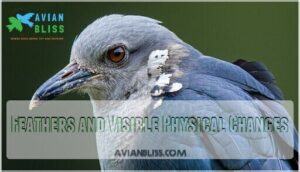
When your bird develops avian malaria, you’ll notice distinct feather loss and plumage changes that signal disease progression. Ruffled feathers create a disheveled appearance as infected birds lose their sleek look.
Clinical signs include patchy bald spots and damaged wing feathers. These visible changes, along with potential beak deformities, help veterinarians identify bird malaria during examination.
Anemia and Reduced Oxygen Transport
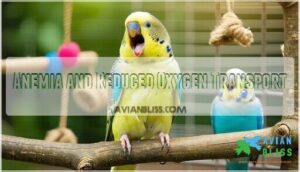
Plasmodium parasites wreak havoc on your bird’s circulatory system, destroying red blood cells and triggering severe anemia. This oxygen depletion leaves birds gasping for breath, struggling with basic activities that once came naturally.
- Hematocrit levels drop below 24% of normal values
- Blood parasites multiply rapidly within red blood cells
- Oxygen transport becomes critically compromised throughout the body
- Anemia effects manifest as pale gums and labored breathing
Organ Enlargement (Liver and Spleen)

When your bird’s body fights Plasmodium parasites, hepatomegaly and splenomegaly develop as these organs work overtime. The liver swells from processing damaged red blood cells, while the spleen enlarges attempting to filter parasites.
Cytological evaluation reveals cellular changes indicating organ failure. These hepatic issues and spleen function problems create visible abdominal distension, making liver disease and splenomegaly causes essential diagnostic markers.
Diagnosing Avian Malaria in Birds

When you suspect your bird has malaria, you’ll need specialized veterinary testing to confirm the diagnosis since symptoms alone can’t tell the whole story.
Your vet will use blood smears under microscopy to spot Plasmodium parasites hiding in red blood cells, along with sophisticated molecular markers that can catch even sneaky infections.
Blood Smears and Microscopy
Looking for confirmation of suspected avian malaria requires proper diagnostic procedures. Microscopy techniques using blood smears remain the benchmark for parasite detection. Your veterinarian will prepare thin blood films, staining them to reveal erythrocytic schizonts and erythrocytic gametocytes under microscopic analysis. Blood sample preparation must be handled carefully to guarantee diagnostic accuracy.
- Giemsa staining reveals parasites as dark purple structures within red blood cells
- Oil immersion microscopy at 1000x magnification provides ideal parasite visualization
- Multiple slide examination increases detection rates since parasitemia levels fluctuate
Molecular Markers and Advanced Diagnostics
When blood smears miss infections, molecular techniques reveal hidden truths. PCR assays detect Plasmodium DNA with outstanding precision, catching cases that traditional microscopy overlooks. These genetic testing methods identify specific parasite lineages and quantify infection levels.
Advanced diagnostic tools like qPCR achieve 96% sensitivity, revolutionizing avian malaria detection. Molecular analysis transforms how we comprehend parasite detection in birds.
The Avian Malaria project involves studying malaria genetic samples to better understand the disease.
Biopsies and Histological Examination
When clinical signs aren’t enough, you’ll need tissue sampling for a definitive diagnosis. Histopathology reveals organ damage that blood smears miss. Microscopic analysis shows cellular changes in affected tissues, providing essential evidence for treatment decisions.
Liver biopsy samples – revealing hepatic enlargement and parasitic invasion
- Spleen tissue examination – showing immune system overwhelm and damage
- Bone marrow analysis – detecting blood cell production disruption
- Heart muscle evaluation – identifying cardiovascular complications
- Kidney tissue assessment – uncovering potential renal involvement
Histological examination combined with cytological evaluation gives you the complete picture your bird needs.
Impact on Bird Populations and Conservation
You’ll find that avian malaria doesn’t just affect individual birds—it’s reshaping entire ecosystems through population declines and species extinctions.
The Plasmodium parasite has contributed to over 20 Hawaiian bird extinctions and continues threatening native species worldwide, particularly as climate change expands mosquito vector ranges into previously safe habitats.
Plasmodium parasites have driven over 20 Hawaiian bird extinctions while climate change expands mosquito ranges into previously safe habitats
Effects on Native and Migratory Birds

When your feathered friends travel along ancient migration patterns, they carry more than just their hopes for warmer weather—they transport avian malaria across continents. Migratory bird species experience higher parasite prevalence than resident birds, spreading disease to vulnerable native populations.
Climate impact intensifies these dynamics as habitat loss pushes birds into unfamiliar territories where conservation efforts struggle to protect against disease transmission. Understanding access restriction issues is vital in mitigating the spread of avian malaria.
Population Declines and Extinctions

Over the past century, avian malaria has devastated bird populations worldwide. Habitat destruction compounds this crisis, creating perfect storm conditions for species extinction.
Population trends show alarming declines, with over 20 Hawaiian bird species already lost. Despite conservation efforts targeting ecological impact reduction, bird population decline continues accelerating globally.
Role of Climate Change and Habitat Loss

Climate change impact drives vector expansion as warming temperatures push malaria-carrying mosquitoes into higher elevations and northern latitudes. Habitat loss effects compound these conservation challenges, creating ecosystem imbalance that threatens vulnerable bird populations.
- Mosquitoes advance uphill 6.5 meters annually, invading previously safe refuges
- Habitat fragmentation increases disease prevalence in isolated bird communities
- Shifting bird ranges force species into areas with greater pathogen exposure
Conservation and Disease Control Efforts

While traditional approaches focus on habitat restoration, today’s disease control methods tackle mosquito vectors head-on. Wildlife conservation teams now deploy Wolbachia-infected males to crash mosquito populations. Avian research drives these pioneering disease management strategies.
| Conservation Method | Target | Effectiveness |
|---|---|---|
| Wolbachia Release | Mosquito Population | High Success Rate |
| Habitat Restoration | Bird Immunity | Moderate Impact |
| Disease Surveillance | Early Detection | Critical for Prevention |
| Mosquito Control | Vector Reduction | Primary Defense |
This eco health approach revolutionizes avian malaria dynamics through integrated bird disease prevention protocols.
Preventing and Managing Bird Malaria

You can protect your birds from malaria by controlling mosquito breeding sites around their environment and implementing targeted vector management strategies that disrupt the Plasmodium parasite’s transmission cycle.
Early detection through regular health monitoring and prompt veterinary consultation when symptoms appear will help you manage infections effectively before they become life-threatening.
Mosquito Control Strategies
Breaking the mosquito vectors’ grip on your birds requires targeted action. Controlling mosquitoes isn’t just about swatting—it’s strategic warfare against disease transmission.
- Habitat Modification: Eliminate standing water sources where mosquitoes breed and multiply
- Larval Control: Apply targeted insecticides to water sources that can’t be removed
- Mosquito Traps: Install CO2-baited traps to capture adult mosquitoes before they bite
- Biological Agents: Introduce mosquito-eating fish or bacteria that target mosquito survival
- Professional Insecticides: Use approved treatments around aviaries and outdoor bird areas
Disease Surveillance and Research
Surveillance Systems track avian malaria outbreaks through coordinated monitoring networks. Epidemiology Studies reveal transmission patterns while Research Methods like blood sampling and GPS tracking monitor bird populations. Disease Modeling predicts Plasmodium spread patterns, helping researchers understand disease incidence trends.
| Research Component | Key Methods |
|---|---|
| Field Surveillance | Blood sampling, band recovery data |
| Laboratory Analysis | PCR testing, microscopy examination |
| Population Monitoring | GPS tracking, breeding success rates |
| Data Analysis | Statistical modeling, GIS mapping |
| Predictive Modeling | Climate variables, vector distribution |
These thorough approaches provide the foundation you’ll need for effective disease prevention.
Bird Disease Prevention Methods
You can protect your feathered friends through targeted disease control methods. Health monitoring programs help detect early infections before symptoms appear.
Habitat modification around bird sanctuaries reduces mosquito breeding sites. Controlled insecticide use eliminates disease vectors without harming birds.
Antimalarial drug therapy shows promise in reducing disease incidence. Vaccine development remains an active research focus for long-term protection.
Future Directions in Avian Malaria Management
Scientists are racing to develop avian malaria vaccines through Genetic Research targeting Plasmodium parasites. Anti-microbiota vaccines show promise in reducing disease transmission.
Epidemiology Studies will guide Conservation Strategies as mosquito control evolves. These breakthroughs in Avian Medicine offer hope for protecting wild bird populations through targeted disease control measures.
Frequently Asked Questions (FAQs)
Can pet birds get malaria from wild birds?
Approximately 16% of wild birds worldwide carry avian malaria parasites. Your pet birds can’t contract malaria directly from wild birds through casual contact—they need mosquito vectors for transmission.
However, infected mosquitoes pose risks.
How long does avian malaria treatment typically take?
You’ll face a treatment protocol lasting three to ten days, depending on the antimalarial medication and your bird’s response. Trimethoprim-sulfaquinoxaline requires five days, while atovaquone-proguanil cycles run three days on, seven days off, then repeats.
Are certain bird species more resistant to malaria?
You’ll find notable variation in malaria resistance across bird species. Honeycreepers lost whatever resistance their mainland ancestors may have had to the disease, making them extremely vulnerable.
Large reductions in malaria fatality rates have only been documented in low-elevation Amakihi, showing some species develop immunity.
Can avian malaria spread to humans or mammals?
Rest assured, avian malaria stays in its feathered lane. The parasites that plague birds can’t jump to you or other mammals—they’re specifically adapted to birds alone.
What vaccines exist for preventing bird malaria?
Currently, you won’t find traditional vaccines for bird malaria. Researchers have developed experimental anti-microbiota vaccines using E. coli strains that reduce Plasmodium transmission in mosquitoes, but no commercial vaccines exist yet for preventing avian malaria infections.
Conclusion
Research reveals that avian malaria affects over 200 bird species globally, making early recognition of bird malaria symptoms essential for conservation efforts.
You’ll need to monitor for lethargy, weight loss, and feather deterioration as primary indicators of Plasmodium infection. Blood smears remain the benchmark for diagnosis, though PCR testing offers enhanced sensitivity for detecting parasite DNA.
Remember that prompt identification of these symptoms can prevent population-level impacts and support targeted mosquito control measures in affected habitats.