This site is supported by our readers. We may earn a commission, at no cost to you, if you purchase through links.
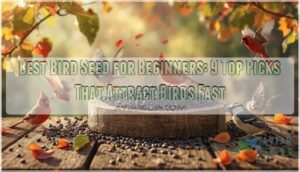 You’ll want to start with black oil sunflower seeds – they’re the gateway drug of bird feeding that attracts cardinals, chickadees, and nuthatches like nothing else. These seeds pack high oil content and nutrition that birds can’t resist. Skip those cheap mixed blends filled with red milo and wheat that birds just ignore.
Instead, focus on single-seed types that deliver real results. Safflower seeds work great too since they deter squirrels while attracting cardinals and grosbeaks. Quality costs more upfront, but you’ll see fewer rejected seeds scattered on the ground and more feathered visitors at your feeder.
The right seed choice makes all the difference between an empty yard and a bustling bird sanctuary.
Table Of Contents
- Key Takeaways
- Essential Bird Seed Types for Beginners
- How Bird Seed Choices Affect Backyard Birds
- Choosing Quality Bird Seed and Mixes
- Top 9 Bird Seed Products for Beginners
- 1. Black Oil Sunflower Bird Food
- 2. Suet Orange Delicious Treat Bars
- 3. Wagners Nyjer Seed Wild Bird Food
- 4. Virginia Peanuts for Wildlife Feed
- 5. Kaytee Nyjer Wild Bird Seed
- 6. Wild Bird Seed Food Mix
- 7. Wagners Safflower Seed Wild Bird Food
- 8. Kaytee Wild Bird Seed Blend
- 9. Pure Cane White Granulated Sugar
- Bird Feeding Tips for Success
- Frequently Asked Questions (FAQs)
- Conclusion
Key Takeaways
- Start with black oil sunflower seeds as your foundation – they’re the most versatile option that’ll attract cardinals, chickadees, and nuthatches while providing high nutritional value that birds can’t resist.
- Skip cheap mixed blends filled with milo and wheat fillers that birds ignore – you’ll save money and reduce waste by choosing single-seed types or quality mixes without junk ingredients.
- Store your seeds properly in airtight containers in cool, dry locations and only buy what you’ll use within 2-3 months to prevent mold, spoilage, and pest problems.
- Place feeders strategically either within 3 feet of windows or over 10 feet away to prevent bird strikes, and clean them every two weeks to keep your feathered visitors healthy.
Essential Bird Seed Types for Beginners
You’ll need five essential seed types to attract the widest variety of birds to your backyard feeders. Black oil sunflower seeds, safflower seeds, nyjer seeds, white proso millet, and peanuts each target different bird species with proven effectiveness.
Sunflower Seeds (Black Oil and Striped)
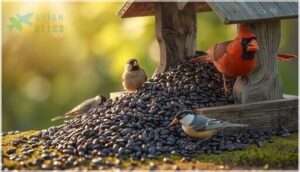
Most backyard birds can’t resist sunflower seeds’ high oil content and nutritional value. Black oil sunflower seeds offer easier cracking than striped sunflower varieties, making them your best starter choice for attracting diverse species.
- Sunflower Nutrition: Rich fats fuel birds through harsh weather conditions
- Bird Preferences: Cardinals, chickadees, and nuthatches favor these protein-packed seeds
- Seed Storage: Keep sunflower hearts fresh in airtight containers for ideal feeder placement
Safflower Seeds
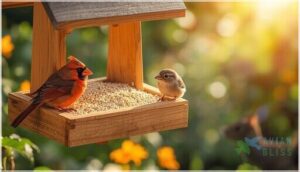
While sunflower seeds work wonders, safflower seeds offer unique safflower benefits for selective bird feeding. These thick-shelled seeds attract cardinals and grosbeaks while serving as an effective squirrel deterrent.
Their bitter taste keeps unwanted visitors away, making seed selection easier. Unlike typical birdseed mixes, safflower provides targeted bird preferences without waste, complementing your sunflower offerings perfectly.
Nyjer (Thistle) Seeds
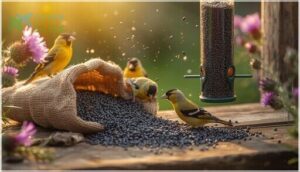
When you’re ready to attract finches, Nyjer seed is your golden ticket. This tiny, oil-rich thistle seed packs exceptional nutrition that goldfinches and siskins can’t resist. Here’s why Nyjer benefits make it essential:
- High oil content provides vital energy for small songbirds
- Heat-sterilized during import, preventing invasive plant spread
- Fine texture perfect for delicate finch beaks
- Long shelf life when stored properly in cool, dry conditions
- Specialized feeders reduce waste and mess
Proper seed storage keeps your Nyjer fresh longer than sunflower seeds.
White Proso Millet
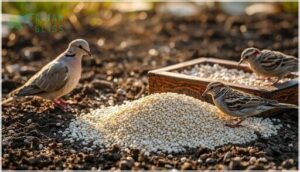
While nyjer attracts finches, white proso millet becomes your go-to seed for ground-feeding birds. This tiny grain acts like a magnet for doves, quail, and native sparrows who prefer dining at ground level.
Scatter millet directly on soil or use low tray feeders with drainage. Store this birdseed in cool, dry containers to maintain millet nutrition and increase bird attraction benefits.
Peanuts and Corn
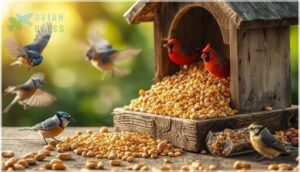
Packing nutritional punch, peanuts for birds offer high-fat content that backyard bird feeders love. Cracked corn attracts ground-feeders but requires careful handling due to contamination risks. Smart seed mixing combines both for diverse bird preferences.
Key feeding safety tips:
- Store peanuts in dry containers to prevent mold
- Use cracked corn sparingly – it spoils quickly
- Mix with quality seeds in bird seed mixes for balanced nutrition
Peanut nutrition backs energy needs while corn varieties provide affordable bulk options.
How Bird Seed Choices Affect Backyard Birds
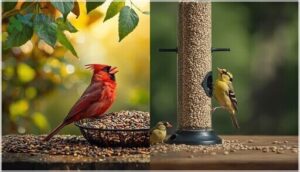
Your seed choices directly determine which birds will visit your backyard, with different species showing strong preferences for specific seed types. Cardinals flock to sunflower seeds while finches prefer nyjer, and your selection can either attract colorful songbirds or leave your feeders empty.
Attracting Colorful Songbirds
When selecting seeds for your backyard habitat, black oil sunflower seeds reign dominant for attracting colorful species like cardinals and goldfinches. Nyjer seed draws vibrant finches during songbird migration periods.
Strategic bird feeder placement with safflower seeds and millet creates diverse seed preferences that welcome blue jays, chickadees, and other stunning visitors to your outdoor sanctuary.
Ground-Feeding Birds’ Preferences
While colorful songbirds grab attention, ground birds have different feeding habits. These species prefer seeds scattered at ground level rather than elevated feeders.
Here are their top seed preferences:
- White millet – favored by doves and native sparrows
- Cracked corn – attracts quail and juncos
- Black oil sunflower seeds – loved by towhees
- Milo or sorghum – preferred by ground-dwelling species
- Mixed seed blends – provides variety for diverse foraging behaviors
Understanding bird behavior helps you create effective feeding stations for groundfeeding birds.
Deterring Squirrels and Pest Species
Smart seed choices protect your feeders from unwanted visitors. Safflower seeds naturally deter squirrels and pest birds through their bitter taste, while remaining bird friendly for cardinals and chickadees. Nyjer and sunflower hearts offer excellent seed protection since mammals usually avoid them.
For wildlife management, combine squirrel proofing strategies with pest deterrents like capsaicin-treated sunflower seeds and suet. Many bird enthusiasts use safflower seeds to deter squirrels.
Choosing Quality Bird Seed and Mixes
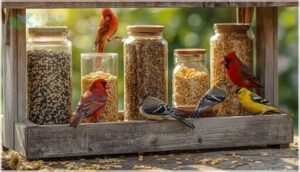
You’ll save money and attract more birds when you choose high-quality seed over cheap mixed blends that contain filler ingredients birds won’t eat.
Single-seed types like black oil sunflower or nyjer perform better than generic “wild bird mixes,” which often include seeds that end up scattered on the ground as waste.
Dangers of Low-Quality Blends
Cheap birdseed blends contain up to 73% cheap fillers like red milo and wheat that birds ignore. These seed contamination issues create serious bird health risks through seed spoilage and toxic ingredients like aflatoxin-prone corn. You’re basically paying premium prices for bird feed that attracts pests instead of songbirds.
Cheap birdseed blends are 73% fillers that birds ignore and can poison them with toxic ingredients
Quality black oil sunflower seeds cost more upfront but deliver actual nutrition without the dangerous waste found in bargain seed mixtures. To minimize such risks, it’s vital to understand the problems with low quality seed.
Benefits of Single-Seed Vs. Mixed Seed
Your birdseed strategy matters more than you think. Single-seed feeds like black oil sunflower seeds reduce waste since birds won’t toss aside unwanted varieties. Mixed blends can attract diverse Bird Preferences but often contain cheap fillers that increase Feeding Costs.
- Sunflower seeds offer high Nutrition Value with minimal waste
- Single varieties let you control Seed Quality and target specific species
- Mixed feeds work best when they skip milo and wheat fillers
- Seed Variety in quality mixes beats random birdseed combinations
Top 9 Bird Seed Products for Beginners
You’ll find nine proven bird seed products that consistently attract feathered visitors to your yard, ranging from single-seed favorites to premium blends.
These carefully selected options work well for new bird feeders, with each product tested by countless backyard birders who’ve seen real results.
1. Black Oil Sunflower Bird Food
 View On Amazon
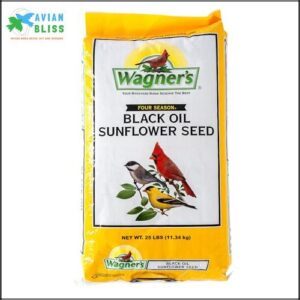
Wagner’s Black Oil Sunflower Seed is the highest quality standard for beginners. It attracts a variety of birds, including cardinals, chickadees, nuthatches, and woodpeckers, thanks to its high-energy powerhouse composition.
The seeds feature thin shells that crack easily, making them ideal for small-beaked birds. With 15% protein and 22% fat content, they ensure your feathered friends stay healthy year-round.
Available in convenient 25-pound bags, this option is cost-effective and compatible with most feeder types. Just remember to store it properly to maintain freshness.
Best For: Backyard bird enthusiasts who want a versatile, high-energy seed that attracts the widest variety of songbirds while being easy for small-beaked species to crack open.
- Attracts diverse bird species including cardinals, chickadees, finches, nuthatches, and woodpeckers due to thin shells and high energy content
- Excellent nutritional value with 15% protein and 22% fat, plus essential vitamins and minerals for bird health
- Cost-effective option available in bulk 25-pound bags that works with most feeder types
- Large bags lack resealable closures, making storage challenging and potentially leading to spills or freshness issues
- May attract squirrels and other pests who will consume fallen seeds from the ground
- Some quality control issues reported with occasional wood chips found in bags, though recent batches show improvement
2. Suet Orange Delicious Treat Bars
 View On Amazon
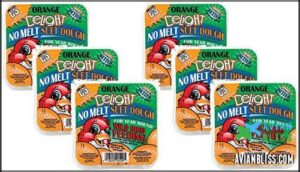
High-energy suet bars frequently become the secret weapon for attracting fruit-loving birds like orioles and tanagers. These orange-flavored treats contain 25-35% crude fat, providing essential energy during cold months.
You’ll notice woodpeckers, chickadees, and bluebirds flocking to your feeder within days. The melt-resistant formula works year-round, handling temperatures up to 100°F.
Each 11.75-ounce bar offers convenient, mess-free feeding that reduces waste compared to loose seeds. Orange flavoring acts like a dinner bell for colorful species that ignore traditional seed mixes.
Best For: Backyard bird enthusiasts who want to attract colorful fruit-loving species like orioles, tanagers, and woodpeckers with a mess-free, high-energy feeding solution.
- Attracts diverse bird species including less common colorful birds that ignore regular seed mixes
- Melt-resistant formula works year-round in temperatures up to 100°F with minimal waste
- High-fat content (25-35%) provides essential energy, especially valuable during cold months
- May attract unwanted wildlife like raccoons due to the appealing orange scent and suet content
- Some users report issues with mold or product shrinkage when exposed to weather conditions
- Contains allergens like peanuts that may limit use in sensitive environments
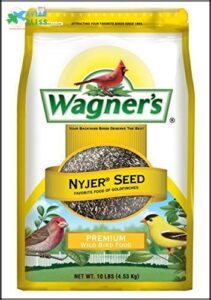
3. Wagners Nyjer Seed Wild Bird Food
 View On Amazon
Goldfinches treat nyjer seed like “black gold” for good reason. Wagner’s delivers 150,000 premium seeds per pound, creating a finch magnet that’ll transform your backyard into a bustling bird café.
You’ll attract American goldfinches, house finches, and pine siskins while keeping larger birds and squirrels at bay. The extra-clean formula means less waste and mess in your feeders.
With a 4.8-star rating from happy customers, this seed consistently delivers fresh results that keep finches coming back for more visits throughout the seasons.
Best For: Backyard birders who want to attract goldfinches, house finches, and other small songbirds while keeping larger birds and squirrels away from their feeders.
- Extra-clean formula with 150,000 seeds per pound means less waste and more frequent finch visits
- Specifically attracts target species like goldfinches and pine siskins while deterring larger birds
- Consistently fresh quality with 4.8-star customer rating and reliable packaging
- More expensive than standard bird seed blends or mixed varieties
- Only attracts finches and small songbirds, limiting overall backyard bird diversity
- Requires specialized feeders with small holes and may spoil faster if exposed to moisture
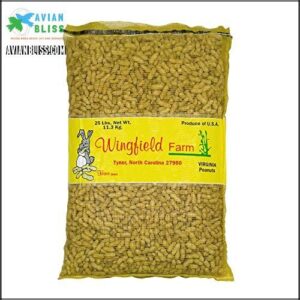
4. Virginia Peanuts for Wildlife Feed
 View On Amazon
Five Virginia peanuts pack 180 calories per ounce, delivering the energy punch your backyard birds crave. You’ll attract woodpeckers, blue jays, and chickadees who’ll remember your feeder and return regularly.
Use mesh feeders to prevent waste and deter starlings. These raw, unroasted nuts provide essential fats and protein that keep birds healthy year-round.
Store them in sealed containers to prevent mold, and always choose aflatoxin-tested varieties for wildlife safety.
Best For: Bird enthusiasts and wildlife watchers wanting to attract diverse backyard species with high-energy nutrition.
- High calorie density (180 calories per ounce) provides essential energy for birds and wildlife
- Attracts multiple species including woodpeckers, blue jays, chickadees, and squirrels who return regularly
- Raw, natural format delivers healthy fats and protein without artificial processing
- Requires proper storage in sealed containers to prevent dangerous mold growth
- More expensive than standard birdseed options per pound
- Risk of aflatoxin contamination if not sourced from reputable, tested suppliers
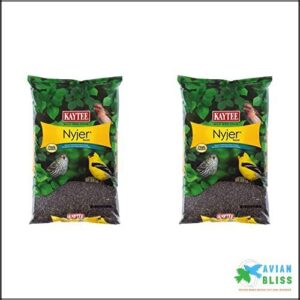
5. Kaytee Nyjer Wild Bird Seed
 View On Amazon
For finch enthusiasts, Kaytee Nyjer delivers a goldmine of nutrition. This sterilized thistle seed packs 35% crude fat and 18% protein, fueling your feathered friends through harsh winters.
You’ll love the zero-waste formula—no hulls means no messy cleanup under feeders. Goldfinches, siskins, and house finches can’t resist these tiny oil-rich seeds.
Use mesh tube feeders for best results, and watch your yard transform into a finch paradise.
Best For: Finch lovers who want mess-free feeding with high-nutrition seeds that attract goldfinches, siskins, and other small songbirds.
- Zero hulls means no messy cleanup under feeders or in your yard
- High fat content (35%) and protein (18%) provides excellent nutrition for birds
- Specifically attracts desirable finch species while deterring larger pest birds
- May contain twigs that can clog mesh feeders
- Requires special mesh tube or sock feeders for optimal results
- Quality can vary with some bags containing more debris than expected
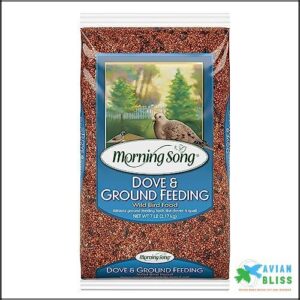
6. Wild Bird Seed Food Mix
 View On Amazon
Morning Song’s Wild Bird Seed Food Mix offers beginners an affordable entry point into backyard bird feeding. The 7.67-pound package contains millet and other seeds perfect for table feeders or ground scattering.
You’ll attract ground-feeding species like doves, quail, sparrows, and juncos with this unflavored blend. While it includes milo that some songbirds ignore, you’re getting solid value for attracting diverse species without breaking the bank.
Best For: Budget-conscious bird watchers who want to attract ground-feeding birds like doves, sparrows, and juncos without spending much.
- Affordable price point makes it accessible for beginners or those feeding birds regularly
- Attracts diverse ground-feeding species including doves, quail, sparrows, and juncos
- Versatile feeding options – works well in table feeders or scattered directly on the ground
- Contains milo filler that many songbirds ignore, leading to waste
- Small seeds may fall through mesh platform feeders
- Lower nutritional quality compared to premium mixes with more sunflower seeds and nuts
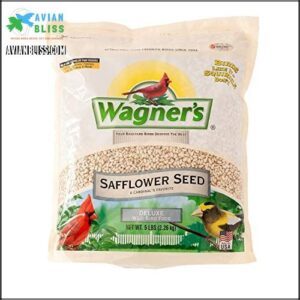
7. Wagners Safflower Seed Wild Bird Food
 View On Amazon
Safflower seeds offer a clever solution for attracting cardinals while discouraging squirrels and starlings. Wagner’s delivers nearly pure safflower with minimal filler, providing 38% fat content that birds need. The bitter taste naturally deters pests, though some persistent squirrels might still try it.
Cardinals, chickadees, and grosbeaks love these tough-shelled seeds. Introduce gradually by mixing with familiar seeds, as birds need time to discover this nutritious option.
Best For: Backyard birders who want to attract cardinals and songbirds while keeping squirrels and pest birds away from feeders.
- Effectively deters squirrels, grackles, and starlings due to bitter taste
- Attracts desirable songbirds like cardinals, chickadees, and grosbeaks
- High nutritional value with 38% fat content and minimal filler ingredients
- More expensive than standard sunflower or mixed seed options
- Some squirrels may still eat it when no other food sources are available
- Birds need time to discover and accept this unfamiliar seed type
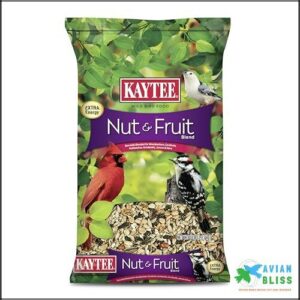
8. Kaytee Wild Bird Seed Blend
 View On Amazon
Offering convenience in one package, Kaytee Wild Bird Seed Blend combines sunflower seeds, peanuts, millet, and safflower in a budget-friendly mix. You’ll attract cardinals, chickadees, and woodpeckers with this diverse blend.
However, birds often pick through the mix, leaving milo and cracked corn behind. The 9.5% protein and fat content provides decent nutrition, though dust and fine particles can clog feeders.
Store the resealable bag in a dry location to prevent spoilage and maintain freshness.
Best For: Budget-conscious bird enthusiasts who want to attract multiple species without buying separate seed types.
- Attracts diverse bird species including cardinals, chickadees, and woodpeckers with varied seed mix
- Budget-friendly option with resealable packaging for easy storage
- Contains high-energy ingredients like sunflower seeds and peanuts for year-round feeding
- Birds often waste milo and cracked corn, leaving them uneaten on the ground
- Contains dust and fine particles that can clog feeders and require frequent cleaning
- Lower protein and fat content compared to premium single-seed options
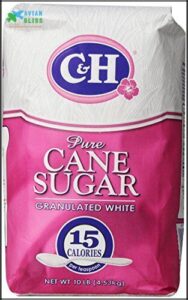
9. Pure Cane White Granulated Sugar
 View On Amazon
While pure cane white granulated sugar might seem like an odd choice for bird seed, it’s actually essential for hummingbird enthusiasts. You’ll mix one part sugar with four parts water to create perfect nectar that mimics natural flower sugars.
Only use pure white granulated sugar—never honey, brown sugar, or artificial sweeteners, which can harm hummingbirds. This simple ingredient transforms your yard into a hummingbird haven when used properly.
Best For: Hummingbird enthusiasts who want to create safe, nutritious nectar that mimics natural flower sugars.
- 100% pure cane sugar with no harmful additives that could endanger hummingbirds
- Creates the ideal 1:4 sugar-to-water ratio recommended by avian experts
- Large 10.05-pound bag provides excellent value for frequent feeder maintenance
- Not suitable for health-conscious individuals avoiding sugar and calories
- Bulky packaging may be challenging for smaller storage spaces
- Requires proper mixing and regular feeder cleaning to prevent mold growth
Bird Feeding Tips for Success
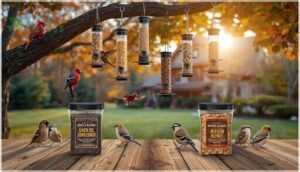
You’ll get the best results when you choose the right feeder type for your seed and place it in an ideal location that balances bird safety with your viewing pleasure.
Proper seed storage and smart budgeting strategies will help you maintain fresh, quality food that keeps birds coming back without breaking the bank.
Feeder Types and Placement
Your feeder choice matters as much as your seed selection. Tube feeders work best for sunflower seeds and attract finches, while hopper feeders accommodate cardinals and larger birds.
Place bird feeders 3 feet from windows or over 10 feet away to prevent strikes. Position them near natural shelter like shrubs for protection.
Use squirrel baffles and weather protection to maintain seed quality. Clean tray feeders weekly to prevent disease transmission.
Seed Storage and Freshness
Smart storage keeps your bird seed fresh and your feathered friends happy. Proper storage containers and pest control methods will extend seed longevity while preventing spoilage, especially when bulk buying different seed types and bird seed varieties.
- Store bird seed in airtight metal or plastic containers to block moisture and pests
- Keep storage containers in cool, dry locations away from direct sunlight and heat
- Buy only what you’ll use within 2-3 months to maintain peak freshness
- Check stored seed regularly for mold, insects, or rancid smells before refilling feeders
- Label containers with purchase dates to track seed longevity and rotation schedules
Feeding on a Budget
You don’t need expensive birdseed to attract birds successfully. Budget seed mixes work when you choose quality over quantity.
Try bulk buying black oil sunflower seed from farm stores for better value. Rationing seed prevents waste while DIY feeders cut costs substantially.
Consider free food sources like kitchen scraps and homemade suet using bacon grease.
Frequently Asked Questions (FAQs)
How often should I clean bird feeders?
You’ll want to clean your feeders every two weeks minimum. Cleaning seed feeders every two weeks is recommended , though more frequent cleaning may be needed if you spot mold or bird sickness signs around your backyard paradise.
When is the best time to feed birds?
You’ll get the best results feeding birds during their peak activity hours: early morning (7-11 AM) and late afternoon.
Birds are most active during these times, searching for food to fuel their day.
How much seed should I put out daily?
Feeling like Goldilocks with your feeder? You’ll want to refill your feeders only once per day , letting birds find their natural rhythm.
Generally, feeders get near empty daily if your garden has sufficient birds , making portion control simple.
What attracts unwanted birds like starlings or grackles?
Cheap mixed seeds, especially those with millet and cracked corn, attract starlings and grackles. These aggressive birds swarm feeders, scaring away desirable species.
You’ll also draw them with scattered ground feeding and poorly maintained feeders with spoiled seed.
Can moldy or wet seed harm birds?
Yes, moldy or wet seed can seriously harm birds. Mold produces toxins that damage their liver and respiratory system. Wet seed spoils quickly, creating bacteria that cause illness.
Always discard contaminated seed and keep feeders clean and dry.
Conclusion
Starting your bird feeding journey is like planting a garden that blooms with wings and song. The best bird seed for beginners centers on black oil sunflower seeds, which attract diverse species reliably.
Supplement with safflower seeds to deter squirrels while welcoming cardinals. Store seeds properly in cool, dry conditions, and you’ll create a thriving backyard habitat that rewards your patience with countless colorful visitors year-round.
- https://georgiawildlife.com/out-my-backdoor-best-seeds-backyard-bird-feeders
- https://www.flockingaround.com/post/which-birdseed-is-best-for-attracting-birds
- https://www.kaytee.com/learn-care/wild-bird/value-of-wild-bird-ingredients
- https://www.mountunion.edu/documents/academics%20section/centers/nature%20center/nc%20education%20resources/bird%20feeder%20fact%20sheet.pdf
- https://www.techgearlab.com/topics/home/best-bird-seed