This site is supported by our readers. We may earn a commission, at no cost to you, if you purchase through links.
 Bird fungal infections stem from five main sources you need to know. Airborne spores from contaminated soil and organic matter float into your bird’s respiratory system, while moldy feed and bedding create perfect breeding grounds for dangerous fungi like Aspergillus fumigatus.
Poor ventilation traps moisture, turning your bird’s environment into a fungal paradise. Compromised immune systems from stress, malnutrition, or illness leave your feathered friend vulnerable to infection.
Environmental factors like overcrowding and temperature swings weaken their natural defenses. Understanding these hidden threats helps you create a safer environment, but there’s more to protecting your bird’s health than meets the eye.
Table Of Contents
Key Takeaways
- Control your bird’s environment by maintaining proper ventilation and humidity levels, since poor airflow traps moisture and creates perfect breeding grounds for dangerous fungi like Aspergillus fumigatus.
- Check feed and bedding regularly for mold contamination, as spoiled grain and organic matter produce mycotoxins that directly cause serious fungal infections in your bird’s respiratory system.
- Strengthen your bird’s immune defenses through quality nutrition rich in vitamin A and protein, since malnutrition and stress make your feathered friend vulnerable to airborne fungal spores.
- Monitor for early warning signs like respiratory distress, fluffed feathers, and appetite changes, because catching fungal infections early prevents them from becoming life-threatening conditions.
What Causes Fungal Infections in Birds?
You’ll find that fungal infections in birds stem from three primary sources: airborne spores from soil and decomposing matter, contaminated feed and bedding materials, and poor ventilation that traps moisture.
Once you know where these fungal threats come from, you can take real steps to keep your birds safe from the respiratory infections that happen when spores get into their sensitive airways.
Airborne Fungal Spores

The invisible threat lurking in your bird’s environment comes from airborne fungal spores. These microscopic particles float through the air, creating serious Spore Inhalation Risks that can trigger Pulmonary Aspergillosis in susceptible birds.
Knowing these dispersion patterns lets you spot the times and places where your bird encounters the highest concentrations of these dangerous spores.
- Soil and decomposing matter: Major sources of Aspergillus spores that affect Air Quality Impact
- Agricultural waste: Grain dust increases Environmental Spore Counts dramatically during handling
- Poor ventilation: Concentrates fungal particles, elevating Respiratory Diseases risk in confined spaces
Contaminated Feed and Bedding
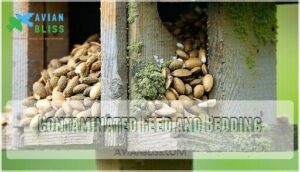
Feed spoilage creates dangerous mycotoxin exposure that threatens bird health. When you store grain or seed improperly, Aspergillus thrives in organic matter, producing toxins that cause serious fungal infections.
Moldy bedding becomes a breeding ground for pathogenic fungi. Your storage practices directly impact bird nutrition and health—always check feed for signs of contamination before serving.
Poor Ventilation and Humidity
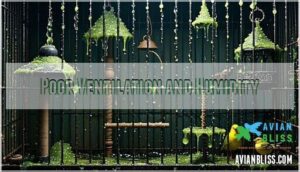
Humidity’s impact on your bird’s respiratory health can’t be ignored. Poor airflow dynamics create the perfect storm for mold growth in aviaries.
When ventilation systems fail, stagnant air traps moisture and fungal spores. This toxic combination threatens avian health by promoting respiratory disease.
Your feathered friend needs fresh air circulation to prevent fungal infections from taking hold.
Common Fungi Affecting Avian Species
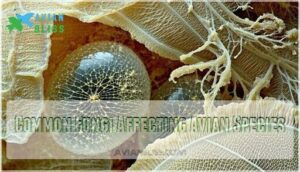
You’ll encounter several fungal species that can threaten your bird’s health, with Aspergillus fumigatus being the most dangerous culprit found in up to 40% of caged birds.
Understanding which fungi pose the greatest risks helps you recognize early warning signs and take preventive measures before infections become serious.
Aspergillus Fumigatus and Aspergillosis
Aspergillus fumigatus stands as the primary culprit behind aspergillosis in pet birds, causing up to 90% of fungal infection deaths. This respiratory disease develops when birds inhale airborne spores from contaminated environments.
Key aspects of aspergillosis include:
- Aspergillus virulence – Requires millions of inhaled spores to trigger fatal infections
- Aspergillosis symptoms – Gradual respiratory deterioration, often unnoticed for weeks
- Diagnosis challenges – Chronic infections progress silently before detection
- Treatment options – Limited antifungal medications with inconsistent success rates
- Resistance development – Prevention remains more effective than cure attempts
Next-Gen DNA sequencing can assist in accurate fungal diagnosis. Prevention remains more effective than cure attempts.
Other Pathogenic Fungi in Birds
Beyond Aspergillus, you’ll encounter other pathogenic fungi causing systemic mycoses in birds. Candidiasis affects digestive tracts, while Penicillium infections target respiratory systems. Zygomycosis creates severe tissue damage, and uncommon fungi like Cryptococcus pose additional threats.
These fungal diseases in birds require different treatment approaches than common aspergillosis, making proper identification essential for companion bird health.
Risk Factors Increasing Susceptibility
Your bird’s risk of developing fungal infections increases a lot when certain conditions weaken their natural defenses.
Understanding these susceptibility factors helps you recognize when your feathered companion needs extra protection and preventive care.
Compromised Immune Systems
When your bird’s immune system becomes weakened, it’s like leaving the front door unlocked during a storm. Malnutrition and stress from environmental changes create vulnerability, further compromising defenses. Immunosuppressive diseases and environmental toxins weaken respiratory health, making aspergillosis more likely.
A weakened bird immune system is like leaving your front door unlocked during a storm
Key immune system compromisers:
- Chronic stress – Overcrowding, loud noises, temperature fluctuations
- Poor nutrition – Vitamin A deficiency, all-seed diets, contaminated food
- Concurrent illness – Viral infections, parasites, organ dysfunction
- Toxic exposure – Chemical fumes, heavy metals, pesticide residues
Age, Species, and Health Status
Young birds face dramatically higher aspergillosis risk, especially in their first two weeks of life. Immature birds lack developed immune systems, making genetic predisposition and age susceptibility critical factors.
Your pet’s species matters too – cockatiels and parakeets show 23% infection rates compared to budgies at just 6%. Health impact varies greatly across avian diseases, with species resistance playing a major protective role.
Maintaining proper avian sanitation is essential in preventing fungal infections.
Malnutrition and Underlying Illness
Poor nutrition weakens your bird’s immune system, creating a perfect storm for fungal infections like aspergillosis and candidiasis. When dietary deficiencies combine with underlying illness, stress factors multiply exponentially.
Key malnutrition and disease interaction factors include:
- Vitamin A deficiency compromising respiratory tract defenses
- Protein insufficiency reducing antibody production capabilities
- Concurrent bacterial infections enabling secondary fungal overgrowth
- Chronic stress from illness suppressing natural immune responses
Preventative measures through proper avian nutrition greatly reduce infection risks.
Environmental Conditions Promoting Infection
Your bird’s environment plays a key role in determining infection risk, as certain conditions create perfect breeding grounds for harmful fungi.
Moldy feed, poor ventilation, and damp enclosures can turn your pet’s home into a fungal hotspot that threatens their respiratory health.
Moldy Grain, Straw, and Organic Matter
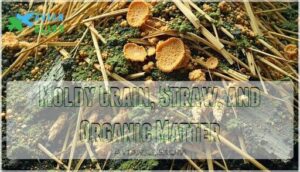
Stored grain, straw, and decomposing Agricultural Waste Exposure create perfect breeding grounds for Aspergillus spores. Moldy Feed Risks multiply when you store feed improperly, allowing Organic Matter Decomposition to occur. Damp Bedding Dangers increase Spore Concentration Levels dramatically, making your bird vulnerable to Aspergillosis.
These fungal infection sources directly threaten avian health and respiratory health through contaminated materials.
Aviary and Enclosure Hygiene

Your cleaning protocols directly impact fungal infection risk. Dirty enclosures create breeding grounds for Aspergillosis-causing spores.
Regular disinfection methods remove contamination buildup. Choose non-porous material choices that resist moisture retention. Establish systematic waste management to prevent organic matter accumulation.
Poor air quality concentrates dangerous fungi, making bird health dependent on consistent hygiene practices.
Seasonal and Climatic Influences
Weather patterns directly affect fungal spore dispersion and avian respiratory health. Higher humidity levels during spring and fall increase aspergillosis risks, while temperature fluctuations stress bird immune systems.
Climate change extends wet seasons, promoting mold growth in feed storage areas. Migration patterns expose birds to varied environmental fungi, creating respiratory tract infection hotspots during seasonal transitions.
Preventing Fungal Infections in Birds
You can protect your bird from fungal infections through three evidence-based strategies: proper nutrition, clean environments, and regular health monitoring.
These preventative measures greatly reduce your bird’s exposure to harmful fungal spores and strengthen their natural immune defenses against infection.
Proper Diet and Nutrition
Feeding your pet birds high-quality seeds and pellets reinforces their immune system against fungal infections. Nutritional deficiencies weaken bird health and wellness, making avian nutrition essential.
Choose fresh, mold-free food sources and consider dietary supplements like probiotics benefits for enhanced protection. Quality bird nutrition forms your first line of defense against fungal infection risks.
Cleanliness and Ventilation Practices
Maintain spotless aviary sanitation through daily cleaning routines and disinfection protocols. Clean water dishes, perches, and cage floors regularly. You’ll prevent Aspergillus spores by ensuring proper airflow optimization and removing organic debris.
Adequate ventilation reduces humidity that promotes mold prevention, directly protecting your bird’s health from fungal infection risks.
Monitoring and Early Intervention
Watch for respiratory distress, lethargy, and appetite changes through regular health checks. Early symptom detection prevents aspergillosis from advancing.
You’ll need rapid diagnostics and proactive treatment plans when symptoms appear. Isolation protocols protect healthy birds during outbreaks.
Avian medicine specialists recommend weekly monitoring for high-risk environments to catch fungal infections early.
Frequently Asked Questions (FAQs)
How long do bird fungal infections last?
Like untangling a stubborn knot, your bird’s fungal infection treatment can last anywhere from six weeks to six months, depending on severity and your pet’s immune response.
Can fungal infections spread between pet birds?
Yes, certain fungal infections can spread between pet birds. Some spread through contaminated environments, water, or feeding, while others like aspergillosis aren’t transmitted bird-to-bird. You’ll need proper hygiene and isolation protocols.
What are early symptoms of avian fungal disease?
Frightening fatigue, fluffed feathers, and frequent tail bobbing reveal early avian fungal infections. You’ll notice difficulty breathing, listlessness, weight loss, and decreased appetite as the first warning signs develop.
Do wild birds get fungal infections naturally?
Wild birds absolutely catch fungal infections in nature. You’ll find them exposed to spores from decaying leaves, rotting wood, and damp soil everywhere.
Their immune systems usually handle it, but stress weakens their defenses a lot.
Are certain bird species more infection-prone?
Approximately 40% of caged birds carry Aspergillus fumigatus. You’ll find that young birds, immunocompromised species, and those with poor nutrition face higher infection risks than healthy adults.
Conclusion
Congratulations, you’ve mastered the art of creating a fungal spa resort for your feathered friends! Understanding bird fungal infection causes helps you to transform their environment from a pathogen playground into a healthy haven.
By controlling moisture, ensuring proper ventilation, maintaining clean bedding, and providing quality nutrition, you’re building a fortress against these microscopic invaders.
Remember, prevention beats treatment every time—your bird’s respiratory system will thank you for staying vigilant against these common but preventable threats.
- https://vcahospitals.com/know-your-pet/aspergillosis-in-birds
- https://www.harrisonsbirdfoods.com/wp-content/uploads/2024/02/29_mycosis.pdf
- https://todaysveterinarypractice.com/exotic-medicine/avian-aspergillosis/
- https://www.petmd.com/bird/conditions/digestive/yeast-infection-birds
- https://www.merckvetmanual.com/exotic-and-laboratory-animals/pet-birds/mycotic-diseases-of-pet-birds