This site is supported by our readers. We may earn a commission, at no cost to you, if you purchase through links.
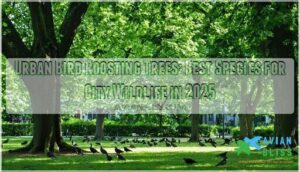 You’ll find the best urban bird roosting trees are native species like oaks, maples, and serviceberries that create dense foliage canopies for protection while helping diverse insect populations. These trees offer sturdy branch structures at varying heights, allowing communal roosting that enhances predator avoidance and energy conservation through group dynamics.
Oak trees alone help over 500 caterpillar species that fuel urban bird communities, while their dense branching patterns accommodate flocks of different sizes throughout the seasons. Native species with cavity availability in older bark provide premium roosting real estate, and their foliage density creates essential hideaways from both predators and harsh weather conditions that urban birds desperately need for survival.
Table Of Contents
- Key Takeaways
- Why Birds Roost in Urban Trees
- Selecting Trees for Urban Bird Roosting
- Enhancing Urban Spaces for Bird Habitats
- Managing Bird Roosting in Urban Areas
- Urban Trees and Ecosystem Services for Birds
- Frequently Asked Questions (FAQs)
- Do native trees support urban birds?
- Does urbanization affect bird richness?
- Do exotic trees support urban birds?
- Why do birds eat urban trees?
- How do urban trees support natural pest control?
- How do seasonal weather patterns affect roosting?
- What diseases spread through urban bird roosts?
- How do artificial lights impact roosting behavior?
- Which bird species cause most roosting problems?
- How do construction activities disturb roosting sites?
- Conclusion
Key Takeaways
- You’ll get the best results by choosing native species like oaks, maples, and serviceberries that create dense canopies and support over 500 insect species on which urban birds depend for food.
- You’re providing essential survival benefits when you plant roosting trees—they offer predator protection, weather shelter, energy conservation through group roosting, and safe communal spaces for birds.
- You can transform urban areas into bird-friendly habitats by focusing on tree structure and connectivity—mature trees with 35-65% canopy cover at 15-40 feet in height create ideal roosting conditions.
- You’ll need to balance bird welfare with human needs through humane management strategies like strategic pruning and visual deterrents, while understanding that native trees in low-income areas can triple bird populations.
Why Birds Roost in Urban Trees
Birds gravitate toward urban trees for roosting because these elevated perches offer essential protection from ground predators while shielding them from harsh weather conditions.
The dense foliage and branch networks create secure communal spaces where birds can rest together, benefiting from group vigilance and thermal regulation during colder months.
Benefits of Tree Roosting for Birds
Urban birds choosing their nighttime roosts reveals fascinating survival strategies at work. Trees offer these creatures a bundle of life-saving advantages:
- Predator Avoidance – elevated perches keep birds safe from ground-dwelling threats
- Weather Protection – dense foliage shields against wind, rain, and harsh conditions
- Energy Conservation – group roosting helps maintain body temperature efficiently
- Social Interaction – communal roosting strengthens flock bonds and communication
- Enhanced Vigilance – multiple birds increase detection of potential dangers
When you watch birds settling in for the night, you’re witnessing urban ecosystems becoming natural laboratories where researchers can study how wildlife adapts to city life.
Urban Tree Features Attractive to Birds
You’ll find that foliage density creates the perfect hideaway for roosting birds, while branch structure determines how many can squeeze in together. Tree height offers safety from ground predators, and bark texture provides grip for clinging feet.
Old trees with cavities become hot property for nesting birds. These urban features turn everyday tree species into bustling bird neighborhoods, showing why city forestry matters for keeping wildlife around.
Selecting Trees for Urban Bird Roosting
When you’re choosing trees for urban bird roosting, you’ll need to focus on native species that provide dense foliage and sturdy branch structures at varying heights.
Your selection should prioritize trees like oaks and willows that nurture insect populations, since these create the food webs that sustain diverse bird communities year-round.
Importance of Native Tree Species
You’ll want to prioritize native tree species when creating bird habitat in urban areas. Native plants host the native insects that suburban bird populations depend on for survival.
With insect life declining nationwide, your choice of native trees directly impacts baby bird protein sources during critical growth periods. Oaks nurture numerous moth and butterfly species, while willows attract essential pollinators.
Your individual impact matters—each native tree you plant creates meaningful habitat connectivity for urban wildlife.
Tree Structure, Foliage Density, and Height

Dense canopy cover is what really draws birds in for roosting. When mature urban trees hit that 35-65% coverage range, they become hotspots for multiple species.
Branch layout matters too – those horizontal limbs between 15 and 40 feet up create perfect safety zones that birds gravitate toward.
As trees age, they develop the kind of intricate branching that different bird species love. These older trees, with their maze of limbs and varied perching spots, end up hosting much more diverse roosting communities than their younger counterparts.
Tree Species Supporting Diverse Bird Life
Native trees like oaks and maples create thriving Urban Bird Habitats by hosting abundant insects that fuel Bird Populations. You’ll see Native Tree Benefits shine through their Foliage Density and Fruit Abundance, supporting diverse feeding guilds.
These Urban Trees provide essential Habitat Provision while strengthening Insect-Bird Relationships that drive Native Bird Species Conservation in cities. Affluent neighborhoods often have more trees, impacting urban bird distribution.
Enhancing Urban Spaces for Bird Habitats
Strategic planting can turn cities into havens for birds. The key is creating connected green corridors that link parks, gardens, and tree-lined streets across the urban landscape.
When you establish these green networks with native tree species, you’re providing essential roosting sites while supporting the broader ecosystem services that sustain urban bird populations year-round.
Planting Strategies for Bird-Friendly Cities
You’ll want to focus on Urban Canopy Design that incorporates Native Seed Mixes and Vertical Greenery systems. Tree Planting Strategies should emphasize Community Involvement through neighborhood workshops and volunteer programs.
Long-Term Planning requires Bird-Friendly City Planning that connects green corridors. Sustainable Urban Planning integrates Urban Bird Habitat Identification to create resilient ecosystems for diverse species.
Maintenance and Habitat Connectivity

Careful Urban Pruning maintains Connectivity Corridors between Habitat Patches. You’ll create effective Roost Management by linking Urban Trees through thoughtful Tree Maintenance and strategic Green Infrastructure placement, reducing Habitat Fragmentation that isolates Urban Bird Habitats.
- Trim branches selectively to preserve dense roosting spots while maintaining flight paths
- Connect tree clusters with planted corridors every 200-300 meters for bird movement
- Schedule pruning outside nesting seasons (avoid March through August)
- Remove invasive species competing with native trees in habitat corridors
- Install bird-safe lighting along green pathways to reduce nighttime collisions
Role of Urban Forests in Bird Conservation
Urban forests serve as biodiversity networks, connecting fragmented habitats across cityscapes. Strategic forest management in low-income areas can triple bird populations, addressing socioeconomic equity in habitat distribution.
Prioritizing native trees is key for providing ideal bird habitat. These conservation strategies create corridors that boost urban bird habitat identification while backing avian conservation through thorough urban forestry planning and targeted bird conservation initiatives.
Managing Bird Roosting in Urban Areas
You’ll face situations where bird roosting becomes problematic, requiring balanced management strategies that protect both wildlife and urban communities.
Effective approaches include humane deterrents like reflective tape and strategic tree pruning, which redirect roosting behavior without harming bird populations.
Humane Deterrent Methods and Tree Modification
When bird roosting becomes problematic, you’ll need proven roosting prevention methods that respect wildlife welfare. Physical deterrents like bird spikes and branch barriers offer barrier effectiveness without harm.
Here are five habitat modification strategies:
- Install visual deterrents including reflective tape and spinning devices
- Use auditory deterrents like wind chimes for gentle disturbance
- Implement strategic pruning impacts to reduce dense roosting sites
- Apply food reduction by securing garbage and removing feeders at dusk
- Consider ethical considerations when selecting bird control methods
These approaches balance effective deterrence with humane treatment.
Balancing Bird Welfare and Human Needs
While deterrents help, finding common ground between birds and people works better long-term. You’ll need Coexistence Strategies that address Public Health concerns while supporting Wildlife Conservation. Smart Habitat Integration creates win-win scenarios. Research shows that cross-sector partnerships based on trust help minimize conflicts, making urban environments work for both birds and residents.
| Challenge | Solution |
|---|---|
| Property damage | Install barriers before peak seasons |
| Noise complaints | Use natural sound buffers like hedges |
Legal and Ethical Considerations
Understanding bird protection laws helps you navigate urban tree management responsibly. The Migratory Bird Treaty Act prohibits roost disturbance without permits, with fines reaching $15,000.
Ethical deterrent methods must respect nesting seasons, while habitat modification legality requires environmental impact assessment.
Public safety concerns don’t override wildlife conservation strategies, and environmental justice demands equitable urban planning across all neighborhoods.
Urban Trees and Ecosystem Services for Birds
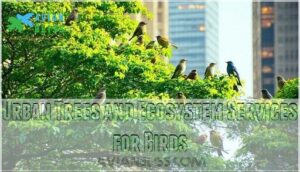
Urban trees do far more than beautify your street—they’re ecosystem powerhouses delivering vital services like air purification, noise reduction, and carbon storage.
These green infrastructure elements also uplift the insect populations that many bird species depend on for food, creating an important link between urban forestry and avian conservation success.
Air Quality, Noise Reduction, and Carbon Storage
But there’s more to these trees than solving roosting issues – they’re powerhouse environmental assets.
Urban tree canopies work as living air filters, scrubbing pollutants from the atmosphere while also muffling city noise.
Here’s how trees help urban bird habitats through ecosystem services:
- Carbon sequestration value increases property values by 15-20%
- Air quality improvements reduce particulate matter by 60%
- Noise reduction capabilities decrease sound levels by 10 decibels
- Urban heat island mitigation lowers temperatures by 9°F
These ecosystem services valuation benefits create healthier environments where both birds and humans thrive together.
Supporting Insect Populations for Bird Food
Urban trees create insect highways that fuel bird populations. Native insect decline threatens suburban bird reliance on these protein sources. You’ll notice oaks supporting diverse Lepidoptera species, while birches shelter invertebrates important for avian behavior. Each tree you plant makes an individual impact on bird food webs.
Native plants host caterpillar food sources essential for nestling survival in urban bird habitats.
Addressing Socioeconomic Gaps in Urban Tree Cover
While low-income neighborhoods have 15.2% less tree cover than wealthy areas, equitable tree planting can strengthen urban bird habitats through environmental justice initiatives.
Community involvement drives policy implications that boost green space access across the socioeconomic gradient.
Smart urban planning prioritizes street trees in underserved communities, creating key corridors for city wildlife.
Frequently Asked Questions (FAQs)
Do native trees support urban birds?
Yes, native trees greatly help birds in cities. Research documents how suburban birds need native plants — which host native insects — to thrive, offering key protein sources for feeding their young.
Does urbanization affect bird richness?
Research shows bird diversity drops by 50% in areas with just 20-40% development. You’ll see fewer species as cities grow, though some adaptable birds actually thrive in moderate development.
Do exotic trees support urban birds?
Exotic trees offer limited sustenance compared to natives. While some non-native species can sustain urban birds seasonally, research shows birds greatly prefer native trees over exotics that dominate city landscapes.
Why do birds eat urban trees?
Birds don’t actually eat urban trees, but they do consume insects, berries, seeds, and nectar that trees provide.
You’ll find birds foraging on tree bark for protein-rich bugs and enjoying seasonal fruits that sustain urban populations.
How do urban trees support natural pest control?
Native trees with 30% canopy cover increase insectivorous bird species by 75%, creating your neighborhood’s pest patrol.
You’ll find these feathered allies naturally control aphids, caterpillars, and harmful insects that damage plants and spread disease.
How do seasonal weather patterns affect roosting?
During winter, you’ll notice birds cluster together more tightly in roosting trees to share body heat. Cold temperatures trigger larger communal roosts, while warmer seasons see smaller, dispersed groups seeking cooler spots.
What diseases spread through urban bird roosts?
Like hidden landmines in soil, roosting sites harbor dangerous pathogens. You’ll encounter avian influenza, salmonella, and histoplasmosis from accumulated droppings.
These diseases spread through contaminated surfaces, airborne particles, and direct contact with infected birds.
How do artificial lights impact roosting behavior?
You’ll find artificial lights disrupt roosting patterns by creating confusion and disorientation. Lights cause confusion, disorientation, and exhaustion, drawing birds into dangerous urban landscapes where they struggle with natural sleep cycles.
Which bird species cause most roosting problems?
Regarding bird troublemakers, you’re dealing with a few usual suspects. Grackles, starlings, cowbirds, and pigeons top the list, with starlings being particularly aggressive and adaptable in large, noisy flocks.
How do construction activities disturb roosting sites?
Construction activities disrupt roosting sites through noise pollution, heavy machinery vibrations, and tree removal. You’ll notice birds abandoning familiar perches when bulldozers arrive, forcing flocks to seek new shelter in already crowded urban areas.
Conclusion
Studies show urban areas with mature native trees help 60% more bird species than those dominated by non-native varieties. Native oaks, maples, and serviceberries offer essential roosting habitat while nurturing insect populations that sustain bird communities year-round.
The trees you plant today determine which birds will call your city home tomorrow. Strategic selection of native oaks, maples, and serviceberries doesn’t just create roosting spots—it builds living corridors where urban development actually supports wildlife instead of displacing it.
Strategic selection of native trees today builds living corridors where urban development supports wildlife instead of displacing it
- https://esajournals.onlinelibrary.wiley.com/doi/10.1002/eap.2149
- https://pmc.ncbi.nlm.nih.gov/articles/PMC9495260/
- https://www.biorxiv.org/content/10.1101/2023.02.10.527978v1.full.pdf
- https://www.ecologyandsociety.org/vol9/iss5/art2/
- https://www.eaglehill.us/urban-habitats/Vol%203/Urban%20Habitats%20--%20Nesting%20Success%20and%20Life-History%20Attributes%20of%20Bird%20Communities%20Along%20an%20Urbanization%20Gradient.html