This site is supported by our readers. We may earn a commission, at no cost to you, if you purchase through links.
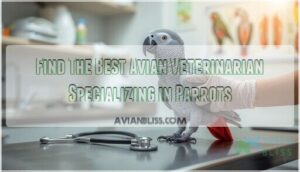
Most bird owners don’t realize their parrot’s lungs work nothing like a dog’s or cat’s. Birds breathe through a rigid system of air sacs that makes them absorb airborne toxins faster, crash harder when infection sets in, and hide illness until they’re already in serious trouble.
A general practitioner who sees mostly dogs and cats won’t catch a subtle weight drop or recognize early aspergillosis before it takes hold. Finding an avian veterinarian specializing in parrots isn’t a luxury for the overly cautious—it’s the difference between catching a problem early and losing a bird you’ve had for twenty years.
Knowing what to look for in that vet, and how to keep your parrot healthy between visits, changes everything.
Table Of Contents
- Key Takeaways
- Why Parrots Need Specialized Veterinary Care
- Qualifications of an Avian Parrot Veterinarian
- What to Expect During a Parrot Vet Visit
- Choosing The Right Avian Veterinarian for Parrots
- Essential Tips for Parrot Health at Home
- Frequently Asked Questions (FAQs)
- Do vets for pets deal with parrots?
- What is a parrot doctor called?
- How do parrots react to anesthesia and surgery?
- What vaccines are recommended for pet parrots?
- How can stress be minimized during transport?
- Are genetic diseases common in captive parrots?
- What are the latest advances in parrot medicine?
- How much does a parrot vet visit cost?
- Can parrots be treated via mobile vet services?
- How often should parrots receive grooming services?
- Conclusion
Key Takeaways
- Your parrot’s air sac system absorbs toxins faster than a dog or cat would, making specialized veterinary care a matter of survival, not preference.
- A board-certified avian vet catches what a general practitioner misses — subtle weight loss, early aspergillosis, and feather changes that signal deeper disease.
- Diseases like psittacine beak and feather disease can spread silently, so annual wellness exams with bloodwork and fecal screening are your best line of defense.
- What you do at home matters just as much as vet visits — a pellet-based diet, mental stimulation, and knowing the early warning signs can add years to your bird’s life.
Why Parrots Need Specialized Veterinary Care
Parrots aren’t just colorful birds or dogs with feathers — their bodies work differently, and so do their health risks.
That’s why understanding avian health supplements for parrots matters — what helps one bird thrive can quietly harm another.
A general vet might miss what an avian specialist catches right away.
Here’s what makes specialized care so important for your bird.
Unique Anatomy and Health Risks
Parrots aren’t built like cats or dogs — their anatomy is a whole different world. Their air sac system makes respiratory issues and air sac disease spread fast and hit hard. Beak problems, feather disorders, and liver damage can signal deeper trouble that only avian medicine catches early.
- Rigid lungs with air sacs make birds highly sensitive to toxins
- Beak overgrowth often reflects liver damage, not just wear
- Feather disorders can point to nutritional, hormonal, or viral causes
Understanding the importance of efficient oxygen exchange in birds can further highlight why specialized avian veterinary expertise is essential for proper care and diagnosis.
That’s why veterinary care for birds — and avian surgery when needed — demands a trained avian veterinarian who truly understands avian health.
Common Diseases in Parrots
Beyond anatomy, the diseases themselves are what make avian medicine so demanding. Viral infections like psittacine beak and feather disease silently destroy feathers and immune defenses.
Fungal diseases such as aspergillosis settle deep in the air sacs before you notice anything’s wrong. Bacterial infections, nutritional disorders, and parasite control failures each hit bird health differently — and without a skilled avian veterinarian, the signs are easy to miss.
Owners should be aware of the risks associated with environmental contamination and carrier state that allow certain viral diseases to persist undetected among parrots.
Importance of Preventive Care
Knowing what can go wrong is only half the battle. Preventive Measures are where you actually protect your bird. Annual Wellness Visits catch weight shifts, feather changes, and early disease before symptoms appear. Your avian veterinarian builds a Health Monitoring baseline each year through bloodwork and fecal screens.
Key Wellness Strategies include:
- Yearly physical exams for early Avian Health detection
- Blood panels tracking liver, kidney, and immune values
- Fecal gram stains screening gut bacteria
- Nutrition Planning reviews to fix seed-heavy diets
- Diet counseling customized by species for Disease Prevention
Qualifications of an Avian Parrot Veterinarian
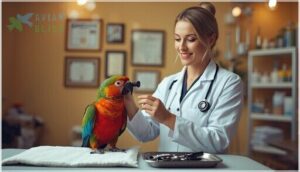
Not every vet with a degree is the right fit for your parrot. Finding the right one means knowing what qualifications actually matter.
Knowing what to look for makes all the difference, and this guide to finding an avian vet specialist near you breaks down exactly which credentials and skills keep parrots genuinely healthy.
Here’s what to look for before you book that first appointment.
Specialized Training and Certifications
Not every vet who sees birds truly understands them. An avian veterinarian specializing in parrot care starts with a four-year Doctor of Veterinary Medicine degree, then adds focused exotic training in avian medicine and surgery, psittacine anatomy, and nutrition.
Many pursue internships or residencies, and organizations like the Association of Avian Veterinarians support ongoing veterinary certification to sharpen real clinical skills in avian medicine.
Board Certification in Avian Medicine
Board certification separates truly dedicated avian specialists from the rest. Through the American Board of Veterinary Practitioners, an avian veterinarian can earn Diplomate status in Avian Medicine and Surgery — but the certification process is rigorous.
It demands years of clinical experience, documented case logs, and a thorough exam. Veterinary credentials like these aren’t just letters after a name; they’re proof of serious medical expertise and specialty training in avian medicine.
Avian board certification is not just letters after a name — it is proof of hard-earned expertise
Experience With Parrot Species
Experience matters more than you’d think. An avian veterinarian who sees budgies, African greys, macaws, and conures daily builds real species expertise — recognizing what’s normal for each bird before anything goes wrong.
That hands-on foundation sharpens parrot nutrition guidance, refines avian handling techniques, and deepens understanding of parrot behavior. When finding a reliable avian veterinarian, ask how many parrot species they regularly treat.
What to Expect During a Parrot Vet Visit
Walking into a parrot vet visit for the first time can feel a little uncertain if you don’t know what’s coming.
Your vet will cover several key areas to make sure your bird is healthy and getting the care it needs. Here’s what usually happens during that visit.
Initial Health Assessment and Diagnostics
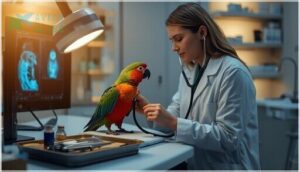
Your parrot’s first visit is more than a quick once-over. The avian veterinarian starts with a thorough medical history evaluation — asking about diet, behavior changes, and past illnesses.
From there, parrot exam techniques guide a full physical, followed by avian lab tests and diagnostic imaging to catch hidden issues early. This health risk assessment forms the foundation of smart, proactive veterinary care.
Routine Wellness Exams and Screenings
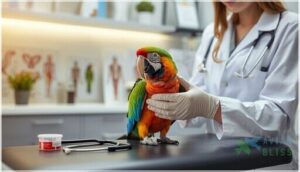
Routine wellness exams aren’t just a formality — they’re your best tool for catching problems before your parrot even shows a symptom.
Wellness exam schedules usually call for annual wellness visits, with senior birds seen every six months.
Parrot health checks include bloodwork, fecal screening, and bird nutrition advice. These preventive care tips, grounded in avian medicine, make all the difference.
Emergency and Advanced Care Services

When things go wrong fast, you need more than good intentions — you need a team that moves.
A skilled avian veterinarian uses Emergency Triage to assess breathing, responsiveness, and bleeding the moment your bird arrives. From there, Critical Care and Avian ICU support kick in immediately:
- Sophisticated Imaging like CT and X-ray guides fast, accurate decisions
- Surgical Interventions for egg binding or internal injuries follow once your bird is stable
- Fluid therapy and oxygen delivery are standard in Avian Emergency protocols
This is Avian Medicine and Surgery at its most essential. Emergency Veterinary Care and a qualified Veterinary Specialist can be the difference between losing your bird and bringing them home.
Choosing The Right Avian Veterinarian for Parrots
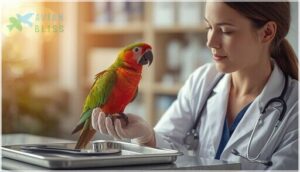
Finding the right avian veterinarian for your parrot isn’t something you want to leave to chance. A few key qualities separate a truly qualified avian vet from someone just willing to see birds.
Here’s what to look for when making your choice.
Key Qualities and Credentials to Look For
Not all veterinarians are created equal — and your parrot deserves better than guesswork. Look for a veterinarian with verified veterinary licenses, genuine avian expertise, and board certification through the American Board of Veterinary Practitioners.
Membership in the Association of Avian Veterinarians signals ongoing commitment to avian medicine and surgery. Strong clinic standards matter too — separate bird areas and trained staff reflect a true veterinary specialist.
Using Directories and Referrals
Once you know what to look for, finding your bird vet gets easier. Start with the Association of Avian Veterinarians’ FindaVet tool — it lists only members who actively see birds.
Avian vet directories like ABVP’s Diplomate search confirm board certification. Don’t stop there, though. Referral strategies from parrot communities, online reviews, and direct clinic evaluations give you the full picture before your first appointment.
Essential Tips for Parrot Health at Home
Good vet visits are only part of the picture in terms of keeping your parrot healthy. What happens at home every day matters just as much, and a few key habits can make a real difference.
Here’s what you should know about caring for your parrot between those annual checkups.
Optimal Nutrition and Diet Recommendations
Diet is the foundation of avian health, and getting it right matters more than most people realize.
Build your parrot’s meals around quality pellet diets — roughly 50 to 70 percent — and fill the rest with fresh foods like leafy greens and vegetables. Work with an avian veterinarian to develop feeding schedules and a nutrition planning approach customized to your bird’s species, weight, and needs.
Environmental Enrichment and Mental Stimulation
Good nutrition sets the stage, but your parrot’s mind needs feeding too.
In avian medicine, we see how boredom quietly unravels bird behavior and avian health and wellness.
Environmental design and pet bird care go hand in hand:
- Rotate foraging techniques weekly using paper cups or puzzle feeders
- Practice toy rotation every two weeks to stay challenging
- Schedule daily social interaction — even 10 minutes counts
- Use cognitive training sessions to build confidence and routine
- Design cage layouts with varied perch heights for movement
Your avian veterinary partner can help tailor this to your specific bird.
Recognizing Early Signs of Illness
Your parrot can’t tell you something’s wrong — but their body will. In avian medicine, we call it “reading the bird.”
Watch for tail bobbing, open-mouth breathing, or fluffed posture at rest — these are respiratory issues showing early.
Dropping analysis matters too: watery or discolored droppings signal trouble fast.
Feather changes, quieter behavior, and skipped meals are nutrition alerts your avian veterinary team needs to hear immediately.
Frequently Asked Questions (FAQs)
Do vets for pets deal with parrots?
Yes, many vets do treat parrots. Clinics offering Avian Vet Services and Exotic Pet Medicine routinely see pet birds alongside dogs and cats, covering everything from Bird Health Issues to Parrot Emergency Care.
What is a parrot doctor called?
Think of them as translators. A parrot doctor is formally called an avian veterinarian — or simply a bird vet.
They bridge the gap between avian medicine and the everyday bird care your parrot deserves.
How do parrots react to anesthesia and surgery?
They respond quickly to anesthetic changes due to their unique avian physiology.
Risks include hypothermia, blood loss, and respiratory depression. Postoperative care focuses on warmth, pain control, and monitoring for a smooth recovery.
What vaccines are recommended for pet parrots?
Polyomavirus is the one vaccine with real backing in avian medicine. Your vet recommends it based on age, exposure risk, and lifestyle — not a fixed schedule.
How can stress be minimized during transport?
Getting a head start makes all the difference. Use a secure travel carrier, cover it with a breathable cloth, and keep the car quiet.
Your avian veterinarian can prescribe sedation if stress runs high.
Are genetic diseases common in captive parrots?
Genetic diseases aren’t the most common issue in captive parrots, but inbreeding risks and color mutations can quietly stack the odds against your bird’s long-term health.
What are the latest advances in parrot medicine?
Parrot medicine has quietly had a revolution. Veterinary Imaging now includes CT scans and MRI, while Bird Microbiome research and sophisticated therapies like probiotics and new antivirals are reshaping Avian Health and Wellness for the better.
How much does a parrot vet visit cost?
A standard wellness exam usually runs $80 to $ Diagnostic tests, like bloodwork, add $80 to $380 more. Emergency care can reach $3, Budget at least a few hundred dollars annually for routine veterinary care.
Can parrots be treated via mobile vet services?
Yes, mobile vet services can handle routine parrot home care, including wellness exams, nail trims, and basic lab work.
For avian emergencies or sophisticated imaging, a full clinic is still your bird’s best bet.
How often should parrots receive grooming services?
Most parrots need nail trimming every 4 to 8 weeks, wing clipping every 6 to 12 weeks, and feather care through misting 2 to 3 times weekly. Grooming schedules vary by species and activity level.
Conclusion
It’s no coincidence that parrot owners who find an avian veterinarian specializing in parrots early rarely face the gut-punch of a preventable loss.
The choices you make before something goes wrong—the vet you research, the symptoms you learn to read, the diet you maintain—quietly shape every year you get together. Your parrot can’t advocate for itself. That responsibility lands entirely with you, and acting on it now is exactly what a good keeper does.