This site is supported by our readers. We may earn a commission, at no cost to you, if you purchase through links.
 Suet attracts powerhouse birds like woodpeckers and nuthatches that patrol your garden, devouring pest insects by the thousands.
This energy-dense fat delivers double the calories of regular seeds, fueling year-round activity while their droppings naturally boost soil fertility.
Here’s where suet feeders really shine compared to scattered birdseed on the ground. You’re basically hiring a crew of woodpeckers and nuthatches to work the upper levels of your garden, picking off pest insects while their nutrient-rich droppings boost soil nitrogen and phosphorus by 40% – which means thicker groundcover and more pollinators showing up naturally.
Smart placement and seasonal timing can transform your backyard into a thriving wildlife habitat that works harder than any gardener ever could.
Table Of Contents
- Key Takeaways
- Why Choose Suet for Your Garden Birds?
- What is Suet and How is It Made?
- How Does Suet Support Bird Health?
- Which Birds Are Attracted to Suet Feeders?
- Can Suet Improve Your Garden’s Ecosystem?
- What Are The Environmental Effects of Feeding Suet?
- How Does Suet Compare to Other Bird Foods?
- When is The Best Time to Offer Suet?
- How Should You Store and Handle Suet?
- What Are The Best Practices for Suet Feeders?
- Frequently Asked Questions (FAQs)
- Conclusion
Key Takeaways
- You’ll attract natural pest controllers like woodpeckers and nuthatches that consume thousands of garden-damaging insects annually, reducing your need for chemical pesticides by up to 28%.
- You’re providing twice the energy density of regular birdseed, keeping beneficial birds active year-round while their nutrient-rich droppings boost soil nitrogen and phosphorus levels by 40%.
- You’ll create a canopy patrol system that targets specific pests—birds can reduce aphids and beetles by 40–65% and caterpillars by 60% through targeted feeding behavior.
- You’re building a thriving wildlife habitat that enhances pollination networks and supports 40% denser groundcover, attracting more beneficial pollinators to your garden ecosystem.
Why Choose Suet for Your Garden Birds?
Suet feeders bring high-energy nutrition right to your backyard birds, especially during tough seasons when natural food sources run low.
This calorie-dense treat supports their active lives and draws in species you might not see otherwise.
Suet’s dense nutrition and accessibility make it an essential addition for anyone interested in attracting a wider variety of healthy, local species.
Nutritional Advantages Over Seeds
Let’s talk nutrition: suet outshines seeds with impressive energy density and a protein source birds can actually digest. Thanks to its high fat content, suet delivers about twice the calories per gram compared to typical seed mixes. Birds gobble it up quickly, getting more out of every bite.
Its digestibility means less energy wasted and more nutrients absorbed—especially useful for seasonal needs. Many bird enthusiasts find that suet attracts insect-eating birds, offering a high-energy food source. If you’re aiming to fuel your feathered friends, the benefits of suet really stack up.
Energy Content for Active Birds
Now here’s where things get interesting—active birds burn through calories like tiny furnaces, and they need fuel that can keep up.
That’s where suet comes in as nature’s power bar, dense with the high-energy fats that keep our feathered friends going strong throughout every season:
- Rapid calorie intake during frigid mornings promotes Winter Survival. – Fat content fuels Migration Assistance for long flights. – Protein levels boost Breeding Season stamina. – Rich foraging efficiency means less time searching, more time thriving.
Feed suet, and watch your garden become a hub of feathered activity.
What is Suet and How is It Made?
Suet is a specific type of hard fat from cows or sheep, offering concentrated energy that bolsters the high activity levels of many wild birds.
You’ll find that it’s prepared through a simple process called rendering, which purifies the fat for safe and nutritious feeding.
Definition and Composition

When you think about suet, you’re dealing with a specific sort of animal fat. The definition of suet centers on the hard fat around a cow’s or sheep’s kidneys and loins. This fat stands out for its unique triglycerides—basically, molecules where three fatty acid chains join a glycerol backbone. That’s where the energy boost comes from.
The table below breaks down some basics:
| Suet Definition | Fat Composition |
|---|---|
| Hard animal fat | Mostly saturated |
| Around the kidneys | Palmitic & stearic |
Suet’s high smoke point also makes it a reliable option in various contexts.
Rendering and Storage Methods
After you learn what beef suet is, you might wonder how to make it last. Rendering techniques turn raw animal fat into tallow — a process that boosts longevity and makes safe handling easier.
During rendering, always watch for quality indicators: pure suet melts clean, leaving little residue.
For storing suet or tallow, cool it fully first. Store in airtight containers under cool, dry storage conditions to guard freshness. Done right, you’ll have safe, ready-to-use suet year-round.
How Does Suet Support Bird Health?
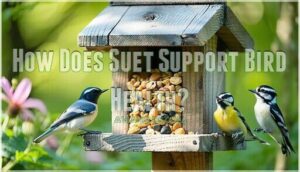
Suet provides birds with a rich source of fat and protein they need for energy, healthy feathers, and proper growth.
When birds get the nutrition they need, they can power through tough seasons with energy to spare.
Protein and Fat Benefits
Birds’ dietary needs are unique, and suet fits the bill as a high-energy food packed with protein and fat—fuel for active wings and sharp instincts. Here’s how the benefits of suet for birds stack up:
- Energy Source: Fats power long flights and busy days.
- Muscle Development: Protein aids in strong wings and legs.
- Feather Health: Good nutrition means bright, durable feathers.
- Immune System: Protein and fat help defend against illness.
Suet’s nutrition truly aids thriving birds.
Seasonal Importance for Birds
When cold weather rolls in, you’ll want to help Winter Birds build Winter Fat Reserves, since natural food sources start thinning out. By offering suet in early winter, you provide a solid Migration Fuel Source and a Breeding Season Boost.
Spring brings nesting energy needs, while the Feather Replacement Season Assistance keeps birds healthy as feathers change. Winter bird feeding strategies revolve around suet’s high calories, making sure your backyard guests stay fueled and full through the year’s toughest moments.
Which Birds Are Attracted to Suet Feeders?
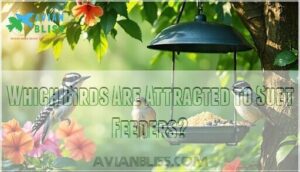
Suet feeders draw an impressive variety of birds to your yard – woodpeckers, nuthatches, and chickadees all flock to these high-fat treats.
These avian visitors frequently display specialized behaviors adapted for accessing suet, making your backyard a gathering place for both common and insect-eating birds.
Common Species in Gardens
When you set out a suet feeder, you’re likely to spot a lively crowd—backyard birds like chickadees, nuthatches, and woodpeckers are big fans. Local bird diversity can surprise you, but those classics almost always show up for a snack.
Sometimes, identifying garden birds is easier when you pay attention to their feeding preferences. Regional bird variations give you a mini field guide right out your window.
Attracting specific species starts with choosing suet, inviting more than seed ever could.
Attracting Insect-eating Birds
If you want to attract the pickiest garden visitors, insect-eating birds top the list. Suet for insectivores isn’t just about extra calories: it’s a direct invite for woodpeckers, wrens, and chickadees. By offering suet feeder types with added insects, you supplement natural diets, especially when bugs vanish in colder months. Suet feeders are a great way to offer birds high-energy. Watch as your wild birds join forces for insect control benefits—true garden teamwork in action.
- Increased feeder variety brings new faces
- Aids insecteating birds during scarcity
- Boosts backyard pest control
- Adapts to seasonal suet needs
- Enhances daily bird feeding experiences
Can Suet Improve Your Garden’s Ecosystem?

Suet feeders draw in birds that love munching on garden pests, cutting down those unwanted insect populations naturally.
This bird activity boosts your yard’s biodiversity and creates a stronger, more balanced ecosystem just steps from your back door.
Encouraging Natural Pest Control
When you welcome insect-eating birds with suet feeders, you’re effectively hiring nature’s pest control team. Chickadees and wrens can consume up to 500 insects daily, while woodpeckers extract 70% of wood-boring larvae they encounter. This bird-insect dynamics creates significant organic pest control benefits.
When you welcome insect-eating birds with suet feeders, you’re hiring nature’s pest control team that devours thousands of garden pests daily
| Pest Type | Reduction Rate | Bird Species Responsible |
|---|---|---|
| Aphids & Beetles | 40-65% | Nuthatches, Titmice |
| Caterpillars | 60% | Woodpeckers, Bluebirds |
| Hornworms | 35% | Warblers, Sparrows |
Attracting birds through backyard birding establishes predator-prey balance, delivering ecosystem services that reduce pesticide use by 28% in monitored gardens.
Enhancing Pollination and Biodiversity
Beyond pest control, suet feeders create a ripple effect that enhances your garden’s pollination network and biodiversity. Wild birds that visit suet feeders often consume nectar and transfer pollen between flowers, aiding plant reproduction. This bird-plant interaction creates habitat diversity that benefits native species.
Here’s how suet enhances ecosystem enrichment:
- Attracts hummingbirds and other nectar-feeding birds that pollinate flowers
- Brings diverse bird species that disperse seeds across your garden
- Creates wildlife corridors connecting fragmented habitats
- Sustains year-round biodiversity through consistent food sources
Attracting diverse bird species transforms your backyard into a thriving ecosystem hub.
What Are The Environmental Effects of Feeding Suet?

Regular suet feeding creates nutrient hotspots in your garden that can dramatically shift soil chemistry and change how plants grow.
Research shows that bird feeding stations can add up to 2.4 gigagrams of phosphorus annually to local environments, creating nutrient hotspots that affect everything from grass growth to beneficial microorganisms.
Impact on Soil and Plant Fertility
Feeding suet transforms your garden’s soil chemistry through concentrated nutrient deposits from visiting birds. Regular bird activity increases soil nitrogen by 50% and phosphorus levels dramatically through droppings rich in animal fat and saturated fat compounds.
| Nutrient Impact | Measurement | Plant Growth Effects |
|---|---|---|
| Soil Nitrogen | +50% increase | Enhanced foliage development |
| Phosphorus Levels | 2.4 Gg annually | Improved root systems |
| Organic Matter | +13-15% content | Stronger plant vigor |
| Soil Porosity | +20% infiltration | Better water absorption |
| Foliar Nutrients | +15-20% nitrogen | Healthier leaf production |
This localized eutrophication from fatty acid-rich droppings creates phosphorus imbalance in some areas, altering ecosystem dynamics. Wildlife biodiversity benefits as enhanced soil sustains 40% denser groundcover, attracting more pollinators and beneficial insects while maintaining natural balance.
Managing Nutrient Dispersal
Smart birders understand that feeding wild birds requires balance. When you’re attracting birds with suet, you’re inadvertently creating phosphorus runoff control challenges. Bird droppings concentrate nutrients in specific areas, potentially altering soil chemistry impacts around feeders.
To aid local bird populations while maintaining sustainable feeding practices, rotate feeder locations monthly. This prevents nutrient overload in one spot. Consider native plant selection that naturally addresses increased fertility. Aiding local bird populations through thoughtful bird feeding means managing where those extra nutrients land in your local ecosystem effects.
How Does Suet Compare to Other Bird Foods?
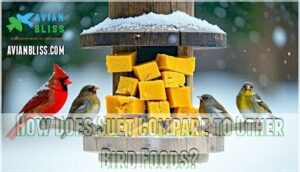
Suet beats regular birdseed hands down when it comes to concentrated nutrition. This high-fat treat packs more calories per bite than most seeds and doesn’t force birds to waste energy cracking shells — they get instant fuel that’s crucial during winter’s energy crunch.
Suet Vs Birdseed
When comparing suet vs birdseed for attracting birds, the numbers tell quite the story. Suet provides roughly 800 calories per 100g compared to birdseed’s 350 calories – that’s like the difference between a power bar and popcorn.
Bird preference trials consistently show woodpeckers, nuthatches, and wrens gravitate toward suet feeders, while seed-loving finches and sparrows stick to their favorites.
Though suet costs more upfront, you’ll refill feeders 22% less often. The real advantage? Waste reduction – suet produces 65% less mess than scattered birdseed hulls.
Suet Blends and Cakes
Suet cakes offer convenient, mess-free bird feeding compared to loose birdseed that scatters everywhere. These compact blocks deliver concentrated energy without the cleanup headaches of scattered seeds.
You’ll find suet variety packs containing nuts, seeds, and dried fruits that attract different species to your bird feeders. No-melt suet formulations prevent summer melting, while allergen-free suet accommodates sensitive birds.
Homemade suet cake recipes let you customize ingredients, though commercial options provide consistent nutrition.
When is The Best Time to Offer Suet?

Fall and winter are prime time for suet feeding – that’s when birds desperately need those extra calories to survive cold nights and maintain their energy.
Sure, you can hang suet feeders year-round, but cooler weather keeps the fat from turning into a gooey mess, making those autumn-through-spring months your sweet spot for attracting the most backyard visitors.
Winter Feeding Strategies
Winter transforms your backyard into a challenging environment where birds need your help most. Cold weather demands more calories, making suet feeders absolutely critical for survival. Here’s your winter feeding strategy:
- Use high-fat suet cakes with nuts and seeds for greatest energy density
- Place feeders in sheltered spots protected from harsh winds and snow
- Check feeders twice daily to prevent freezing and fresh supplies
- Add heated suet feeders to prevent solidification in extreme temperatures
- Combine with supplemental foods like black oil sunflower seeds nearby
This approach keeps birds healthy through harsh months.
Adjusting for Seasonal Changes
Seasonal changes mean adjusting your suet offerings to match birds’ shifting needs throughout the year. During early winter and harsh weather, increase suet portions as birds burn more calories staying warm.
Switch to nomelt suet for summer feeding to prevent spoilage and feather coating. Spring’s Breeding Season Boost requires protein-rich suet blends aiding nesting activities.
Migration Energy Source becomes essential during fall travels, while Molting Season Assistance helps birds grow new feathers.
Monitor your Suet Feeders regularly, adapting quantities based on visitor patterns and weather conditions.
How Should You Store and Handle Suet?

Fresh suet keeps in the fridge for five days or in the freezer for up to six months before it spoils and develops harmful bacteria.
Proper storage prevents the fat from melting in warm temperatures, which can coat birds’ feathers and interfere with their natural insulation.
Preventing Spoilage and Melting
During scorching summer months, preventing suet from turning into a greasy mess requires smart storage methods and strategic choices. Keep fresh suet refrigerated and use within five days, or freeze for up to six months.
Summer suet feeding becomes manageable with nomelt suet formulations that resist heat better than traditional rendering suet. Consider suet feeders with shade covers and proper feeder placement away from direct sunlight.
Some manufacturers add antioxidant additives to extend shelf life and prevent rancidity during hot weather conditions.
Safe Storage Tips
Beyond preventing spoilage, proper storage techniques keep your suet safe for both you and your feathered friends. Store fresh suet in your refrigerator for up to five days, or wrap it tightly and freeze for six months.
Freezing suet extends its usability without compromising nutritional value. When thawing suet, do it gradually in the refrigerator rather than at room temperature. Tallow shelf-life reaches one year when stored in sealed containers.
Always practice safe handling by washing hands after touching animal fat, and check for rancidity before filling suet feeders.
What Are The Best Practices for Suet Feeders?
Position your suet feeder within ten feet of shrubs or trees where birds naturally feel safe and protected.
Regular cleaning every two weeks prevents bacterial growth and rancid odors that can deter birds, while proper positioning away from direct sunlight reduces melting and waste.
Feeder Placement and Maintenance
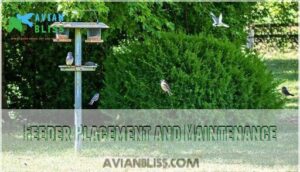
Once you’ve sorted storage, smart feeder placement becomes your next priority. Position suet feeders five feet from bushes to provide birds escape routes while promoting predator avoidance. Choose locations offering weather protection from harsh winds and direct sunlight.
Mount feeders on poles with material durability in mind – metal withstands weather better than plastic. Clean your feeding station weekly during active seasons, increasing cleaning frequency in hot weather.
This feeder accessibility approach maximizes birdwatching opportunities while promoting healthy bird feeding habits year-round.
Reducing Waste and Deterring Pests
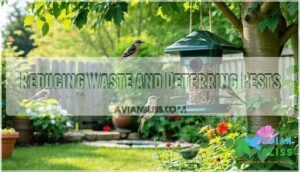
Smart feeder design makes all the difference in waste reduction and pest deterrence. Choose suet cakes over loose suet—they’re consumed completely, leaving no messy residue that attracts unwanted visitors. Strategic placement away from ground level keeps raccoons and squirrels at bay while making birdwatching easier.
Quality suet feeders with drainage holes prevent spoilage during wet weather. When birders select no-mess suet blends instead of traditional seed mix, they’ll notice cleaner feeding areas and fewer pest problems.
Frequently Asked Questions (FAQs)
Does homemade suet work better than store-bought?
Like comparing apples to oranges, you’ll find homemade suet offers customization advantages. You control ingredients and freshness, but store-bought provides convenience and consistent nutrition.
Both work well—choose based on your time and preferences.
Can suet feeding attract unwanted wildlife visitors?
Yes, suet can attract raccoons, squirrels, bears, and other mammals. You’ll want to use caged feeders, bring feeders indoors at night, and avoid ground spillage to minimize unwanted visitors while still feeding birds.
Are there suet alternatives for vegetarian gardens?
You can offer plant-based alternatives like nut butters, seeds, or commercial vegetarian suet made from vegetable oils. These provide similar high-energy nutrition without animal products.
Does suet feeding create bird dependency issues?
Dependency concerns are wildly overblown! Birds naturally forage from multiple sources, so feeders supplement rather than replace their diet. You’re creating convenience, not creating helpless birds who’ve forgotten survival skills.
Which suet feeder designs work most effectively?
Cage-style feeders work best because they prevent larger birds from monopolizing your suet while allowing smaller woodpeckers easy access.
You’ll want tail-prop designs that aid climbing birds naturally and easy-clean materials.
Conclusion
Imagine stepping into your garden and watching woodpeckers, nuthatches, and chickadees go to work like a dedicated crew.
Suet bird food draws these feathered helpers right to your doorstep, where they’ll devour thousands of garden pests each year—no spraying required.
You’ll also enrich the soil through nutrient-dense bird droppings, further enhancing your garden’s health. Strategic suet feeding creates a year-round wildlife habitat, supporting pollinator populations and biodiversity. Transform your backyard into a self-sustaining ecosystem where birds handle pest management naturally.
- https://wildbirdstore.com/2018/08/30/summer-suet-feeding/
- https://www.moananursery.com/2024/10/01/benefits-of-suet-feeders/
- https://ecobirdfood.com/the-benefits-of-suet-cakes-when-bird-feeding-analysis-of-product-options/
- https://www.kaytee.com/learn-care/wild-bird/wild-bird-suet
- https://birdseedandbinoculars.com/wordpress/solving-suet-suet-feeder-problems/