This site is supported by our readers. We may earn a commission, at no cost to you, if you purchase through links.
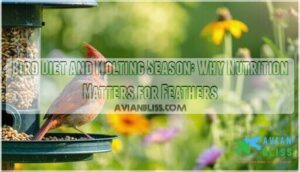 You’ll notice your backyard birds acting differently during molting season—they’re basically rebuilding their entire feather structure. Since feathers are 85% protein, bird diet and molting season are intimately connected.
During this 6-8 week period, usually late summer, birds need 18-25% protein content compared to their normal diet. Think of it like your body healing from surgery—it demands specific building blocks. Birds seek out protein-rich foods like insects, seeds, and mealworms while appearing patchy and less active.
Poor nutrition during molting leads to weak feathers and compromised immune systems. The strategic timing matters too, as most species molt after breeding season ends.
Table Of Contents
Key Takeaways
- You’ll need to boost protein to 18-25% during molting season since feathers are 85% protein and birds require specific amino acids like methionine for healthy feather development.
- Your backyard birds become less active and look patchy during their 6-8 week molt, typically in late summer after breeding season ends, so don’t worry if they seem sluggish.
- You can support molting birds by offering high-protein foods like mealworms, suet, and quality seed blends at clean feeders with fresh water nearby.
- Poor nutrition during molting leads to weak feathers and compromised immune systems, so providing adequate protein sources is essential for their survival and long-term health.
What is Molting Season in Birds?
When you watch your feathered visitors throughout the year, you’ll notice they periodically shed their old feathers and grow fresh ones during molting season.
This natural process usually occurs after breeding season ends, requiring birds to replace worn flight feathers and body plumage with new, healthier ones.
Definition and Purpose of Molting

Molting is the natural process where birds shed old, worn feathers and grow fresh ones. This seasonal adaptation ensures ideal flight, insulation, and display capabilities.
When birds grow new feathers, their bodies need extra protein to build them strong and healthy.
Different bird species molt at their own pace and timing, but they’re all working toward the same goal: keeping their feathers in top shape so they can fly well, stay warm, and attract mates.
Typical Molting Timelines by Species
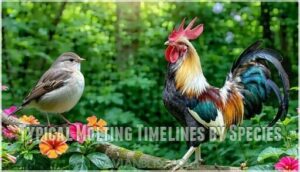
Across different bird species, molting patterns reveal fascinating seasonal adaptation strategies. Most wild birds complete their molt within four weeks, though larger species like eagles require up to six months for full feather regrowth.
Species variation in avian development creates distinct molting calendars based on climate and lifecycle demands. Understanding the molting process is essential for maintaining healthy bird plumage.
- Songbirds – Complete molt in late summer (June-September) after breeding
- Chickens – Annual molt begins at 14-16 months, lasting 6-8 weeks each fall
- Tropical species – Less seasonal timing, often molting year-round with overlapping cycles
- Migratory birds – Synchronize molt entirely after breeding to avoid flight disruption
Signs That a Bird is Molting
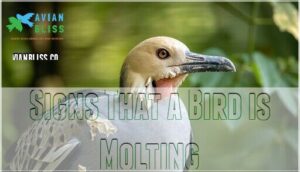
You’ll spot telltale signs when your feathered friends enter their molting patterns. Feather loss creates patchy gaps in their plumage quality, while beak changes may appear subtle.
Behavioral shifts become obvious—birds seem less active and more irritable. Their identification becomes tricky as familiar bird species exploration reveals disheveled appearances.
Understanding avian anatomy helps recognize these bird characteristics and adaptations during this vulnerable period.
Why Diet Matters During Molting
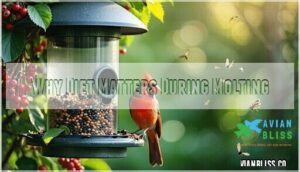
You’ll notice your backyard birds need more protein during molting season than at any other time of year.
Feathers are 85% protein, so inadequate nutrition during this critical period can lead to poor feather development and weakened immune systems.
Increased Protein Needs for Feather Growth
When your bird starts molting, it’s like their body goes into overdrive building new feathers. Since feathers are basically 85% protein, your feathered friend needs way more of the good stuff—especially amino acids like methionine and cysteine—to keep up with all that keratin production happening under the hood.
- Protein supplements become essential – aim for 18-25% protein content during active molting
- Amino acid needs intensify, especially methionine and cysteine for keratin production
- Feather development requires sustained protein intake over 6-8 week periods
- Bird species exploration reveals varying protein demands – smaller birds need proportionally more
- Molting timing affects dietary planning – prepare protein-rich foods before visible feather loss begins
Key Nutrients for Healthy Molt
Beyond protein intake, your feathered friends need specific building blocks for strong plumage. Amino acids like methionine and lysine create feather keratin, while vitamin supplements bolster immune function.
Calcium sources strengthen new growth, and mineral balance ensures proper development. These nutrients work together like a well-oiled machine during molting season. Proper molting season care is essential for a healthy and successful molt.
Consequences of Poor Nutrition in Molting Birds
Poor nutrition during molting spells trouble for birds. Without the right nutrients, their new feathers come in weak and fragile, leaving them with subpar plumage that can’t handle the demands of flight.
Nutrient deficiencies cause molting delays, extending vulnerability periods when birds can’t fly effectively.
These health consequences compromise immune systems, making birds susceptible to disease and reducing survival rates markedly.
How Birds’ Diets Change in Molting Season
When your backyard birds enter molting season, you’ll notice they actively seek protein-rich foods like insects, caterpillars, and seeds to foster new feather growth.
Their feeding patterns shift dramatically as they prioritize nutrient-dense options over their usual fare, often spending more time foraging in areas with high-quality food sources.
Natural Food Sources Sought During Molt
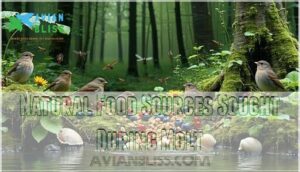
When molting kicks in, you’ll notice birds switching gears in their food hunt. They target protein-rich insects like caterpillars and beetles more aggressively.
Calcium sources become priority picks—think crushed shells and mineral deposits.
Wild berries offer essential vitamins, while aquatic vegetation provides hydration.
Seed preferences shift toward higher-fat options like sunflower seeds, supporting the energy-intensive feather replacement process.
Changes in Foraging and Feeding Behavior

You’ll notice molting birds become more strategic hunters. Their foraging efficiency drops as energy diverts to feather production, creating molt-related stress.
Birds get really good at switching up what they eat, especially when their neighborhoods change or they’re dealing with city life.
When they’re molting, they’ll hunt around longer for protein-packed bugs instead of just grabbing seeds—it’s like they know their bodies need that extra fuel to grow new feathers.
Seasonal Shifts in Diet Composition
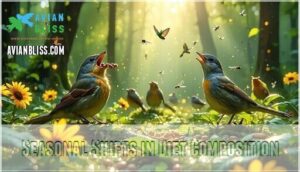
Nature’s pantry transforms as feathers regenerate. You’ll notice birds abandoning their usual favorites for protein-packed alternatives during molting season.
Seasonal dietary adaptations include:
- Insect surge – Birds increase bug consumption by 40% for essential amino acids
- Seed selection – High-fat sunflower and nyjer seeds replace lighter options
- Timing shifts – Extended foraging periods to meet increased caloric demands
These nutrient variations reflect refined foraging strategies that guarantee adequate food availability promotes healthy molt completion.
Environmental Factors Affecting Molting and Diet
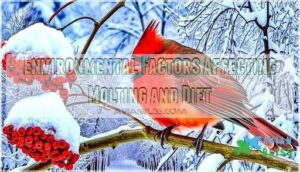
You’ll find that weather patterns and habitat conditions directly impact when birds molt and what foods they can access.
Environmental changes like temperature shifts, rainfall, and human feeding stations can either aid or hinder a bird’s ability to meet its nutritional needs during this energy-intensive process.
Climate and Weather Influences
When temperatures suddenly shift, birds get the signal that it’s time to swap out their feathers—but climate change is throwing their timing completely off track.
What used to be a perfectly coordinated process now leaves many birds struggling when their energy needs spike but food becomes scarce.
Rainfall affects feather condition by influencing insect populations and seed production.
Extreme weather impacts force birds to prioritize survival over complete molts, often resulting in patchy plumage and compromised insulation.
Habitat Quality and Food Availability
Habitat degradation disrupts habitat food webs, triggering molt stress responses in birds struggling to find adequate nutrition. Urban food deserts and habitat loss force species to expand foraging ranges by 40-55% during molting.
Climate change impact further reduces protein-rich resources by 20-45%, creating conservation challenges that demand habitat restoration strategies.
Impact of Human Supplementary Feeding
Your backyard bird feeding creates a ripple effect that extends far beyond simple kindness. Supplementary feeding increases feeding site density, boosting local bird populations by over 70% during molting season.
However, this population dependence can trigger dietary imbalances and behavioral changes. Dense feeding areas become hotspots for disease transmission among backyard bird species, potentially compromising their health when they need peak nutrition most for successful molting.
Supporting Birds Through Molting Season
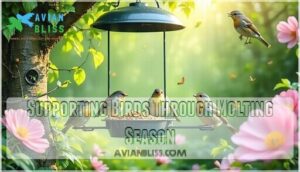
You can directly aid birds during their molt by providing high-protein foods like mealworms, suet, and quality seed blends at your feeders.
These nutritional supplements help offset the increased metabolic demands of feather replacement, promoting healthier molts and stronger plumage.
Best Practices for Backyard Bird Feeding
You’ll want to prioritize feeder hygiene by cleaning stations weekly with bleach solution.
Offer diverse seed variety, including sunflower, nyjer, and safflower, to nourish molting birds’ increased protein needs.
Strategic placement matters—position feeders near cover but away from predator hiding spots. Install predator deterrents like baffles on poles.
Maintain fresh water sources nearby for drinking and bathing during this demanding period.
Designing Molt-Supportive Diets for Pet Birds
When your bird starts molting, their body works overtime to grow new feathers. Bump up their protein intake to around 18-22% during this time—think of it like feeding an athlete in training.
Cooked eggs, legumes, and quality pellets make great protein sources, while amino acids like methionine and cysteine help build strong feather keratin.
Keep an eye on their weight, since some birds get picky eaters during molt, even though they need more calories than usual. Your avian vet can give you species-specific tips on timing and exactly what your bird needs.
Conservation Efforts and Legal Protections
Several legal frameworks protect birds during their vulnerable molting periods. The Migratory Bird Treaty Act safeguards over 800 species, while the Endangered Species Act helps 78% of listed birds achieve stable populations. Climate action and habitat preservation remain essential for species recovery through public awareness campaigns.
| Legal Framework | Protection Scope | Conservation Impact |
|---|
When you’re ready to step into premium territory, high-end e-bikes between $3,500 and $5,000 deliver the performance and features that serious riders expect.
Premium e-bikes between $3,500 and $5,000 deliver the performance and features that serious riders expect
You’ll find advanced motor systems, longer-lasting batteries, and build quality that can handle daily commuting or weekend adventures without breaking a sweat.
Frequently Asked Questions (FAQs)
Can molting birds eat their shed feathers?
You’ve probably heard the peculiar theory about molting birds consuming their own shed feathers, but here’s what actually happens.
Birds like grebes regularly ingest their own feathers as an essential digestive system aid. However, not all species exhibit this behavior during molting.
Do birds stop singing during molting periods?
You’ll notice birds often reduce their singing during molting.
During molt, birds conserve energy by greatly reducing or stopping their singing, as elaborate songs are too expensive when the body focuses on regrowing feathers.
How long can molting delay migration timing?
Like a phoenix breaking free from worn-out plumage, you’ll find molting can delay your bird’s migration by several weeks to months.
Extended molting periods push migration windows back, especially when food resources are scarce during this vulnerable time.
Which birds molt multiple times per year?
You’ll find warblers, wrens, and waterfowl topping the multiple-molt list.
Marsh Wrens change ALL their feathers twice a year, while most songbirds stick to one complete annual molt plus partial seasonal changes.
Do baby birds molt differently than adults?
Yes, baby birds molt differently than adults. Juvenile feathers grow all at once rather than sequentially, and they’re lower quality than adult feathers.
Young birds shed juvenile plumage within about a year.
Conclusion
Think of molting season as nature’s annual renovation project—your feathered friends are literally rebuilding themselves from the ground up.
Knowing bird diet and molting season helps you aid these vulnerable creatures when they need it most. You’ll provide the right nutrients at the right time, fostering strong feathers and healthy birds.
Remember, proper nutrition during this critical period isn’t just helpful—it’s essential for their survival and long-term wellbeing in your backyard habitat.