This site is supported by our readers. We may earn a commission, at no cost to you, if you purchase through links.
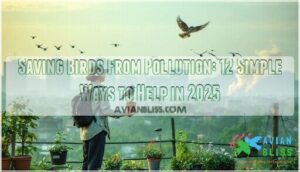 You can make a real difference in saving birds from pollution by tackling three major threats. Air pollution has already reduced bird populations by over 10%, while plastic debris kills roughly one million birds annually. Urban hazards like window collisions claim up to a billion birds yearly in the U.S. alone.
The good news? Simple actions work—pollution mitigation efforts have already prevented 1.5 billion bird losses since 1980. You can reduce single-use plastics, make windows bird-safe with films or screens, and choose shade-grown products.
Even small changes multiply when we all pitch in. There’s more you can do than you might think.
Table Of Contents
Key Takeaways
- You can prevent up to a billion bird deaths annually by making your windows bird-safe using films, screens, or decals—simple changes that eliminate deadly collisions in your neighborhood.
- Your daily choices matter: choosing shade-grown coffee, reducing single-use plastics, and keeping cats indoors directly saves birds from the pollution and hazards killing millions each year.
- Air quality improvements you support through policy and lifestyle changes work—pollution mitigation efforts have already prevented 1.5 billion bird losses since 1980.
- You don’t need expertise to make a difference: planting native species, avoiding pesticides, and participating in citizen science projects like eBird multiply your impact when combined with community action.
How Pollution Threatens Bird Populations
You’re witnessing an environmental crisis that’s quietly devastating bird populations across North America, where pollution acts like an invisible predator, claiming millions of avian lives annually.
From ground-level ozone that reduces bird abundance by over 10% in heavily polluted areas to plastic debris that 90% of seabirds now ingest, modern pollutants create a toxic gauntlet that birds can’t escape.
Air Pollution’s Impact on Avian Health
Air pollution acts like a silent predator, slowly weakening bird populations through ozone toxicity and respiratory distress. Studies show 82% of birds experience negative health effects from polluted air, including elevated stress hormones and DNA damage.
Air Quality Monitoring reveals that ozone pollution causes a measurable decrease in bird abundance, while Pollution Mitigation Strategies through improved air quality regulations have already prevented 1.5 billion additional bird losses since 1980.
Understanding the air pollution impacts is vital for developing effective conservation efforts to protect bird populations.
Effects of Plastic Pollution on Birds
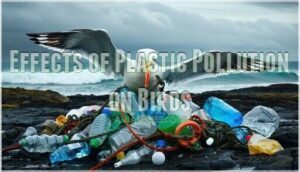
Swallowing plastic debris kills roughly one million birds annually worldwide, with seabirds like albatrosses especially vulnerable. Marine debris causes bird entanglement, internal wounds, and organ damage—98% of Laysan Albatross chicks contain stomach plastic.
The impact of plastic pollution on wildlife disrupts hormones, reduces breeding success, and threatens biodiversity through ecosystem-wide effects, requiring urgent wildlife conservation action. Understanding the plastic pollution problem is vital for developing effective solutions to mitigate its effects on seabirds.
Window Collisions and Urban Hazards

Beyond plastic ingestion, urban environments pose another deadly threat you can address today. Every year, more than one billion birds collide with glass in the U.S. alone!
Window films, bird-friendly design elements, and glass treatments create effective collision prevention.
Urban lighting confuses migrating birds, but you can install screens or use markers to make your windows bird-safe. These simple wildlife protection measures foster ecological conservation at home.
The Role of Ozone in Bird Decline
Ground-level ozone pollution acts like invisible kryptonite for our feathered friends. Research shows ozone concentrations directly correlate with declining bird populations—a one-unit increase in ozone levels leads to measurable drops in bird abundance across North America.
Ozone pollution hits birds in several devastating ways:
- Respiratory damage – Birds’ sensitive lungs suffer from prolonged ozone exposure
- Reduced food sources – Air quality issues damage insects and plants birds depend on
- Weakened immune systems – Poor environmental conditions stress bird populations
- Habitat degradation – Ozone concentrations alter ecosystem balance in critical nesting areas
- Migration disruption – Polluted air corridors force birds to change traditional flight paths
Fortunately, air quality regulations targeting ozone precursors have already prevented the loss of 1.5 billion birds, proving conservation strategies work when we commit to cleaner air.
Simple Actions to Protect Birds
You don’t need a PhD in ornithology to make a real difference for the 3 billion birds we’ve lost since 1970.
You don’t need expertise to help save the 3 billion birds we’ve lost since 1970
These four straightforward actions can dramatically reduce pollution-related bird deaths in your neighborhood, from preventing the 2.4 billion annual cat-caused fatalities to stopping deadly window strikes that claim up to 1 billion birds yearly.
Keeping Cats Indoors or Creating Catios

Transform your cat into a bird-friendly companion by keeping them indoors. Cats kill over 2.4 billion birds annually, making indoor enrichment essential for feline nutrition and pet safety.
Create catio designs that satisfy cat behavior needs while supporting wildlife conservation. This environmental impact reduction helps bird conservation efforts flourish.
Making Windows Bird-Safe
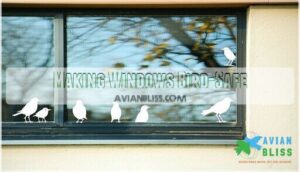
Every year, window strikes kill close to a billion birds—but there’s good news. You can actually do something about it. Simple solutions like glass coatings and window films work by making your windows visible to birds while staying crystal clear for you. Bird decals aren’t just decorative—they create visual barriers that cut collisions by 64%. Want the most protection? External window screens are your best bet and nearly eliminate strikes entirely.
- Try UV-reflective films for birdfriendly collision prevention
- Install external screens as effective physical barriers
- Use tempera paint patterns for budget-friendly window safety
- Place decals on exterior surfaces for wildlife conservation
Planting Native Species and Reducing Lawn Area
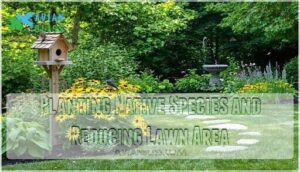
Your yard is sitting on a goldmine for bird conservation if you ditch some lawn for native plants. Studies consistently show that swapping out grass monocultures for indigenous flora creates way better ecosystem benefits.
Here’s what that shift could look like:
| Lawn Type | Bird Species Supported | Water Usage | Maintenance Hours/Month | Soil Conservation Rating |
|---|---|---|---|---|
| Traditional Grass | 2-3 | High | 8-12 | Poor |
| Mixed Native | 15-25 | Low | 2-4 | Excellent |
| Prairie Restoration | 30-50 | Minimal | 1-2 | Outstanding |
| Woodland Edge | 20-35 | Low | 3-5 | Very Good |
| Pollinator Garden | 25-40 | Medium | 4-6 | Good |
Native plants create biodiversity protection hotspots in suburban landscapes, supporting sustainable practices that benefit both birds and homeowners seeking freedom from endless lawn care.
Avoiding Pesticides and Chemicals
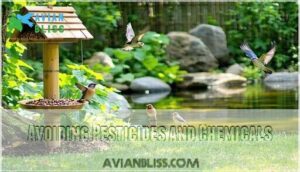
Your garden’s chemical arsenal might be poisoning the very birds you’re trying to attract. Pesticides don’t discriminate—they harm beneficial insects birds rely on for food and can accumulate in bird tissues, affecting reproduction and survival.
Want to build a toxic-free garden instead? Start with these steps:
- Choose Organic Farming methods over synthetic pesticides
- Use Chemical Alternatives like neem oil or diatomaceous earth
- Select Eco Friendly Products for sustainable landscaping
- Encourage natural predators to control pests
This shift aids bird conservation and environmental protection.
Sustainable Lifestyle Changes for Bird Conservation
You’ll discover that making strategic consumer choices, from switching to bird-friendly coffee to reducing plastic waste, can directly aid avian populations while simplifying your daily routine.
Research shows that when you choose shade-grown products and participate in citizen science projects like eBird, you’re contributing valuable data that helps scientists track the recovery of North America’s 3 billion lost birds.
Reducing Single-Use Plastic Consumption
Every piece of single-use plastic you ditch becomes a victory for birds. Plastic pollution affects 800 species worldwide, with 90% of seabirds ingesting plastic fragments.
Swap plastic bags for reusable bags, choose refillable water bottles, and refuse unnecessary packaging. These conservation tips transform waste management into sustainable living.
Your eco-friendly choices create ripple effects—protecting birds while building environmental freedom.
Choosing Shade-Grown and Bird-Friendly Products
Your morning coffee can directly aid bird conservation through responsible sourcing. Shade-grown coffee farms with diverse native trees create habitat for up to 180 bird species, rivaling natural forests in bird abundance. Choose Bird-Friendly certified products that guarantee sustainable farming practices and wildlife preservation.
- Look for Green Certifications – Seek Smithsonian Bird Friendly labels on eco-friendly coffee and cocoa products
- Aid Shade-Grown Operations – These farms maintain 40% canopy cover, boosting migratory bird populations 14-fold
- Choose Responsible Sourcing – Over 100 roasters now offer bird-friendly products that fund conservation efforts
Supporting Eco-Friendly Organizations and Legislation
Your voice matters when you champion organizations fighting for Eco-Friendly Policies and Green Legislation, like the Migratory Bird Protection Act. These conservation efforts work because they create lasting change through Environmental Advocacy and wildlife preservation funding.
| Action Type | Organizations | Focus Area | Impact Level |
|---|---|---|---|
| Legislation Assistance | Audubon Society, American Bird Conservancy | Environmental policy | High |
| Clean Air Act advocacy | EPA partnerships | Air quality regulations | Medium |
| Conservation Funding | Wildlife Federation | Sustainable Practices | High |
| Local initiatives | Community groups | Urban habitat protection | Medium |
Participating in Citizen Science Projects
Through citizen science projects like eBird, you’re contributing essential data collection that drives conservation research. Your bird surveys help scientists track bird abundance and wildlife population dynamics across regions.
These community engagement efforts provide conservation cobenefits by identifying pollution hotspots and population trends.
Join thousands making a real difference—your backyard observations become powerful tools for bird conservation and ecosystem protection.
Community and Policy Solutions

You can’t solve bird conservation challenges alone, but when communities and governments work together, the results are outstanding. Air pollution regulations targeting ozone precursors have already prevented the loss of 1.5 billion birds.
Regional plastic bans in Canada, the UK, and EU countries are reducing marine pollution that kills 90% of seabirds through plastic ingestion.
Air Quality Regulations and Their Benefits
You can’t fight pollution alone, but Air Quality Regulations pack a serious punch. Clean Air Policies have already saved 1.5 billion birds through ozone pollution controls—that’s nearly 20% of current populations!
Environmental Governance targeting emission standards shows Wildlife Conservation Strategies work. When regulatory frameworks reduce air pollution by just 8.4 parts per billion, bird abundance increases measurably across affected regions.
Regional Plastic Bans and Their Impact
Across regions, plastic bag bans are making a real difference for birds. These eco-legislation efforts have reduced plastic pollution by 25-47% on shorelines where single-use plastics face restrictions. You’ll find fewer birds tangled in plastic bags and debris in areas with strong waste management policies.
While 90% of seabirds still ingest plastic, conservation efforts through pollution control measures are slowing environmental degradation and protecting ocean conservation areas where migratory birds depend on clean habitats.
Public Engagement in Conservation Policy
Democracy works best when you’re part of it. Your Conservation Advocacy gains real strength when you dive into Public Comment periods, reach out to representatives on Environmental Governance matters, and get involved in Community Outreach for Wildlife Protection.
Ready to make a difference? Start with these moves:
- Submit comments during Environmental Protection policy reviews
- Attend town halls on Bird Conservation initiatives
- Join advocacy groups promoting Policy Awareness
- Contact lawmakers about Conservation Efforts legislation
Educating Others on Bird Protection
Your voice multiplies impact exponentially. Share bird abundance data with neighbors—mention that ozone pollution alone has cost us billions of birds.
Start conversations about Environmental Literacy through social media posts featuring local wildlife.
Community Outreach through school presentations builds lasting Wildlife Preservation habits. Environmental health education creates champions who understand ecosystem health connections.
The Broader Value of Saving Birds

When you protect birds from pollution, you’re safeguarding essential ecosystem indicators that signal environmental health across entire landscapes.
Birds provide billions of dollars in economic benefits through pest control, pollination, and seed dispersal, while their presence bolsters biodiversity that keeps natural systems functioning smoothly.
Birds as Indicators of Ecosystem Health
When you monitor bird abundance, you’re actually tracking ecosystem health in real-time. Birds act as nature’s early warning systems for environmental problems like air pollution.
Avian research shows that one-third of American bird species now face decline, signaling broader biodiversity loss. Scientists rely on this kind of ecosystem monitoring to keep ecological balance in check.
Economic and Public Health Benefits
When you protect birds, you’re investing in your community’s financial future and health. Bird tourism generates billions annually, while eco services like pest control save farmers massive costs.
Conservation cobenefits include air pollution reduction, creating public health benefits that reduce healthcare expenses.
These sustainability efforts deliver measurable economic returns while maintaining ecological balance.
Birds’ Role in Biodiversity and Sustainability
Birds are like nature’s ultimate multi-tools, providing crucial services that keep ecosystems humming. They pollinate plants, spread seeds far and wide, and help maintain the delicate balance that supports biodiversity.
This ecosystem work creates a ripple effect for habitat restoration, where healthy bird populations mean thriving native plant communities and stronger conservation outcomes overall.
Inspiring Collective Action for Wildlife Preservation
Your voice matters more than you realize in wildlife advocacy. When you share conservation education with friends and neighbors, you’re building community engagement that creates real change.
Talk about bird abundance in your area, explain how environmental regulation brings conservation cobenefits, and show others how sustainable living protects wildlife.
Collective responsibility starts with individual environmental stewardship, but it grows through shared stories and simple actions that inspire others.
Frequently Asked Questions (FAQs)
What pollution sources affect migratory bird routes?
Pollution pathways plague migratory flyways through agricultural runoff, light pollution from cities, chemical pesticides, and industrial discharge.
These contaminants disrupt critical stopover sites, where birds rest during their long journeys.
How does noise pollution impact bird behavior?
You’ll notice that chronic noise stress disrupts birds’ communication, increases hypervigilance, and triggers elevated stress hormones.
Research shows excessive noise affects foraging behaviors and causes chronic stress with multiple health consequences.
Which bird species are most vulnerable to pollution?
Birds are the proverbial canaries in the coal mine regarding environmental threats. Fulmars, shearwaters, petrels, albatrosses, gulls, and kittiwakes face the highest pollution risks, with petrels particularly vulnerable since they can’t easily regurgitate ingested plastic.
Do oil spills have long-term breeding effects?
Yes, oil spills cause serious long-term breeding problems. You’ll see 45% reduced reproductive success lasting at least 10 years after spills.
Females lay thinner-shelled eggs that break easily, and even single drops cause significant embryo mortality.
Can light pollution disrupt bird navigation patterns?
Like migrating birds orienting by the North Star, you’ve got to know that artificial light can seriously throw off their internal GPS.
Light pollution disrupts circadian rhythms and causes disorientation during flight, making birds fly into cities instead of staying on course.
Conclusion
Surprisingly, saving birds from pollution starts with decisions you’re already making daily. Your morning coffee choice, window treatments, and plastic use directly impact avian survival rates.
The numbers tell the real story—pollution mitigation efforts have actually saved 1.5 billion bird lives since 1980.
Those twelve strategies you just picked up? They work. From cutting back on single-use plastics to backing bird-friendly policies, these aren’t wishful thinking—they’re proven methods that gain momentum when communities get on board.
Start with one change today, and you’ll join millions creating measurable impact for our feathered neighbors.
- https://abcbirds.org/threat/plastics/
- https://www.audubon.org/magazine/plastic-pollution-so-pervasive-its-causing-new-disease-seabirds
- https://ornithology.com/birds-and-oil-spills/
- https://blog.nwf.org/2014/05/study-estimates-around-800000-birds-killed-during-bp-oil-spill/
- https://pmc.ncbi.nlm.nih.gov/articles/PMC7733844/