This site is supported by our readers. We may earn a commission, at no cost to you, if you purchase through links.
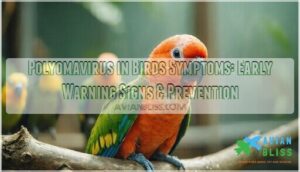 Polyomavirus in birds starts subtly with social withdrawal and decreased interaction, but escalates quickly to life-threatening signs. Within 7-14 days, you’ll see skin hemorrhages, abdominal swelling, and feather abnormalities that signal serious trouble.
Young birds under 15 days face a grim reality – 100% mortality rates make early detection vital. The virus spreads like wildfire through aviaries, often carried by healthy-looking birds that show no symptoms themselves.
While there’s no cure, recognizing these warning signs can buy precious time for supportive care that might save your feathered friend’s life. Prevention strategies become your strongest weapon against this silent threat.
Table Of Contents
- Key Takeaways
- What is Polyomavirus in Birds?
- How Does Polyomavirus Spread Among Birds?
- Who is Most at Risk for Polyomavirus?
- What Are The Early Symptoms in Birds?
- What Are The Severe Symptoms of Polyomavirus?
- How is Polyomavirus Diagnosed in Birds?
- What Treatment Options Are Available?
- How Can Bird Owners Prevent Polyomavirus?
- Frequently Asked Questions (FAQs)
- What are the symptoms of avian polyomavirus in birds?
- What is polyomavirus in birds?
- Do parrots have polyomavirus?
- What are some important facts about polyomavirus infection?
- How do you know if a parrot has polyomavirus?
- How to prevent polyomavirus infection in birds?
- Can recovered birds become lifelong carriers?
- How long does immunity last after vaccination?
- What disinfectants effectively kill polyomavirus in aviaries?
- Are there genetic factors affecting susceptibility?
- Conclusion
Key Takeaways
- Early detection saves lives: Polyomavirus symptoms start with subtle behavioral changes like social withdrawal and decreased interaction, but escalate within 7–14 days to life-threatening signs, including skin hemorrhages, abdominal swelling, and respiratory distress.
- Young birds face extreme mortality risk: Birds under 15 days old experience 100% mortality rates, while those under 14 weeks remain at highest risk, making age the primary factor determining survival odds.
- No cure exists, only supportive care: Treatment focuses on managing symptoms through fluid therapy, vitamin K for bleeding control, and nutritional support while the bird’s immune system fights the infection.
- Prevention through hygiene and vaccination: Strict sanitation protocols, proper quarantine of new birds for 30+ days, and vaccination (showing 93% immunity after two doses) represent the most effective protection strategies against this highly contagious virus.
What is Polyomavirus in Birds?
Avian polyomavirus (APV) spreads like wildfire through parrot populations, hitting young birds the hardest.
While some infected birds might only develop feather issues, others—especially chicks—can die suddenly without warning.
Budgerigars, eclectus parrots, caiques, and hawkhead parrots face the highest risk, with mortality rates reaching 100% in birds under 15 days old.
Overview of Avian Polyomavirus
When your feathered friend suddenly falls ill, avian polyomavirus might be the silent threat you didn’t see coming. This member of the Polyomaviridae family represents one of the most serious viral infections affecting pet birds today.
First identified in 1981, avian polyomavirus can strike without warning, causing everything from subtle feather abnormalities to sudden death in young birds. The virus doesn’t discriminate—it can infect birds at any age, though mortality rates skyrocket in chicks under 15 days old.
What makes this pathogen particularly dangerous is its ability to remain dormant in carriers while spreading silently through aviaries and homes. Understanding this virus’s origins and behavior is your first line of defense in protecting your bird’s health through proper disease management strategies.
Bird Species Most at Risk
Budgerigars face the highest mortality risk from avian polyomavirus, with nestlings under 15 days showing up to 100% mortality rates. Young psittacine birds—including lovebirds, macaws, conures, caiques, and eclectus parrots—are particularly vulnerable between 4-14 weeks of age. Hand-raised chicks experience heightened risk due to their immature immune systems and close human contact during feeding.
While cockatoos and eclectus parrots can become infected, budgies remain the most susceptible species within the parrot family. Detection rates vary seasonally, with lovebirds showing 15.6 times higher infection rates during winter months.
Adult birds generally survive infection but may become asymptomatic carriers, making flock management challenging for avian health practitioners managing parrot diseases in breeding facilities. Understanding the virus transmission methods is vital for preventing the spread of the disease.
How Does Polyomavirus Spread Among Birds?
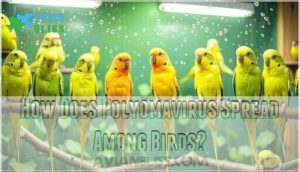
Understanding how polyomavirus spreads is vital for protecting your flock from this deadly disease.
The virus travels through multiple pathways, making it surprisingly contagious among both wild and captive bird populations.
Direct and Indirect Transmission Routes
Polyomavirus spreads quietly through your aviary without obvious warning signs. Bird owners often miss how transmission happens through multiple pathways:
- Airborne Transmission via respiratory droplets and feather dust
- Fomite Spread through contaminated food bowls and perches
- Direct contact with infected droppings or bodily fluids
- Human Error transferring virus on hands between birds
- Environmental Contamination from surfaces harboring the pathogen
Role of Carriers and Environmental Contamination
Many birds carry avian polyomavirus without showing symptoms, creating hidden reservoirs that silently spread infection. These asymptomatic carriers shed the virus through feather dust and droppings for months, contaminating cages and aviaries. Environmental persistence means the virus survives on surfaces for weeks, while poor biosecurity amplifies contamination risks.
Your bird’s carrier state facilitates ongoing viral shedding even after recovery, making thorough sanitation essential for preventing polyomavirus transmission throughout your flock. Understanding the role of avian virus transmission is vital for effective prevention strategies.
Human-Mediated Spread
Humans actually drive most polyomavirus spread between bird flocks. When handlers move between aviaries without proper protocols, they carry the virus on contaminated clothing, hands, and equipment.
Shared feeding tools that aren’t disinfected properly become another transmission pathway.
Common human-mediated transmission routes include:
- Contaminated clothing, hands, or equipment moving virus between birds
- Shared feeding utensils without proper disinfection protocols
- Poor quarantine practices when introducing new birds to existing flocks
Understanding avian polyomavirus transmission helps prevent avian polyomavirus symptoms from devastating your birds.
Who is Most at Risk for Polyomavirus?
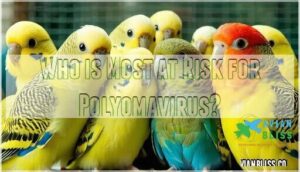
Young birds under 14 weeks old face the highest mortality risk from polyomavirus, with death rates reaching 100% in chicks less than 15 days old.
Budgerigars, eclectus parrots, caiques, and hawkhead parrots are particularly susceptible, especially in crowded aviaries where the virus spreads rapidly through direct contact and contaminated environments.
High-Risk Age Groups
Age becomes the primary deciding factor when polyomavirus strikes, with the youngest birds facing the steepest odds against survival. Birds under 14 weeks old experience the highest Young Bird Mortality rates, with Fledgling Vulnerability reaching critical levels.
Neonatal Transmission Risks peak in birds less than 15 days old, where Juvenile Infection Rates can approach 100% fatality. Age-Related Symptoms intensify dramatically in these High-Risk Bird Populations, making early intervention vital.
Susceptible Bird Species
Some bird species naturally resist polyomavirus, but budgerigars get hit especially hard. Young budgies face crushing mortality rates when this virus takes hold of a flock.
Eclectus parrots, caiques, and hawkhead parrots also show heightened susceptibility to polyomavirus infection. These parrot species share certain avian genetics that make them prime targets for viral infections in birds, particularly when flock dynamics concentrate multiple susceptible individuals together.
Risk Factors in Aviaries and Homes
Crowded environments dramatically increase avian polyomavirus transmission risks. High-density settings like pet shops show outbreak rates up to 48.7%, while household flocks remain under 10%. Key risk factors include:
- Avian Density: Mixed collections with budgerigars and lovebirds exceed 20% positivity rates
- Environmental Contamination: Porous materials harbor virus for six months without proper aviary sanitation
- Quarantine Protocols: Short isolation periods contribute to 38% of new bird infections
- Bird Hygiene: Inadequate cleaning increases APV rates by 12% compared to sanitized environments
Continuous breeding cycles and frequent bird turnover escalate viral infections substantially.
What Are The Early Symptoms in Birds?
Recognizing early symptoms of avian polyomavirus can mean the difference between life and death for your bird.
Most infected birds show initial signs within 7-14 days after exposure, making quick identification vital for treatment success.
Incubation Period and Onset

Avian polyomavirus hides in your bird’s system for 7-14 days before any symptoms show up. Your bird carries the virus during this time but looks completely normal, which makes spotting the infection early really tough.
The infection rate peaks as the virus multiplies internally, with disease progression accelerating toward symptom onset. Understanding this timeframe helps you monitor newly exposed birds more effectively during polyomavirus infection and treatment protocols.
Common Behavioral Changes

When your bird suddenly stops its usual chatter and retreats to a corner, you’re witnessing one of polyomavirus’s most telling early signs. Social withdrawal marks the beginning of concerning behavioral abnormalities.
Your normally active companion may exhibit stress factors like decreased interaction, unusual aggression signs toward cage mates, or repetitive feather plucking. These behavioral changes often precede physical symptoms, making early recognition vital for managing this serious avian disease.
Early Physical Signs
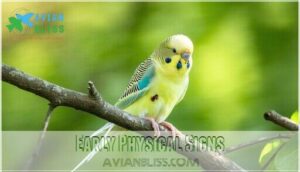
Physical examination reveals distinct early warning signs that help identify avian polyomavirus before severe complications develop. These clinical signs typically emerge within 7-14 days after exposure, with subcutaneous hemorrhage appearing in over 70% of affected fledgling budgerigars.
Watch for these five critical early physical signs:
- Skin Hemorrhages – Small bleeding spots under the skin appear in 38% of juveniles within 10 days
- Abdominal Distention – Swollen belly develops in 39% of young psittacines post-infection
- Feather Lesions – Malformed flight feathers affect 41% of parakeets during early stages
- Crop Issues – Delayed crop emptying occurs in 46% of newly weaned parrots
- Beak Deformities – Structural changes accompany other polyomavirus symptoms in susceptible species
These early clinical signs often precede respiratory problems and more severe complications.
What Are The Severe Symptoms of Polyomavirus?
When polyomavirus progresses to severe stages, birds develop life-threatening complications that require immediate veterinary intervention.
These late-stage symptoms include hemorrhagic lesions under the skin, respiratory distress with labored breathing, tremors, and tragically high mortality rates that can reach 100% in birds under 15 days old.
Hemorrhagic Lesions and Bleeding
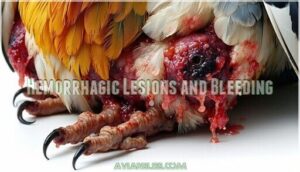
The most alarming progression of avian polyomavirus reveals itself through hemorrhagic lesions that appear as dark red or purple patches beneath your bird’s skin. These bleeding disorders indicate severe viral damage to blood vessels, often accompanied by internal hemorrhaging that can’t be seen externally.
Avian hemorrhage from polyomavirus particularly affects young birds, causing blood clotting abnormalities that manifest as visible bruising and feather lesions around the abdomen and legs.
| Location | Appearance | Severity |
|---|---|---|
| Abdomen | Dark purple patches | High |
| Legs/Feet | Red bruising | Moderate |
| Wing areas | Scattered lesions | Variable |
| Neck region | Small hemorrhages | Low-Moderate |
Respiratory Distress and Tremors
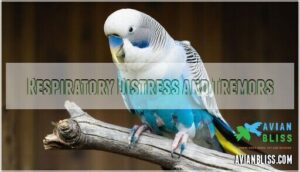
As polyomavirus progresses, your bird’s breathing becomes labored and shallow, often accompanied by visible tremors that signal the virus is attacking their nervous system.
These avian polyomavirus symptoms indicate severe viral infections affecting critical body systems:
- Respiratory Failure – gasping, open-mouth breathing
- Avian Tremors – uncontrolled shaking, especially wings
- Feather Loss – patchy or complete plumage deterioration
- Beak Deformity – abnormal growth patterns
- Wing Paralysis – inability to lift or move wings
These bird health emergencies require immediate veterinary intervention.
Mortality Rates in Young Birds

Across all bird species, neonatal susceptibility to avian polyomavirus creates devastating mortality patterns that should alarm every bird owner.
Budgerigar fledglings face near-certain death, with mortality rates reaching 100% between 10–25 days of age. Non-budgerigar psittacine chicks aren’t spared either—case fatality rates climb between 20–100%, peaking in birds under four months old.
Young bird fatalities occur most dramatically during the critical 14–56 day window, when age-specific mortality transforms a thriving clutch into tragedy within hours.
How is Polyomavirus Diagnosed in Birds?
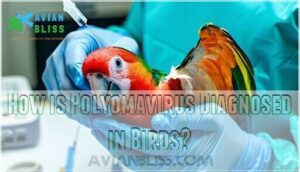
Diagnosing polyomavirus in birds requires a thorough veterinary approach that combines physical examination with specialized laboratory testing.
Your veterinarian will use DNA analysis of blood samples or swabs from the mouth or cloaca to detect the virus, even in birds that appear healthy but may be silent carriers.
Physical Examination by Veterinarians
A good vet will catch things you’d never notice—those early warning signs of polyomavirus that could save your bird’s life. They’ll feel around your bird’s body during the exam, checking for a swollen belly, enlarged organs, or any unusual lumps that point to viral trouble.
The clinical exam covers how your bird holds itself, its breathing, and overall condition. Your vet will also check how well the crop empties and whether your bird’s properly hydrated. Sometimes they’ll need medical imaging to spot internal bleeding or swollen organs—classic signs of avian polyomavirus.
But here’s the thing: even the most thorough physical exam can’t definitively prove polyomavirus. That’s when lab testing becomes crucial. Having a vet who really knows birds means nothing slips through the cracks during this vital checkup.
Identifying Carriers and Asymptomatic Birds
Roughly seven percent of captive psittacine birds carry Polyomavirus without showing symptoms, creating a hidden threat in your flock. These asymptomatic carriers shed the virus through feather dander and droppings, making Carrier Detection Methods essential for prevention.
Real-time PCR testing on blood, feathers, or cloacal swabs represents the most reliable approach for identifying these silent shedders. Don’t rely on visual inspection—healthy-looking birds can maintain this carrier state for years, continuously transmitting infection.
Bird Screening Protocols should include PCR testing before introducing new birds, as Asymptomatic Infection Rates climb higher in crowded environments like bird markets. Proper quarantine procedures combined with molecular testing help break the cycle of Virus Transmission Dynamics that fuel ongoing outbreaks in aviaries.
What Treatment Options Are Available?
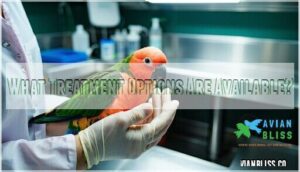
Unfortunately, there’s no cure for avian polyomavirus, so treatment focuses on sustaining care to help your bird’s immune system fight the infection.
Your veterinarian may provide fluids for dehydration, vitamin K injections for bleeding issues, and nutritional assistance to keep your bird stable while their body battles the virus.
Supportive Veterinary Care
When your bird gets a polyomavirus diagnosis, supportive care becomes your lifeline.
There’s no cure, but the right veterinary care can make all the difference between your bird pulling through or not making it.
Your veterinarian will focus on viral load management through emergency care protocols, maintaining ideal bird nutrition, and implementing recovery strategies customized to your bird’s specific condition under careful veterinary guidance.
Managing Symptoms and Hydration
Once your bird shows signs of polyomavirus, keeping them comfortable and properly hydrated becomes your lifeline in the fight against this devastating virus. Your veterinarian will focus on fluid therapy to prevent dehydration and maintain electrolyte balance. Emergency care includes monitoring your bird’s intake carefully.
- Subcutaneous fluid administration – Delivered under the skin for gradual absorption
- Oral rehydration solutions – Electrolyte-balanced formulas for conscious birds
- Temperature regulation – Maintaining ideal warmth to reduce metabolic stress
- Nutritional assistance – Easy-to-digest foods that won’t stress the digestive system
Role of Vitamin K and Other Interventions
While holistic care forms the backbone of polyomavirus treatment, targeted interventions like vitamin K can make the difference between life and death for birds battling this devastating virus. Vitamin K therapy tackles hemorrhagic complications by promoting proper blood clotting, while thorough holistic care maintains hydration and nutrition during recovery.
| Intervention Type | Primary Purpose |
|---|---|
| Vitamin K Therapy | Controls bleeding and hemorrhages |
| Fluid Assistance | Maintains hydration levels |
| Nutritional Assistance | Strengthens immune response |
| Environmental Disinfection | Prevents reinfection cycles |
How Can Bird Owners Prevent Polyomavirus?
Prevention stands as your strongest weapon against avian polyomavirus, requiring a three-pronged approach of strict hygiene protocols, strategic vaccination, and careful quarantine practices.
You can markedly reduce your flock’s risk by implementing consistent environmental sanitation, considering vaccination for high-risk species, and screening new birds before introduction.
Hygiene and Environmental Sanitation
Your bird’s environment harbors invisible threats everywhere—surfaces, food bowls, even dust particles can carry polyomavirus. This makes rigorous sanitation protocols absolutely essential for protection.
Remove droppings and feathers daily, then disinfect cages, perches, and food bowls with veterinary-approved cleaning methods. Environmental controls like proper ventilation reduce airborne contamination, while strict waste management and hygiene protocols protect your flock from this persistent virus.
Vaccination Strategies
Vaccines offer powerful protection against avian polyomavirus, with studies showing 93% of birds developing strong immunity after two doses. You’ll want to start immunization schedules at three weeks of age, spacing doses two weeks apart.
Vaccine efficacy is impressive—all vaccinated birds resisted infection in trials, while unvaccinated controls succumbed. Annual boosters keep protection solid for high-risk birds exposed to shows or pet stores.
Vaccine safety profiles remain excellent, with only minor local reactions occasionally reported.
Screening and Quarantine of New Birds
Adding new birds to your flock means introducing unknown health risks—there’s no way to tell what diseases they might carry just by looking.
This is exactly why quarantine protocols matter so much for preventing Avian polyomavirus transmission.
Isolate new arrivals for at least 30 days, conducting thorough New Bird Screening through your veterinarian. This Avian Isolation period allows time for symptoms to develop while protecting your existing flock’s biosecurity from potential APV carriers.
Frequently Asked Questions (FAQs)
What are the symptoms of avian polyomavirus in birds?
Avian polyomavirus triggers a range of clinical signs that progress from subtle behavioral changes to life-threatening complications. Infected birds commonly develop feather lesions, respiratory issues, and neurological effects including tremors, with mortality rates reaching 100% in young birds under two weeks old.
What is polyomavirus in birds?
This silent predator strikes without warning, targeting your feathered companions when their defenses are lowest. Avian polyomavirus (APV) represents a formidable viral infection that poses serious threats to bird immunity across multiple species.
- Viral Origins: APV belongs to the Polyomaviridae family, first identified in 1981
- Polyomavirus Strains: Multiple variants affect different avian species with varying severity
- Avian Disease Impact: Causes budgerigar fledgling disease and hemorrhagic nephritis
- Virus Mutation Potential: Environmental persistence allows ongoing viral adaptation
- Bird Immunity Challenges: Younger birds face mortality rates up to 100%
Do parrots have polyomavirus?
Yes, parrots can contract Avian polyomavirus (APV), with budgies, eclectus parrots, caiques, and hawkhead parrots being particularly susceptible species.
This viral infection spreads through direct contact with infected birds or contaminated environments, making Parrot Virus Transmission a serious concern for bird owners seeking effective Avian Disease Prevention strategies.
What are some important facts about polyomavirus infection?
When you look at polyomavirus under a microscope, you’re seeing something that can wreak havoc on bird populations.
This viral load can silently devastate entire aviaries, making infection control paramount for any bird owner committed to their flock’s wellbeing and survival.
How do you know if a parrot has polyomavirus?
Detecting Polyomavirus in parrots requires careful Health Monitoring since symptoms often develop gradually. Feather Lesions, delayed crop emptying, and behavioral changes like depression signal potential Avian Polyomavirus infection.
Though these signs are indicative, a definitive Avian Polyomavirus Diagnosis requires laboratory Polyomavirus Testing through blood or swab samples.
How to prevent polyomavirus infection in birds?
Beyond vaccines alone, effective Avian Polyomavirus prevention requires thorough Flock Management. This includes implementing Bird Quarantine protocols and Environmental Disinfection practices.
Additionally, strategic Prevention Strategies for Bird Owners are crucial. These encompass proper Nutrition Therapy to strengthen immune systems against APV transmission.
Can recovered birds become lifelong carriers?
Birds that fight off Avian polyomavirus don’t automatically clear the virus from their systems. Many recovered birds become lifelong carriers, continuously shedding virus particles through feather dander and droppings, creating ongoing Polyomavirus transmission risks.
How long does immunity last after vaccination?
Vaccine protection doesn’t last forever – it fades gradually over time. After your bird gets the initial avian polyomavirus shots, immunity lasts at least a year.
That’s good news since it means the protection doesn’t just disappear one day, but it does weaken bit by bit.
Consider these key timing factors for vaccination effectiveness:
- Initial vaccine series – Two doses given 2-3 weeks apart provide the foundation
- Annual boosters – Booster shots are required each year to maintain protective immunity
- Age at vaccination matters – Birds must be at least 5 weeks old for best response
- Individual variation occurs between birds in immune response duration
We also recommend giving your parrot an annual booster, particularly if they’re exposed to other pet birds. This yearly revaccination schedule ensures continuous disease prevention through consistent avian veterinary care protocols.
What disinfectants effectively kill polyomavirus in aviaries?
Effective broad spectrum disinfectants require one-minute contact time with 200ppm dilution for APV infection control.
Chlorine bleach and sodium hypochlorite provide proven disinfectant efficacy while maintaining avian sensitivity, making them essential for disease prevention against viral infections in birds.
Are there genetic factors affecting susceptibility?
Within budgerigar breeding lines, distinct genetic predisposition patterns suggest some bloodlines carry immune genes that confer viral resistance.
However, heritability studies examining breed susceptibility to Avian polyomavirus remain limited in current veterinary literature.
Conclusion
Catching polyomavirus symptoms early in your birds can literally save their lives. The sooner you notice something’s off, the better your chances of successful treatment.
Don’t wait for the dramatic finale—behavioral changes, withdrawal, and physical abnormalities demand immediate veterinary attention.
Your vigilance, combined with proper prevention measures and swift action, gives your birds their best fighting chance against this silent killer.
Early detection and swift preventive action represent your bird’s only lifeline against this devastating viral threat