This site is supported by our readers. We may earn a commission, at no cost to you, if you purchase through links.
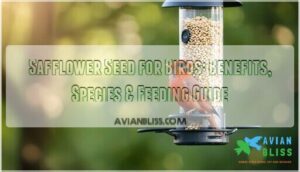 Safflower seed for birds is a white, oil-rich seed from the safflower plant that attracts cardinals, chickadees, and other desirable songbirds while naturally discouraging squirrels and pest species like grackles. Its slightly bitter taste acts as a built-in filter, keeping your feeder visitors exactly where you want them.
With 38% fat and 16% protein, safflower delivers solid nutrition—essential fatty acids, calcium, and magnesium promote feather health, bone strength, and immune function. It’s not just about who shows up at your feeder; it’s about the quality fuel you’re offering them.
The right setup and adjustment strategy can transform your backyard into a cardinal’s favorite stop.
Table Of Contents
Key Takeaways
- Safflower seed’s bitter taste naturally deters squirrels, grackles, and starlings while attracting cardinals, chickadees, and grosbeaks—making it a selective feeding tool that filters your feeder visitors without extra equipment. – With 38% fat and 16% protein, plus essential minerals like calcium and magnesium, safflower delivers quality nutrition that supports feather health, bone strength, and immune function in songbirds. – Bird acceptance of safflower improves significantly over time—cardinals show 65%+ acceptance initially, while chickadees jump from 12% to 28% after two weeks, and using dedicated feeders instead of mixed blends increases acceptance by 22%. – Proper storage in airtight containers and choosing triple-cleaned seeds prevents mold growth and pest infestation, maximizing shelf life and maintaining nutritional value while reducing waste at your feeders.
What is Safflower Seed for Birds?
Safflower seed comes from the safflower plant, a crop grown worldwide for its oil-rich seeds that offer valuable nutrition for backyard birds.
These white seeds are loaded with fat, protein, and minerals that songbirds love—and squirrels usually ignore.
Origin and Cultivation of Safflower
Safflower grows worldwide in arid regions, thriving where many other crops struggle due to its remarkably deep taproot that can reach far into the soil for water. Farmers commonly seed safflower plants in early to late spring, spacing rows 6-12 inches apart in well-drained soil. You’ll often see safflower cultivation between winter wheat crops because its unique growing requirements fit perfectly into crop rotation schedules. This drought-tolerant plant doesn’t need much irrigation, making safflower plant care relatively straightforward even in challenging climates.
- Safflower history spans centuries, with farmers recognizing its value in dry landscapes where water is scarce
- Global cultivation continues expanding as more regions discover safflower’s ability to produce quality seeds without intensive watering
- Arid adaptation makes safflower ideal for areas receiving limited rainfall, reducing your irrigation costs considerably
- Crop rotation benefits emerge when you alternate safflower with grains, improving soil health naturally
- Root system depth reaches far underground, allowing safflower plants to access moisture other crops can’t reach
Safflower Plant Characteristics
Take a closer look at safflower, and you’ll spot some features that really set it apart from other crops. For starters, these plants grow an impressively long taproot—sometimes reaching several feet down into the soil.
That deep root system is what makes safflower so tough in dry climates—it can tap into water sources other plants never reach. The plant does best in well-drained soil where water doesn’t pool or sit.
These drought-tolerant characteristics make safflower ideal for crop rotation with winter wheat, and usually minimal fertilization is needed during the first growing season.
Safflower Seed Production Methods
Farmers harvest safflower seeds when the flower heads turn brown and dry, usually using combine equipment similar to what you’d see working wheat fields. After harvesting, seed production follows careful steps to help guarantee quality:
- Seed cleaning removes debris and immature seeds through screening processes
- Quality control testing checks seed germination rates and oil content
- Sorting and grading separates seeds by size for uniform planting
- Storage preparation dries seeds to proper moisture levels for longevity
These cultivation techniques help guarantee you get high-quality safflower seeds with strong plant propagation potential when sowing seeds in spring.
Nutritional Benefits of Safflower Seed
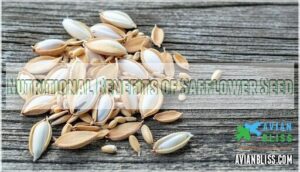
Safflower seed packs a solid nutritional punch for backyard birds. With 38% fat, 16% protein, and essential vitamins and minerals like calcium and magnesium, it offers energy and health benefits that keep your feathered visitors coming back.
Fat, Protein, and Carbohydrate Content
It really helps to know what’s in the seeds you’re offering at your feeders. Safflower seeds, for example, are loaded with 38% fat, 16% protein, and 34% carbohydrates.
This mix gives birds the energy and nutrients they need, thanks to those essential fatty acids and a solid balance of protein and carbs.
| Component | Percentage by Weight |
|---|---|
| Fat | 38% |
| Protein | 16% |
| Carbohydrates | 34% |
That’s about 2 kilocalories per gram—enough to keep your feathered friends fueled without weighing them down.
Safflower hits that sweet spot: plenty of energy from fat, building blocks from protein, and quick fuel from carbs.
Essential Vitamins and Minerals
Beyond fats, proteins, and carbs, safflower seeds pack a solid nutritional punch with vitamins and minerals that aid your backyard birds’ overall health.
Safflower seeds deliver important nutrients that keep feathers healthy, bones strong, and immune systems working right:
- Calcium – bolsters strong bones and eggshell formation
- Magnesium – aids muscle function and energy metabolism
- Phosphorus – essential for skeletal health
- Zinc – boosts immune response
- Vitamins A and B – promote vision, reproduction, and metabolic processes
Safflower seeds also come loaded with antioxidants, and birds’ bodies absorb their vitamins and minerals efficiently. That’s why songbirds thrive on them—they’re getting real nutritional bang for their buck.
Comparison With Sunflower Seed
Safflower and sunflower seeds differ considerably in nutrient content and bird preferences. Sunflower seeds pack more protein—21 grams per 100 grams versus safflower’s 16 grams. However, safflower oil is richer in polyunsaturated fats, supporting heart health in seed-eating birds. Acceptance rates tell an interesting story about market comparison and seed quality.
| Feature | Safflower Seed | Sunflower Seed |
|---|---|---|
| Protein (per 100g) | 16g (score: 65) | 21g (score: 88) |
| Calories (per 100g) | 517 kcal | 584 kcal |
| Shell Hardness | Hard, limits birds | Thin, easier access |
| Squirrel Deterrence | High (bitter taste) | Low (highly preferred) |
Most birds pick sunflower seeds first when both are available. That’s because sunflower’s thinner shell makes feeding easier for species with smaller bills. Safflower attracts cardinals, grosbeaks, and mourning doves—birds with stronger beaks who can crack its tough shell. As a drought-tolerant crop, safflower produces quality animal feed but costs more due to limited production. You’ll find squirrel deterrence is safflower’s biggest advantage, reducing pest activity at your feeders while selectively feeding songbirds you want to attract. Some bird enthusiasts use it to deter bully birds from monopolizing feeders.
Which Birds Eat Safflower Seed?
Safflower seed attracts a select group of songbirds while naturally discouraging squirrels and some aggressive species. Cardinals, chickadees, grosbeaks, and nuthatches favor these seeds, though initial acceptance may take time since safflower isn’t as common in feeders as sunflower.
Popular Bird Species Attracted
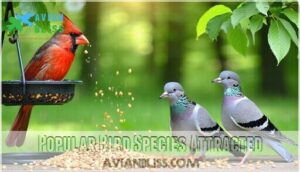
If you’re wondering which birds will show up at your feeder once you offer safflower seed, you’ll be pleased to know it attracts some of the most beloved songbirds in North America. Cardinal preference for safflower is strong, and finch varieties like house finches readily accept it. Here’s what you can expect:
- Grosbeak appeal – Rose-breasted and black-headed grosbeaks love safflower seeds from safflower plants
- Dove consumption – Mourning doves forage beneath feeders for fallen seeds
- Bunting attraction – Indigo buntings discover safflower during migration periods
Safflower Seed Acceptance Rates
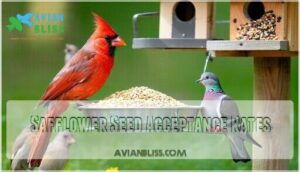
Not every bird takes to safflower right away, but acceptance rates improve with time and the right setup. Northern Cardinals lead the pack, accepting safflower over 65% of the time, while Mourning Doves start at 30% but can reach 49% after repeated exposure. Here’s how different species compare:
| Bird Species | Initial Acceptance | After Extended Exposure |
|---|---|---|
| Northern Cardinals | 65%+ | Sustained high preference |
| Mourning Doves | 30% | Up to 49% |
| House Finches | 38% | Moderate increase |
| Chickadees | 12% | Up to 28% after 2 weeks |
Geographic factors also play a role. Southern US cardinals show 70% acceptance rates in winter, while western finch and jay populations often stay under 30%. Safflower plants thrive in arid regions with specific growing requirements, making the seeds widely available.
When offering safflower, the feeder type and setup significantly impact acceptance. Using dedicated feeders instead of mixed blends increases acceptance by 22%. Tray and platform feeders outperform tube designs by 15%. Compared to sunflower seeds, safflower’s overall acceptance is 41% versus sunflower’s 80%-plus, but patience is key. After three months of exclusive presentation, acceptance can climb by 30%.
For those seeking pest control benefits and aiming to attract cardinals while discouraging squirrels, safflower seeds are a reliable choice. Many bird enthusiasts find that cardinals prefer safflower over other seed options.
Deterrence of Squirrels and Unwanted Birds
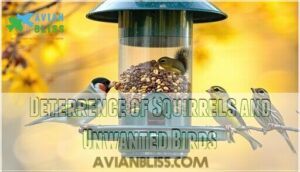
One of safflower’s biggest advantages at your feeder is its bitter taste, which naturally discourages squirrels and many nuisance birds from eating it. Grackles, starlings, and blackbirds usually avoid safflower seeds because they don’t enjoy the flavor.
This makes safflower an effective pest control option without needing squirrel-proof feeders or strategic bird feeder placement. You’ll still attract the songbirds you want while keeping unwanted visitors searching for alternative food sources elsewhere.
How to Offer Safflower Seed in Feeders
Offering safflower seed correctly helps you attract your favorite songbirds while keeping your feeders clean and efficient.
The right feeder type and a thoughtful shift in strategy can make all the difference in how quickly birds accept this nutritious alternative to sunflower seed.
Best Feeder Types for Safflower
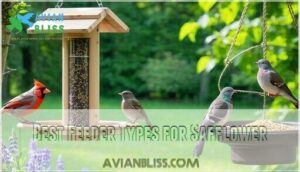
You’ll want feeders that work for medium to large perching birds—think tube, hopper, tray, or platform styles. These keep safflower seeds dry and accessible for your feathered visitors.
Here’s what works well:
- Tube feeders with bigger ports for cardinals and grosbeaks
- Hopper designs that shield seeds from rain
- Tray feeders for doves that prefer ground-level dining
- Platform feeders with open access
- Squirrel baffles to keep pests out and seeds in
Each option helps birds eat comfortably without wasting seed.
Transitioning Birds From Other Seeds
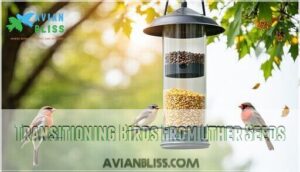
When you swap sunflower seeds for safflower, don’t be surprised if your birds take a few days—or even weeks—to warm up to it. They’re creatures of habit, after all. The trick? Mix safflower with their usual sunflower seeds at first. This eases the transition and keeps your feeder from turning into a wasteland of untouched seeds.
As your birds get used to the new option, slowly bump up the safflower ratio. You’ll keep them interested without tossing money out the window on wasted seed. Plus, they’ll be adjusting to a quality food source that benefits them in the long run.
Tips for Maximizing Bird Visits
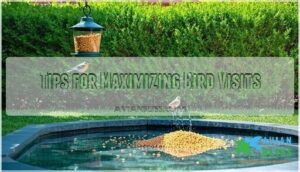
Attracting more birds to your safflower feeder doesn’t require luck—it takes a few smart adjustments to make your setup irresistible.
Position your feeder near natural cover like shrubs, which offers predator protection while birds eat. Adding a water source nearby helps, especially during seasonal changes when natural supplies vary.
Choose high-quality safflower seed that’s triple-cleaned to reduce waste and keep birds coming back.
Trends and Considerations in Safflower Bird Feed
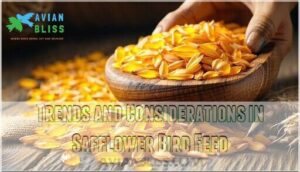
Safflower seed has become more popular in recent years, though it costs more than sunflower seed and appears in premium bird feed blends.
You’ll want to think about factors like pricing, seed quality, and proper storage to get the best value for your backyard birds.
Pricing and Availability in The Market
Safflower seed prices in the U.S. ranged from $1.20 to $2.05 per pound in 2025, with regional price variation influenced by drought and supply chain issues. Your choices depend on where you live and how much you buy:
- Bulk buying options like 50 lb bags averaged $75.99, offering better value for frequent feeders
- Seasonal availability peaks after October harvests, with occasional stockouts during high demand
- Premium blends containing safflower cost 14–21% more than basic mixes, reflecting excellent seed quality
Market price trends show safflower remains pricier than sunflower but appeals to backyard birders seeking selective nutrition.
Cleanliness and Shelf Life of Safflower Seed
Premium safflower seed blends often go through triple cleaning, which cuts down on dust and debris while keeping the seed fresh for months on your shelf. This process removes fungal diseases and contaminants that could harm your backyard birds.
You’ll notice quality degradation signs like discoloration or musty odors if storage conditions aren’t ideal. Proper seed quality depends on pest control during harvesting and dry storage afterward, helping your feathered friends get nutritious food every time.
Bulk Buying and Storage Recommendations
Buying safflower seed in bulk can stretch your budget and keep your birds well-fed. Here’s what you need to know about storage:
- Use airtight containers to keep seeds fresh and moisture out
- Store in cool, dry spots—heat breaks down the oils in safflower seeds
- Check regularly for bugs by looking for webbing or off smells
- Mark containers with purchase dates so you know how long seeds have been sitting
- Figure out how much your birds eat weekly to avoid buying more than you’ll use
When you store safflower correctly, you’re protecting its nutritional punch and making sure your bird-feeding dollars go further. The oils and nutrients stay intact, giving your birds better nutrition than typical seed mixes—without the waste.
Frequently Asked Questions (FAQs)
How often should I refill safflower feeders?
Your feeder’s size and your local bird population determine refill frequency. Most backyard setups need topping off every three to seven days.
Weather impact matters too—cold snaps increase seed consumption as birds need extra energy.
Can safflower seed get moldy in wet weather?
Yes, safflower seed can get moldy in wet weather. Moisture creates the perfect breeding ground for mold and fungal nasties. You’ll want to protect your seed by using covered feeders or tossing any wet seed right away.
| Condition | Mold Risk |
|---|---|
| Dry storage | Low |
| Rain exposure | High |
| Humid air | Moderate |
After a storm rolls through, check your feeders and remove anything that’s gotten damp. Store your bulk safflower in airtight containers to lock out moisture. It’s simple stuff, but it keeps the seed fresh and your birds healthy.
Do starlings or grackles avoid safflower seed too?
Most starlings and grackles do avoid safflower seed, making it an effective pest control strategy. Grackles can crack safflower shells but dislike the taste, while starlings find the thick shell challenging to open.
Key Feeding Behavior Factors affecting Safflower Deterrent Effectiveness:
- Grackles possess the physical ability to crack safflower seeds, but the majority are discouraged by the bitter taste
- Starlings struggle with safflower’s thick shell, which proves difficult for them to open
- Species-Specific Diets mean songbirds like cardinals, chickadees, and nuthatches readily accept safflower seeds
- Grackle Seed Aversion becomes apparent when you swap sunflower for safflower, generally showing immediate impact in reducing their visits
Is safflower seed safe for baby birds?
While adult birds can handle safflower seed without issue, baby birds face choking hazards from the seed size.
Parents feeding nestlings naturally process food first, but you shouldn’t offer whole safflower directly to young birds due to digestibility concerns and their specialized nutritional needs during development.
Should I mix safflower with other seed types?
Flexibility matters when planning your bird feeding strategy. Mixing safflower with other seeds offers several advantages:
- Seed Mix Ratios: Blend safflower with sunflower seeds (50/50 or 25/75) to encourage gradual acceptance
- Nutritional Synergy: Combining seeds provides varied nutrients, supporting diverse dietary needs
- Attracting Variety: Mixed offerings appeal to more species while maintaining safflower’s deterrent benefits
- Cost Effectiveness: Stretching premium safflower with other seeds reduces overall feeding expenses
And here’s the best part—you won’t have to worry much about storage as long as you keep everything sealed tight.
Conclusion
So there you have it—apparently the secret to a peaceful backyard isn’t therapy for squirrels, just switching to safflower seed for birds. Cardinals, chickadees, and grosbeaks will line up while the troublemakers take their business elsewhere.
With proper feeders and a gradual shift, you’ll build a loyal flock that actually appreciates quality nutrition. Stock up, store it right, and watch your yard become the neighborhood spot for the birds worth hosting.
- https://valleyfarms.shop/blogs/news/a-birder-s-guide-to-safflower-seeds
- https://checkyourfood.com/ingredients/ingredient/1705/safflower-seeds-dried
- https://fmbrown.com/product/safflower-seeds/
- http://www.littlefeatheredbuddies.com/info/nutrition-seeds.html
- https://teampiersma.org/what-birds-eat-safflower-seeds/