This site is supported by our readers. We may earn a commission, at no cost to you, if you purchase through links.
 A single sick bird can trigger an outbreak.
Table Of Contents
Key Takeaways
- Early detection through behavioral changes (fluffed posture, skipped meals, drooping wings) and physical symptoms (dull feathers, discharge, respiratory distress) can mean the difference between recovery and losing your entire flock.
- Advanced diagnostic tools like real-time RT-PCR deliver results in 2–4 hours with 95% sensitivity, while emerging technologies such as microfluidic biochips and AI-powered scanning can detect infections in under 45 minutes at significantly lower costs than traditional methods.
- Strict biosecurity practices—including disinfecting equipment between bird groups, quarantining new birds for at least 30 days, and monitoring wild bird activity near your property—can cut your flock’s disease risk by more than half.
- Comprehensive record-keeping of flock history, individual health profiles, vaccination schedules, and environmental factors enables you to spot disease patterns early and make informed treatment decisions with your veterinarian.
Key Signs of Disease in Birds
Spotting illness early can mean the difference between recovery and tragedy for your birds. Your feathered companions show distinct signs when something’s wrong, but you need to know what to look for.
I’ll break down the behavioral changes, physical symptoms, and breed-specific red flags you need to watch for.
Behavioral and Physical Changes

When your bird starts acting differently—sitting fluffed up when it’s usually active, or skipping meals it would normally devour—you’re often seeing the first red flags that something’s wrong. These behavioral signs are your earliest clues for disease diagnosis.
Watch for changes in avian posture, like drooping wings or an unsteady stance.
Physical symptoms matter too: dull feather condition, beak deformities, or discharge around the eyes can signal avian diseases requiring prompt diagnosis.
Common Symptoms of Avian Illness
Once you spot those early warning signs, watch for specific symptoms that signal illness: respiratory distress, abnormal droppings, or sudden weight loss all require immediate attention.
Common disease symptoms include:
- Avian fever with lethargy and reduced appetite
- Respiratory issues like wheezing, nasal discharge, or labored breathing
- Feather loss beyond normal molting patterns
- Beak deformities or overgrowth requiring diagnosis
These avian diseases need diagnostic tests for birds to confirm conditions like egg binding or bird flu.
Species-specific Warning Signs
Different bird species exhibit distinct disease patterns that can serve as early indicators of health issues. For instance, parrots with Psittacine Beak and Feather Disease (PBFD) experience rapid and severe feather loss, shedding 80%-100% of their feathers within a week during acute stages—a critical sign requiring immediate veterinary attention. House finches, on the other hand, develop crusty, swollen eyes due to conjunctivitis, which can lead to blindness in 20%-30% of severe cases.
| Species | Disease Warning Signs | Mortality/Impact |
|---|---|---|
| Parrots | Progressive feather disorders (PBFD) | 80%-100% feather loss in 1 week |
| House Finches | Crusty, cloudy eyes; bird behavior changes | 20%-30% blindness rate |
| Budgerigars | Sudden death in pre-fledging chicks | 60%-100% mortality in outbreaks |
| Turkeys | White plaque-like areas; intestinal beak deformities | 30%+ flock mortality |
Regular flock monitoring is essential to detect these avian health symptoms early, preventing widespread damage and ensuring timely intervention.
Essential Steps for Examining Sick Birds
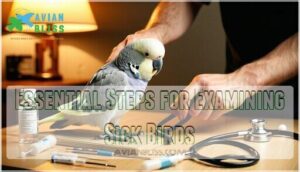
When your bird seems off, knowing what to look for can make all the difference. A careful exam keeps you one step ahead of bigger problems.
Here’s where to begin.
Safe Bird Handling Techniques
Your hands are the difference between a calm examination and a stressed, injured bird—so learning proper restraint isn’t optional. Personal Protective Equipment guards you against bird flu and other avian health risks.
Follow these Safety Protocols:
- Wear protective gloves and masks before touching any bird
- Use proper Bird Restraint techniques—support the body, control the wings
- Maintain Avian Hygiene by disinfecting between birds
- Work quickly to minimize stress during poultry health management
- Document flock health observations immediately after managing
Physical Examination Checklist
Once you’ve got your bird secured, a systematic head-to-toe exam reveals the clues your feathered patient can’t tell you in words. Your Clinical Examination should cover eyes, nares, beak, feathers, vent, and feet—looking for discharge, swelling, or color changes.
| Body Area | Physical Signs to Check |
|---|---|
| Head & Eyes | Discharge, cloudiness, swelling |
| Feathers & Skin | Parasites, lesions, pox marks |
| Vent & Abdomen | Prolapse, masses, discoloration |
What you find during this external check-up tells you which diagnostic tests to run.
Gathering Flock and Individual History
A single missing detail—hatchery source, vaccination timeline, or even the date symptoms first appeared—can send your diagnosis down the wrong path, so collecting a complete flock history isn’t optional.
You’ll need owner interviews covering breed, age, flock size, operation type, feeding program, and health records. This historical data forms the backbone of diagnosing poultry diseases, turning guesswork into targeted flock management and accurate bird identification.
Diagnostic Tests for Avian Diseases
When disease hits your flock, speed matters. A handful of reliable tests can tell you exactly what’s affecting your birds.
Let’s break down the main diagnostic options.
Blood Tests and Laboratory Diagnostics
When you suspect something’s wrong with your bird, blood tests can reveal what the eye can’t see—from hidden infections to organ damage lurking beneath the feathers.
Laboratory tests like hematology tests and biochemical profiles examine your bird’s blood analysis to detect anemia, inflammation, or metabolic issues. Serum analysis and immunological assays can confirm infections, while molecular diagnostics pinpoint specific pathogens.
These veterinary diagnostics give you concrete answers when diagnostic testing matters most.
Real-time RT-PCR and Advanced Assays
Real-time RT-PCR (RRT-PCR) stands as the benchmark in molecular diagnostics for avian influenza detection, delivering results within 2–4 hours with diagnostic sensitivity up to 95.4%. This sophisticated assay validation technique measures viral load measurement with precision, detecting as few as 5–50 RNA copies per reaction.
RT-PCR sensitivity allows you to identify infections before clinical symptoms appear, supporting early containment. Modern platforms distinguish between virulent and avirulent strains, inform targeted control measures, and improve diagnostic testing accuracy in avian disease diagnosis and virology.
Necropsy and Post-mortem Procedures
Necropsy procedures reveal the definitive answers that live birds can’t always provide, uncovering hidden lesions, tissue damage, and pathogen distribution that explain sudden deaths or treatment failures in your flock.
Your postmortem examination should follow systematic necropsy techniques:
- Document mortality rates and circumstances before opening the carcass
- Collect tissue sampling from liver, spleen, lungs, and intestines for pathology reports
- Photograph abnormal findings to support avian disease diagnosis
- Submit samples within 24 hours for accurate postmortem analysis
When you follow this systematic process, every necropsy becomes actionable intelligence that helps you protect your flock’s health.
Emerging Technologies in Avian Disease Diagnosis
Technology is changing how we diagnose bird diseases, making detection faster and more accurate than ever before. New tools can spot infections in hours instead of days, helping you protect your flock before illness spreads.
Let’s look at three pioneering methods reshaping avian health care.
Microfluidic Biochips and Artificial Intelligence
You’re looking at a breakthrough in avian disease diagnosis. Microfluidic biochips paired with AI diagnostics cut turnaround times from days to under three hours in field trials, detecting avian pathogens like H5N1 at just 10 copies/µL. These biochip integration systems processed 180 poultry samples daily during outbreaks, while machine learning reduced false positives by 18% in pathology workflows.
| Technology Feature | Performance Metric |
|---|---|
| Detection speed | Under 45 minutes |
| Sensitivity rate | 93.1% in field trials |
| Cost reduction | 42% vs. traditional RT-PCR |
| Daily sample capacity | Up to 180 samples |
| AI accuracy improvement | 97.2% lesion classification |
Next-generation Sequencing Applications
Next-generation sequencing (NGS) transforms avian disease diagnosis by detecting multiple pathogens—viruses, bacteria, fungi, and parasites—in one test. You’ll get complete genome-level data from fresh or frozen tissues, identifying co-infections and novel strains that traditional genetic tests miss.
NGS provides outcomes in 48–72 hours, rivaling necropsy turnaround times, while revealing antimicrobial resistance genes and tracking outbreak evolution.
This diagnostic genomics approach costs around $200 per test and provides the pathogen detection breadth you need for accurate avian pathology decisions.
Noninvasive Flock-level Scanning Methods
Base Molecular Resonance scanning technology now lets you screen your entire flock for avian influenza in seconds—no blood draws, no management stress, just point-and-scan detection that separates healthy birds from infected ones on the spot.
You’ll conduct disease surveillance across hundreds of birds during routine flock health management rounds, catching infections before clinical signs appear. This bird health monitoring approach aids real-time flock monitoring decisions, helping you protect both avian and nonavian species on mixed farms.
Tips for Preventing Disease Spread in Flocks
Once you’ve identified a disease in your flock, the next challenge is stopping it from spreading further. Prevention isn’t just about protecting sick birds—it’s about creating
Biosecurity Best Practices
You can slash your flock’s disease risk by over 50% with three straightforward habits—no fancy equipment required.
Start by making sanitation non-negotiable: disinfect your boots and equipment every time you move between bird groups. This simple step cuts off avian influenza before it spreads.
When you bring in new birds, quarantine them for at least two weeks before they join your existing flock.
Vaccination and Treatment Protocols
Protecting your birds from disease doesn’t stop at the gate—it continues with smart vaccination schedules and quick action when illness strikes. Work with your veterinarian to create immunization strategies customized to your flock’s risks, including avian diseases like coccidiosis and poxvirus.
When you spot symptoms, don’t wait—early treatment options and proper medication protocols can save lives and prevent outbreaks from devastating your entire operation.
Continuous Monitoring and Surveillance
Ongoing avian surveillance and disease tracking keep you one step ahead of emerging threats in your flock. Monitor your birds daily for behavioral shifts, and don’t overlook wild bird sampling near your property—since over 500,000 wild bird samples have been collected in U.S. surveillance efforts since 2006.
- Schedule routine flock monitoring with veterinary diagnostic procedures
- Track environmental testing results from your farm’s surroundings
- Record any wild bird activity or unusual deaths near your operation
- Use bird health monitoring logs to spot patterns early
- Partner with local veterinarians for poultry health management support
These disease diagnosis and control practices through avian disease prevention help you catch problems before they explode into costly outbreaks.
Frequently Asked Questions (FAQs)
What are the costs of diagnostic tests?
Diagnostic costs vary widely depending on the test type and lab. Blood work usually costs $50–$150, while PCR tests for avian influenza can run $100–$
Necropsy fees generally range from $75–$200, creating an economic burden for small flock owners.
How do you choose the right veterinarian?
Your bird’s life may hang in the balance of this choice. Seek a veterinarian with avian-specific credentials, hands-on experience treating birds, and emergency services available.
Check online reviews from other bird owners to confirm the healthcare professional understands avian health needs.
When should you quarantine new birds?
You should quarantine every new bird for at least thirty days before introducing them to your flock. This disease prevention period helps protect your existing birds from infections.
Strong biosecurity measures during quarantine isolation prevent outbreaks and safeguard avian health.
What records should you keep for birds?
You can’t fix what you don’t document. Keep detailed flock history, including owner information and flock size, alongside individual Bird Profiles with health records and vaccination history.
Track disease symptoms, feeding logs, and veterinary notes to guarantee effective biosecurity and treatment plan adjustments.
How do environmental factors affect bird health?
Climate change, habitat destruction, air pollution, and water quality shape avian physiology and survival. Poor food availability stresses birds, weakening immunity.
Conservation efforts protect diverse habitats and ecology, ensuring healthier populations across ecosystems.
Conclusion
Getting good at diagnosing bird diseases is all about staying alert and jumping on problems fast. You’ve picked up how to spot trouble early, do proper health checks, and make the most of modern diagnostic tools.
Don’t wait for disease to tighten its grip on your flock. Implement biosecurity measures now, monitor continuously, and partner with veterinary professionals who understand your birds’ unique needs.
Your commitment to early detection and rapid response transforms uncertainty into protection, ensuring healthier birds and safer flocks for years ahead.