This site is supported by our readers. We may earn a commission, at no cost to you, if you purchase through links.
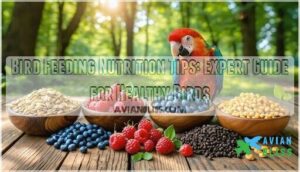 A parrot refusing to eat pellets, a finch with dull feathers, or a cockatiel that won’t stop picking seeds—these frustrating scenarios often share the same root cause: poor nutrition. Many bird owners unknowingly create health problems by relying on outdated feeding advice or assuming that a full food dish means a balanced diet.
The truth is, nutritional deficiencies develop slowly and silently, manifesting as weakened immunity, poor feather quality, and shortened lifespans long before you notice something’s wrong. Getting bird feeding nutrition tips right from the start makes the difference between a companion that merely survives and one that thrives with vibrant plumage and energetic behavior.
Understanding what your bird actually needs—from the protein that fuels feather growth to the calcium that strengthens bones—transforms feeding time from guesswork into a science-backed routine.
Table Of Contents
Key Takeaways
- Birds need balanced nutrition from pellets (not seed-only diets) supplemented with fresh produce, as 70% of nutritional deficiencies show up first in poor feather quality and skin problems before becoming life-threatening.
- Essential nutrients require specific ratios—12-18% protein for adults, 2:1 calcium-to-phosphorus balance, and 5-10% healthy fats—while toxic foods like avocado, chocolate, and onions can cause respiratory failure or cardiac arrest within hours.
- Diet adjustments matter across seasons and life stages, with juveniles needing up to 30% protein during growth, breeding birds requiring extra calcium, and winter feeding demanding high-energy foods to maintain body temperature.
- Daily monitoring of water quality, feather condition, behavior changes, and body weight helps catch deficiencies early, while regular veterinary check-ups prevent problems before symptoms appear.
Essential Bird Nutrition Tips
Your bird’s health starts with understanding what goes into their bowl each day. Different nutrients serve different purposes, from building strong bones to maintaining bright feathers.
Let’s look at the essential building blocks your bird needs to thrive.
Key Nutrient Requirements for Birds
Your bird needs six essential nutrients to thrive: proteins, carbohydrates, fats, vitamins, minerals, and water. Adult birds usually require 12–18% protein in their diet, while growing chicks need up to 22% for proper development. Amino acids like lysine and methionine support feather growth and metabolism.
Calcium and phosphorus should maintain a 2:1 ratio for strong bones, and vitamin deficiencies—especially vitamin A—can compromise immune health and vision.
Owners should provide access to fresh water daily for their birds.
Macronutrients and Micronutrients Explained
Macronutrients fuel your bird’s daily activities and maintain basic body functions, while micronutrients—though needed in smaller amounts—support everything from vision to immune defense. Here’s what your bird’s body relies on:
- Proteins supply amino acid sources for feather growth and tissue repair
- Fats deliver essential fatty acids for energy and healthy skin
- Vitamins guarantee proper bioavailability, supporting metabolism and immune function
- Minerals work through complex interactions—calcium partners with phosphorus for bone strength
Recognizing nutrient deficiency signs early helps you adjust your bird’s diet before health problems develop.
Protein, Fat, and Carbohydrate Needs
Your bird needs about 12–15% protein to stay healthy, though chicks building new feathers will gobble up to 30% to fuel their rapid growth. Balanced proteins from pellets, cooked eggs, and legumes provide essential amino acids.
Fats deliver concentrated energy—aim for 5–10% of the diet from quality protein sources.
Carbohydrates offer quick fuel, helping your bird meet daily energy requirements without tipping into weight gain.
Calcium, Phosphorus, and Vitamin Importance
Beyond macronutrients, calcium and phosphorus work together like a tag team to keep bones strong and eggs intact, while vitamins power everything from vision to immune defense. Here’s what you need to watch:
- Calcium sources include cuttlebone, leafy greens, and mineral blocks for bone health and eggshell formation.
- Phosphorus balance matters—too much blocks calcium absorption, weakening bones.
- Vitamin deficiencies show up as poor feather quality or immune problems.
- Supplement overdose can harm your bird, so consult your vet first.
Choosing The Best Bird Food
Walking down the bird food aisle can feel overwhelming with all the choices staring back at you. You’ll want to understand the differences between pellets, seeds, and fresh foods to make the right decision for your feathered friend.
Let’s break down your options so you can build a diet that keeps your bird thriving.
Pellets Vs. Seeds: Pros and Cons
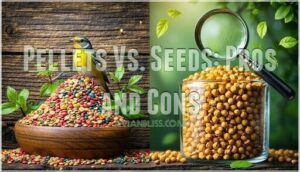
Think of choosing between pellets and seeds like picking between a complete meal and a snack platter. Pelleted diets offer nutrient completeness, delivering balanced vitamins, minerals, and protein in every bite. Seed-only diets fall short nutritionally but satisfy your bird’s foraging behavior.
The cost analysis favors seeds upfront, but pellets prevent expensive health issues. Palatability issues arise during transitions—birds resist change. Storage concerns differ too: pellets stay fresh longer than seeds.
Veterinarians often suggest pellets to prevent nutritional deficiency risks.
Recommended Commercial Food Brands
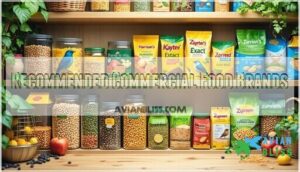
Exploring commercial food options feels overwhelming when you want the best for your birds. Brand reputation matters—companies like Harrison’s, Kaytee Exact, and Zupreem consistently deliver high-quality pellets with verified ingredient quality.
Consider these trusted complete diets:
- Harrison’s offers organic, species-specific formulas tested through rigorous palatability testing
- Roudybush provides laboratory-verified nutrition used in avian hospitals
- Lafeber emphasizes human-grade ingredients in small-batch production
Cost comparison shows premium brands prevent expensive health problems down the road.
Safe Fresh Fruits and Vegetables
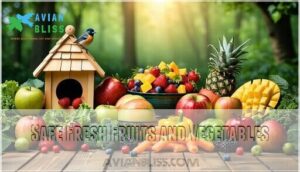
Fresh produce can elevate your bird’s diet from adequate to outstanding, but selecting safe options requires careful consideration. These safe foods provide essential vitamins and fiber, with daily serving sizes ideally matching your bird’s head size.
| Safe Fruits | Safe Vegetables | Fruit Preparation |
|---|---|---|
| Apples (seedless) | Bell peppers | Remove pits, seeds |
| Berries | Carrots | Wash thoroughly |
| Mango | Broccoli | Cut bite-sized pieces |
| Papaya | Zucchini | Offer organic options when possible |
Focus on providing a variety of vegetables and rotating fresh produce to keep your bird’s diet interesting. Always avoid toxic foods like avocado to ensure your bird’s health and well-being.
Using Seeds and Nuts as Treats
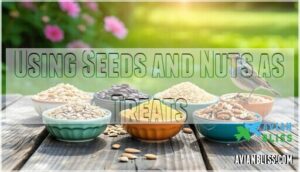
Seeds and nuts are like candy for birds—delicious and irresistible, but they shouldn’t make up the bulk of their diet. Use them as training rewards or enrichment tools instead.
Offer small portions of varied seeds like millet or sunflower, plus nuts such as almonds or walnuts. Treat portioning matters—limit these high-fat options to 10% of daily intake to prevent obesity and nutritional imbalances.
Supplementing and Enriching Bird Diets
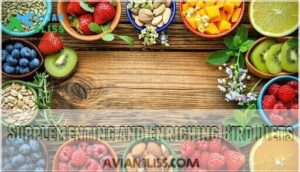
Even the best pellets need a little backup sometimes. Your bird’s diet might require supplements, enrichment strategies, and careful attention to what’s safe and what’s not.
Here’s how to fill in the gaps and keep mealtime interesting.
When to Use Vitamin and Mineral Supplements
Most birds thrive on a well-rounded pellet-and-produce diet, but some situations call for an extra nutritional boost beyond what their meals provide.
Seed-only diets often create vitamin and mineral deficiencies that require targeted supplementation. Stressful periods like molting or illness may demand bird vitamins to support recovery.
Your avian veterinarian can identify specific deficiencies and recommend appropriate supplement types, ensuring you’re supplementing with vitamins and minerals only when truly needed.
Foraging Toys and Dietary Enrichment
Wild birds don’t just eat—they hunt, forage, and work for every meal, and recreating that natural challenge at home keeps your feathered companion mentally sharp and physically active.
Foraging toys and puzzle feeders transform mealtime into enrichment activities that satisfy natural instincts:
- Hide seeds in paper rolls or woven baskets for natural foraging experiences
- Rotate interactive toys weekly to maintain novelty and behavioral benefits
- Combine food puzzles with perches for enrichment variety
This approach prevents boredom and promotes healthier eating patterns.
Avoiding Toxic and Unsafe Foods
While enrichment keeps birds engaged, knowing which foods pose serious risks protects them from harm. Avocado toxicity ranks as one of the most dangerous threats—persin in all parts of the plant causes respiratory distress within 12 hours. Chocolate, onions, and garlic create cardiac and blood problems. Watch for aflatoxin dangers in moldy seeds, and keep birds away from PTFE fumes and pesticide exposure in your home. Remove apple seeds and cherry pits before feeding, as they contain cyanide compounds.
| Toxic Food | Danger | Symptoms |
|---|---|---|
| Avocado | Persin causes respiratory failure | Breathing difficulty, sudden death |
| Chocolate | Theobromine affects heart function | Hyperactivity, seizures, cardiac arrest |
| Onions/Garlic | Compounds damage red blood cells | Anemia, weakness, digestive upset |
Proper Food Storage and Handling
Once you’ve identified what’s toxic, proper storage keeps everything else fresh, safe, and full of nutrients. Storing bird food properly prevents spoilage and contamination that can harm your birds. Use airtight containers to keep pellets and seeds dry, refrigerate fresh produce for up to three days, and discard anything with mold or odd smells.
- Container Choices: Store pellets and seeds in sealed plastic or glass containers away from heat and humidity to maintain shelf life
- Safe Thawing: Defrost frozen foods in the refrigerator overnight, never at room temperature where bacteria multiply rapidly
- Pest Control: Check stored food weekly for moths, beetles, or droppings—proper bird feeding means protecting food from contamination
Seasonal and Life Stage Feeding Strategies
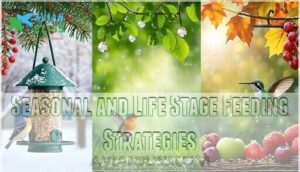
Your bird’s nutritional needs shift with the seasons and change as they age. Just like you wouldn’t eat the same meals year-round or feed a toddler the same diet as a teenager, birds need adjustments based on weather, breeding cycles, and life stage.
Here’s how to tailor your feeding approach throughout the year and across your bird’s lifetime.
Spring and Summer Diet Adjustments
When warm weather arrives, your bird’s body kicks into high gear—molting old feathers, raising chicks, and burning through energy faster than you might expect. Breeding season nutrition demands extra protein and calcium sources—think cooked eggs, leafy greens, and cuttlebone.
Fresh fruits and vegetables provide essential hydration while supporting molting. Consider offering live insects like mealworms, especially as insect decline affects wild food availability.
Fall and Winter Feeding Tips
As temperatures drop and daylight fades, your bird’s metabolism shifts gears—requiring a different nutritional approach to stay warm and healthy through the colder months. Boost cold-weather calories with high-energy foods like winter suet and wild bird seeds rich in fat. Provide unfrozen water sources daily—dehydration happens faster than you’d think.
With habitat loss and seasonal migration affecting natural food availability, offering drought foods helps compensate for scarce resources during fall and winter feeding considerations.
Nutrition for Juvenile, Adult, and Senior Birds
Your bird’s nutritional needs change considerably as they age. Juvenile birds need up to 30% protein daily for proper growth—think chick protein needs during rapid development.
Adults require 12-15% protein in their maintenance diet, with adjustments during molting for a nutrient boost. Senior birds benefit from easily digestible foods and joint-supporting nutrients.
Breeding season nutrition demands extra calcium and protein to support reproduction and chick-rearing across all life stages.
Adjusting Diet for Climate and Breeding
Shifting weather patterns and breeding cycles push your bird’s body into overdrive, demanding targeted dietary changes to keep up. During spring and summer diet adjustments, boost protein during breeding season and add calcium-rich foods for egg production.
Fall and winter feeding considerations mean offering high-energy options and ensuring water source availability despite freezing temperatures.
Climate change impact creates unpredictable challenges—stock drought food options and provide extra hydration when heat strikes, while molting energy boost support remains essential year-round.
Supporting Bird Health and Monitoring
Even with the perfect diet, your bird’s health depends on more than what’s in the bowl. You need to watch for warning signs, maintain proper hydration, and work with your avian vet to catch problems early.
Here’s what to monitor and when to take action.
Importance of Clean, Fresh Water
Water isn’t just a dietary extra—it’s the single most critical nutrient your bird needs every day to survive. Without adequate hydration, your bird’s organs can’t function properly, and water contamination risks pose serious health threats.
Water isn’t just important—it’s the single most critical nutrient your bird needs to survive each day
Here’s how to keep your bird properly hydrated:
- Change water twice daily to prevent bacterial growth and maintain water quality
- Use clean, shallow dishes that allow easy access while preventing drowning hazards
- Monitor water intake patterns since sudden changes can signal illness
Water source safety matters—tap water is generally fine, but if you wouldn’t drink it, don’t offer it to your bird.
Recognizing Signs of Nutritional Deficiencies
Your bird’s appearance and behavior tell you everything about their nutritional health—if you know what to watch for. Over 70% of birds with vitamin A or protein deficiencies show poor feather coloration, while dry, flaky skin affects roughly 60% of malnourished birds. Here’s what to monitor:
| Body System | Warning Signs |
|---|---|
| Feather Abnormalities | Dull color, broken shafts, abnormal molting, white plaques near mouth |
| Skin Disorders & Beak Problems | Flaky skin, scaly feet, overgrown or brittle beak, dermatitis |
| Behavioral Signs | Lethargy, feather picking (48% increase with deficiencies), coordination issues |
| Reproductive Issues | Egg binding, reduced egg production (up to 40% decline), weak chicks |
| Metabolic Indicators | Dark green stools, weight loss (42-60% prevalence), fatty liver disease |
Nutritional deficiencies don’t happen overnight. Chronic malnutrition creates cascading health problems—from vitamin deficiencies triggering bird illness to complete metabolic breakdown if left unchecked.
Transitioning to a Healthier Diet
Switching your bird’s diet isn’t like flipping a switch—it’s a gradual process that requires patience, strategy, and a willingness to outwit some surprisingly stubborn eating habits. Start by mixing small amounts of the new avian diet with familiar foods, gradually increasing the ratio over 2-4 weeks.
Place fresh foods next to favorite perches and eat similar foods yourself—birds often copy what they see.
Monitor weight weekly during dietary conversion to catch any concerning behavioral changes early.
Role of Veterinary Check-Ups in Nutrition
Your avian veterinarian isn’t just there for emergencies—they’re your partner in catching nutritional problems before they become life-threatening. Regular check-ups provide expert guidance on individual nutrition while monitoring your bird’s health through early detection methods.
Schedule preventative care visits to:
- Assess dietary adequacy and adjust feeding plans
- Detect deficiencies before symptoms appear
- Review weight trends and body condition
- Discuss species-specific nutritional needs
- Answer questions about avian health concerns
Frequently Asked Questions (FAQs)
How often should I change my birds food?
Daily food changes prevent bacterial growth and spoilage, while water needs changing twice daily to avoid contamination. Remove uneaten fresh foods within two hours to maintain peak freshness.
Pellets can stay longer, but monitor for moisture and discard anything questionable to support your bird’s health.
Can birds eat sprouted seeds safely?
Yes, sprouted seeds are safe and nutritious for birds when prepared correctly. Proper rinsing prevents seed contamination and mold growth.
Sprouting benefits include enhanced vitamins, digestibility, and protein. Supply fresh water during sprouting, and consider species sensitivities when introducing this healthy bird diet addition.
What temperature should bird food be served?
Room temperature works best—think Goldilocks, not hot or cold extremes. Serve food around 65–75°F to maintain food palatability factors and support a healthy bird diet.
Cold foods from the fridge can upset digestion, while warming bird food slightly improves aroma and appeal for avian health.
How much food should I offer daily?
Most birds need about 5–2 tablespoons of pellets per 100 grams of body weight daily, plus fresh produce. Portion sizes prevent overfeeding risks and obesity while meeting caloric needs.
Species variations matter—parakeets need less than macaws. A balanced daily feeding plan meets nutritional needs by life stage and weight management, reducing waste.
Conclusion
Here’s the irony: after decades of advice telling you to fill your bird’s dish and walk away, the real work begins when you start paying attention. Implementing these bird feeding nutrition tips means accepting that convenience doesn’t equal care—that pellets beat seeds, fresh vegetables matter more than another toy, and your veterinarian knows more than online forums.
Your bird won’t thank you with words, but watch its feathers shine and energy soar. That’s the language of proper nutrition speaking louder than any squawk ever could.
- https://www.petmd.com/bird/nutrition/evr_bd_feeding-birds-101
- https://www.aspca.org/pet-care/small-pet-care/bird-care
- https://www.aav.org/page/basicbirdcare
- https://birdreel.com/blogs/news/diet-and-nutrition-in-wild-birds-a-scientific-perspective
- https://todaysveterinarynurse.com/nutrition/avian-nutrition/