This site is supported by our readers. We may earn a commission, at no cost to you, if you purchase through links.
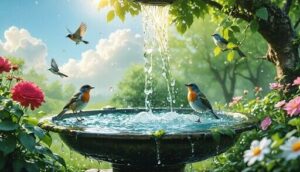 A thin green film appears in your bird bath almost overnight, transforming yesterday’s clear water into murky soup. Algae spores drift invisibly through the air, landing in that shallow basin where sunlight and nutrients create the perfect breeding ground. Within 24 to 48 hours during warm weather, these microscopic organisms multiply exponentially, turning your backyard watering hole into an uninviting green mess.
The challenge isn’t just aesthetic—birds avoid contaminated water, and thick algae growth can harbor harmful bacteria that threaten their health. Understanding what triggers this rapid bloom gives you the upper hand in keeping your bird bath clean.
Strategic placement, regular maintenance, and simple natural solutions can prevent algae from ever gaining a foothold, ensuring fresh water that attracts more feathered visitors to your yard.
Table Of Contents
Key Takeaways
- Algae thrives in bird baths when sunlight, warm temperatures above 77°F, and organic waste from bird droppings create nutrient-rich conditions that allow microscopic organisms to multiply exponentially within 24 to 48 hours.
- Strategic placement in partial shade combined with water circulation systems like fountains or solar pumps disrupts stagnant conditions and reduces algae growth by up to 90% while keeping water temperatures lower.
- Natural cleaning solutions including white vinegar, hydrogen peroxide, lemon juice, and pre-1982 copper pennies effectively control algae without toxic chemicals that could harm visiting birds.
- Regular maintenance routines—changing water every 2-3 days during warm months, daily scrubbing with safe cleaning agents, and immediate removal of organic debris—prevent algae establishment while protecting bird health and attracting more species to your yard.
Why Algae Grows in Bird Baths
Understanding why algae thrives in bird baths helps you prevent it before it becomes a problem. Several environmental factors work together to create ideal conditions for rapid algae growth.
Let’s examine the key contributors that turn clean water green.
Factors That Promote Algae Growth
Algae growth in your bird bath depends on several environmental triggers working together. Sunlight intensity drives photosynthesis, allowing algae to double every 24 to 48 hours during summer months. Water temperature above 77°F accelerates algae reproduction.
Nutrient buildup from bird droppings and fallen leaves raises nitrogen and phosphorus levels, feeding algae development. Water hardness and bath material also matter—hard tap water supplies more minerals for algae than rainwater.
Higher bird load increases organic waste, creating an ideal algae growth environment within days. Regular maintenance is key to preventing the spread of disease, including checking for safe water levels to verify a healthy environment for birds.
Role of Sunlight and Temperature
Think of sunlight hitting your bird bath like fuel on a fire—the more it gets, the faster algae spreads. Direct sunlight drives photosynthesis, letting algae multiply rapidly while heating the water. Water temperature above 77°F triggers algae bloom within 24 hours.
You’ll notice thermal regulation becomes difficult without sunlight filters or water circulation. Shade controls both temperature and light exposure, cutting algae growth markedly.
Impact of Bird Droppings and Debris
While shade helps, the very visitors you’re trying to attract—the birds themselves—inadvertently fuel the algae they bathe in. Bird droppings deliver nitrogen and phosphorus directly into the water, creating a nutrient-rich environment where algae thrive. Debris like feathers, seeds, and dust compounds the problem:
Birds inadvertently create the algae problem they bathe in, as their droppings and debris deliver nutrients that fuel growth
- Dropping management requires daily water checks during peak bathing hours
- Organic cleanup prevents nutrient accumulation before algae establish colonies
- Debris removal within 24 hours stops decomposition that feeds growth
- Waste reduction through frequent changes denies algae their food source
Clean water circulation systems help, but removing these organic materials remains your first defense against algae growth.
How Water Stagnation Fuels Algae
Even when you remove droppings and debris promptly, standing water creates the perfect breeding ground where algae spores settle, multiply, and spread into visible colonies within 48 hours.
Stagnant conditions prevent oxygen from reaching deeper water layers, allowing nutrient buildup to fuel algae proliferation unchecked.
Water circulation disrupts this cycle by introducing oxygen levels that inhibit algae formation, making movement essential for algae prevention in any effective maintenance routine.
Choosing The Best Bird Bath Location

Where you place your bird bath matters more than you might think. The right location discourages algae while keeping birds safe and happy.
Let’s look at the key factors that’ll help you choose the perfect spot.
Benefits of Partial Shade
Positioning your bird bath where sunlight filters through leaves rather than blazes down unobstructed can cut algae growth by more than half. Dappled sunlight keeps water cooler throughout the day, creating conditions where algae struggle to thrive.
A shaded area blocks the intense heat that accelerates photosynthesis, giving you cleaner water with less effort. Partial shade also protects visiting birds from overheating while they bathe.
Water Depth and Bird Bath Design
Basin Shapes and water depth directly impact both bird safety and algae control. A shallow design measuring 1 to 2 inches accommodates most songbirds while limiting stagnant pockets where algae colonize. Consider these design elements:
- Gradual sloping sides allow birds to enter and exit without slipping
- Rough-textured bath materials provide secure footing during bathing
- Wide, shallow bowls attract diverse species simultaneously
- Adding stones creates depth control in deeper basins
- Multiple depth zones let large and small birds share the same bird bath design
Proper birdbath depth and design reduces drowning risk while discouraging algae establishment. For ideal results, understanding bird bath needs is essential for creating an effective bird bath.
Accessibility and Placement Tips
Where you place your bird bath matters just as much as keeping it clean—birds won’t visit a spot that feels unsafe or difficult to reach. Position your bird bath near protective cover like shrubs, allowing quick escape routes from predators.
A shaded area within 10 to 15 feet of vegetation provides security without trapping birds. Verify the bird bath location offers clear sightlines so birds can detect approaching threats while maintaining comfortable water depth and accessibility features.
Seasonal Adjustments for Optimal Placement
As seasons shift, so should your bird bath—what works perfectly in summer’s heat can turn into an algae factory or frozen block when autumn and winter arrive.
During summer months, move your bath to shaded areas to lower water temperature and slow algae growth.
In winter months, relocate it to sunlit spots that prevent freezing while adding wind protection.
This seasonal rotation balances climate considerations, ensuring fresh water year-round through smart shade management and sunlight filtering.
Proven Algae Prevention Strategies
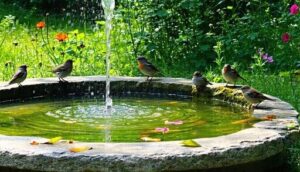
Preventing algae doesn’t have to feel like a losing battle. The right strategies address the root causes we’ve covered, turning your bird bath into a place where clean water flows freely.
Let’s walk through four practical approaches that work together to keep algae at bay.
Water Circulation Systems and Fountains
You can break the cycle of algae blooms by installing a fountain or water agitator that keeps your bird bath water in constant motion. Moving water disrupts the stagnant conditions algae need to thrive, reducing proliferation by up to 90%.
Solar-powered pumps offer an energy-efficient solution, circulating 50–100 gallons per hour without specialized plumbing. These circulation systems also attract more bird species while minimizing mosquito larvae development and bacterial growth.
Frequency of Water Changes
Regular water changes act like hitting the reset button on algae growth—you’re removing spores before they can establish colonies that turn your bird bath green. Stagnation control methods depend on changing water frequently to maintain water quality:
- Every 2-3 days during warm months prevents algae bloom prevention
- Daily changes in extreme heat (above 85°F)
- Every 4-5 days in cooler seasons
- After heavy bird activity when droppings accumulate
- Between regular cleaning routines to maintain fresh water benefits
This simple algae prevention strategy works alongside water circulation systems for best results.
Managing Organic Debris and Nutrient Sources
Leaves, feathers, twigs, and droppings—these organic materials don’t just clutter your bird bath; they’re feeding algae the exact nutrients it needs to thrive. Daily debris removal disrupts nutrient cycling before algae can exploit it.
You’re maintaining eco balance through organic control—skim floating material immediately, remove settled debris, and rinse the basin to restore water quality. This natural solution keeps nutrient levels low, starving algae without water filtration systems.
Monitoring and Adjusting Water Temperature
Warm water acts like a greenhouse for algae—once temperatures climb above 75°F, you’re watching growth rates double or even triple in just hours. Temperature monitoring reveals seasonal changes that demand action—move your bath to shaded locations during summer heat, refresh water twice daily when evaporation concentrates nutrients, and use water circulation to cool the basin naturally, protecting water quality through consistent algae prevention.
Natural and Safe Algae Control Methods
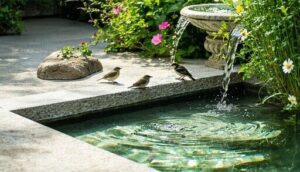
You don’t need harsh chemicals to keep your bird bath algae-free. Several natural solutions work effectively while keeping the water safe for your feathered visitors.
Here’s what you can use to control algae without putting birds at risk.
Vinegar and Apple Cider Vinegar Solutions
Vinegar isn’t just for salads—it’s one of your best allies in the fight against bird bath algae. White vinegar and apple cider vinegar both work well for algae prevention, though ACV’s higher pH can offer slightly better effectiveness.
Use a vinegar dilution ratio of 1:1 with water for cleaning, then rinse thoroughly to avoid vinegar residue risks that might deter birds. This natural solution keeps your bird bath clean without harmful chemicals.
Using Lemon Juice, Hydrogen Peroxide, and Grapefruit Seed Extract
Beyond vinegar, you’ve got three more natural algae fighters that pack surprising power: lemon juice, hydrogen peroxide, and grapefruit seed extract.
Lemon juice benefits include citric acid that disrupts algae growth while naturally sanitizing surfaces.
Hydrogen peroxide uses involve adding 1-2 tablespoons per gallon to oxidize algae on contact—it’s a powerful natural algaecide.
Grapefruit seed effects offer antimicrobial properties; just a few drops maintain water quality between cleanings.
These organic cleaning methods provide effective algae prevention without harming your feathered visitors.
Copper Coins and Their Effectiveness
Copper pennies—specifically pre-1982 coins containing 95% copper—slowly release copper ions that disrupt algae cell membranes and photosynthesis. This ion leaching process creates algae suppression within a few days, though copper toxicity risks remain if you overdo coin placement or skip water changes.
You’ll find copper coins work best when paired with regular bird bath maintenance and manual scrubbing, since copper won’t remove debris on its own. Place one or two copper pennies in clean water, monitor clarity weekly, and refresh regularly for safe algae prevention.
Avoiding Harmful Chemicals and Algaecides
Many commercial algaecides marketed for pond or aquarium use contain copper sulfate or quaternary ammonium compounds that can poison birds with just a few sips, making careful product selection a matter of life and death for your feathered visitors.
Instead, you’ll want to stick with natural cleaning solutions like vinegar, hydrogen peroxide, or lemon juice—safe alternatives that tackle algae without putting birds at risk. These eco-friendly algae prevention strategies protect wildlife while keeping your bird bath crystal clear.
Essential Bird Bath Cleaning and Maintenance Tips
Keeping your bird bath clean doesn’t have to be complicated, but it does require consistent attention. A regular maintenance routine prevents algae from taking hold and ensures birds have access to safe, fresh water.
Here’s what you need to know about proper cleaning practices and how they support the health of your backyard visitors.
Regular Scrubbing and Rinsing Techniques
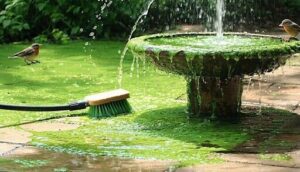
A stiff brush and some elbow grease might sound old-fashioned, but they’re your most reliable tools for breaking algae’s grip on your bird bath.
Here’s how to optimize your scrubbing efforts for effective algae removal:
- Apply hot, soapy water to loosen biofilm before you start scrubbing
- Work the brush in circular motions across all surfaces, including rim edges
- Focus on textured areas where algae cling stubbornly to porous materials
- Rinse thoroughly with clean water to flush away detached spores and cleaning solutions
This hands-on approach ensures your clean bird baths stay inviting.
Cleaning Frequency and Seasonal Routines
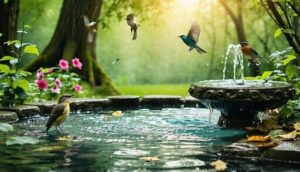
Your bird bath won’t stay clean on the same schedule year-round—birds bring different levels of activity and mess depending on the season.
During spring and summer, daily cleaning becomes essential as breeding activity peaks and heat accelerates algae growth. In fall and winter, you can stretch routine scrubbing to every three to four days when cooler seasonal conditions slow algae scheduling naturally.
Adjust your water change frequency based on what you observe.
Safe Cleaning Agents for Birds
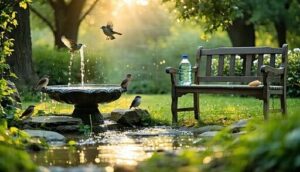
When choosing what to clean your bird bath with, the wrong product can turn a helpful routine into an unexpected hazard for the very birds you’re trying to protect. Stick with bird-friendly natural cleaning solutions that won’t leave toxic residues behind.
Safe, effective cleaning agents include:
- White vinegar or apple cider vinegar – Dilute 1:1 with water for powerful, bird-safe algae removal
- Hydrogen peroxide – Use 3% solution to oxidize algae without harming feathered visitors
- Hot water and stiff brush – Simple scrubbing removes most buildup without chemicals
- Lemon juice – Natural citric acid creates an inhospitable environment for algae
- Eco products labeled bird-safe – Verify any commercial algae removers are non-toxic before use
Materials That Simplify Maintenance
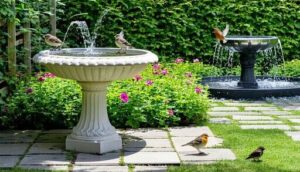
The material your bird bath is made from can either make cleanup a breeze or turn it into a weekly battle you’ll dread. Glazed ceramic and stainless steel surfaces resist algae buildup and wipe clean with minimal scrubbing.
Metal surfaces with smooth glazed finishes don’t harbor spores in tiny crevices like porous concrete does.
Choose durable designs in easy-clean materials—glazed ceramic bird baths or metal bird bath fountains simplify your maintenance routine considerably.
How Clean Water Benefits Bird Health
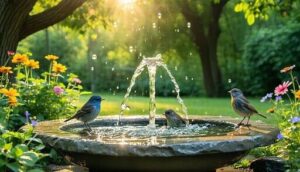
Clean water stands as your first line of defense in protecting bird health. Once you’ve selected the right materials, your consistent maintenance routine delivers these critical benefits:
- Proper hydration during hot weather keeps birds energized and regulates their body temperature effectively.
- Excellent feather health through regular grooming maintains insulation and waterproofing essential for survival.
- Disease prevention by eliminating algae and bacteria that cause infections and digestive problems.
- Increased bird diversity as more species visit clean, safe water sources in your yard.
Quality water transforms your bird bath from a potential hazard into an essential resource.
Frequently Asked Questions (FAQs)
What are the best bird bath materials for durability?
Glazed ceramic and metal bird baths offer easy cleaning and resist staining better than concrete or terracotta.
Glass materials also work well but need careful management, while recycled plastics provide lightweight durability at lower cost.
How do I winterize my bird bath properly?
Before spring arrives, winterizing prevents frozen water and ice damage that could undermine your algae prevention efforts. Use heated bird baths or de-icers for cold weather water circulation.
Remove seasonal covers regularly to monitor ice formation, ensuring winter care maintains fresh water for visiting birds.
Can I add plants around my bird bath?
Yes, you can add plants around your bird bath. Select native species that provide natural shade and attract bird-friendly insects. Avoid planting too close, which increases organic debris and promotes algae growth in your water source.
What depth is safest for small songbirds?
Shallow water is the name of the game. You want one to two inches of water depth for small songbirds, with a gently sloped design that lets them wade in gradually.
This safe depth prevents drowning while offering secure edge grip and promoting bird health by discouraging algae.
How do I attract specific bird species?
Different species prefer specific bird seed types, feeder designs, and water features that match their feeding behavior.
Creating a bird habitat with native plants provides natural food sources while supporting bird health and attracting birds to your sanctuary.
Conclusion
Watch a single drop of fresh water disturb that green film, and you’ll see the power of consistent action. The battle against algae isn’t won through complicated interventions—it hinges on understanding light, movement, and timing.
Your bird bath algae prevention tips transform into daily habits: changing water, positioning thoughtfully, and choosing circulation over stagnation. Birds return when they sense safety in clarity.
That sparkling basin becomes more than decoration—it’s a lifeline where feathered visitors drink without hesitation, knowing you’ve created conditions that favor their health over microscopic invaders.
- https://habitat.earthclinic.com/birds/prevent-algae-fountain-birdbath.html
- https://www.lsuagcenter.com/articles/page1695236961280
- https://www.farmanddairy.com/top-stories/how-to-clean-a-birdbath-and-keep-it-clean/774241.html
- https://miller-mfg.com/blogs/blog/ensuring-safe-and-inviting-bird-baths-in-your-garden
- https://www.sciencedirect.com/science/article/pii/S1470160X21005562