This site is supported by our readers. We may earn a commission, at no cost to you, if you purchase through links.
 A bird’s feathers tell you more about its health than any single symptom. When plumage loses its sheen, develops stress bars, or starts falling out in patches, you’re seeing physical evidence of problems that might range from zinc deficiency to parasitic infection.
Your bird can’t explain what’s wrong, but its feathers broadcast distress signals if you know what to look for.
Understanding how nutrition, environment, and stress affect feather quality gives you the tools to catch health issues early—often before your bird shows other signs of illness.
Table Of Contents
Key Takeaways
- Feathers function as diagnostic tools that reveal underlying health problems—from nutritional deficiencies to parasitic infections—often before other symptoms appear, making regular visual inspection essential for early intervention.
- Poor feather quality stems from interconnected causes including inadequate nutrition (protein, vitamins, minerals), environmental stressors (humidity, toxins, noise), parasites, and behavioral issues like anxiety-driven plucking, requiring you to address root causes rather than just symptoms.
- Maintaining healthy plumage demands a multi-pronged approach: species-appropriate diets rich in amino acids and fatty acids, regular bathing opportunities, environmental enrichment to prevent boredom, and humidity levels between 40-60% to support feather structure.
- Recovery from feather damage requires treating underlying illness through veterinary diagnostics, redirecting destructive behaviors with enrichment strategies, and supporting natural molting cycles with increased protein and calcium—though permanent stress bars can’t be reversed, only replaced through new growth.
Key Functions of Bird Feathers
Feathers aren’t just there to make your bird look gorgeous—they’re essential survival tools that keep everything running smoothly. From powering flight to staying warm on chilly nights, these extraordinary structures do far more than you might think. Let’s look at the key ways feathers help your bird thrive every single day.
Flight and Aerodynamics
When you watch a bird slice through the air with barely a flap, you’re witnessing one of nature’s most efficient engines—and it all comes down to how feathers shape and control airflow. Primary flight feathers act like propeller blades, generating lift and thrust with each wing movement, while their interlocking structure minimizes air resistance.
This feather architecture allows birds to adapt their flight patterns instantly, whether they’re gliding on thermals or performing tight turns that would make any wind tunnel engineer jealous.
Insulation and Temperature Control
Beyond powering flight, those same feathers work overtime as your bird’s personal climate control system—trapping warm air close to the skin when it’s cold and releasing heat when temperatures climb. This thermal regulation depends on feather density and structure—think of it like adjusting a thermostat:
- Fluffing up creates air pockets between feathers for maximum heat conservation during cold snaps
- Sleek positioning releases trapped warmth when your bird needs to cool down
- Layered insulation mechanisms with downy underlayers provide cold resistance while outer feathers shield from wind
Healthy feather growth directly impacts these insulation mechanisms, making feather health essential for your bird’s survival.
Weatherproofing and Protection
Your bird’s feathers aren’t just keeping her warm—they’re also her built-in raincoat and armor against the elements. Feather structure creates natural rain resistance through specialized feather coating oils that birds spread during preening. These overlapping layers offer wind protection and sun shielding while maintaining cold insulation.
Healthy feathers and weatherproofing go hand-in-hand—damaged feather structure compromises your bird’s defenses, making bird feather care and maintenance essential for peak avian health.
Communication and Display
Feathers do more than protect—they’re also your bird’s way of saying ‘look at me’ to the world around her. Vibrant feather structure and function create visual signals during courtship displays, where males show off iridescent plumes to attract mates.
Feather preening maintains these communication tools, keeping colors vivid for social learning within flocks. Healthy feathers for display combine with vocalizations and bird behavior to create a complete language—damaged feathers can leave your bird struggling to express herself socially.
Feather Anatomy and Types
Understanding feather anatomy helps you spot problems early and care for your bird more effectively. Feathers aren’t just pretty—they’re complex structures with specific jobs to do.
Let’s break down the main types and what makes each one unique.
Feather Structure Explained

Think of a feather like a suspension bridge—every cable, beam, and rivet working together to create something that’s both strong enough to support weight and flexible enough to bend with the wind. At the heart of feather anatomy, you’ve got a central shaft called the rachis. Branching off are barbs, which lock together with tiny hooks called barbules—that’s what gives feathers their smooth surface.
A feather works like a suspension bridge—barbs lock together with tiny hooks called barbules to create a smooth, flexible surface strong enough for flight
During feather development, each one grows from feather follicles, nourished by blood vessels until fully formed. Understanding this feather structure helps you spot problems early and support healthy feather growth.
Primary Vs. Secondary Feathers

When you watch a bird soar through the sky, you’re really watching two teams of feathers work in perfect harmony—primaries doing the heavy lifting of propulsion and steering, while secondaries create the lift that keeps everything airborne.
Primaries attach to the wing’s "hand" bones, giving birds their forward thrust and aerodynamic performance. Secondaries connect closer to the body, forming that essential curved surface that generates lift. Together, this wing structure and feather morphology create the flight dynamics birds need to master the air.
Contour, Down, and Filoplume Feathers
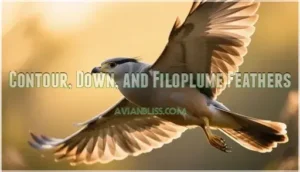
Your bird’s plumage isn’t just one kind of feather doing everything—it’s actually a specialized layered system where contour feathers create the sleek outer shell, down feathers trap warmth close to the skin, and filoplumes act as tiny sensors that help your bird know exactly where each feather sits.
Think of it like this:
- Contour feathers shape your bird’s body and wing feathers, giving that smooth aerodynamic profile essential for flight mechanics
- Down feathers sit underneath, trapping air pockets that keep your bird cozy—feather development starts here during chick stages
- Filoplumes work as pressure sensors, monitoring feather structure and position for precise flight adjustments
Understanding avian plumage helps you spot feather health issues early and provide better feather care.
Causes of Feather Loss in Birds
Feather loss can sneak up on you, and it’s not always easy to tell what’s causing it. Sometimes it’s normal, like during molting season, but other times it signals something needs your attention.
Let’s walk through the most common culprits so you can spot what’s going on with your bird.
Nutritional Deficiencies
Poor bird nutrition is like building a house with missing materials—things fall apart quickly. Vitamin deficits, mineral imbalance, and protein malnutrition directly weaken feather structure, causing them to break, fade, or grow abnormally. Fatty acid deficiency leaves plumage dull and brittle, while caloric insufficiency forces your bird’s body to prioritize survival over feather care and maintenance.
Avian nutrition and diet fundamentally shape avian health and wellness—without proper bird nutrition, even healthy birds can’t maintain their stunning coats. A balanced diet is vital for preventing avian malnutrition issues that can lead to poor feather health.
Parasites and Infections
Feather mites, lice, and fungal diseases are invisible saboteurs that damage plumage from the outside in. Ectoparasite control matters because heavy infestations cause frayed barbs, missing vanes, and compromised flight efficiency—feather mite prevalence hits 90% in some tropical communities.
Viral infections like avian influenza and avian poxvirus attack growing feather epithelium directly, causing necrosis within days. Bacterial infections and fungal pathogens like Aspergillus thrive in stressed birds, while parasite ecology shows that humid environments and colony living increase risk substantially.
Understanding bird lice prevalence is essential for effective ectoparasite management and maintaining avian feather health.
Behavioral Feather Plucking
Self-destructive Feather Plucking often starts as a mental health crisis rather than a medical issue—separation anxiety alone increases plucking odds by 81%. Understanding Feather Plucking Causes helps you tackle Behavioral problems in birds before they become permanent:
- Chronic boredom and insufficient Environmental Enrichment Strategies trigger repetitive Feather Destructive Behavior that worsens over months
- Bird Stress Management failures allow anxiety to manifest as Parrot Behavior and Psychology disorders, especially in cockatoos (30.6% prevalence)
- Plucking Prevention Methods and Avian Behavioral Therapy work best early—established Bird Behavior patterns resist reversal
Environmental Stressors
Beyond the visible behaviors like plucking, your bird’s surroundings—cage placement near drafts, constant household noise, poor lighting cycles, or even a new pet—can silently sabotage feather quality just as destructively as any internal anxiety.
Air pollution from aerosols or cooking fumes compromises avian health, while poor water quality introduces toxins that dull plumage.
Even subtle stress from noise pollution or habitat destruction outside your window affects bird health and wellness, triggering feather loss you might mistake for normal molting.
Molting Vs. Abnormal Loss
Once you’ve ruled out the toxic environment, the next puzzle is figuring out whether those bare patches are part of your bird’s natural rhythm or a red flag waving for help. Healthy bird molting follows predictable patterns—symmetrical feather shedding, gradual replacement over weeks, and your bird acting like its usual self. Abnormal feather loss screams trouble through asymmetry, bald spots, and feather destructive behavior paired with listlessness.
Normal molting cycles include:
- Symmetrical feather regrowth on both wings simultaneously
- Predictable seasonal timing with minimal avian stress
- Intact beak health and normal preening behavior
Diagnosing Feather Health Problems
When your bird’s feathers don’t look quite right, figuring out what’s wrong can feel like solving a puzzle. The good news is that vets have several reliable ways to pinpoint the problem, from simple visual checks to more detailed testing.
Let’s walk through the main diagnostic approaches you’ll encounter.
Visual Signs of Poor Feather Health
When you really look at a bird’s plumage—not just a quick glance, but a genuine once-over—the feathers tell you almost everything you need to know about what’s going on inside. Feather discoloration, brittleness, and feather loss signal trouble. You’ll spot stress bars, frayed edges, or plumage issues like dullness.
Watch for feather plucking patterns, beak problems, and scale disorders too—they’re all connected to your bird’s overall feather health and well-being.
Veterinary Diagnostic Methods
Your vet has tools that go way beyond what you can see. Avian radiology uses specialized imaging techniques to peer inside without surgery—think digital X-rays and ultrasound adapted for bird anatomy.
Diagnostic endoscopy lets us actually look at internal organs through tiny cameras, while molecular testing catches infections early through PCR.
Cytology analysis examines cells under a microscope to spot trouble. These diagnostic tests in avian veterinary care pinpoint exactly what’s causing bird diseases affecting those feathers.
Laboratory and Blood Tests
Blood work tells the story your bird’s feathers can’t—revealing hidden deficiencies, infections, and organ dysfunction that show up long before visible damage. Diagnostic testing for birds uncovers avian pathology like liver disease or chronic infections affecting animal health, giving you answers when feathers look wrong.
Your avian veterinarian runs hematology analysis to check nutrient levels, while toxicology tests catch heavy metal poisoning.
Behavioral Assessments
Watching how your bird moves, preens, and interacts with their environment gives veterinarians clues about stress, boredom, or compulsive habits driving feather damage from the inside out. Behavioral therapy tackles feather destructive behavior through environmental enrichment and stress management, while social learning helps modify behavioral problems—because sometimes animal behavior and feathers tell different stories than bird behavior and psychology alone.
Tips for Maintaining Healthy Feathers
Keeping your bird’s feathers in top shape isn’t rocket science, but it does take some know-how. Think of feather care as a combination of the right fuel, the right environment, and a little TLC.
Here’s what you need to focus on to keep those feathers looking sharp and doing their job.
Optimal Nutrition and Supplements
Think of feathers like your bird’s personal health report card—what goes in the diet directly shows up in the plumage. Focus on balanced diets rich in protein, amino acids, and essential fatty acids for strong feather structure. Avian vitamins like A, D3, and E support growth and coloration, while feather minerals such as calcium, zinc, and selenium strengthen keratin production.
Dietary enrichment through varied fresh foods boosts avian wellness naturally. If you’re using formulated pellets, consider nutrient supplements customized to your species during molting seasons when demand peaks. Bird nutrition and diet directly impact bird grooming behaviors and overall feather health.
Proper Bathing and Grooming
Bathing isn’t just about keeping your bird clean—it’s a cornerstone of feather maintenance that directly affects how well those feathers insulate, repel water, and stay structurally sound. Offer shallow dishes, gentle misting, or supervised showers—whatever matches your bird’s natural preferences promotes feather growth and avian nutrition and diet working together.
Essential bird grooming routines include:
- Beak Cleaning: Remove food debris to prevent overgrowth affecting feather care and maintenance
- Nail Maintenance: Trim carefully to avoid perch-gripping issues that stress feather health
- Wing Trimming: Consult your vet for safe techniques that protect blood feathers
Regular Feather Dusting through bathing and Scale Care during routine checks keep your bird thriving.
Safe and Stimulating Environment
Your bird’s environment shapes feather health just as much as the food in its bowl—a cramped, boring cage can trigger stress-related plucking faster than you’d think. Proper Cage Design with perches at varying heights plus Environmental Enrichment through toys support natural animal behavior across bird species.
Social Interaction matters—avian community connections reduce anxiety, while Natural Lighting regulates preening cycles. Noise Reduction protects sensitive hearing, benefiting both captive birds and wildlife conservation efforts in ecological studies.
| Element | Why It Matters |
|---|---|
| Cage Size | Allows flight practice and wing stretching |
| Toy Rotation | Prevents boredom that leads to feather damage |
| Perch Variety | Natural wood textures support foot health |
| Light Cycles | Regulates molting and hormone balance |
| Quiet Zones | Reduces cortisol spikes affecting plumage |
Preventing and Managing Stress
Stress acts like a slow-burning fuse in birds—one that quietly damages plumage long before you notice the first frayed feather. Stress reduction starts with recognizing triggers—sudden changes, inadequate social interaction, or monotonous routines can all spark feather plucking.
Your approach should include:
- Environmental Enrichment through foraging toys and perch variety
- Calming Techniques like consistent routines and quiet zones
- Behavior modification before considering antianxiety drug therapy
- Behavioral Therapy addressing root causes of stress-related feather loss
Regular Veterinary Check-Ups
Even the most enriched environment and stress-free routine won’t catch early health problems—that’s where twice-yearly vet visits become your bird’s safety net. Your avian veterinarian will perform diagnostic testing for birds, spotting subtle changes in plumage before they escalate into serious bird health and disease issues.
| Exam Component | What It Catches |
|---|---|
| Physical examination | Early feather abnormalities, stress bars |
| Weight monitoring | Nutritional deficiencies affecting plumage |
| Blood work | Liver disease, hormonal imbalances |
| Behavioral assessment | Plucking triggers, anxiety indicators |
Preventive medicine through regular health checks means you’re not just reacting to problems—you’re staying ahead of them.
Supporting Feather Regrowth and Recovery
Once you’ve figured out why your bird’s feathers aren’t thriving, it’s time to focus on getting them back on track. Recovery isn’t just about waiting for new feathers to grow—you’ll need to tackle the root cause, support your bird’s natural cycles, and create conditions that encourage healthy regrowth.
Here’s what you need to know to help your feathered friend bounce back.
Treatment for Underlying Illness
When feathers fall out due to illness, getting the right diagnosis and treatment plan isn’t just helpful—it’s the fastest path to recovery. Your vet might prescribe medical therapy for parasitic infections or internal organ diseases, while nutrition therapy addresses deficiencies head-on.
Sometimes diagnostic testing for birds reveals issues needing surgical intervention, though most avian disease cases respond well to targeted avian medicine that aids natural feather repair and treating feather loss effectively.
Addressing Behavioral Issues
If the illness is under control but your bird is still pulling out feathers, the real challenge often lies in untangling the psychological knots that keep the behavior going. Here’s how you can help:
- Behavioral Therapy: Work with an avian vet to identify triggers for feather plucking
- Environmental Enrichment: Rotate toys, foraging puzzles, and perches to prevent boredom
- Stress Management: Establish consistent routines and quiet spaces for your bird
- Socialization Techniques: Provide adequate interaction without overwhelming your parrot
- Behavior Modification: Reward positive actions to gradually reduce feather picking
Patience matters—breaking the cycle of feather loss takes time.
Special Care During Molting
Molting naturally ramps up your bird’s nutritional needs and stress levels. Boost molting nutrition with extra protein, calcium, and amino acids—feather supplements like cuttlebone or pellets formulated for feather growth work wonders.
Keep the molting environment calm and humid to ease discomfort during bird molting and feather growth. Encourage avian hydration through misting or baths, which softens emerging pin feathers.
Don’t confuse normal feather care with feather plucking and picking—molting birds look scruffier, but that’s just the process unfolding.
Using Enrichment for Recovery
Enrichment isn’t just about keeping your bird entertained—it’s a critical piece of the recovery puzzle that rebuilds confidence and redirects anxious energy away from damaged feathers. Environmental enrichment strategies act as avian therapy, helping birds overcome feather plucking and picking patterns while promoting healthy feather regrowth through positive distraction and mental stimulation.
Introduce foraging toys, puzzle feeders, and safe perches to support behavioral rehabilitation and stress reduction.
Frequently Asked Questions (FAQs)
What vitamins prevent feather color fading?
Think of feather pigments as paint that needs the right ingredients to stay vivid. Vitamin A, biotin, and amino acids like cysteine support color retention and prevent fading in bird feathers, assuring vibrant feathers through proper avian nutrition and vitamin supplements.
How often should birds bathe weekly?
You’ll want to offer fresh water for bathing two to three times weekly, though some species prefer daily opportunities.
Water quality matters—clean, shallow dishes support feather cleaning, beak hygiene, and overall plumage maintenance for peak bird feathers and avian health.
Can supplements reverse stress bar damage?
Unfortunately, no—supplements can’t erase existing stress bars since those marks are permanent records of past nutritional crises locked into the feather shaft.
However, proper nutrient therapy will guarantee your bird’s next feather regrowth cycle produces healthy, unblemished plumage, effectively achieving damage reversal through replacement rather than repair.
What humidity levels support feather health?
Your bird’s feathers thrive in 40-60% humidity. Too dry and they become brittle, while excess moisture invites fungal issues.
Climate management and air quality directly affect feather moisture, supporting healthy feather growth and overall avian hydration throughout feather care routines.
How long does complete feather regrowth take?
Regrowth patterns vary widely—most feathers take four to eight weeks to fully develop, though molting cycles and avian hormones influence the timeline.
Feather growth rate depends on species, nutrition, and the type of feather structure involved in bird molting and feather growth.
Conclusion
When your bird’s plumage loses its luster or thins unevenly, it’s not just cosmetic—it’s a quiet plea for help. By staying alert to these signals and applying solid avian feather health advice, you’ll catch problems before they spiral.
Think of feather care as preventive medicine: the right diet, a clean environment, and stress management keep your bird’s coat vibrant and resilient.
With consistent observation and quick action, you’re not just maintaining feathers—you’re safeguarding your bird’s overall well-being.
- https://pmc.ncbi.nlm.nih.gov/articles/PMC8279392/
- https://www.greencrossvets.com.au/pet-library/articles-of-interest/why-my-pet-bird-is-losing-feathers/
- https://www.zinpro.com/resource-center/blog/what-poultry-nutritional-supplements-support-feather-development-and-egg-production/
- https://avianreport.com/bird-feathers/
- https://www.ivis.org/library/avian-health-and-disease/psittacine-beak-and-feather-disease-an-overview