This site is supported by our readers. We may earn a commission, at no cost to you, if you purchase through links.
 Whether magpies are lucky or unlucky depends on your cultural background and how many you spot.
In Western folklore, one magpie traditionally signals sorrow while two bring joy, following the old rhyme "one for sorrow, two for joy."
However, many Asian cultures view magpies as symbols of good fortune and happiness.
These intelligent birds aren’t actually magical – they’re simply living their lives while we project meaning onto their presence.
The superstitions stem from centuries of human storytelling rather than any real supernatural powers, reflecting your cultural upbringing more than actual fortune-telling abilities of these clever corvids, which are influenced by your personal beliefs about magpie luck.
Table Of Contents
- Key Takeaways
- Are Magpies Lucky or Unlucky?
- The Myth of The Lonely Magpie
- Historical Superstitions Surrounding Magpies
- Meaning Behind Magpie Rhymes and Sayings
- Contrasting Cultural Symbolism of Magpies
- Modern Perceptions of Magpie Luck
- The Intellect and Behavior of Magpies
- Frequently Asked Questions (FAQs)
- Are Magpies good or bad luck?
- Is seeing a magpie a sign of bad luck?
- Why are magpies so unlucky?
- Why is a lonely Magpie a symbol of bad luck?
- Do magpies presage bad luck?
- Is it bad luck to shoot a magpie?
- Is it bad luck to see a magpie?
- Are magpies bad to have around?
- What is the old saying about magpies?
- What does it mean when a magpie visits you?
- Conclusion
Key Takeaways
- Your cultural background determines whether you’ll see magpies as lucky or unlucky – Western folklore links one magpie to sorrow, while Asian cultures view them as symbols of good fortune and happiness.
- The famous "one for sorrow, two for joy" rhyme reflects centuries-old superstitions, not reality – These counting verses predict different outcomes based on how many magpies you spot, but there’s no scientific evidence supporting these beliefs.
- Magpies don’t actually possess supernatural powers to influence your fortune – They’re simply intelligent corvids with problem-solving abilities and complex social behaviors who are living their natural lives.
- Modern science debunks magpie luck myths while revealing their true value – These birds actually benefit ecosystems by controlling pest populations and demonstrate intelligence that rivals great apes, making them fascinating creatures worth appreciating for their real qualities.
Are Magpies Lucky or Unlucky?
You might wonder if spotting a magpie brings fortune or misfortune. The answer isn’t straightforward – magpie superstitions vary dramatically across cultures.
In Western magpie folklore, a lone bird traditionally signals bad luck, while groups suggest good luck magpie encounters. These cultural interpretations stem from ancient beliefs about their mating habits.
Chinese traditions view magpies as joy-bringers, contrasting sharply with European bad luck magpie associations. The famous rhyme "One for sorrow, two for joy" reflects these superstition origins, though rhyme variations exist worldwide.
Modern customs include tipping hats to solitary magpies or offering polite greetings. Scientific evidence doesn’t support magpie bird luck claims either way.
These intelligent corvids simply live their lives, unaware they’re subjects of centuries-old folklore. Their striking plumage contributes to confusion and visual patterns.
Your luck depends more on perspective than magpie folklore.
The Myth of The Lonely Magpie
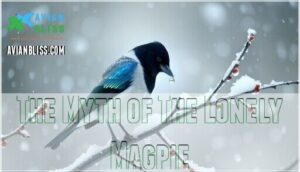
You’ve probably heard that spotting a lone magpie brings bad luck, but there’s more to this lonely magpie myth than meets the eye.
The one magpie meaning stems from their lifelong mating habits – these birds truly mate for life. When you see a solitary magpie, it might’ve lost its partner, creating genuine magpie solitude that people interpret as an omen.
This mate loss can trigger aggression signs in the surviving bird, making it appear more territorial or distressed. The loneliness symbolism runs deep in magpie superstitions, leading people to create imaginary mates through rituals like saluting or greeting the bird.
Here’s what the lonely magpie actually represents:
- Natural grief – The bird may be mourning its deceased partner
- Territorial behavior – Single magpies become more protective of their space
- Human projection – We assign our fears of loneliness to their solitary state
These superstitions reflect our understanding of loss rather than supernatural good luck. They also have distinct vocal communication when threatened.
Historical Superstitions Surrounding Magpies
Throughout history, magpie superstitions have swung dramatically between good luck and bad luck.
**Magpies dance between fortune and misfortune across cultures—proving that luck truly lies in the eye of the beholder.
Ancient Roman Omens actually favored these intelligent birds, viewing them as symbols of wisdom. However, Christian Folklore painted a darker picture, claiming magpies refused to board Noahs Ark and carried devil’s blood.
Early Traditions in Europe linked them to witchcraft and death. By Victorian times, this fear escalated into Victorian Hunting campaigns that nearly wiped them out.
These conflicting beliefs show how cultural context shapes our perception of luck. Some even believed magpies were linked to unpredictable weather changes, associating them with misfortune.
Meaning Behind Magpie Rhymes and Sayings

You’ve heard the famous magpie rhyme, but what’s behind these mysterious verses? The traditional counting song carries deep magpie superstitions dating back centuries.
Each number holds specific magpie meanings that supposedly predict your future.
- One for sorrow – signals impending bad luck or sadness
- Two for joy – promises happiness and good fortune ahead
- Three for a girl – indicates a female birth or feminine energy
- Four for a boy – suggests a male child or masculine influence
- Five for silver – foretells financial gain or precious discoveries
These rhyme variations aren’t just playful verses—they’re cultural artifacts reflecting our ancestors’ beliefs about luck and fate through magpie encounters.
These beliefs are widespread, with English folklore recording the bird as a sign of ill-omen since 1777.
Contrasting Cultural Symbolism of Magpies
Magpie cultural beliefs span the globe like a patchwork quilt of contradictions.
In Eastern Symbolism, you’ll discover that Chinese tradition celebrates magpies as symbols of magpie good fortune and happiness.
These birds represent marital harmony and celestial communication in Ancient Beliefs across Asia.
Western Perceptions tell a different story entirely.
European folklore often links magpies to death omens and underworld spirits.
French traditions view them as reincarnated wicked nuns, while Scandinavian cultures connect them to forest spirits and the goddess Skadi.
Native American traditions add another layer to Global Interpretations.
Many tribes see magpies as intelligent messengers with important Spiritual Significance in their oral storytelling traditions.
This cultural divide reveals how the same bird can symbolize both magpie bad fortune and divine blessing.
Their behavior includes caching food for later, showcasing their resourcefulness.
Your geographic location shapes whether you’d welcome or worry about a magpie encounter.
These magpie superstitions demonstrate how deeply human beliefs intertwine with nature’s creatures across different societies.
Modern Perceptions of Magpie Luck

Today’s world shows shifting beliefs about magpie luck that blend old superstitions with fresh perspectives.
Contemporary superstitions still influence how you might react to spotting these birds, though media portrayals increasingly challenge traditional views.
Modern luck interpretations vary widely:
- Some folks still salute lone magpies automatically
- Others appreciate their problem-solving intelligence
- Urban dwellers see them as adaptable city survivors
- Social media celebrates their complex vocalizations
- Scientists debunk myths about songbird population impacts
Magpie influence on modern culture reflects our evolving relationship with nature and superstition. Their opportunistic omnivorous diet allows them to thrive in varied environments, showcasing their ability to adapt and survive in different settings, which is a key aspect of their complex vocalizations and overall influence on human perception.
The Intellect and Behavior of Magpies

You’ll find magpie intelligence rivals that of great apes in remarkable ways.
Magpies possess minds so sharp they’d outwit most humans in a battle of wits.
These birds demonstrate advanced problem-solving skills through tool use and complex foraging strategies.
Their social behavior involves intricate communication systems and mimicry abilities that showcase cognitive flexibility.
Watch a magpie’s social complexity unfold as they engage in play—essential for their cognitive development.
Their problem solving extends to controlling garden pests, making them beneficial neighbors.
Magpies also exhibit fascinating behaviors, such as mobbing potential predators, showcasing their intelligence.
Perhaps our cognitive biases have unfairly labeled these intelligent creatures as harbingers of misfortune when they’re actually nature’s brainy performers.
Frequently Asked Questions (FAQs)
Are Magpies good or bad luck?
Whether you’ll encounter good or bad luck depends on your cultural background and beliefs.
There’s no scientific evidence that magpies actually influence fortune – they’re just intelligent birds living their lives.
Is seeing a magpie a sign of bad luck?
Like shadows dancing between folklore and fact, spotting a magpie isn’t inherently unlucky.
You’re witnessing centuries of conflicting beliefs—while one magpie traditionally signals sorrow, there’s no scientific evidence supporting this superstition.
Why are magpies so unlucky?
Magpies aren’t actually unlucky – that’s just superstition.
Christian folklore wrongly blamed them for not mourning Jesus’s death and refusing Noah’s ark.
Their intelligence and egg-stealing behavior unfortunately created negative myths over centuries.
Why is a lonely Magpie a symbol of bad luck?
Since 85% of magpie pairs mate for life, you’re likely seeing a bird that’s lost its partner.
This solitary state traditionally symbolizes sorrow and misfortune, making the lone magpie an enduring omen of bad luck.
Do magpies presage bad luck?
No scientific evidence supports magpies bringing bad luck.
You’re experiencing cultural superstition, not reality.
These intelligent birds don’t possess supernatural powers to influence your fortune – they’re simply living their natural lives, free from any ability to affect your fortune.
Is it bad luck to shoot a magpie?
Historically, 90% of Victorian magpie killings stemmed from superstition rather than necessity.
You’re not risking supernatural consequences by shooting one—luck isn’t tied to harming wildlife.
However, you’ll face legal penalties since magpies enjoy protection under wildlife laws.
Is it bad luck to see a magpie?
You’ll encounter mixed beliefs about spotting magpies. While one magpie traditionally signals sorrow, there’s no scientific evidence supporting bad luck. It’s simply superstition rooted in old folklore and cultural stories.
Are magpies bad to have around?
Studies show magpies actually benefit ecosystems by controlling pest populations.
You shouldn’t worry about having them around – they’re intelligent, social birds that pose no real threat to your property or well-being despite old superstitions.
What is the old saying about magpies?
The famous rhyme goes "One for sorrow, two for joy, three for a girl, four for a boy."
You’ll find variations, but this classic version from the 1780s connects magpie sightings to fortune-telling and luck.
What does it mean when a magpie visits you?
When magpies visit, when they appear, when they cross your path—you’re witnessing nature’s complexity, not fortune’s decree.
Their presence carries no mystical meaning beyond natural behavior, as these intelligent birds simply forage, explore territory, and live their lives.
Conclusion
Studies show that over 40% of people still hold superstitions about wildlife encounters, proving these ancient beliefs persist today.
Whether magpies are lucky or unlucky ultimately depends on your cultural background and personal beliefs rather than scientific evidence.
These intelligent corvids don’t possess supernatural powers – they’re simply remarkable birds living their natural lives.
Instead of worrying about fortune, you can appreciate magpies for their problem-solving abilities, complex social behaviors, and impressive intelligence that makes them truly fascinating creatures.
- https://www.facebook.com/LiveQurious/photos/in-ancient-greece-a-lone-magpie-was-a-sign-of-bad-luckthe-ancient-greeks-believe/1058913392915703/
- https://symbolismguide.com/magpie-symbolism/
- https://theculturetrip.com/europe/ireland/articles/11-irish-superstitions-people-still-believe
- https://www.birdfy.com/blogs/blogs/spiritual-meaning-of-magpies-visiting-signs-and-symbolism-in-everyday-life?srsltid=AfmBOopGgGmzA_rs1aq_xBUavGzBHoq7uR2q0tsKwnZWaTlVrPBJxFLI
- https://medium.com/resonates/the-magic-of-the-magpie-7c860c2b6fe