This site is supported by our readers. We may earn a commission, at no cost to you, if you purchase through links.
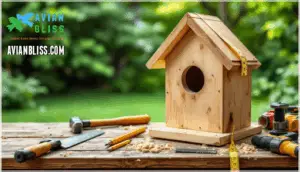 A backyard without a birdhouse is like a stage missing its actors—quiet, still, and waiting for life to arrive. When you build a nesting box, you’re not just hammering together a few planks; you’re setting the scene for bluebirds, wrens, or even curious owls to raise their families right outside your window.
Choosing the right materials and design means your birdhouse nesting box plans can turn an ordinary yard into a thriving habitat, full of song and movement. With a few thoughtful steps, you’ll create a safe haven that aids local wildlife for seasons to come.
Table Of Contents
Key Takeaways
- Using untreated cedar, pine, or cypress and rust-resistant hardware builds a birdhouse that keeps birds safe and comfortable.
- Entry hole size, roof slope, and proper ventilation are crucial for attracting specific bird species and protecting them from predators and harsh weather.
- Adding predator guards, easy-clean features, and mounting birdhouses on poles at the right height increases nest success and makes maintenance simpler.
- Planting native plants, offering feeders and baths, and practicing safe observation help create a welcoming, healthy backyard habitat for birds and local wildlife.
Essential Birdhouse Materials and Tools
Before you start building a birdhouse, it helps to know which materials and tools will work best. The right choices make your project safer for birds and easier for you. Here’s what you’ll want to have on hand.
Best Wood Types for Birdhouses (Cedar, Pine, Cypress)
When you’re picking wood for birdhouses, think durability, cost, and safety. Here’s what matters most:
- Cedar Durability—insulates and lasts, perfect for nesting boxes.
- Pine Cost—budget-friendly, easy to work with.
- Cypress Rot-Resistance—stands up to moisture, ideal for wet climates.
Consider that entrance hole size is also key for attracting specific species. Always use untreated wood to avoid wood toxicity and source sustainably for healthy habitats.
Choosing Safe Fasteners and Hardware
Galvanized screws or stainless steel fasteners offer rust resistance, keeping your birdhouse assembly solid through the seasons. Avoid staples and nails—they loosen over time. Non-toxic adhesives can reinforce joints safely.
For secure mounting, check all hardware twice. Thoughtful choices in birdhouse materials and construction help create a safe nesting environment that aids your birdhouse features and design.
Tools Needed for DIY Birdhouse Plans
With your hardware sorted, you’ll want to gather a few simple tools that make building a sturdy, bird-friendly house much easier. Measuring tools guarantee accuracy, while cutting equipment shapes your wood precisely. Drilling essentials create clean entry holes and ventilation. Safety gear, like gloves and goggles, keeps you protected. Hand tools help with birdhouse assembly, bringing your chosen birdhouse features and design to life.
Selecting Finishes and Treatments for Bird Safety
Before you start assembling your birdhouse, it’s smart to think about which finishes and treatments will keep your feathered visitors safe and comfortable. Stick to untreated wood for the main structure, or use Safe Sealants and Natural Oils if extra protection is needed. Avoid non-toxic stains on nesting surfaces.
Finish alternatives matter—birdhouse material and safety go hand-in-hand for bird health.
Birdhouse Design Features for Healthy Nesting
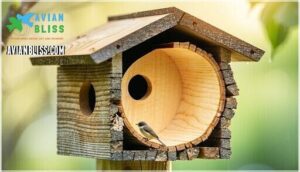
When you’re building a birdhouse, the right design choices make all the difference for nesting success. Each feature you add helps keep birds safe, comfortable, and healthy.
Let’s look at what matters most for a bird-friendly enclosure.
Importance of Sloped Roofs and Ventilation
Think of a birdhouse roof like an umbrella—without a good slope and smart airflow, your feathered guests could end up damp and uncomfortable, no matter how sturdy the walls.
A sloped roof and ventilation offer key benefits:
- Roof Runoff keeps nests dry
- Ventilation Benefits aid Temperature Regulation
- Mold Prevention safeguards Nestling Health
Smart birdhouse design starts here.
Entry Hole Sizes for Different Bird Species
For nesting birds, entry hole sizes are more than a detail—they’re a gatekeeper for Species Preferences and Predator Exclusion. Understanding the importance of entrance hole size is key for attracting specific bird species and protecting them from predators. Place the hole at the right height for maximum Nesting Success and to block Invasive Species.
Here’s a quick reference for birdhouse design and features:
| Bird Species | Entry Hole Size | Hole Height Above Floor |
|---|---|---|
| Bluebird | 1.5" | 6" |
| Chickadee | 1.125" | 6–8" |
| Wren | 1.25" | 1–6" |
| Screech Owl | 3" | 4–15" |
Fledgling Kerfs and Mesh Floors
Kerf placement matters—grooves inside your birdhouse walls help nestlings grip as they climb. Pair that with a mesh floor for proper drainage and added nestling safety.
Good mesh material keeps the habitat dry, boosting fledgling success. It’s a small touch, but these nesting box features make all the difference when young birds are ready to fly.
Predator Guards and Mounting Options
Did you know a proper predator guard can boost nest success by 6.7%? For your birdhouse, choose a metal baffle or mounting collar—these guard types stop raccoons, squirrels, and cats cold.
Mounting heights matter too: about five feet works for chickadees and wrens. Match guard styles and materials to your local predators and bird species for best results.
Easy-Clean Features and Viewing Windows
Cleaning Access makes a world of difference—think hinged doors, removable bottoms, or mesh floors with drainage holes. These birdhouse features help you keep nesting boxes fresh and healthy.
If you’re curious about the birds inside, a small birdhouse viewing window works, but use it sparingly. Window Safety matters; avoid disturbing your bird habitat or exposing nests to predators.
Step-by-Step Birdhouse Nesting Box Plans
Ready to build a birdhouse that fits your yard and local birds? Here’s a look at several nesting box plans you can try yourself. Each option offers something unique for your feathered visitors.
Simple Single-Chamber Birdhouse Tutorial
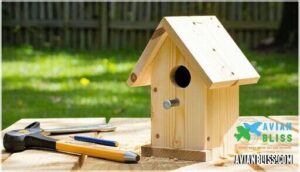
Building a basic birdhouse is a lot like setting the table for new guests—it’s all about creating a safe, welcoming spot where birds feel right at home. Start with cutting wood to size, follow assembly steps for sturdy construction, and focus on roof installation and hole placement. Finishing touches matter, so choose birdhouse materials and construction that truly support nesting boxes.
- Imagine the thrill of seeing fledglings peek out for the first time.
- Feel pride knowing your nest boxes help local bird populations thrive.
- Savor quiet mornings watching nature settle into your handiwork.
Building a Bluebird House (with Nature’s Way Example)
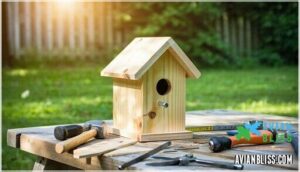
Start by choosing cedar for your Bluebird House Plans, following the Natures Way Design for durability and insulation. Cut panels to size, then assemble with galvanized screws.
Make sure the entry hole size is 1.5 inches—ideal for bluebirds. Add a predator prevention guard, and use pole mounting techniques for safe nest boxes that truly welcome these bright birds.
Crafting an Owl Nesting Box (JCS Wildlife Model)
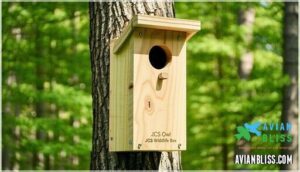
For an owl nesting box, stick with untreated wood material—cedar works well. The JCS model’s owl box dimensions usually measure 24 inches tall, with a 3-inch entrance hole size for screech owls.
Add a predator baffle design and a predator guard for safety. Mounting height should be 10-15 feet, ensuring a secure nesting habitat.
Safe Hanging and Pole-Mounted Birdhouse Plans
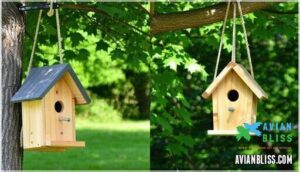
Whether you’re setting up a home for small songbirds or larger species like owls, how you hang or mount your birdhouse can make all the difference in keeping your feathered visitors safe.
For secure mounting and safe nesting options for birds, consider:
- Pole selection with predator baffles
- Durable hanging hardware for location safety
- Elevation and placement for nesting birds’ protection
Budget-Friendly DIY Birdhouse Ideas
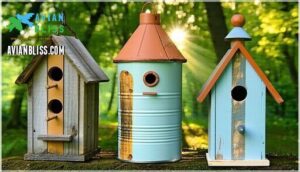
Start with recycled materials or scrap wood—old fence boards or leftover lumber are perfect for budget-friendly birdhouse options. Free plans online make DIY birdhouses easy, and upcycling ideas like tin cans or simple designs cut cost without sacrificing safety.
Birdhouse kits offer cost savings and convenience, letting you focus on creating a welcoming space for backyard birds.
Placement and Maintenance for Bird Safety
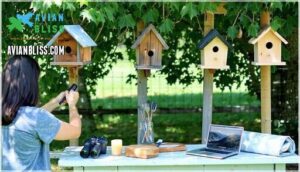
Choosing the right spot and keeping your birdhouse in good shape makes a big difference for the birds. You’ll want to think about safety, cleaning, and how to watch the birds responsibly.
Here’s what to think about as you set up and care for your nesting boxes.
Best Locations for Mounting Birdhouses
Ever wondered how birdhouse placement shapes your backyard’s success? Aim for mounting options that keep birdhouses off trees, using pole mounts for predator avoidance. Prioritize sunlight exposure and face entrances away from prevailing wind direction.
Spacing guidelines matter—bluebird houses need 300 feet apart. Match habitat types, from open fields to shaded garden edges, for vibrant outdoor garden decor and thriving nests.
Predator-Proofing Your Birdhouse
From raccoons to snakes, keeping crafty predators out of your birdhouse means thinking a few steps ahead when you design and install it.
Try these practical steps:
- Add a predator guard to block access.
- Use sturdy material choices like cedar.
- Mount birdhouses on poles for safety.
- Choose locations with good visibility—location awareness reduces threats to birds.
Cleaning and Seasonal Maintenance Tips
Aim for birdhouse cleaning and maintenance at least once after nesting birds fledge—usually late summer is best for nest removal and checking for damage. Repairing damage and preventing pests helps protect your bird habitat from predators.
Consistent cleaning frequency keeps the space safe, and seasonal timing makes certain you won’t disturb active nests. Your care aids healthy, thriving backyard wildlife.
Monitoring Bird Activity Safely (Avian Flu Precautions)
Keeping an eye on your backyard birds is a bit like tending a quiet garden—gentle observation goes a long way, especially when avian flu is a concern.
Practice Safe Observation by keeping your distance, reporting illness in wild birds, and following Local Guidelines.
Good Hygiene Practices, like washing hands after bird watching, help prevent bird illnesses and support ongoing wildlife protection.
Enhancing Your Yard for Birds and Wildlife
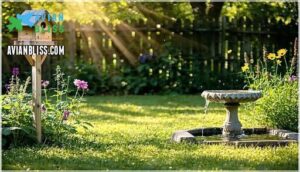
Creating a welcoming space for birds goes beyond building a sturdy nesting box. You can add a few thoughtful touches to make your yard even more inviting and safe.
Here are some practical ways to support birds and other wildlife right outside your door.
Complementary Bird Feeders and Baths
Think of bird feeders and baths as the welcome mat and watering hole that can turn your backyard into a bustling community for feathered visitors. Try these essentials for wild bird care:
- Explore Feeder Types for diversity.
- Rotate Seed Variety for nutrition.
- Use bird bath options for Water Sources.
- Practice Bath Maintenance weekly.
- Follow Placement Tips for safety.
Growing Native Plants for Bird Habitats
Imagine your garden as a living buffet—native plant selection isn’t just about looks, it’s the backbone of nesting habitat and insect food sources. Native plants drive biodiversity benefits, supporting both birds and butterflies. With gardening trends shifting, weaving conservation impact into wildlife habitats is simple.
Here’s a starter table for your habitat planning:
| Native Plants | Insect Food Sources | Biodiversity Benefits |
|---|---|---|
| Oak | Caterpillars | Specialist birds |
| Wildflowers | Bees/Butterflies | Pollinator increase |
| Dogwood | Moth larvae | Bird diversity |
Supporting Bird Conservation at Home
Building on your efforts to grow native plants, there are plenty of simple ways to make your backyard a safe haven for birds and help conservation from right where you live.
Try joining citizen science projects, using sustainable practices, and connecting with neighbors to share tips.
Every birdhouse or bird-friendly garden you create adds to local wildlife conservation and aids nesting habitat.
Decorative and Functional Birdhouse Styles
You’ll find birdhouse styles and types to suit every taste, from classic wooden birdhouses to playful themed birdhouses and nest boxes. Unique designs and creative color palettes let you express your personality while supporting wildlife.
Material choices matter, too—decorative birdhouses can be functional, blending beauty and practicality for birds and backyard enthusiasts alike. DIY decor further enhances this blend of aesthetics and utility.
Top Brands and Product Recommendations
For instance, Glitzhome options blend artistic flair with sturdy construction, while Nature’s Way and Woodlink features focus on eco-friendly, functional Cedar Birdhouse designs. Zaer Ltd’s unique shapes and Good Directions’ copper-roofed Bird Houses add visual interest.
Reading Birdhouse reviews and ratings for each Brand helps you select reliable Wooden Birdhouses that suit your yard’s needs.
Frequently Asked Questions (FAQs)
How do I attract specific bird species?
To attract specific bird species, focus on habitat considerations and food preferences. Use birdhouses with specific hole sizes, place them wisely, and offer nesting materials.
For bluebirds or wrens, thoughtful birdhouse placement truly encourages nesting birds in your yard.
What is the ideal height for mounting?
Mounting nest boxes at 5 to 7 feet above ground balances Predator Avoidance, Species Needs, and Accessibility Concerns.
Pole-mounted or free-standing birdhouse stakes offer yard installation flexibility, while regional factors may influence ideal height for specific birds.
Can birdhouses help control garden pests?
You’ll notice Pest Control Birds like chickadees and wrens help manage garden pests. By offering habitat with well-placed birdhouses, nesting birds act as Natural Insecticides, supporting Organic Gardening and maintaining Ecosystem Balance in your garden.
How do weather conditions affect nesting success?
Sudden storms, soaring temperatures, and shifting climate patterns can disrupt nesting timing and damage nests.
Weather-resistant materials, proper ventilation, and a sloped roof help shield birds from rainfall impact and temperature extremes, and promote healthy air flow.
Are there legal restrictions on installing birdhouses?
Legal restrictions can vary, so check Local Ordinances and HOA Rules before installing a birdhouse.
The Migratory Bird Act and Building Permits may apply, especially for bird sanctuary projects or avian habitat conservation involving protected species and wildlife conservation.
Conclusion
Just imagine the moment a bluebird lands on your new birdhouse, inspecting the nesting box plans you brought to life. That small act could spark a chain of wildlife discoveries in your yard, each season revealing new visitors and stories.
The tools and steps you’ve learned aren’t just for building—they’re for welcoming nature home. With every board and screw, you’re setting the stage for connection, curiosity, and a living tapestry right outside your door.
- https://www.birds.cornell.edu/home/
- https://www.audubon.org/people/chad-witko
- https://www.lowes.com/pd/National-Audubon-Society-National-Audubon-Aqua-and-Blue-Plastic-Hopper-Bird-Feeder/1001134644?cm_mmc=shp-_-c-_-prd-_-sol-_-ggl-_-LIA_SOL_109_Patio-_-1001134644-_-local-_-0-_-0&ds_rl=1286981&gclid=CjwKCAiArY2fBhB9EiwAWqHK6qaxHTDBrRs2t-iIw15Z1Opimcb8gQdJNy78J60QTwB6k2Kn-9My5hoCrrgQAvD_BwE&gclsrc=aw.ds
- https://www.acehardware.com/departments/outdoor-living/bird-and-wildlife-supplies/bird-houses/8914855
- https://www.bestnest.com/bestnest/audubon.asp?SRC=audubon&utm_source=audubon&utm_medium=email&utm_campaign=aud3-24