This site is supported by our readers. We may earn a commission, at no cost to you, if you purchase through links.
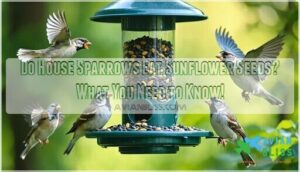 Yes, house sparrows absolutely love sunflower seeds and they’re like candy to these little birds.
You’ll often see them cracking open both black oil and striped varieties with their strong beaks, accessing the protein-packed kernels inside.
These seeds provide essential fats and energy that sparrows need, especially during cold months and breeding season.
They’re not picky eaters, but sunflower seeds rank among their favorites alongside millet and cracked corn.
If you’re filling your bird feeder, expect house sparrows to show up in flocks when you offer sunflower seeds, understanding their specific preferences can help you create the perfect backyard bird buffet.
Table Of Contents
- Key Takeaways
- Do House Sparrows Eat Sunflower Seeds?
- House Sparrows’ Seed Preferences
- Impact of Sunflower Seeds on House Sparrows
- Alternatives to Sunflower Seeds for House Sparrows
- Common Birds Averse to Sunflower Seeds
- Optimal Bird Seed Mix for Attracting House Sparrows
- Frequently Asked Questions (FAQs)
- Do sparrows eat sunflower seeds?
- What do house sparrows eat?
- Do house sparrows eat seeds?
- Do house sparrows eat millet?
- Do house sparrows eat corn?
- Do sparrows eat husks?
- What seeds do house sparrows not like?
- Are sunflower seeds too big for sparrows?
- What is the best seed for house sparrows?
- How do you keep sparrows from eating bird seeds?
- Conclusion
Key Takeaways
- You’ll find house sparrows absolutely love sunflower seeds, especially black oil varieties with thin shells that crack easily, making these seeds like candy to them due to their high protein and fat content.
- You can expect flocks of house sparrows to show up at your feeder when you offer sunflower seeds, as these provide essential energy they need during cold months and breeding season.
- You’ll get the best results attracting house sparrows with a seed mix containing 50% millet, 30% sunflower seeds, and 20% cracked corn, adjusting fat content higher during winter months.
- You should know that consistently feeding sunflower seeds can increase local sparrow populations significantly, potentially leading to competition with other bird species for resources and nesting sites.
Do House Sparrows Eat Sunflower Seeds?
If you’ve spotted those chunky little house sparrows hopping around your yard, you’re probably wondering what they’re after. The answer is simple: yes, house sparrows absolutely devour sunflower seeds! These seeds are like candy to them.
House sparrows have smart sparrow feeding habits – they know good nutrition when they see it. Sunflower seeds birds crave provide essential fats and proteins that keep them energized. The seed nutritional value is exactly what their bodies need for daily activities and survival.
Birds like house sparrows benefit from the high protein content found in sunflower seeds. Different sunflower seed types matter too. Shell hardness impact affects how easily they can crack them open. Black oil varieties with thin shells? Perfect!
Birds eat seeds strategically, and sparrows have developed clever seed storage strategies to guarantee they’ve got food when they need it most.
House Sparrows’ Seed Preferences
Preference shapes everything regarding house sparrow diet. These adaptable birds eat seeds with remarkable enthusiasm, showing clear favorites based on seed nutritional value and accessibility. Sunflower seeds rank high on their menu because they’re packed with essential fats and proteins that fuel their busy lifestyles.
Shell hardness preference plays a vital role in their choices. You’ll notice sparrows gravitate toward black oil sunflower seeds over striped varieties because the thinner shells crack easier. Sparrow food preferences also include millet, safflower, and various agricultural grains, with seeds comprising 60-70% of their annual caloric intake.
Their seed storage strategies are surprisingly sophisticated. Sparrows cache food in hidden spots around your yard, ensuring they’ve got backup supplies when feeders run empty. Winter diet composition shifts dramatically, with 41% coming from wild seeds and 59% from grains found near livestock areas. They also enjoy white proso millet, a highly favored seed.
Understanding these preferences helps with seed feeder management, whether you’re trying to attract or discourage these opportunistic visitors.
Impact of Sunflower Seeds on House Sparrows
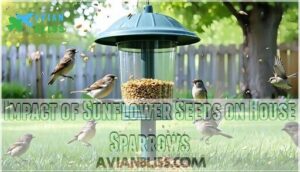
Sunflower seeds create ripple effects that go far beyond your backyard feeder. When you consistently offer these nutrient-packed treats, you’re basically rolling out the red carpet for house sparrows in your neighborhood.
Toss out sunflower seeds and watch your yard transform into sparrow headquarters overnight.
The nutritional benefits are undeniable – black oil sunflower seeds, hulled sunflower seeds, and even striped sunflower seeds provide the high-fat, high-protein fuel these birds crave. This rich house sparrow diet supports their energy needs and reproductive success, but it comes with strings attached.
Population effects become noticeable quickly. Your generous feeding can lead to behavioral changes as sparrows flock to reliable food sources, often in larger numbers than you’d expect.
This seed dependence creates a domino effect – more sparrows mean increased competition for resources and potential displacement of native species.
The ecosystem impacts extend beyond your property lines. When sparrow populations boom in response to abundant sunflower seeds, they can overwhelm local environments and outcompete other birds for nesting sites and food sources. Many species, including the White-breasted Nuthatch, also enjoy these seeds.
Alternatives to Sunflower Seeds for House Sparrows
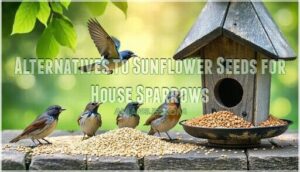
While sunflower seeds keep house sparrows well-fed, you don’t have to stick with just one option.
Mixing up your bird seed offerings creates a more balanced diet and keeps your backyard visitors interested.
Here are three top alternatives to explore:
- Safflower Seeds – These white, heart-shaped seeds pack similar nutrition to sunflower seeds but with a slightly bitter taste that deters squirrels while still appealing to sparrows.
- Millet Varieties – White proso millet works perfectly for ground-feeding house sparrows. These tiny, round seeds are easy to crack and digest.
- Nyjer Seed – Though small, these oil-rich seeds provide excellent nutrition. You’ll need a special feeder with tiny holes, but sparrows will work for this nutritious treat.
Suet options and fruit offerings can supplement these seeds for sparrows during different seasons. Organic bird food offers a safer, pesticide-free diet.
Cracked corn makes another solid choice, though use it sparingly since it attracts larger birds too. Creating variety in your sparrow seed types keeps feeding stations lively and nutritionally complete.
Common Birds Averse to Sunflower Seeds
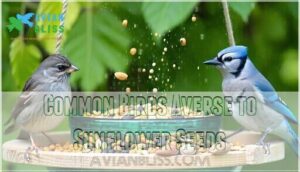
Not every bird at your feeder will show enthusiasm for sunflower seeds, despite their popularity among house sparrows. Understanding Seed Aversion Reasons helps explain these Bird Feeder Preferences.
Tufted titmice and blue jays demonstrate limited interest in sunflower varieties, preferring nuts and insects instead. Grackles typically bypass bird seed offerings for protein-rich alternatives. Seed Size Matters substantially—smaller-beaked birds struggle with larger sunflower shells, creating natural barriers to consumption.
Alternative Bird Diets reveal fascinating patterns. Warblers focus on insects during breeding season, while hummingbirds exclusively seek nectar and tiny arthropods. Swallows and swifts, being aerial hunters, won’t visit your bird feeding stations at all.
Regional Bird Variations also influence preferences. Some finch species prefer thistle over sunflower options, depending on local habitat conditions. Even woodpeckers, occasional sunflower consumers, primarily hunt bark-dwelling insects.
These preferences create opportunities for targeted bird food strategies that attract diverse species beyond the persistent house sparrow. For healthier birds, consider organic, chemical-free ingredients.
Optimal Bird Seed Mix for Attracting House Sparrows
When creating the perfect bird seed mixes for attracting house sparrows, you’ll want to focus on their favorite foods.
These feisty birds can’t resist a blend that includes black oil sunflower seeds, white proso millet, and cracked corn. This combination offers excellent nutritional balance while remaining cost effective for regular feeding house sparrows.
To verify the seeds remain nutritious, prioritize fresh options.
Your seed mix ratios should prioritize:
- 50% millet as the base ingredient
- 30% sunflower seeds for high energy content
- 20% cracked corn for variety and appeal
Make seasonal adjustments by increasing fat content during winter months using preferred seed types.
Frequently Asked Questions (FAQs)
Do sparrows eat sunflower seeds?
Yes, sparrows absolutely love sunflower seeds!
You’ll find they prefer black oil varieties with thin shells that crack easily.
These nutrient-packed seeds provide essential fats and energy that keep sparrows healthy and active.
What do house sparrows eat?
House sparrows are opportunistic eaters with diverse appetites.
You’ll find them munching on seeds, grains, insects, worms, and fruits.
They’re not picky—these adaptable birds will even snack on human food scraps when available, making them opportunistic in their search for food.
Do house sparrows eat seeds?
Seeds make up 60-70% of a sparrow’s yearly diet. You’ll find them munching on sunflower seeds, millet, and wild grass seeds. They’re basically feathered seed-cracking machines with impressive appetites.
Do house sparrows eat millet?
Sparrows will eat millet, though it’s not their top choice.
You’ll find they prefer it when mixed with other seeds.
White proso millet works better than red varieties for attracting these adaptable birds to your feeder, with white proso millet being a key factor.
Do house sparrows eat corn?
Cracked corn is like candy to house sparrows – they’ll gobble it up enthusiastically.
You’ll often find them scratching around feeders for fallen kernels, making corn a reliable way to attract these adaptable birds to your yard, with reliable methods ensuring their return.
Do sparrows eat husks?
No, sparrows don’t eat sunflower seed husks.
They crack open the shells to reach the nutritious kernels inside, then discard the empty husks.
You’ll often find these discarded shells scattered beneath your bird feeders.
What seeds do house sparrows not like?
Here’s the rub: you’ll find house sparrows turn their beaks up at Nyjer seeds, safflower seeds, and suet.
They can’t crack tough striped sunflower seeds easily either, making these excellent choices for deterring them.
Are sunflower seeds too big for sparrows?
No, sunflower seeds aren’t too big for house sparrows.
These adaptable birds can easily crack open both striped and black oil varieties.
They’ll handle hulled seeds even better since there’s no shell to break through.
What is the best seed for house sparrows?
Black oil sunflower seeds are your best bet for house sparrows.
They’ve got thin shells that’re easy to crack, plus they’re packed with the fats and oils sparrows crave for energy.
How do you keep sparrows from eating bird seeds?
Imagine this scenario: you’re watching your favorite songbirds get bullied away from their breakfast buffet.
Switch to safflower seeds, use tube feeders with short perches, clean spilled seeds regularly, and offer nyjer thistle instead.
Conclusion
Ironically, while many bird enthusiasts worry about house sparrows dominating feeders, you’ll actually benefit from understanding their sunflower seed obsession.
These adaptable birds do house sparrows eat sunflower seeds with enthusiasm, making them reliable backyard visitors.
You can create thriving bird communities by offering quality sunflower seeds alongside millet and cracked corn.
Remember, feeding sparrows doesn’t just support them—it provides you with endless entertainment watching their social feeding behaviors throughout the seasons.