This site is supported by our readers. We may earn a commission, at no cost to you, if you purchase through links.
 A parrot nibbles each feather with the quiet focus of a jeweler examining gold. Every barb and vane must line up perfectly if that bird hopes to slice effortlessly through the air or stay warm on a frosty night. Preening isn’t just maintenance—it’s essential self-care, woven into survival and health.
When feathers shine and fit flush, a bird’s flight grows sharper and its message to future mates rings loud and clear. Understanding feather preening best practices means giving your bird what nature demands: comfort, protection, and the chance to look and feel its best every single day.
Table Of Contents
- Key Takeaways
- Why Feather Preening Matters for Birds
- Recognizing Healthy Versus Problem Preening
- Key Factors Affecting Feather Health
- How Birds Learn to Preen
- Best Practices for Encouraging Preening
- Preventing and Managing Over-Preening
- Supporting Indoor Birds’ Feather Care
- Training and Conditioning for Healthy Preening
- Monitoring Avian Health and Well-Being
- Frequently Asked Questions (FAQs)
- Conclusion
Key Takeaways
- Preening keeps your bird’s feathers flight-ready, insulated, and free from damage, making it vital for both health and survival.
- A balanced diet, proper humidity, and regular exercise all have a major impact on the condition and structure of your bird’s plumage.
- Early experiences, social learning, and environmental enrichment help birds develop strong self-grooming habits that last a lifetime.
- Watch for signs of over-preening or feather loss, since they often point to medical, nutritional, or behavioral issues that need fast attention.
Why Feather Preening Matters for Birds
Preening isn’t just about looking good—it’s how birds stay flight-ready and healthy. Your bird’s feathers work like a complex system that needs daily care to function properly.
Let’s look at why this grooming behavior matters so much for your feathered companion’s well-being.
Feather Structure and Function
Each feather on your bird’s body is a marvel of natural engineering—thousands of interlocking barbs and barbules work together like a zipper to create a smooth, functional surface. The central shaft, or quill, anchors each feather while flexible vanes branch outward.
Different feather types serve distinct purposes: contour feathers shape your bird’s silhouette, down feathers trap warmth, and flight feathers enable movement.
The preening gland secretes oils that maintain feather quality and flexibility, guaranteeing proper structure and coloration throughout feather growth cycles.
Benefits for Flight and Insulation
When your bird preens properly, those interlocking feather structures don’t just look good—they create an aerodynamic surface that makes flight possible and form an insulating layer that regulates body temperature in any weather. Proper feather alignment reduces air resistance during flight, conserving energy with each wingbeat.
The oil from your bird’s preening gland provides waterproofing while maintaining feather flexibility, helping thermal regulation work efficiently whether your bird faces cold drafts or warm conditions.
Role in Attracting Mates
Beyond keeping your bird airborne and comfortable, well-groomed feathers play a surprising role in the social world of birds—they’re actually part of how birds signal health and vitality to potential mates. Think of plumage quality as your bird’s calling card in mate selection:
A bird’s well-groomed feathers announce its health and vitality to potential mates, turning plumage into a powerful social signal
- Vibrant feather color indicates good nutrition and disease resistance
- Sleek, aligned plumage demonstrates thorough preening skills and self-care
- Display behavior showcases feather condition during courtship rituals
- Glossy, oil-coated feathers signal access to proper resources
- Symmetrical wing and tail feathers reveal developmental health
Well-maintained parrot plumage directly influences mate attraction through these preening signals.
Recognizing Healthy Versus Problem Preening
Understanding the difference between normal grooming and problem behaviors is essential for keeping your bird healthy. Birds naturally spend several hours each day preening, but when this behavior becomes excessive or destructive, it signals an underlying issue.
Let’s look at what healthy preening looks like, the warning signs of over-preening, and the feather disorders you should watch for.
Normal Preening Behaviors
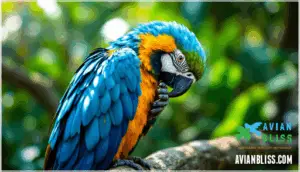
You mightn’t think twice about your bird running its beak through its feathers, but this daily ritual tells you everything about whether your companion is thriving or struggling.
Healthy preening happens several times a day—your bird carefully zips feather barbs together, spreads oil from the preening gland, and smooths everything into place. Species variations exist, but most birds spend 10-15% of their day on feather maintenance.
| Preening Behavior | What You’ll See | Why It Matters |
|---|---|---|
| Oil distribution | Bird touches tail base, then runs beak along feathers | Waterproofs and conditions each feather |
| Feather alignment | Systematic grooming from head to tail | Maintains flight capability and insulation |
| Social preening | Paired birds groom each other’s heads | Strengthens bonds and reaches difficult spots |
Watch for this natural rhythm in your bird’s grooming habits—it’s the foundation of good health.
Signs of Over-preening or Plucking
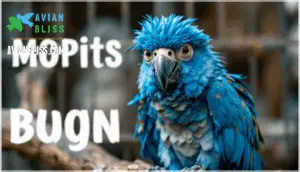
If your bird’s feathers look ragged or patchy, something deeper than grooming has gone wrong. Over-preening creates feather damage—frayed edges, broken shafts, or bald patches on the chest and wings.
Watch for behavioral changes like constant preening in one spot, skin irritation with redness, or bleeding spots where feathers once grew. Feather plucking differs from normal preening—it’s repetitive and destructive.
Causes of over-preening range from medical issues to stress, making early detection essential for your bird’s well-being.
Feather Disorders to Watch For
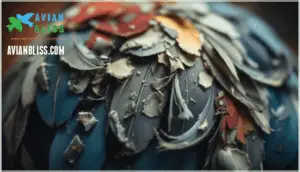
Several feather disorders threaten your bird’s health beyond simple over-preening. Viral infections like PBFD cause progressive feather loss and dystrophy, with cockatoos especially vulnerable. The global prevalence of PBFDV in parrots is estimated to be 16.30%.
Feather mites peak seasonally—74% of birds showed infestations in May. Structural issues from poor diet or low humidity create fault bars and brittle shafts.
Feather damaging behaviour affects 11.7% of companion parrots, reaching 30.6% in cockatoos. Contact an avian veterinarian if you notice symmetrical feather loss, thickened shafts, or abnormal coloration.
Key Factors Affecting Feather Health

Feather health doesn’t happen by accident. Your bird’s diet, environment, and daily activity all play critical roles in keeping those feathers strong, flexible, and ready for flight.
Let’s look at three key factors that can make or break your bird’s plumage quality.
Importance of Diet and Nutrition
Think of feathers as your bird’s wardrobe—they only look good when properly fed. Protein deficiency affects feather quality dramatically; young chicks fed diets below 16% crude protein develop poor plumage within two weeks. Vitamin deficiencies, especially vitamin A and D, cause pigment loss and abnormal feather condition.
Fatty acids like omega-6 improve feather flexibility and flight efficiency. Mineral intake matters too—zinc deficiency creates frayed, spoon-shaped feathers.
Feather analysis reveals nutritional gaps, helping you adjust your avian diet for peak feather health. Supplements with sulphur containing amino acids promote rapid feather growth.
Environmental Humidity and Dryness
Indoor air can suck the moisture right out of your bird’s feathers, turning them dry and brittle faster than you’d think. Indoor heating and air purifiers strip humidity from your avian environment, leaving feathers compromised. Regular misting restores feather hydration and encourages natural preening.
Here’s how to maintain proper humidity levels:
- Mist your bird daily, especially during winter months
- Use humidifiers near bird cages to offset indoor dryness
- Monitor humidity between 40-60% for ideal feather health
- Provide shallow bathing dishes for self-directed water access
Misting benefits extend beyond hydration—it triggers your bird’s instinct to preen and align feathers properly.
Impact of Exercise and Activity
Exercise isn’t just about keeping your bird fit—it directly shapes how well those feathers stay healthy and ready for flight. Active birds naturally preen more after foraging activities or flight sessions, aligning and conditioning their plumage. Environmental enrichment that promotes bird exercise triggers instinctive grooming behaviors, keeping feathers in condition.
Regular activity aids both flight feather health and overall grooming habits.
| Activity Type | Preening Benefit |
|---|---|
| Flight training | Stimulates feather alignment post-exercise |
| Foraging puzzles | Encourages mental stimulation and grooming |
| Climbing exercises | Promotes natural preening behaviors |
| Social play | Triggers mutual preening and bonding |
How Birds Learn to Preen
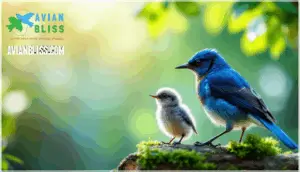
Preening isn’t just instinct—it’s a learned skill that young birds develop through observation and practice. Like many natural behaviors, the quality of a bird’s grooming depends heavily on early experiences and social guidance.
Let’s explore how birds acquire this essential skill from hatchling to adulthood.
Parental Care and Teaching
In the wild, parrot parents don’t just feed their chicks—they pass down grooming skills through careful preening sessions that shape a young bird’s entire approach to feather care. This preening inheritance happens through social learning, where the role of parent birds becomes mentor and teacher.
You’ll see clutch preening among siblings, with older birds guiding younger ones. Hand-fed birds often miss this critical early parrot education, which explains why they sometimes struggle with feather maintenance later in life.
Fledgling Development Stages
As young birds move through their fledgling weeks, they’re practicing preening on themselves—working out which feathers need attention and how much pressure to apply with their beaks. During the fledgling stage, early parrot education accelerates through trial and error:
- Pre-fledgling birds observe parental influence but haven’t yet mastered technique
- Early preening attempts often look clumsy as feather development progresses
- Independent grooming improves through social learning and repeated practice
This fledgling development lays the groundwork for lifelong feather care.
Role of Socialization and Mentors
Once a bird figures out the basics on their own, watching and interacting with other birds—whether clutch mates or an experienced adult—sharpens their preening skills even further. Peer learning and clutchmate influence create natural teaching moments. Social preening strengthens bonds while demonstrating technique. Parental guidance provides correction when young birds miss spots or apply too much pressure.
The importance of socialization can’t be overstated—isolated birds often struggle with feather care throughout their lives.
| Socialization Factor | Mentorship Benefits | Impact on Preening |
|---|---|---|
| Clutchmate interaction | Demonstrates technique | Faster skill mastery |
| Adult supervision | Corrects mistakes | Prevents bad habits |
| Flock dynamics | Reinforces routine | Daily practice |
| Avian socialization | Models healthy behavior | Reduces feather damage |
| Pair bonding | Encourages mutual grooming | Maintains motivation |
Best Practices for Encouraging Preening
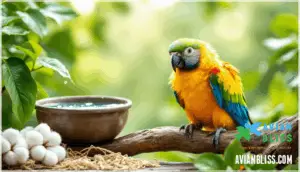
Encouraging your bird to preen regularly doesn’t have to be complicated. A few simple changes to their daily routine can make a big difference in feather health and grooming behavior.
Here are three practical ways to support natural preening habits.
Misting Techniques and Humidifiers
When dry indoor air starts taking a toll on your bird’s feathers, misting becomes one of your most powerful tools for encouraging healthy preening habits. Misting techniques for parrots work best when you understand the basics:
- Misting frequency: Two to three times weekly prevents dry skin and feathers
- Water quality: Use room-temperature, chlorine-free water for bird comfort
- Spray distance: Hold the bottle 12-18 inches away from your bird
- Humidifier types: Cool-mist models maintain 40-60% humidity without overheating
- Timing: Mist during morning hours to allow feathers to dry completely before evening
Proper misting and preening go hand in hand—your bird will naturally groom those dampened feathers, distributing oils and realigning barbs.
Bathing and Water Access
Beyond spraying, your bird also needs regular opportunities to bathe—whether that means splashing in a shallow dish, standing under a gentle shower stream, or dunking into a birdbath.
Bath frequency varies by species, but most parrots benefit from two to three bathing sessions weekly. Water temperature should feel lukewarm to your wrist, and water quality matters—use filtered water when possible.
Bathing safety means supervising your bird and guaranteeing proper drying time afterward.
Safe Environmental Enrichment
While your bird bathes and preens, you can support those instincts even further by creating an environment that keeps their mind active and their feathers in top shape. Environmental enrichment for parrots means offering safe toys free from toxic materials, proper space allocation in the bird enclosure, and opportunities for social interaction.
Cognitive stimulation through foraging activities keeps your bird engaged while supporting healthy preening habits in any avian climate.
Preventing and Managing Over-Preening
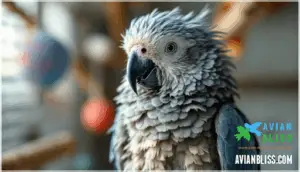
Over-preening can stem from medical issues, behavioral stress, or social dynamics within your bird’s environment. Addressing this problem requires you to identify the root cause and take targeted action.
Let’s explore the main factors that contribute to over-preening and how you can manage them effectively.
Identifying Medical Causes
Over-preening often points to hidden health issues that need attention. You might not see the problem right away, but medical factors affecting preening can include infections, nutritional deficiencies, or even systemic inflammation.
Common culprits include:
- Feather mites and parasites that cause irritation and discomfort
- Fungal infections affecting skin conditions and feather follicles
- Liver disease leading to hormonal behavior changes and metabolic imbalances
Nutritional deficiencies weaken feather structure, making birds more prone to plucking and damage.
Behavioral Interventions and Foraging
Keeping your bird’s mind busy turns out to be one of the most effective ways to curb over-preening. Foraging toys and enrichment strategies tap into natural avian behavior, giving your bird something constructive to do instead of picking at feathers. Redirected behavior helps address behavioral issues at their root.
Environmental control matters too—rotating toys, hiding treats, and offering varied textures reduce boredom. When parrot behavior shifts toward exploration rather than obsessive grooming, you’ll notice healthier feathers and a happier bird.
Compatibility Among Cage Mates
Pairing the wrong birds together is like forcing roommates who clash—stress builds, and feathers pay the price. Aggression triggers and resource competition often spark over-preening.
Space requirements matter—cramped quarters heighten tension. Personality matching through careful introduction protocols reduces conflict.
Monitor socialization and preening interactions closely, making sure avian behavior stays healthy. Proper avian enrichment and compatibility prevent feather damage before it starts.
Supporting Indoor Birds’ Feather Care
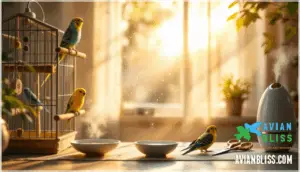
When your bird lives indoors, caring for their feathers takes a little extra thought. From addressing dry air to offering the right light and safe grooming tools, each choice is important.
Here’s what to remember for creating a space that truly promotes feather health.
Managing Dry Indoor Air
Ever notice how your skin feels tight in winter—imagine how the air inside your home affects your bird’s delicate feathers, too. Raising indoor humidity can help with skin health and feather hydration. Try these tips:
- Misting benefits daily
- Use safe humidifier types
- Preventing dry skin and feathers
- Avoid constant air conditioning
- Consider an artificial rain system
Use of Basking Lights and Towel Desensitization
Sometimes a little sunshine and a soft towel are just what your feathered friend needs to turn grooming into a stress-free habit. Use a basking light to create a cozy spot for feather drying—just mind safe temperatures and placement. Gradually introduce a towel—pair it with treats and watch for behavioral cues.
This table offers key tips for gentle, effective avian care:
| Light Placement | Towel Introduction |
|---|---|
| Position lamp above perch | Let bird see/touch towel |
| Avoid overheating | Start brief sessions |
| Encourage preening | Offer treats and praise |
| Monitor for discomfort | Stop if bird panics |
Safe Use of Hair Dryers
After a warm towel and a spot of basking, you might wonder if a hair dryer can help keep your bird’s feathers in top shape, too. Always watch for Heat Damage—set the device to cool or low, keep it a safe distance (at least twelve inches), and monitor Bird Comfort.
Safer alternatives, like air drying, often outperform mechanical drying techniques in avian care.
Training and Conditioning for Healthy Preening
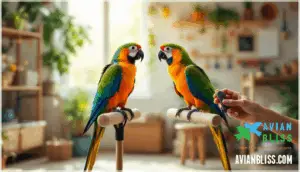
Building good preening habits takes planning and the right setup. To support your bird’s feather care, let’s look at the essentials that make each training session work.
Here’s what to keep in mind as you get started.
Training Stands and Setup
How you set up your bird’s training stand can make all the difference in helping those feathers stay sleek and your feathered friend feel at ease. Choose secure Stand Placement, select safe Perch Materials, and include Toy Integration for enrichment. Good Safety Features and Cleaning Protocols mean every bird training session fosters parrot education, avian grooming, and better bird behavior from the start.
- Stable, non-slip footing for safety
- Natural perches for foot health and comfort
- Rotate toys to encourage exploration and reduce stress
Feeding and Hydration During Sessions
Once your bird is perched and feeling comfortable, don’t forget that a snack and a sip of water are just as important as the right setup for keeping training stress-free.
Having a feeding dish with diet variety and fresh water bolsters your parrot’s Nutritional Needs and Hydration Importance.
Frequent breaks and Water Availability make sure Feeding and Hydration in Training always promotes healthy feather care.
Promoting Self-preening After Activities
Full bellies and a little rest mean it’s the perfect time for your parrot to start tidying up those feathers and settling back into self-care.
Encourage preening behavior by offering gentle misting—misting benefits are real—or a fresh bath.
Training stands, environmental enrichment, and making hydration important all help reinforce how birds learn to preen, promoting self-preening after every session.
Monitoring Avian Health and Well-Being
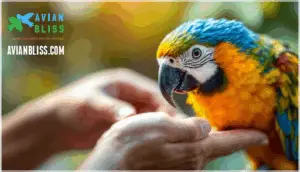
Keeping your bird in top shape starts with a good look at its feathers and skin.
There are a few steps that help you stay on top of any changes. Here’s what you’ll want to keep an eye on.
Regular Feather and Skin Checks
Think of a feather and skin check like a pit stop—it’s a quick pause that keeps your bird running smoothly and safely. Each week, gently look for signs of Early Detection: inspect for mites, Skin Abnormalities, or changes in Feather Quality.
Regular checks support bird preening, reinforce feather care routines, and help maintain healthy, well-kept feathers between full grooming sessions.
When to Consult an Avian Veterinarian
When should you call in a professional for bird health concerns? Sudden feather loss, persistent lethargy signs, and emergency situations—like trouble breathing—warrant an avian veterinarian’s attention right away. Abnormal droppings, feather damage, or over-preening also signal trouble.
Regular routine checkups catch feather disorders in birds early, making it easier to manage avian health before problems become urgent.
Tracking Moulting and Feather Growth
With each change of season, you’ll notice your bird shedding old feathers and growing new ones, like a wardrobe refresh that keeps them ready for life’s ups and downs.
Keep an eye on moulting stages, unique moulting patterns, and the feather shaft. Healthy pin feather preening, steady growth rate, and assorted feather types all signal proper feather maintenance—diet impact matters too.
Watch for abnormal moulting.
Frequently Asked Questions (FAQs)
Can birds preen each other in mixed-species aviaries?
Like dancers finding rhythm together, some birds will preen each other in mixed-species aviaries. However, species compatibility, disease transmission risks, preening hierarchy, and resource competition all shape these grooming habits and the ways Parrot Socialization and Behavior unfold.
How does preening vary among different bird species?
Preening oil composition, beak morphology influence, and habitat preening adaptations shape bird grooming habits. Some avian species excel at social preening, while others rely on species-specific techniques—demonstrating that preening varies remarkably among bird species and environments.
Does preening behavior change with seasonal molting?
During seasonal molts, preening frequency shifts dramatically as birds manage itchy skin and loose feathers.
Expect more focused preening, attention to new feather sheaths, and sometimes signs of molt-related discomfort—key moments for attentive seasonal feather care.
Are certain toys or perches unsafe during preening?
Imagine if telegraphs came with toxic wires—some toys or perches do just that.
Avoid sharp edges, entanglement hazards, abrasive surfaces, and chemical exposure. These risks can damage feathers or even hurt birds during preening, impacting avian wellbeing.
What signs indicate stress-related changes in preening?
A sudden spike in preening or switching to feather plucking—with possible self-mutilation—should raise a red flag.
Watch for appetite loss, changes in vocalizations, or repetitive, anxious feather damaging behaviour. These may point to stress or anxiety.
Conclusion
Like a stitch in time, daily attention to feather preening best practices protects your bird’s health for years to come. Your watchful eyes spot early changes; thoughtful routines create comfort and resilience.
From misting to regular feather checks, your actions are the difference between a bird who simply survives and one who truly thrives. When you honor preening as nature intended, you give your companion the wings—quite literally—to navigate a life full of freedom and vitality.
- https://hari.ca/avian-care/misting-preening-education/
- https://www.merckvetmanual.com/bird-owners/disorders-and-diseases-of-birds/skin-and-feather-disorders-of-pet-birds
- https://pmc.ncbi.nlm.nih.gov/articles/PMC12108240/
- https://journals.plos.org/plosone/article?id=10.1371%2Fjournal.pone.0235406
- https://www.midogtest.com/blog/skin-microbiota-quaker-parrot/