This site is supported by our readers. We may earn a commission, at no cost to you, if you purchase through links.
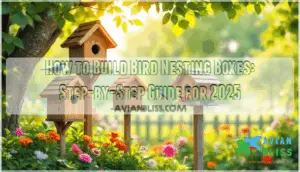 A cavity-nesting bird that can’t find a safe home won’t raise chicks that season—and in areas where old trees are scarce, that simple truth affects dozens of species.
Building a nesting box gives woodpeckers, chickadees, and bluebirds the shelter they need when natural cavities disappear.
You don’t need fancy tools or expert carpentry skills to make a difference. With basic lumber, a drill, and attention to entrance hole size, you can create habitat that sustains local bird populations for years.
The right box, placed thoughtfully and maintained each season, becomes a reliable refuge that transforms your yard into a sanctuary.
Table Of Contents
- Key Takeaways
- Why Build Bird Nesting Boxes?
- Choosing The Best Materials and Design
- How to Build a Bird Nesting Box Step-by-Step
- Placement and Maintenance for Success
- Designing for Different Bird Species
- Frequently Asked Questions (FAQs)
- How do you build a bird nest box?
- How do I design a nest box?
- Can I build my own nest box or bird house?
- What predators commonly target bird nesting boxes?
- Can nesting boxes be painted or decorated?
- How far apart should multiple boxes be?
- What temperatures are unsafe for nesting birds?
- Do birds reuse nests from previous years?
- Conclusion
Key Takeaways
- Building a nesting box with proper entrance hole size, ventilation, and drainage gives cavity-nesting birds like woodpeckers and bluebirds the shelter they need when natural sites disappear, directly supporting declining populations affected by habitat loss.
- Use untreated cedar or cypress wood at least 15-18mm thick with galvanized screws, and apply raw linseed oil only to exterior surfaces—interior chemicals and finishes can harm nesting birds.
- Mount boxes 5-15 feet high with predator guards and clean them annually after nesting season to remove old materials and prevent disease, ensuring the box stays safe and functional year after year.
- Match your design to specific species requirements, since bluebirds need 1.5-inch entrance holes while chickadees prefer 1.125-inch openings, and placement height varies from 3 feet to 30 feet depending on the bird.
Why Build Bird Nesting Boxes?
Building a nesting box isn’t just about carpentry—it’s about giving birds a safe place to call home. When natural nesting sites disappear, these simple structures can make all the difference for local bird populations.
Let’s look at why taking on this project matters for the birds in your backyard and beyond.
Benefits for Local Bird Populations
Putting up a nesting box can make all the difference for birds struggling to find safe places to raise their young. Here’s how your box helps:
- Increases nesting success for cavity-nesting bird species that can’t find natural sites
- Fosters population growth in areas where habitat restoration is needed
- Boosts species diversity by giving different bird species secure spaces to thrive
Your simple act of bird conservation creates ripples through the entire wildlife community.
Supporting Biodiversity in Your Garden
When birds find a home in your garden, they bring along a whole cast of beneficial visitors—from the insects they eat to the seeds they spread—turning your yard into a thriving ecosystem. Nesting boxes encourage native species to settle in, which aids wildlife conservation and eco gardening.
Birdfriendly spaces promote sustainable gardening by attracting urban wildlife that pollinates bird-friendly plants and controls pests naturally, enriching garden ecosystems and boosting biodiversity right outside your door.
Addressing Habitat Loss and Conservation
North American bird numbers have dropped by roughly 500 million since the 1970s, with habitat loss pushing many species toward crisis. Cavity-nesting birds face a steep challenge—dead trees and natural nesting sites vanish as forests shrink and farmland expands.
Since the 1970s, North America has lost 500 million birds as vanishing forests erase the cavities cavity-nesters need to survive
Your nesting boxes fill that gap, offering wildlife preservation through habitat restoration. Each box you build bolsters conservation efforts and ecosystem balance, giving struggling populations a real shot at recovery while protecting biodiversity right in your backyard.
By understanding deforestation effects, individuals can better appreciate the importance of their nesting box contributions.
Opportunities for Birdwatching and Education
A nesting box in your yard becomes a front-row seat to nature’s most dramatic moments—from the first egg laid to wobbly fledglings taking flight. You’ll track bird behavior and nesting patterns up close, turning everyday observations into hands-on wildlife education.
Kids learn bird conservation through real-world DIY projects, while birdwatching sharpens identification skills across bird species—nurturing environmental education and wildlife conservation right at home.
Choosing The Best Materials and Design
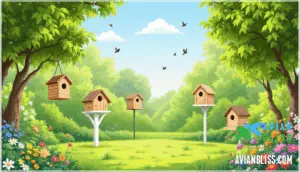
The materials you choose make all the difference in creating a safe, durable home for your feathered neighbors. From wood thickness to drainage features, every detail matters when you’re building something that’ll weather the seasons.
Let’s look at what works best to keep birds comfortable and protected.
Recommended Wood Types and Thickness
Your wood choice acts as the foundation of a safe, long-lasting home for your feathered neighbors. Cedar and cypress offer natural decay resistance, making them ideal sustainable timber options. Hardwood like oak provides outstanding material durability but costs more. Pine and poplar work well as eco-friendly options if you’re willing to maintain them regularly.
Stick with 15–18mm thickness for proper insulation. Exterior-grade plywood acts as a lightweight alternative when solid wood isn’t available.
Safe Fasteners and Finishes for Birds
Galvanized screws and stainless steel fasteners won’t rust over time, protecting birds from sharp edges and toxic corrosion. Skip pressure-treated wood—chemicals harm nesting birds. Galvanized nails and stainless screws provide reliable rust proofing for sustainable materials.
Apply raw linseed oil as an eco-friendly coating on exterior surfaces only. Never coat the interior—wood preservatives can release fumes that endanger your feathered friends.
Essential Ventilation and Drainage Features
Without proper airflow and water escape routes, even the sturdiest box becomes a deathtrap for baby birds. Drill four small ventilation holes near the roof for airflow management and three drainage holes in the floor for moisture control. These simple additions prevent heat buildup and standing water, keeping your birdhouse dry and safe.
Regular maintenance checks verify ventilation systems and drainage designs stay clear, supporting nest box hygiene throughout the season.
Sustainable and Eco-Friendly Material Choices
When you choose materials that won’t harm the planet, you’re building twice—once for the birds and once for the world they’ll fly through tomorrow. Look for FSC logo-certified lumber or recycled materials for green building projects. Cedar and cypress are eco wood options that resist decay naturally.
Raw linseed oil acts as a natural preservative for sustainable woodworking practices. These sustainable designs support environmental sustainability while creating safe homes for birds.
How to Build a Bird Nesting Box Step-by-Step
Building a nesting box isn’t complicated, but it does require attention to detail and the right approach. Before you pick up your saw, you’ll want to know exactly what your local birds need and how to create a safe home they’ll actually use.
Let’s walk through each step so you can build a box that gives birds the shelter they’re looking for.
Researching Target Bird Species and Requirements
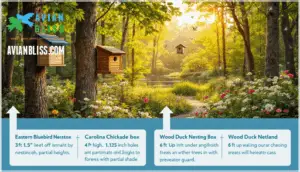
Before you can build a nest box that truly aids your local birds, you’ll need to match your design to the avian habitat around you. Different bird species have unique nesting box requirements, from entrance hole diameter to interior dimensions and placement height. Here’s what matters most:
- Eastern Bluebirds need 1.5-inch entrance holes and boxes 3–6 feet high in open spaces
- Carolina Chickadees prefer 1.125-inch holes at 4–15 feet in partial shade near forest edges
- Wood Ducks require larger boxes 6–30 feet up with predator guards near wetlands
Understanding native species interactions is vital for effective nest box design. Your bird species research and habitat analysis will guide every construction decision ahead.
Measuring and Cutting Wood Accurately
A single miscut board can leave you with a drafty box that won’t keep birds safe, so precise measurements matter from the first mark you make. Use a square and sharp pencil for accurate wood measurement. Quality cutting tools like a fine-tooth saw produce clean edges.
Mark your plywood or wood pieces twice before cutting once. Double-check dimensions against your species requirements to maximize material use.
Drilling Entrance, Ventilation, and Drainage Holes
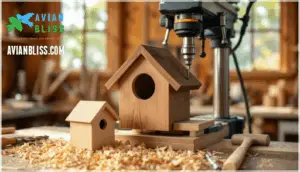
Once your wood pieces are cut to size, the next step is drilling the right holes—too small and birds won’t enter, too large and predators might reach inside. Match your drill bit selection to the entrance hole diameter your species needs.
Here’s your hole size guidance:
- Entrance hole: Use a spade bit for clean edges and sand smooth to prevent injury
- Ventilation: Drill two 6mm holes near the roofline on opposite sides
- Drainage designs: Add four 6mm holes in the floor corners for moisture escape
- Safety precautions: Clamp wood securely and wear eye protection while drilling
- Birdhouse ventilation systems: Keep holes below the nesting material level for airflow
Assembling and Securing The Box
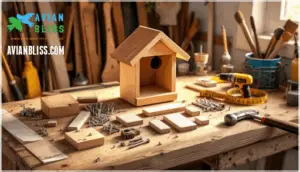
With your holes drilled and edges sanded smooth, it’s time to bring all those pieces together into a sturdy home that’ll stand up to wind, rain, and curious critters. Start by laying out your Nest Box Frames—front, back, sides, floor, and roof—in assembly materials order before picking up your first screw.
| Component | Fastener Type | Assembly Tips |
|---|---|---|
| Side panels to back | Galvanized screws (3.8cm) | Pre-drill to prevent wood splitting |
| Floor to sides | Stainless steel screws | Leave slight gap for drainage |
| Front panel | Hinged or removable | Allows annual maintenance access |
| Roof attachment | Weather-resistant screws | Overhang 5cm for rain protection |
| Mounting bracket | Heavy-duty hardware | Verifies predator protection stability |
Use galvanized or stainless steel fasteners for secure fastening that won’t rust. Apply wood jointing techniques—pre-drill screw holes to avoid splitting, especially near edges. Attach one hinged side panel for easy cleaning access.
Your box assembly tips: Work on a flat surface, check corners are square, and verify the roof overhangs for weather protection and mounting strength.
Applying Safe Protective Finishes
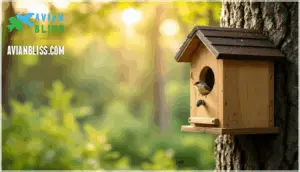
Your bird box won’t last long without a protective coat that keeps the wood safe from rain and sun while staying harmless to the birds who’ll call it home. Choose finishes that protect without putting wildlife at risk.
- Raw linseed oil – Natural oils soak into cedar and other woods, offering gentle predator protection through weather resistance
- Water-based exterior stains – Eco-friendly stains from Forest Stewardship Council-certified sources add color safely
- Non-toxic coatings – Apply only to exterior surfaces, never inside where chicks hatch
- Bird-safe sealants – Wood preservatives without harsh chemicals support wildlife conservation
- Unfinished interiors – Leave inner walls bare for breathability and grip
Placement and Maintenance for Success

Building your nesting box is just the beginning—where you place it and how you care for it determines whether birds will actually call it home.
The right location keeps birds safe, while regular maintenance guarantees the box stays welcoming season after season.
Let’s look at the key factors that turn a well-built box into a thriving bird sanctuary.
Ideal Height and Location Selection
Placing your nesting box at the right height and spot can mean the difference between a thriving bird family and an empty box collecting dust.
Mount your box 5 to 15 feet high with a clear flight path for easy access. Position it near tree proximity for shelter but angle the entrance away from harsh sun exposure reduction.
This simple placement promotes wildlife conservation while keeping your bird habitat safe.
Predator Protection and Mounting Options
Keeping predators at bay starts with smart mounting choices and a few clever design tweaks you can add right from the start. Install a predator guard below the entrance hole to block reaching paws. Use metal poles or secure mounting hardware for box security, and add a sloped roof design to prevent perching predators.
These anti-predator features support bird conservation and safety without complicated effort.
Cleaning, Inspection, and Seasonal Care
After nesting season wraps up each fall, you’ll want to roll up your sleeves and give that box a thorough cleaning to keep your feathered friends healthy year after year. Remove old nesting material and scrub surfaces with a mild bleach solution for proper birdhouse maintenance and pest control methods.
During annual inspections, check mounting hardware and repair damage to protect the nesting environment and support wildlife conservation efforts.
Monitoring Nesting Activity and Box Condition
Weekly checks let you catch issues early and track which birds are calling your box home. Look for nest building materials and eggs during spring nest box inspection to monitor bird behavior and nesting success.
Note which bird species are using the box so you can adjust box maintenance and improve the nesting environment. Your observations support wildlife conservation and help future nesting box maintenance decisions.
Designing for Different Bird Species
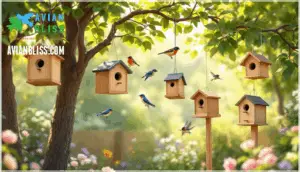
Not every bird looks for the same home. The entrance hole size, interior dimensions, and special features you build into your nesting box will determine which species move in.
Here’s what different birds need to feel safe and raise their young successfully.
Entrance Hole Sizes and Shapes
The right entrance hole size acts like a front door that welcomes your target birds while keeping unwanted guests out. For bluebirds and tree swallows, you’ll need a 3.2 cm hole diameter drilled clean and smooth. Barn owls require larger entrance shapes—at least 10 x 10 cm square openings work best.
Position the entrance hole near the top of your nest box design to discourage predators and add a predator guard if needed.
Dimensions for Common Garden Birds
Each bird species has its own blueprint—get the floor area, internal height, and overall dimensions right, and you’ll see nests filling up season after season.
House sparrows thrive in compact nesting boxes with a 12.5 x 12.5 cm floor area. Tree swallows and bluebirds need similar entrance holes but prefer internal heights between 15–18 cm.
Barn owls require spacious nest box sizes with floor areas of 0.2–0.4 m² and minimum depths of 45 cm from entrance hole to floor for successful nesting.
Features for Species-Specific Needs
Some species need more than just the right entrance hole—they benefit from wood shavings, roughened interiors, or strategic predator guards. Wood ducks, for example, see 100% nesting success when you add wood shavings to the nest box design before installation, mimicking natural cavities.
Roughen interior walls with grooves spaced 1.2–1.6 cm apart so nestlings can grip and climb out safely. Metal guards around entrance holes cut predation by 70%, protecting vulnerable broods from snakes and mammals.
Addressing Regional Climate and Habitat Factors
Beyond basic design, climate adaptation and regional planning shape how well your boxes perform. Hot climates demand lighter wood with enhanced ventilation, while cold regions benefit from thicker walls and wind-blocking placement. These environmental conservation strategies support ecosystem balance and habitat restoration across diverse landscapes.
- Hot zones: Paint boxes light colors or add shade overhangs to prevent overheating
- Wet climates: Increase drainage holes and apply raw linseed oil for wood protection
- Cold regions: Use 18mm hardwood thickness and face openings south for warmth
- Windy areas: Mount boxes lower and orient entrances away from prevailing winds
Frequently Asked Questions (FAQs)
How do you build a bird nest box?
To create a functional nestbox, start by researching your target bird species and gathering nest box plans that match their needs.
Cut untreated wood like cedar or pine to precise measurements, drill entrance and ventilation holes, then assemble using galvanized screws for durability.
How do I design a nest box?
Start by researching your target bird species—entrance hole size, floor dimensions, and depth matter.
Use untreated wood like cedar or pine, 15-18mm thick, with ventilation holes near the top and drainage holes in the floor for safety.
Can I build my own nest box or bird house?
You can absolutely build your own nest box—it’s one of the most rewarding DIY woodworking projects.
With basic birdhouse plans or DIY nestbox plans, you’ll create bird-friendly designs that support nesting boxes perfectly suited to your local species.
What predators commonly target bird nesting boxes?
Cats, raccoons, and snakes pose serious threats to nesting boxes, while hawks and squirrels also invade nests. Predator prevention techniques—like metal guards and proper placement—help protect vulnerable bird species and promote successful breeding.
Can nesting boxes be painted or decorated?
You can paint or decorate nesting boxes, but stick with natural, muted color options outside. Avoid bright artistic themes that attract predators.
Use non-toxic, water-based exterior finishes on wood surfaces only. Keep decorative designs minimal for bird species safety and wildlife conservation success.
How far apart should multiple boxes be?
Installing multiple nesting boxes near each other can work, but spacing matters. For the same bird species, keep boxes at least 25-30 feet apart to reduce territorial disputes and competition for resources.
What temperatures are unsafe for nesting birds?
Temperatures above 104°F can cause bird heat stress and threaten nestlings in nesting boxes. Extreme weather and climate change increase risks, so place boxes in shaded areas to support avian thermoregulation and bird safety.
Do birds reuse nests from previous years?
Most birds don’t recycle old nests like hand-me-downs. They build fresh nests each season, though some species salvage materials from previous nests.
That’s why cleaning your nesting box annually prevents parasites and disease while supporting healthy bird nesting habits.
Conclusion
Every backyard can become a lifeline. When you learn how to build bird nesting boxes with care and precision, you’re not just assembling wood—you’re giving wings to the future flock.
Each entrance hole sized correctly, each ventilation gap drilled thoughtfully, becomes shelter where it’s desperately needed. Your hands create what forests once provided freely.
That simple act of building connects you to something bigger than yourself, and the birds will answer with their presence.
- https://www.instructables.com/How-to-Make-a-Nest-Box-for-Birds/
- https://www.barnowltrust.org.uk/barn-owl-nestbox/barn-owl-nestboxes/
- https://www.bto.org/learn/helping-birds/nest-boxes/putting-nest-box
- https://pmc.ncbi.nlm.nih.gov/articles/PMC10090579/
- https://www.nwf.org/-/media/PDFs/Garden-for-Wildlife/Gardening-Tips/Nesting-Boxes_web.pdf