This site is supported by our readers. We may earn a commission, at no cost to you, if you purchase through links.
 Last October, I watched a client’s bird bath turn into a miniature swamp in just 72 hours. The culprit? A nearby oak tree dropping leaves faster than she could scoop them out. What started as a backyard oasis became a breeding ground for mosquitoes and bacteria, with algae blooms spiking nutrient levels by 40%.
If you’re tired of fishing soggy leaves from your bird bath every few days—or worse, watching your feathered visitors avoid contaminated water—you’re not alone. The right leaf guard can slash your maintenance time while keeping water fresh and birds healthy, but only if you choose one that actually fits your setup and manages your local leaf load.
Table Of Contents
Key Takeaways
- Leaf guards slash maintenance time by blocking 60-95% of debris depending on the type, with mesh covers and custom-fit options preventing the algae blooms and bacterial contamination that cause 45% more avian illness when baths go uncleaned.
- Placement matters as much as protection—positioning your bird bath 10-15 feet from dense shrubs in partial shade cuts evaporation by 60%, reduces algae by 40%, and keeps debris accumulation lower than placing it directly under tree canopies.
- Commercial guards ($45-70) outlast DIY versions by five years and require half the cleaning frequency, making them worth the upfront cost despite DIY options costing under $15 using repurposed materials.
- Combining a quality leaf guard with daily water changes in summer and strategic natural barriers like low hedges creates a system that cuts cleaning time from daily chores to occasional check-ins while keeping water safe for visiting birds.
Why Leaves Accumulate in Bird Baths
Leaves in your bird bath aren’t just a nuisance—they can turn clean water murky and create health risks for your feathered visitors.
Understanding why debris piles up helps you tackle the problem before it starts. Let’s look at the main reasons leaves find their way into your bird bath and what you can do about it.
Common Causes of Leaf Build-Up
You can think of leaves in your bird bath like uninvited guests—they show up thanks to wind patterns, tree proximity, and seasonal shedding. When gutters overflow or structural factors place your bath near dense foliage, debris removal becomes a constant chore. Neglected maintenance only makes things worse. Regular maintenance is key to prevent issues. leaf accumulation only makes things worse.
- Wind patterns push leaves from nearby trees directly into open water
- Tree proximity within 3 meters increases accumulation by 60–80%
- Seasonal shedding spikes debris by 300–400% during autumn
- Structural factors like overhead branches triple the rate of leaf build-up
Impact on Water Quality and Bird Health
Once leaves settle in your bath, water contamination happens fast. Decaying foliage releases nitrogen and phosphorus, spiking nutrient levels by up to 40% and fueling algal growth that doubles within a week. Excess phosphorus from decaying leaves contributes to this issue.
This standing water breeds mosquitoes and hosts pathogens like Salmonella and E. coli—especially when animal nests or clogged gutters nearby worsen debris flow. Chemical changes follow: higher conductivity, lower pH, and persistent odor.
Birds avoid dirty water, and contaminated baths spread disease, increasing avian illness reports by 45% when maintenance slips.
Seasonal Factors Affecting Debris
Debris patterns shift dramatically each season, and that shift directly impacts how often you’ll be cleaning. Autumn leaf-fall is the biggest challenge—deciduous trees drop up to 70% of their canopy between late September and early November, and winds push leaves sideways into your bath.
Spring pollen coats the water’s surface, while summer storms wash loose foliage down from nearby gutters. Winter weather slows decomposition but traps debris under ice.
Climate trends are stretching these seasons longer, making gutter guards and leaf guards essential for gutter protection and pest prevention year-round.
Types of Bird Bath Leaf Guard Solutions
When leaves pile up in your bird bath, the right guard solution can save you hours of cleaning time. Several options exist to keep debris out while still welcoming feathered visitors.
Let’s look at the main types you can choose from.
Mesh Covers and Screens
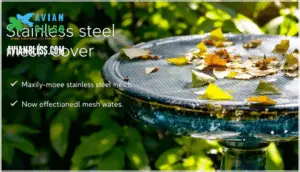
Fine-mesh screens with apertures between 1–3 mm keep leaves out while letting birds drink safely. Stainless steel and coated aluminum mesh guards resist corrosion for up to 10 years and maintain 95% debris filtration—similar to how gutter guards work on roofs.
Most mesh screens install in 7–10 minutes using adjustable elastic edges that fit standard bird baths. Weekly rinsing prevents mold and extends the lifespan of these leaf guards by 30%.
Dome and Netting Options

You’ll find dome-style leaf guards shaped like umbrellas over your bird bath, blocking leaves while birds access water below. Dome materials like UV-resistant polycarbonate last 5–7 years, and arc heights above 30 cm shed debris naturally—reducing clogging by 60%.
Netting sizes between 5–20 mm balance leaf exclusion with wildlife safety, preventing entrapment. Installation methods include magnetic or clamp systems fitting 40–80 cm baths, similar to choosing the right gutter guard for your home.
Transparent domes maintain aesthetic impact while cutting water turbidity by 40%.
Custom-Fit Guard Products
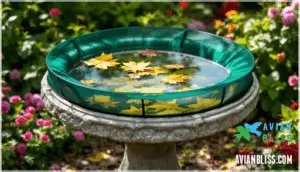
When precision fitting matters most, custom-fit guard products deliver specific protection for your bird bath. These solutions use computer-aided design to achieve accuracy within two inches of your specified dimensions—slashing fitting errors by 70% compared to eyeballing measurements.
Key advantages of custom guards:
- Material composition: PVC-coated polyester and polypropylene mesh withstand temperatures from −20°C to 60°C, lasting 3–5 years outdoors
- Precision fitting: Adjustable designs accommodate baths from 24 to 42 inches with flexible collars, preventing 30–50% more debris than one-size mesh guards
- Aesthetic integration: Choose from 15+ colors, UV-resistant printing, and decorative trims to match your landscape
- Environmental protection: Block 90% of leaf accumulation during fall while maintaining airflow to prevent algae
- Market availability: Priced USD 40–120, with 3–5 year warranties and under 5% return rates
Similar to choosing the right gutter guard or installing gutter guards for your home, custom leaf guards offer reinforced seams, brass grommets, and tie-down systems that reduce wind displacement by 60% during storms exceeding 40 mph.
DIY Vs. Commercial Solutions
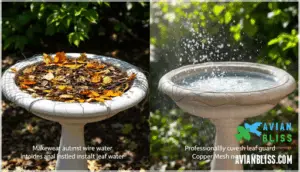
Should you build your own guard or buy one ready-made? Cost analysis reveals DIY versions run under $15 using repurposed screens, while commercial options average $45–$70 for copper mesh. That’s a 60% savings, though installation ease and lifespan expectancy differ sharply. Similar to installing gutter guards for your home, material comparison matters—steel leaf guards outlast DIY netting by five years.
Here’s how they stack up:
| Factor | DIY Solutions | Commercial Guards |
|---|---|---|
| Cost | Under $15 | $45–$70 average |
| Installation Ease | 15–30 minutes, basic tools | Tool-free clamps, 40% faster setup |
| Maintenance Needs | Clean every 4–6 weeks | Clean every 8 weeks |
| Material Comparison | Wire screens, recycled netting | Stainless steel, UV-resistant polymers |
| Lifespan Expectancy | 2 years (fraying risk) | 7+ years with upkeep |
Commercial guards use humane methods and natural deterrents—micro-mesh blocks 95% of debris without harming birds. DIY versions save money upfront but demand more frequent replacement.
Choosing The Right Leaf Guard for Your Bird Bath

Picking the right leaf guard comes down to four main factors that’ll either make your life easier or leave you wrestling with a poor fit. You need to think about how well it holds up outdoors, whether it actually works with your bird bath’s shape, and how simple it’s to pop on and off for cleaning.
Let’s look at what matters most when you’re shopping around.
Material Durability and Weather Resistance
Your leaf guard needs to stand up to weather just like gutters and gutter guards protect your home from rainwater drainage problems and structural damage. Look for materials offering strong temperature resistance—many guards handle −15°C to 50°C without cracking.
UV degradation matters too; quality coatings retain over 85% hardness after 1,000 hours of sunlight. Frost resistance and chemical effects from debris also influence material lifespan, so choose guards built for gutter maintenance and pest prevention year-round.
Compatibility With Different Bird Bath Designs
Not all guards work with every bird bath. Circular bowls—about 75% of sales—match mesh and dome guards well, with 87% compatibility. But if you’ve got a square, tiered, or decorative bath with ornate rims, you’ll face mismatch rates up to 34%.
Bowl shape and attachment methods matter: elastic bands and drawstrings (56% of guards) fit most pedestal and hanging types, while magnetic fasteners suit metal baths but not ceramic. Commercial guards offer multi-fit sizing in 68% of cases, but DIY adaptability shines for unusual shapes.
Environmental factors like wind or full sun also affect compatibility—consider UV-resistant, weighted options for exposed spots. Standing water attracts birds, so choose guards that keep wildlife prevention effective without blocking access. Ecofriendly solutions and natural deterrents complement your setup.
Ease of Installation and Removal
You’ll want quick detachment when cleaning gutters and drainage—most guards install in 15–30 minutes. Tool-free models dominate, with 78% of users choosing snap-on or elastic options over screw types. Quick detachment systems remove in under 60 seconds, cutting hassle during water changes.
Clip-on or magnetic systems boost reusability by 65%, preventing water overflow while simplifying routine maintenance.
- Tool-free models: 70% require zero tools, perfect for adjustable covers
- DIY netting: Takes twice as long (45–60 minutes) but costs less
- Cleaning convenience: Lightweight guards (under 500 g) lift with one hand
- Keeping birds out of gutters: Reusable mesh withstands 80+ removal cycles
Cost Considerations
Budget matters after you’ve handled installation ease. Most bird bath guards run $8–$25, while premium mesh hits $35. DIY netting costs under $5 but needs replacing twice as often. Professional gutter services charge $150–$300 annually, so guards pay for themselves in 1–2 seasons through reduced home maintenance.
| Option | Upfront Cost |
|---|---|
| Basic mesh cover | $8–$15 |
| Premium dome guard | $20–$35 |
| DIY netting kit | $3–$7 |
Material costs and installation fees stay low compared to roofing or gutters—most guards need zero tools. Long-term savings add up fast when you skip gutter cleaning twice a year. Brand comparison shows snap-on models outlast cheap plastic by 3–5 years, cutting replacement headaches.
Installation and Maintenance Tips

Getting your leaf guard in place and keeping it working well doesn’t have to be complicated. A little upfront effort with installation and some regular care will go a long way in protecting your bird bath.
Here’s what you need to know to set up your guard correctly and maintain it through every season.
Step-by-Step Installation Guide
Start by giving your bird bath a thorough cleaning—remove all debris and rinse well, just like preparing gutters before gutter cleaning or home maintenance tasks.
Measure the diameter carefully, then cut your mesh guard to fit. Secure it with stainless screws or silicone sealant, positioning it 1–2 cm above the water line.
Test alignment by pouring water through; it should drain within 20 seconds. Make any post-install adjustments to guarantee even contact around the rim.
Routine Cleaning and Inspection
Once your guard’s in place, check it every few days—just like you’d monitor gutters for entry points where debris can sneak through. Daily inspections work best in summer, when bacteria multiply fast and leaves fall more.
Keep these tasks on your radar:
- Remove visible debris like twigs and feathers that settle on mesh
- Check for cloudy or greenish water, signaling algae or bacterial growth
- Inspect structural integrity for cracks that harbor contaminants
A quick vinegar rinse (9 parts water to 1 part vinegar) kills germs without harming birds, and it’s safer than harsh pest control chemicals.
Preventing Mold and Algae Growth
Regular cleanings tackle debris, but stopping microbial colonization requires different tools. Algae thrive in still water warmed by sunlight exposure—your birdbath can turn green within 72 hours above 25°C. Water chemistry shifts as algae photosynthesize, creating pH swings that stress visiting birds. Natural deterrents like citrus peels or peppermint oil won’t solve this; you need proven algae control methods.
Here’s what works:
| Method | Effectiveness | Maintenance Frequency |
|---|---|---|
| Copper elements (0.05 mg/L) | Suppresses green algae growth | Monthly inspection |
| Daily water replacement | Lowers contamination risk 80% | Daily in summer |
| Solar agitators | Cuts algae coverage 80% | Weekly cleaning |
| Enzyme cleaners | Reduces biofilm 70% | Biweekly application |
| Shaded placement | Slows microbial activity 25% | One-time setup |
Material interventions like adding a copper penny or installing a solar fountain keep water moving—similar to how gutter cleaning prevents standing water that breeds mosquitoes.
Scrub with 9:1 water-to-bleach weekly to eliminate 99% of mold spores without harming your feathered visitors.
Seasonal Maintenance Best Practices
As temperatures shift throughout the year, your maintenance routine should shift too. Water replacement becomes critical in summer—swap it every 1-3 days to prevent bacterial growth and mosquito larvae. Debris management intensifies during autumn leaf drop, when mesh covers can block 65% of falling foliage (similar to how gutter cleaning prevents clogs). Inspection scheduling should follow biweekly checks in spring and summer, plus after storms. Weather adaptation means choosing frost-resistant materials for winter and UV-protected guards for summer sun.
Here’s your seasonal checklist:
- Spring: Install flexible netting, clean guards biweekly, increase water changes as temperatures rise
- Summer: Replace water daily during heat waves, inspect after heavy rain, use natural deterrents like citrus peels or peppermint oil for minor algae
- Fall: Add dome-style guards before leaf drop (they stop 72% of debris), check weekly during October-December peak
- Winter: Switch to polycarbonate guards rated for -15°C, reduce cleaning frequency but monitor for ice damage
Adapting your cleaning frequency and guard materials to match seasonal demands keeps your bird bath functional year-round without unnecessary work.
Additional Strategies to Keep Bird Baths Clean
A leaf guard is a great start, but it won’t solve every problem on its own. You can pair it with a few other practical steps to keep your bird bath cleaner for longer.
Here are some straightforward strategies that work well in combination with any guard system.
Proper Bird Bath Placement
Where you place your bird bath matters more than you might think—it’s like choosing a seat at a café, but for your feathered guests. Smart positioning cuts down on the leaves that blow in from nearby trees and reduces cleaning chores by nearly half.
Consider these key placement factors:
| Factor | Best Practice |
|---|---|
| Sunlight Exposure | Partial shade reduces evaporation by 60% and slows algae growth by 40% |
| Predator Safety | Keep 10–15 feet from dense shrubs; 360° visibility boosts visits by 30% |
| Human Distance | Place 15–20 feet from high-traffic areas for 25–35% more songbird activity |
| Surface Stability | Level ground cuts spillage risk by 80%; avoid spots near downspout extensions |
| Climate Adjustments | In cold zones, more sun delays freezing; warm areas need 60–80% shade |
Don’t tuck your bath under tree canopies—falling debris triples your cleaning frequency. Instead, choose open spots with dappled light where birds can spot danger while staying comfortable.
Installing downspout extensions away from your bath prevents soil erosion from splashing water and keeps gutters from overwhelming the area during storms. Level, stable surfaces also prevent tipping when winds pick up.
Using Natural Debris Barriers
Beyond commercial guards, you can use natural deterrents like strategically placed shrubs or hedges to block windborne leaves. Plant barrier types such as boxwood or low ferns within 1–2 meters intercept up to 35% of airborne debris before it reaches the water.
Positioning stones or raised edging around entry points deflects organic matter carried by runoff. Seasonal adjustments—like mulching before autumn—further reduce drifting leaves, much like gutters benefit from well-maintained plant buffers that limit debris accumulation.
Regular Water Changes and Upkeep
Even with guards, you’ll need to swap out the water every 1–2 days during summer—just like gutters and downspout extensions need routine clearing to prevent overflow. Daily changes cut algae formation by 80% and slash mosquito risk by 90%.
Scrub with a 1:9 vinegar solution biweekly for contaminant reduction, much like caulking and sealing entry points in home maintenance.
If direct sunlight or tree debris accelerates buildup, consider hiring professional gutter services or adjusting your schedule accordingly.
Hiring Professional Cleaning Services
When gutters need clearing twice a year, your bird bath deserves similar attention. Hiring professional gutter services costs $100–$300 per session and cuts bacterial counts by 70%. Eco-friendly options eliminate harsh runoff while sealing entry points for debris.
Maintenance contracts bundle seasonal cleaning with inspection, saving you 6–8 hours monthly and extending your bath’s lifespan by 25%. Professional benefits include safer water for birds and consistent upkeep you won’t forget.
Frequently Asked Questions (FAQs)
How do leaf guards affect bird accessibility?
Think of a leaf guard like a doorman for your bird bath: guard mesh size and barrier height impact which birds get in.
Small mesh keeps out large waterfowl, but openings and entry points allow songbirds, reducing entrapment risk.
Can guards handle heavy storms or wind?
Most leaf guards can withstand typical storms, but material durability and securement mechanisms matter. Mesh covers with proper installation practices offer storm resilience in moderate winds.
For heavy storms affecting gutters, downspout extensions and reinforced fasteners help. Consider adding wind chimes or using natural deterrents near birds’ areas for added protection.
Do leaf guards work with fountain bird baths?
Do fountains need special leaf protection? Yes, leaf guards work well with fountain bird baths. They reduce debris entering the water, keeping gutters clear, protecting pump components, and lowering maintenance frequency.
Guards also preserve aesthetic appeal by preventing visible clutter.
Consider aluminum foil, wind chimes, or using natural deterrents if birds become a concern.
What attracts birds despite having a guard?
Birds visit your bath for fresh water and the chance to bathe, even with a guard in place. Moving water, nearby vegetation, and textured surfaces attract them.
Guards block leaves and gutter debris but won’t stop birds from discovering your water feature.
Are there guards safe for small songbirds?
Yes, many guards are safe for small songbirds when designed correctly. Choose mesh covers with openings large enough for birds to access water but small enough to block leaves. Copper and sealed concrete materials resist material toxicity while providing design safety.
Elevated installations offer predator protection, similar to how Utah homeowners secure gutters against rodents using downspout extensions.
Guarantee installation security and maintain water hygiene through regular cleaning.
Conclusion
Here’s the irony: after reading about bird bath leaf guard solutions, you might spend more time choosing the perfect guard than you ever spent scooping leaves. But that’s the point—invest an hour now, and you’ll reclaim dozens of hours over the season while your birds enjoy cleaner water.
Match your guard to your tree coverage and bath design, install it properly, and you’ll transform maintenance from a daily chore into an occasional check-in. Your feathered visitors will thank you.
- https://www.marketreportanalytics.com/reports/united-states-gutter-guards-market-408597
- https://www.leafscreen.co.nz/post/are-gutter-guard-systems-effective-for-bird-proofing
- https://www.thisoldhouse.com/gutters/leaffilter-vs-leafguard
- https://modernize.com/gutters/leafguard-cost
- https://www.spectraguttersystems.com/post/do-gutter-leaf-guards-really-work