This site is supported by our readers. We may earn a commission, at no cost to you, if you purchase through links.
 A parrot in the wild spends up to six hours each day foraging for food, solving problems, and exploring its territory. In a cage, that same bird can exhaust its daily activities in under fifteen minutes. This stark difference explains why captive birds often develop behavioral problems like feather plucking, repetitive pacing, and vocalization issues—their intelligent minds need work to do.
Enrichment activities for caged birds bridge this gap by recreating the mental and physical challenges that keep birds healthy and engaged. When you understand how to properly stimulate your bird’s natural instincts, you transform their cage from a holding space into a vibrant environment that fosters their behavioral wellness and prevents the stress-related disorders that plague understimulated birds.
Table Of Contents
- Key Takeaways
- Why Bird Enrichment is Essential
- Types of Enrichment Activities for Caged Birds
- Choosing Safe and Effective Enrichment Toys
- Setting Up an Enriching Bird Cage Environment
- DIY Bird Enrichment Activities and Toys
- Species-Specific Enrichment Needs
- Monitoring and Improving Bird Enrichment
- Frequently Asked Questions (FAQs)
- What are the different types of enrichment for birds?
- How do I choose the right enrichment for my parrot?
- What is parrot enrichment?
- What is avian enrichment?
- Why is bird enrichment important?
- Why do birds need avian enrichment?
- How often should enrichment toys be replaced?
- Can birds share enrichment toys safely together?
- What enrichment works best for elderly birds?
- How do you introduce new enrichment gradually?
- Conclusion
Key Takeaways
- Captive birds need enrichment because they can complete their daily activities in under fifteen minutes compared to six hours in the wild, leading to behavioral problems like feather plucking and repetitive pacing without proper mental and physical stimulation.
- Enrichment activities prevent boredom-related stress by recreating natural behaviors like foraging, which research shows reduces stereotypic behaviors by 60% and decreases feather plucking by up to 50% when birds receive proper environmental challenges.
- Effective enrichment combines five key types—foraging puzzles, physical exercise through climbing and flight, social interaction, chewing materials for beak health, and sensory experiences like bathing—tailored to each bird’s species-specific needs and cognitive abilities.
- Regular toy rotation every one to two weeks maintains novelty and prevents habituation, with studies showing that weekly changes reduce repetitive behaviors by 32% and boost daily engagement by 30–50% compared to static environments.
Why Bird Enrichment is Essential
When you bring a bird into your home, you’re taking on more than just feeding and cleaning—you’re responsible for keeping their minds sharp and their spirits bright. Birds are intelligent, curious creatures that need mental and physical challenges to thrive, and without proper enrichment, they can develop serious behavioral and health problems.
Let’s look at three key reasons why enrichment isn’t optional for your feathered companion.
Preventing Boredom and Stress
When birds lack mental stimulation and physical exercise, stress and boredom take hold quickly, triggering harmful behaviors like feather plucking and excessive vocalization. You’ll notice these stress behavior signs early if you watch for repetitive pacing or unusual aggression.
Research shows captive parrots with proper environmental control and novelty introduction display 60% fewer stereotypic behaviors, while routine consistency and increased interaction frequency extend foraging times and support boredom prevention.
Captive parrots benefit greatly from environmental enrichment activities, which allow them to display natural behaviors. Mental stimulation paired with enrichment delivers measurable stress reduction, keeping your bird emotionally balanced and behaviorally healthy.
Supporting Natural Behaviors
Your bird’s wild relatives spend 60–80% of their day searching for food, and replicating this foraging behavior in captivity meets their instinctual needs in ways a simple food bowl never will. Enrichment activities that encourage natural behaviors—like foraging puzzles, climbing structures promoting varied locomotor patterns, and sensory stimulation through textures and sounds—provide the mental stimulation and physical exercise captive birds require.
Social engagement opportunities and destructible materials for chewing directly support reducing FDB while allowing your bird to express behaviors hardwired into their species. All birds should have access to environmental enrichment items unless there’s a justified reason.
Enhancing Bird Health and Happiness
Beyond simply preventing problems, enrichment activities actively boost your bird’s overall well-being. Research shows that proper environmental stimulation reduces stress hormones by 22%, while improving cognitive function and social behaviors.
Physical activity through climbing and foraging enhances muscle tone and cardiovascular health. These behavioral improvements and mental health benefits translate directly into a better quality of life—enriched birds live longer, experience boredom reduction, and develop stronger bonds with their caregivers.
When you meet your bird’s social needs through varied stimulation, you’re investing in their physical health and happiness simultaneously.
Types of Enrichment Activities for Caged Birds
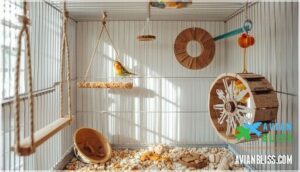
Birds thrive when they can express their natural instincts, and the right enrichment activities make all the difference in their daily lives. Understanding the main categories of enrichment helps you create a well-rounded routine that keeps your bird mentally sharp and physically healthy.
Let’s look at the key types of enrichment you can offer your feathered companion.
Foraging and Food-Seeking Challenges
In the wild, your bird’s ancestors might spend half their waking hours hunting for the next meal—that’s not just busywork, it’s survival hardwired into their DNA. Foraging enrichment brings this instinct back into captivity. Puzzle feeders and foraging toys challenge your bird to work for food, stretching those 30–70 minutes captive birds generally spend eating into several rewarding hours.
Natural foraging setups, like hiding treats under paper or using puzzle toys with multiple steps, provide cognitive stimulation and prevent boredom. Food variety and reward schedules keep the challenge fresh, encouraging foraging and food-seeking behaviors that reduce stress and destructive habits. These enrichment activities satisfy your bird’s need to explore, think, and thrive.
Physical Exercise and Play
Keeping your bird moving isn’t just about stretching wings—it’s about keeping muscles strong, minds sharp, and hearts healthy. Captive parrots show metabolic rates 6–8% higher during flight than at rest, and even short bursts of activity improve cardiovascular function and bone density. Flight alternatives and exercise toys replicate natural movement patterns, reducing obesity and behavioral problems.
Play benefits extend beyond fitness—birds with active enrichment display fewer stereotypic behaviors and greater daily activity levels.
Here are some examples of toys and exercises that can help keep your bird healthy:
- Swings and climbing toys strengthen balance and coordination while mimicking wild perching behaviors.
- Ladders encourage vertical movement, building leg and wing muscles through active play.
- Exercise toys like birdie treadmills offer species variations in activity, keeping birds physically fit in smaller spaces.
- Rehabilitation exercises, including controlled cage-flight programs, restore muscle fitness in recovering birds, with outcomes varying by species and injury severity.
Social and Cognitive Stimulation
Your bird’s social life and mental workouts matter as much as physical activity. Parrots and corvids solve problems as effectively as primates, requiring regular cognitive challenges to thrive.
Social interaction with you or other birds reduces anxiety and decreases feather plucking by up to 50%. Puzzle toys, foraging activities, and play sessions three times weekly lower stress hormones and boost problem-solving skills.
Tablet-based virtual enrichment and sensory input like music maintain engagement longer than static toys. Positive reinforcement training during these interactions strengthens your bond while keeping minds active.
Chewing, Shredding, and Beak Care
Gnawing through fibrous materials satisfies your bird’s hardwired drive while keeping its beak in working order. Shredding and chewing wear down the continuously growing keratin layer, preventing overgrowth and misalignment that interfere with eating and grooming.
Offer these safe chew materials for best beak exercise and chewing and beak maintenance:
- Untreated woods like pine, balsa, birch, and apple provide natural textures for chewing and shredding without toxic coatings.
- Fibrous plants such as palm leaf, sugarcane paper, and abaca mimic wild foraging substrates and encourage repeated shredding behavior.
- Natural fiber ropes including cotton, hemp, and sisal deliver softer chewing toys that reduce feather plucking by 75% in enriched groups.
Rotate shredding toys every 3–5 days for chewing integration that maintains novelty. Studies show destructible toys boost daily engagement by 30–50%, delivering behavioral improvements through natural beak health benefits. Replace moisture-exposed materials immediately to maintain hygiene practices and prevent bacterial contamination.
Bathing and Sensory Enrichment
Regular bathing and sensory input keep your bird’s feathers immaculate while preventing stress-related disorders. Water baths remove dust and oils, reducing feather plucking risk by up to 25% through improved preening.
Offer bathing opportunities three times weekly using shallow trays or misting systems to support feather care and thermoregulation. Complement bathing stations for birds with auditory stimulation like flock sounds, visual variety through textured objects, and tactile enrichment using natural materials.
Monitor for sensory overload—excessive pacing or feather fluttering signals overstimulation. Balanced avian care integrates bathing frequency with sensory enrichment to maintain excellent welfare.
Choosing Safe and Effective Enrichment Toys
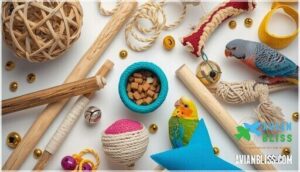
Selecting the right toys for your bird requires balancing enrichment value with safety considerations. The materials, design, and maintenance of toys all play important roles in keeping your bird engaged without exposing them to unnecessary risks.
Below, you’ll find guidance on the most effective toy types, safety standards to follow, and strategies for keeping your bird’s environment fresh and stimulating.
Common Bird Enrichment Toys
Think of enrichment toys as your bird’s personal toolkit for staying sharp and content. Foraging toys and puzzle toys mimic natural food-seeking behaviors, keeping beaks busy for extended periods. Chew toys and shredding toys support beak health while satisfying instinctive needs.
Climbing toys like ropes and swings build strength and coordination. Cognitive toys challenge problem-solving skills, while sensory toys with bells or textures provide auditory and tactile stimulation.
You can also explore DIY bird toys and accessories for budget-friendly options. Interactive toys that combine these elements offer the richest experiences for your feathered companion.
Toy Safety Guidelines and Materials
Enrichment toy safety guidelines protect your bird from material toxicity and structural integrity failures. Safe DIY bird enrichment toys rely on non-toxic materials like untreated pine, manzanita, and stainless steel hardware, while avoiding zinc-coated metals and chemically treated woods.
Consider these enrichment toy safety essentials:
- Safe materials include cotton ropes under 20 cm, acrylic plastics, and vegetable-tanned leather—never synthetic fibers that create rope hazards
- Daily cleaning protocols with bird-safe soap prevent microbial buildup and respiratory illness
- Sizing suitability matches toy strength to beak power—what works for budgies won’t withstand macaw force
Inspect toys daily for frayed edges or loose parts, discarding damaged items immediately to prevent ingestion risks.
Rotating and Refreshing Toys
Once you’ve chosen safe materials, toy rotation keeps your bird mentally engaged. Novelty retention drops sharply after seven days, so weekly rotation frequency works well for most parrots—switching between foraging puzzles, chewing toys, and interactive play items.
Toy sanitization with bird-safe cleaners prevents bacterial growth between uses. Material variety matters: alternating rope, wood, and acrylic textures boosts exploratory behavior by nearly 30%.
Watch your bird’s behavioral impact closely; if interest fades faster, adjust enrichment routines every three to five days instead.
Setting Up an Enriching Bird Cage Environment
Your bird’s cage isn’t just a place to sleep—it’s their entire world. When you set up an environment that encourages movement, exploration, and natural behaviors, you’re giving your bird the foundation for a healthier, happier life.
Let’s look at the key elements that transform a basic cage into a truly enriching space.
Cage Size and Layout Considerations
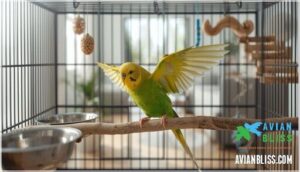
Your bird’s cage setup directly impacts their welfare and safety. The Association of Avian Veterinarians recommends cage width at least 1.5 to 2 times your bird’s wingspan—budgies need 18" x 18" x 20" minimum, while African Greys require 34" x 24" x 36". Bar spacing matters too: use 1/2" for budgies, 1/2" to 3/4" for cockatiels.
Spatial organization with distinct zones for perching, feeding, and foraging promotes natural behaviors and reduces stress-related feather-pecking.
Variety in Perches and Accessories
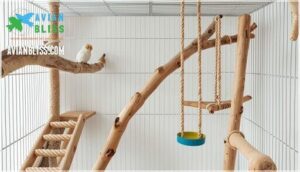
Once your cage structure allows movement, the next step is selecting perches and accessories that protect foot health and prevent repetitive strain. Natural wood branches with varied texture and perch diameter ranging from 2.5 to 5 cm allow comfortable gripping without overextension. Rope perches, platform perches, and ladders add diversity, while rotation benefits include sustained engagement and up to 25% higher activity levels.
Placement strategies matter—position perches at different heights and angles, maintaining 20 to 30 cm separation to reduce aggression. Swings encourage balance and muscle strengthening, mimicking natural movement patterns your bird would experience in the wild.
Incorporating Natural Elements
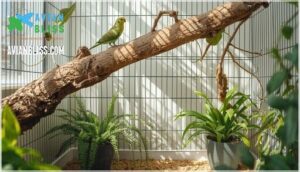
After selecting the right perches, you can improve your bird’s environment by bringing a bit of the outdoors inside. Natural wood branches with bark offer texture variation that aids beak conditioning behaviors twice as often as smooth plastic.
Adding non-toxic live plants like spider plant or fern increases movement frequency by 20–25% and reduces stress-related feather-picking by 33%. Sunlight exposure for two to four hours daily improves vitamin D3 synthesis and circadian rhythms.
Natural substrates like sand encourage dustbathing—a species-appropriate behavior seen 40% more often with habitat enrichment that includes natural materials and proper airflow integration.
Space-Saving Enrichment Ideas
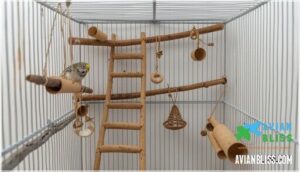
Within limited square footage, vertical optimization transforms how you arrange cage setup. Positioning perches at multiple heights increases usable area by 40% and boosts daily physical activity by 25%.
Compact foraging stations tucked into corners add 15–25% enrichment space, while rotating tools extend novelty for weeks. Multifunction design—like branch ladders or combination perches—reduces clutter and encourages mental stimulation.
DIY toys made from paper tubes enable corner usage without crowding flight paths.
DIY Bird Enrichment Activities and Toys
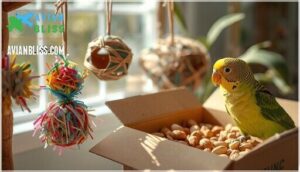
You don’t need expensive toys to keep your bird engaged and happy. Simple household materials can be transformed into enriching activities that encourage natural behaviors like foraging, shredding, and problem-solving.
Here are three practical ways to create DIY enrichment that your bird will love.
Homemade Foraging Puzzles
You can transform everyday items into bird-appropriate food puzzles that challenge your bird’s foraging and food-seeking behaviors without spending a fortune. Homemade enrichment promotes progressive puzzle training, as birds usually need about eight days to master new challenges.
Here are proven DIY bird toys and accessories that support behavioral observation metrics:
- Newspaper rolls stuffed with treats inside cardboard tubes offer cognitive challenge and satisfy natural chewing instincts
- Unbleached coffee filters tied with raffia and filled with seeds mimic wild foraging environments while ensuring puzzle material safety
- Partitioned plastic containers with varied textures encourage species puzzle adaptation and choice-based exploration
Rotate enrichment items every one to two weeks to maintain novelty and prevent habituation, adjusting puzzle complexity based on your bird’s size and species needs.
Safe Household Materials for Toys
Your bird’s safety depends on careful material selection when crafting DIY bird toys and accessories. Stick with untreated pine, balsa, or birch wood for chewing, and choose 100% cotton, sisal, or hemp ropes as natural fiber options. Stainless steel connectors prevent zinc poisoning, while food-grade cardboard and unprinted paper make excellent shredding materials.
Avoid cedar, oak, nylon ropes, and galvanized metals—toxic material awareness protects your bird from respiratory issues and heavy metal exposure.
These eco enrichment ideas using natural materials and bird-friendly plastics guarantee safe toy design.
Creating Interactive Play Areas
Setting up a dedicated play zone offers your bird measurable benefits—activity levels increase up to 35%, and stress-related feather plucking drops by 25–40%.
When planning your enrichment zone, incorporate multi-level bird gym safety features using varied perch diameters and non-toxic materials like stainless steel. Vertical space utilization with interactive toys and removable foraging points doubles engagement time.
Position play areas near family spaces to boost social interaction by 50%, and rotate cage enrichment items every 10–14 days to sustain novelty and keep your bird mentally stimulated.
Species-Specific Enrichment Needs
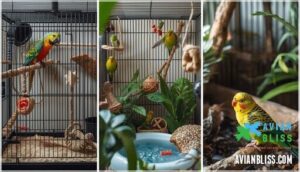
Not all birds are cut from the same cloth, and what works for one species might leave another unstimulated or even stressed. Each type of bird brings its own set of instincts, intelligence levels, and physical capabilities to the cage.
Understanding these differences will help you tailor enrichment activities that truly resonate with your feathered companion’s natural behaviors and needs.
Enrichment for Parrots
Parrots are like puzzle-solving athletes—they need both mental gymnastics and physical outlets to stay balanced. You’ll want to provide enrichment activities that offer cognitive stimulation through foraging puzzles, which can keep your parrot engaged for hours at a time, mirroring the 4–8 hours wild grey parrots spend seeking food.
Bird cage enrichment should include swing perches and climbing opportunities for wing exercise, combined with chewable materials for beak maintenance and shredding toys that support natural feather care behaviors.
Parrot socialization matters tremendously, so incorporate mirror play or daily human interaction to prevent destructive behaviors like feather-plucking.
Enrichment for Canaries and Finches
Small songbirds like finches and canaries thrive on enrichment that mirrors how they would spend their days in the wild—flitting between branches, searching for seeds, and singing their hearts out. You’ll want to provide enrichment for birds that includes:
- Millet sprays and leafy greens attached near perches, boosting gentle foraging activity by up to 30%
- Multi-level perches with varied diameters to strengthen feet and encourage short flights, raising exploratory behavior by 25%
- Natural daylight exposure to maintain ideal canary song frequency and support feather care
Bird cage enrichment for finches benefits from bark-based substrate containing mixed seeds, while canaries need accessible bathing stations to support beak health and plumage quality.
Finch socialization flourishes when visual contact with other birds is available, and avian nutrition improves when you offer enrichment activities that make mealtime an engaging experience rather than a quick refill.
Enrichment for Budgies
Budgerigars are playful, curious birds that need enrichment activities designed around their love of ground foraging and social play. Providing enrichment for birds like budgies means offering bark-based substrates with mixed seeds, which replicate their natural foraging techniques and improve beak maintenance. Your cage design should include multiple perches, puzzle toys, and swing stations to keep your budgie moving and engaged. Toy rotation every two weeks prevents boredom and sustains interest.
| Enrichment Type | Activity | Benefit |
|---|---|---|
| Foraging | Bark substrate with seeds | Mimics wild behavior |
| Physical | Swings and ropes | Increases movement 25% |
| Cognitive | Puzzle feeders | Boosts problem-solving |
Budgie socialization thrives with mirrors or visual contact with other birds, reducing distress vocalizations by 35%. Bird cage enrichment that combines tactile toys, varied perches, and regular novelty keeps your budgie mentally sharp and physically active.
Adapting Activities for Single Birds
Single birds living without cage mates need enrichment activities that replace the social interaction and mental stimulation a companion would provide. Mirrors, puzzle feeders, and auditory cues like recorded contact calls can reduce distress vocalizations by 35%, offering lonely bird solutions that combat isolation.
Your enrichment for a single pet bird should include daily human interaction for at least four hours, plus custom enrichment plans combining foraging challenges and solo play ideas. Rotating individual stimulation tools keeps your bird engaged, providing the mental and physical stimulation needed for behavioral wellness.
Monitoring and Improving Bird Enrichment
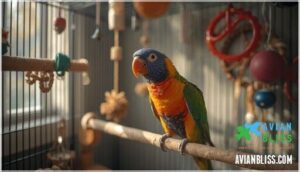
Even the best enrichment setup needs regular evaluation to verify it’s truly meeting your bird’s needs. Observing how your bird reacts to different activities allows you to fine-tune their environment and prevent problems before they develop.
Here’s what to look for and how to adjust your approach when needed.
Signs Your Bird Needs More Stimulation
How do you know when your bird is silently asking for help? Behavioral changes often reveal the problem—feather plucking, repetitive pacing, or head bobbing affect over 40% of birds in barren enclosures. Stress signals like fluffed feathers, decreased vocalization, or excessive screaming point to unmet needs.
Environmental factors matter too; without toy rotation, intelligent species show boredom symptoms within just 7–10 days. Nutrition impact appears through overeating or dull plumage.
Social withdrawal and reduced interaction indicate your bird needs more enrichment immediately.
Adjusting Activities Based on Behavior
Once you spot stress signals, it’s time to act. Enrichment rotation every week reduces repetitive behaviors by 32%, according to 2025 research on captive birds.
Watch for behavioral cues like frustration or disinterest, then adjust activities accordingly. If puzzle toys cause stress, simplify them—this improved participation by 22% in studies.
Tailor physical versus cognitive challenges based on your bird observation notes, preventing boredom while encouraging natural behaviors through customized activity adjustment.
When to Consult Avian Specialists
Even enrichment programs sometimes need professional eyes. Schedule your first avian veterinarian visit within 1–2 weeks of acquiring your bird, then maintain annual wellness exams to catch diseases early.
If behavioral problems persist despite enrichment adjustments—feather plucking, aggression, lethargy—consult avian specialists immediately. Signs like reduced vocalization, breathing difficulty, or appetite loss require emergency veterinary care.
Board-certified avian health professionals possess specialized training that improves recovery outcomes and ensures proper bird wellness through species-specific behavioral assessments.
Frequently Asked Questions (FAQs)
What are the different types of enrichment for birds?
Birds thrive with five enrichment types: foraging strategies that mimic wild food-seeking, physical activities for exercise, social interactions with you or other birds, beak maintenance through chewing natural materials, and sensory experiences like bathing.
Each type meets specific mental and physical stimulation needs.
How do I choose the right enrichment for my parrot?
Your parrot’s enrichment needs depend on species differences, personality, and available space.
Consider budget considerations and toy durability when choosing enrichment activities.
Match species-appropriate activities to natural behaviors, ensuring all parrot enrichment ideas are safe and engaging.
What is parrot enrichment?
When you watch a wild flock gliding through forest canopy, you’ll notice they’re constantly busy—foraging, exploring, and interacting.
Parrot enrichment recreates those natural activities in captivity through toys, puzzles, and foraging challenges. It provides mental stimulation and physical exercise while encouraging natural behaviors, which reduces stereotypic behaviors like feather plucking and improves overall welfare.
What is avian enrichment?
Avian enrichment provides environmental stimuli that encourage natural behaviors, improve physical health, and enhance psychological welfare in captive birds.
It reduces stress and prevents destructive behaviors like feather plucking, while also promoting species-specific activities such as foraging and exploration.
Why is bird enrichment important?
You’ve probably heard that enrichment prevents boredom, but it’s more critical than that—without proper stimulation, your bird’s mental wellbeing deteriorates, triggering stress-related behaviors like feather plucking and aggression.
Enrichment needs aren’t optional luxuries; they’re essential for behavioral health, allowing natural instincts to flourish while providing cognitive benefits that reduce stress and frustration.
Why do birds need avian enrichment?
Birds need environmental enrichment because captivity’s impact suppresses their natural instincts, leading to behavioral problems like feather plucking and aggression.
Enrichment fulfills cognitive needs, reduces stress and frustration, and improves mental wellbeing by encouraging natural behaviors and preventing bird boredom.
How often should enrichment toys be replaced?
You should inspect toys weekly and replace them every one to two weeks to maintain safety and interest. Research shows that regular toy rotation prevents up to 70% of boredom-related behavioral problems. Material durability, activity level, and behavioral indicators determine exact replacement frequency.
Frayed ropes, broken parts, or discoloration signal immediate replacement to prevent health risks like ingestion injuries or toxic exposure.
Enrichment routines with proper toy safety precautions keep your bird engaged while preventing bird boredom through consistent enrichment activities.
Can birds share enrichment toys safely together?
Sharing toys isn’t always safe—disease transmission, aggression risks, and stress impacts can arise. Without proper hygiene protocols and toy safety measures, birds may fight over resources or spread illness, undermining social interaction and preventing boredom in birds effectively.
What enrichment works best for elderly birds?
Like a favorite armchair adjusted for comfort, your elderly bird’s world needs thoughtful modifications to support aging gracefully. Provide gentle exercise through horizontal climbing ramps, and offer sensory stimulation with varied textures and sounds.
Make dietary adjustments with accessible soft foods, and foster social comfort through consistent interaction.
Create an accessible environment using platforms instead of high perches.
How do you introduce new enrichment gradually?
Introduce new enrichment gradually by starting with just one item at a time, placing it near familiar objects in your bird’s cage environment.
Monitor behavior closely for signs of stress, and use positive reinforcement with treats to reduce neophobia and build trust through routine consistency.
Conclusion
You might worry that enrichment activities for caged birds demand too much time or creativity, but the truth is simpler than you think. Even five minutes spent hiding food in crumpled paper or rotating a single toy can satisfy your bird’s instinctual need to work for rewards.
The real challenge isn’t finding hours in your day—it’s recognizing that without these activities, your bird’s mind deteriorates in ways you can’t always see until behavioral problems emerge.
Start small, stay consistent, and watch your bird rediscover the engagement their species evolved to crave.