This site is supported by our readers. We may earn a commission, at no cost to you, if you purchase through links.
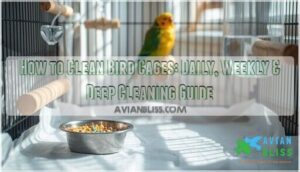 Your bird’s cage might look clean from across the room, but bacteria and fungi don’t wait for visible grime to appear. Within 24 hours of daily cleaning, harmful microbes can multiply to dangerous levels—putting your feathered companion at risk for respiratory infections and digestive illness.
The same droppings that attract pests like mites also release ammonia that compromises both bird and human health. A proper cleaning routine cuts illness risk by 40% and nearly eliminates pest problems, but most bird owners either clean too little or use the wrong methods.
Understanding the difference between daily maintenance and deep cleaning transforms your bird’s habitat from a potential health hazard into a space where natural behaviors flourish and stress indicators drop by over 20%.
Table Of Contents
Key Takeaways
- Daily cleaning tasks like changing liners, washing dishes, and wiping perches cut bacterial growth by 60-80% and reduce illness risk by 40%, making consistent maintenance your first defense against respiratory infections and digestive problems.
- Bacteria multiply to dangerous levels within 24 hours of cleaning, and ammonia from droppings can reach harmful concentrations above 25 ppm without daily liner changes, directly compromising both bird and human respiratory health.
- Weekly deep cleaning with bird-safe disinfectants like diluted vinegar or hydrogen peroxide eliminates 90% of remaining pathogens, while rotating toys every two weeks boosts play behaviors by 25-30% and prevents stress-related issues like feather plucking.
- Your daily cleaning routine doubles as health monitoring—watching for changes in droppings consistency, color, or volume during cage maintenance catches infections, parasites, and nutritional problems before symptoms appear.
Why is Cleaning Bird Cages Essential?
Keeping your bird’s cage clean isn’t just about appearance—it’s about protecting your feathered companion from serious health risks. A dirty cage creates the perfect environment for bacteria, fungi, and parasites that can make your bird sick.
Understanding why regular cleaning matters will help you create a routine that keeps your bird healthy and your home fresh.
Preventing Bird Illnesses and Infections
Beyond keeping your bird’s space tidy, regular cleaning protects against serious health threats. Dirty cages become breeding grounds for bacteria and fungal infections that can make your bird sick. In fact, studies show bacteria like Staphylococcus thrive in poorly maintained cages, and some strains even resist antibiotics.
Here’s what you’re protecting your bird from:
- Pathogen contamination from droppings and leftover food that foster harmful microbes
- Zoonotic diseases like psittacosis, which spreads to humans through contaminated cage dust
- Avian diseases caused by bacteria and fungi that multiply when hygiene protocols slip
Consistent disinfection efficacy matters—proper cleaning reduces bacterial survival by over 90 percent, keeping transmission risks low and preventing illness in birds. Proper sanitation can help control bacteria and fungi, but viruses need disinfectants.
Reducing Odors and Pest Risks
Poor hygiene doesn’t just harm your bird—it invites unwelcome guests. Accumulated seed debris and moist waste attract pests like mites, flies, and rodents, raising cross-contamination risks by up to 45 percent.
Ammonia buildup from droppings can reach harmful levels above 25 ppm without daily liner changes, damaging respiratory health.
Safe cleaners and ventilation strategies cut odor intensity by 70 percent, while consistent cleaning schedules slash pest presence by 96 percent through proper odor elimination and pest control. Regular cleaning can also help prevent unpleasant bird cage smells.
Supporting Bird Behavior and Wellbeing
A clean cage environment isn’t just about hygiene—it’s about your bird’s mental health too. When you maintain consistent cleanliness, stress indicators like feather plucking drop by 22 percent, while exploratory behavior increases by 30 to 40 percent through enrichment strategies.
Clean surroundings support social interaction and reduce anxiety, fostering natural behaviors that keep your bird engaged and emotionally balanced.
Promoting a Healthy Home Environment
Your bird’s cage impacts more than just your pet—it shapes air quality and safety throughout your home. The EPA reports indoor air pollution can be 2–5 times higher than outdoor levels, and bird dander and dried droppings make that worse. Proper cage sanitation and ventilation lower airborne particles by 37–51 percent, protecting both avian hygiene and your family’s health while reducing exposure to zoonotic diseases.
- Fresh air replacing stale, dust-laden air throughout your living spaces
- Surfaces free from the fine coating of dander that settles overnight
- Children breathing easier without coughing from airborne irritants
- Safe disinfectants replacing harsh chemicals that threaten bird health
- Reduced bird stress leading to calmer, more predictable household energy
Daily Bird Cage Cleaning Routine
Daily cage cleaning keeps your bird healthy and your home fresh. You’ll need to complete a few simple tasks each morning to prevent bacteria buildup and catch health issues early.
Here’s what to do every day to maintain a clean, safe environment for your feathered friend.
Cleaning Food and Water Dishes
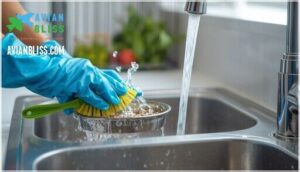
Your bird’s dishes are like your own kitchen countertops—they need daily attention to stay safe. Wash food dishes and water dishes every morning with hot water and dish soap, scrubbing away residue and biofilm. Rinse thoroughly to remove all soap traces, since even small amounts can irritate your bird’s mouth and crop.
Daily cleaning tasks like these cut illness risk by 40% and prevent bacterial colonies from multiplying tenfold after just two days. Material matters too—ceramic, metal, and thick plastic are easier to disinfect than porous wood or wicker holders.
Changing Cage Liners
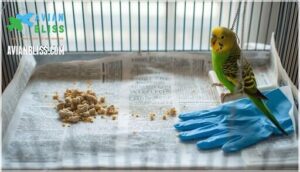
Each morning, swap out your cage liner to maintain air quality and catch health clues early. Daily changes slash bacterial growth by 60% and odor by 80%, turning this simple task into your first line of defense.
Larger birds need twice-daily liner change frequency to control ammonia buildup.
Choose safe bedding material wisely:
- Plain unscented newspaper or butcher paper works best—avoid colored inks
- Skip corn cob, walnut shells, and cat litter since they grow mold fast
- Reusable fabric cage liners with antimicrobial coatings cut waste by 70%
- Check droppings daily on your plastic floor liner for color, consistency, and volume changes
Wiping Perches, Bars, and Accessories
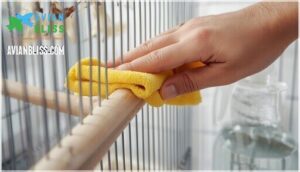
After each meal, grab a damp cloth and wipe down your bird’s perches and cage bars to stop bacteria from setting up shop. You’ll cut airborne bacteria by 75% and prevent foot infections that can show up in just two weeks.
Use a vinegar-water mix (1:3 ratio) or 3% hydrogen peroxide on surfaces—both wipe away pathogens without leaving toxic residues.
Don’t forget the cage accessories and bird toys tucked in corners where droppings hide.
Removing Leftover Food and Debris
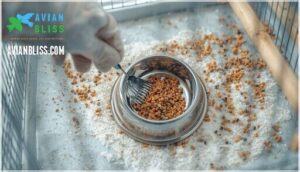
Your bird produces 48 droppings daily, and spoiled food can harbor bacteria in under an hour—that’s why removing leftover food and debris right after meals protects your bird from infections and pest attraction.
Here’s your daily removal routine:
- Scoop out old food and uneaten pellets from dishes and the cage floor to prevent spoilage prevention issues and mold growth
- Lift droppings and food debris from perches, grates, and corners using bird-safe scrapers or disposable gloves
- Rinse feeding areas with hot water to eliminate residue that attracts ants and insects
Pull any moist or cooked food within one hour to stop bacterial buildup and maintain hygiene impact.
Inspecting for Damage or Wear
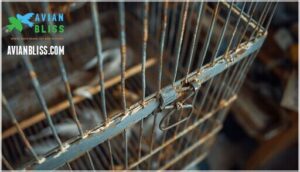
A bent bar or loose latch can turn into an escape hatch in seconds—that’s why you must check cage components during every cleaning session to catch problems early.
Look over bar integrity and fastener security on doors and latches. Check coating condition for chips or peeling paint that expose unsafe bird cage materials. Examine the cage frame for rust, cracks, or weak joints. Evaluate accessory wear on perches, swings, and feeders for splinters or stress damage.
Replace worn cage accessories immediately to prevent injury and maintain a safe bird cage setup through joint assessment and careful inspection.
Weekly and Monthly Deep Cleaning Tasks
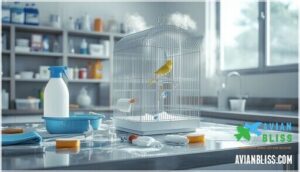
Beyond your daily routine, weekly and monthly deep cleaning keeps your bird’s space truly safe and healthy. These deeper tasks target bacteria and buildup that daily wipes can’t reach.
Let’s walk through what you need to do and when.
Washing Toys, Perches, and Accessories
Every toy, perch, and food dish you leave unwashed becomes a breeding ground for bacteria that can quickly travel from your bird’s feet to its bones.
Wash plastic toys and accessories in hot soapy water weekly, using safe disinfectants like diluted white vinegar or hydrogen peroxide. Scrub perches to remove droppings, then rotate them for even wear.
Wood and rope materials need hand washing and thorough drying to prevent mould. Inspect each item for cracks or fraying during cleaning—damaged accessories harbour pathogens.
Disinfecting Cage Bars, Grates, and Trays
Once toys and perches are clean, you’ll need to disinfect the cage structure itself to eliminate bacteria hiding in crevices. First, scrub off droppings and food debris—pre-cleaning removes up to 95% of germs before you apply any disinfectant.
Use diluted chlorhexidine or hydrogen peroxide on cage bars, grates, and trays, letting it sit for 10–20 minutes. Rinse thoroughly three times to remove chemical residue, then air-dry completely—dampness invites mold within 24 hours.
Rotating and Replacing Accessories
Clean toys and perches help, but rotating them boosts mental health—birds who meet a new toy every two weeks show 25–30% more play behaviors. Swap accessories biweekly to prevent boredom and maintain sanitation scheduling by cutting fecal buildup 35%.
Replace frayed ropes or splintered wood immediately, since damaged toys cause one-third of beak injuries.
Toy rotation reduces long-term costs, too—bulk purchases drop prices 15%.
Using Steamers or Pressure Washers for Deep Cleaning
When swapping toys and perches, you might notice grime in cage corners—this is where steam vs pressure comes in. A steam cleaner uses only water, kills pathogens in seconds, and reduces aerosolization risks, while a pressure washer blasts tough debris but uses more water.
Both disinfect bird cages well; just remember gloves and masks for safety measures during deep cleaning.
Drying and Reassembling The Cage
After steaming or pressure washing, let your cage air-dry completely in a shaded spot for 45 to 90 minutes—residual moisture invites rust and mildew.
Check all cage components for chips or corrosion before reassembly, then wipe bars one last time to confirm dryness.
Secure fasteners snugly and reinstall accessories only when everything feels room-temperature, ensuring your cleaning routine delivers a safe environmental setup every time.
Bird Cage Maintenance Tips for Long-Term Hygiene
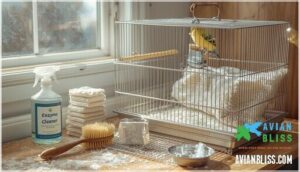
Keeping your bird’s cage clean isn’t just about weekly scrubbing—it’s about building habits that prevent problems before they start. A few simple strategies can make your routine easier and keep your bird healthier for years to come.
Here’s what works best for long-term cage hygiene.
Creating a Cleaning Schedule
You’ll protect your bird’s health better when you map out daily, weekly, and monthly bird cage cleaning tasks. A cleaning schedule keeps hygiene monitoring consistent and prevents bacterial buildup from sneaking up on you. Here’s how to build one:
- Match frequency to your bird’s species—large parrots need weekly deep cleaning, while finches do fine with monthly sanitizing if you keep up daily maintenance.
- Track tasks in a written log—recording what you cleaned and when helps you spot patterns and adjust seasonal routines during molting or humid months.
- Assign cleaning products to specific intervals—mild soap daily, vinegar weekly, bleach monthly—so you minimize chemical exposure while maximizing safety.
- Review your bird’s health against your log—since 70% of avian infections stem from dirty cages, you’ll catch hygiene gaps before they become problems.
Schedule benefits add up fast. Structured routines cut airborne pathogens by over 50% and reduce stress-related behaviors like feather plucking.
Choosing Easy-to-Clean Cage Designs
Your choice of cage design cuts cleaning time by half when you prioritize material composition, structural accessibility, and automated features. Stainless steel and powder-coated cages resist waste absorption, while removable trays and grates slash weekly cleanup by 25 minutes.
Look for bird cages with external-mounted dishes, seed guards, and detachable components that simplify accessory integration. Shape optimization matters too—rectangular designs support airflow and straightforward tray removal, making cage components accessible during daily maintenance.
Preventative Measures for Odor and Bacteria
Controlling air circulation cuts airborne bacteria by 60%, so position your cage away from walls and maintain humidity below 60%.
Change multi-layer paper liners daily to slash odor-causing bacteria by 80%, preventing ammonia buildup from bird droppings.
Use safe disinfectants like 1:1 water-vinegar solutions for 90% bacterial elimination. Vacuum the hygiene perimeter daily and sanitize accessories in hot soapy water weekly to maintain cage hygiene.
Monitoring Bird Health Through Cage Cleanliness
Your daily cleaning routine acts as a health screening tool, revealing critical signs of avian health before symptoms appear. Watch for these changes during cage observations:
- Fecal consistency shifts (color, texture, or volume) signal digestive infections or nutritional stress requiring immediate attention.
- Behavior changes like reduced vocalization or activity levels often reflect discomfort from bacterial exposure.
- Droppings analysis helps detect parasites or dehydration early, supporting disease prevention.
Consistent hygiene practices create a baseline for spotting infections fast.
Essential Tools and Supplies for Cleaning
You can’t clean effectively without the right arsenal. Stock up on these essentials: stainless steel cleaning brushes for bars and corners, bird-safe detergent for dishes, cage disinfectant spray or diluted vinegar, cage liners like newspaper, dish supplies including soft sponges, and protective gloves to shield your hands.
Multi-pack cleaning tools generally cost $8–$15, while specialized cleaning supplies and safe disinfectants range from $10–$30.
Frequently Asked Questions (FAQs)
What cleaning products are toxic to birds?
Ammonia, bleach, and phenol-based cleaners release fumes that damage your bird’s delicate respiratory system. Even low concentrations can cause irritation, breathing problems, or death.
Skip these environmental toxins and choose bird-safe alternatives like vinegar or unscented soap instead.
How often should I replace cage liners?
You should replace cage liners daily to prevent waste accumulation and bacterial growth. Bird size, diet impact, and bird health affect frequency.
Larger birds or seed-based diets require daily cage cleaning, while smaller birds on pellets may need newspaper or bedding material changes every two to three days.
Can I use vinegar to clean cages?
Yes, you can use distilled white vinegar as a safe cleaner for birds, but dilute it properly—1 part vinegar to 2 parts water works well. Rinse thoroughly afterward to remove acidity.
While vinegar addresses organic matter and some bacteria, it has pathogen limitations and won’t kill resistant organisms, so consider stronger safe alternatives during outbreaks.
What cage materials are easiest to clean?
Stainless steel cages are easiest to clean due to their non-porous, biofilm-resistant surfaces and excellent chemical compatibility with safe cleaning products.
Powder-coated steel also simplifies bird cage maintenance, requiring minimal cleaning effort compared to porous materials.
Should I remove my bird during cleaning?
Think of it as moving your bird to the green room before showtime. You should absolutely remove your bird during deep cleaning to prevent fume exposure risks and injury prevention while supporting stress reduction through safe relocation in a secure space, enabling better hygiene facilitation.
Conclusion
A spotless cage won’t guarantee health, but a dirty one practically guarantees illness. The minutes you invest in how to clean bird cages each day prevent the hours you’d spend nursing respiratory infections or battling parasites.
Your bird can’t escape its environment—you control whether that space fosters vitality or breeds disease.
Clean consistently, disinfect thoroughly, and watch stress behaviors fade as your companion thrives in a habitat that finally mirrors the care you intended all along.
- https://www.kookshop.com/no-more-dirty-birdies-how-often-and-what-you-should-use-to-clean-your-pet-bird-s-cage
- https://birdsupplies.com/pages/how-to-clean-a-bird-cage
- https://birdsittingtoronto.ca/how-to-keep-your-birds-cage-clean-and-hygienic/
- https://www.petmate.com/blogs/petmate-academy/how-often-clean-bird-cage-tips
- https://cdn.kingcounty.gov/-/media/king-county/depts/dph/documents/health-safety/environmental-health/pet-business/infection-control-plan-live-poultry-business.pdf?rev=ec4364fe0778445cbc73192defc91b2c&hash=9BC3D0FC65F083E2DF61A3359A781B95