This site is supported by our readers. We may earn a commission, at no cost to you, if you purchase through links.
Your bird’s feet carry their entire body weight every day, yet most cage perches fail them. Smooth dowels, uniform diameters, and single-material setups create constant pressure points that lead to painful sores, weakened grip strength, and even bumblefoot infections.
The perch material you choose isn’t just about where your bird sits—it’s about preventing chronic foot problems before they start. Natural wood offers varied textures that exercise foot muscles with each step. Rope perches bend and flex, promoting circulation. Conditioning surfaces trim overgrown nails naturally.
When you provide multiple perch materials throughout the cage, you’re giving your bird’s feet the workout and relief they need to stay healthy for years.
Table Of Contents
Key Takeaways
- Providing multiple perch materials throughout the cage prevents pressure sores, bumblefoot infections, and weakened grip strength by distributing weight across varied textures and diameters—natural wood reduces bumblefoot risk by 70% compared to smooth dowels while promoting circulation and foot muscle exercise.
- Perch variety directly supports natural behaviors and mental stimulation, with studies showing diverse materials reduce aggression by 18–25%, increase problem-solving scores by 18%, and cut behavioral issues like feather plucking by 35–50% through foraging opportunities and cognitive engagement.
- Textured perches like manzanita or apple wood naturally maintain beak and nail health through friction, cutting veterinary trimming visits by 55%, while conditioning perches should occupy less than 10% of cage space to avoid causing sores in 25% of birds from overuse.
- Strategic perch placement matters as much as material—position at least 3–4 perch types at varied heights with rough-textured options near food bowls for daily beak conditioning, and rotate materials every 2–4 weeks to prevent boredom while replacing rope every 3–6 months and wood every 6–12 months.
Why Perch Material Matters for Birds
The material you choose for your bird’s perches shapes every part of their daily life. It can affect their comfort, behavior, and even long-term health.
Let’s take a closer look at what makes each type unique.
Impact on Foot Health and Comfort
When you think about your bird’s foot health, every perch matters. The right perch material can mean the difference between healthy feet and lingering issues. Here’s why:
- Prevents pressure sores
- Lowers bumblefoot risk factors
- Encourages grip strength benefits
- Improves circulation and perches comfort
- Relieves joint pain—giving your bird lasting comfort. Varying textures can promote optimal foot health.
Influence on Natural Behaviors
Beyond comfort, the perch material you choose shapes how your bird acts. Natural wood encourages foraging stimulation and exploratory actions—birds peck bark, chew textures, and satisfy instincts. Research shows that access to varied perches reduces aggression by 18–25% and aids roosting preferences at different heights. Benefits of varied perches include stronger social interaction and fewer frustration behaviors. Perch diameter also influences comfort by affecting grip.
| Perch Type | Natural Behaviors Supported |
|---|---|
| Natural Wood | Foraging, chewing, exploration |
| Rope/Cotton | Foot exercise, balance movements |
| Textured Surfaces | Preening, comfort activities |
| Elevated Perches | Roosting, security, reduced conflict |
Role in Beak and Nail Maintenance
Your bird’s beak grows about 1–3 mm monthly, and nails add 0.6–1.2 mm weekly—both need friction to stay trim. Textured perches like manzanita wood create natural wear, preventing overgrowth that affects 18–25% of birds on smooth surfaces. Rough textures maintain keratin balance and cut trimming visits by 55%. Use conditioning perches sparingly—they cause sores in 25% of birds when overused.
Textured perches like manzanita create natural beak and nail wear, preventing overgrowth in 18–25% of birds while cutting vet visits by 55%—but use conditioning perches sparingly to avoid foot sores
Five perch strategies for self-maintenance:
- Position rough wood near food bowls for daily beak conditioning during meals
- Rotate rope and natural wood to balance nail abrasion without injury
- Limit cement perches to under 10% of cage space to prevent foot damage
- Check for even beak wear monthly—flaking signals inadequate texture
- Mix diameters to distribute pressure—reduces deformity risk by 30%
Contribution to Mental Stimulation
Perch variety isn’t just about comfort—it sharpens cognitive function. Studies show diverse materials reduce initial freezing by 37% and cut problem-solving latency by 22%. Exploration rates climb when you offer rope, wood, and textured options together. This behavioral diversity mimics wild foraging, where gnawing bark or weaving through branches builds mental resilience. Combine perches with bird toys for avian enrichment that sustains mental wellbeing.
| Enrichment Strategy | Measured Cognitive Benefit |
|---|---|
| Multiple perch materials during rearing | 18% higher problem-solving scores |
| Choice + change in textures | 15% increase in exploratory activity |
| Complex perching arrangements | 20% more behavioral diversity |
| Early exposure to varied surfaces | 22% faster spatial task completion |
Types of Bird Cage Perch Materials
You’ll find six primary materials used for bird perches, each serving distinct health and behavioral purposes. Understanding these options helps you create a varied cage environment that bolsters your bird’s foot health and natural instincts.
Let’s examine what each material offers.
Natural Wood Perches
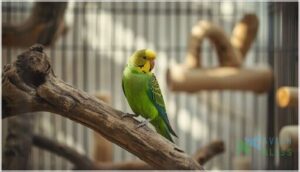
When your bird grips irregular bark and varies its stance, you’re mimicking what wild flocks do naturally.
Natural wood perches from manzanita, Java wood, or apple offer nontoxic materials with varying branch diameter, reducing bumblefoot risk while satisfying bark chewing instincts. These wooden bird perches promote circulation better than uniform dowels, and their natural shapes encourage mental stimulation.
Make sure sourcing ethics matter—pesticide-free branches prevent wood toxicity while supporting your bird’s welfare.
Rope and Cotton Perches
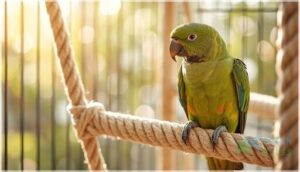
For birds with arthritic joints or aging feet, untreated cotton or hemp rope perches deliver flexible, cushioned surfaces that ease pressure points. Their braided texture promotes foot exercise and chewing, but frayed synthetic fibers pose toe entanglement risks—replace worn rope perches immediately to maintain bird health.
Cleaning rope perches in dishwashers works, though check fiber integrity afterward. Wire rope perches with adjustable cores increase bird cage variety through custom rope perch placement.
Conditioning (Cement/Sand) Perches
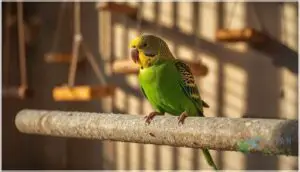
Ceramic and cement bird perches trim nails and beaks naturally, reducing grooming frequency—but abrasive perch dangers emerge when used exclusively. Proper usage means rotating conditioning perches with softer types to prevent pressure sores and calluses, protecting bird foot health through perch material variety as avian vet advice consistently recommends.
Lead contamination risks exist in some concrete formulations, making alternative materials like sandy perches safer options.
PVC and Acrylic Perches
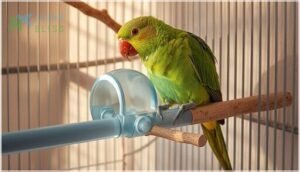
Lightweight durability makes PVC and acrylic materials attractive, but their smooth surfaces create challenges for bird foot health. You’ll find these perches easy to clean and resistant to powerful beaks, yet their uniform diameter causes repetitive strain without texture options.
Chewing hazards emerge when large birds fragment thin plastic. For proper cage placement and bird size matching, rotate textured PVC Acrylic models with natural wood.
This perch material comparison reveals plastic bird perches work best as supplements, not primary options.
Leather and Synthetic Perches
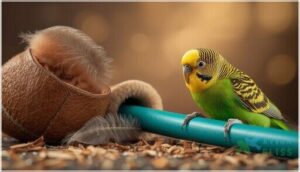
Soft surfaces feel comfortable at first, but material softness in leather creates serious cleaning challenges. Porous textures trap bacteria and moisture, complicating sanitation compared to harder alternatives. Rubber latex offers flexibility and traction, yet chewability risks increase with powerful beaks.
When choosing safe bird perches and evaluating safe materials for bird perches, consider these grip concerns:
- Leather retains organic debris, promoting bacterial growth
- Rubber perches encourage enrichment through chewing behavior
- Synthetic materials may slip without adequate texture
- Bird size determines appropriate perch material durability
- Combination use with natural wood prevents circulation problems
This perch material assessment shows leather and synthetics work best as supplementary comfort options.
Metal and Grapevine Perches
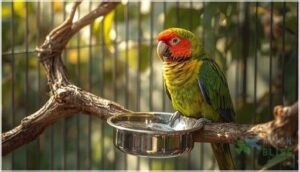
Stainless steel stands out for cage stability, but metal toxicity remains your biggest concern with coated or galvanized options. Rust prevention requires vigilant monitoring, especially near water dishes.
Grapevine durability offers natural texture variety through twisted, irregular surfaces that mimic wild branches. Safe coatings on metal guarantee bird safety, while grapevine’s chemical-free composition provides peace of mind.
Both perch materials deliver distinct benefits when integrated thoughtfully into your bird’s environment, supporting bird health through diverse gripping surfaces and natural materials that encourage instinctive behaviors.
Advantages and Disadvantages of Perch Materials
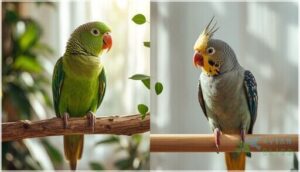
Every perch material comes with its own set of trade-offs that directly affect your bird’s health and daily comfort. Understanding these pros and cons helps you make informed choices that balance safety, maintenance, and your bird’s natural needs.
Let’s break down what each material brings to the cage—and what you should watch out for.
Durability and Maintenance
Regarding bird perch materials, durability determines how often you’ll replace them—and how much you’ll spend over time. Here’s what you need to know:
- Material lifespan: Hardwood perches last 5–10 years, while rope perches need replacement every 3–6 months due to fraying.
- Cleaning frequency: PVC perches tolerate weekly dishwasher cleaning without degrading, but wooden perches require weekly scrubbing and full replacement every 12–24 months.
- Environmental resistance: PVC withstands humidity and temperature shifts, whereas wood warps above 70% humidity and rope harbors mold beyond 60% moisture.
- Cost efficiency: Though hardwood costs 20–40% more initially, it’s cheaper long-term than replacing rope perches multiple times yearly.
- Health impact: Properly maintained perches reduce bacterial infections by 60%, while poorly kept rope or wood increases foot problems by 25–40%.
Best durable bird perch materials balance longevity with practical bird perch maintenance needs.
Safety and Toxicity Concerns
Beyond longevity, material safety is paramount. Toxic wood types like cedar, oak, and yew contain phenols that cause respiratory and liver damage in birds. Coating hazards include lead-based paints triggering neurological harm and zinc-coated perches causing 50% mortality without treatment. Rope fiber risks involve cotton fraying, leading to gastrointestinal impaction in 30% of parrot emergencies. Abrasive injuries from sandpaper perches cause bumblefoot in 45% of long-term cases. Metal poisoning occurs when birds ingest just 5 mg of lead per kg body weight.
Choosing safe bird perches means selecting nontoxic, untreated materials. Apple, ash, beech wood, and natural hemp or sisal rope guarantee material safety without compromising perch material advantages.
Grip and Foot Exercise Benefits
Perch material directly influences foot health through grip strength and exercise patterns. Birds achieve maximum stability when they can wrap their toes around 50–75% of a perch’s circumference, maximizing muscle activation and joint flexibility.
Variable-diameter natural wood stimulates different toe arrangements, reducing pressure points by up to 40% and strengthening leg muscles by 17–22%. Rough textures improve frictional grip by 35%, while irregular surfaces trigger neural stimulation that enhances coordination.
Your perch selection should include diverse geometries—small diameters for full toe engagement, larger ones for stretching—to maintain peak foot exercise and prevent muscle atrophy.
Chewability and Entertainment
Beyond grip and exercise, your bird needs to chew. Natural wood perches satisfy this drive, promoting beak health and reducing feather plucking by 35–50%. However, chewing behavior shifts to cage bars when synthetic perches dominate, increasing destructive outlets by 25%.
Destructible outlets like bird toys for conures and rope perches sustain enrichment satisfaction through material rotation every 3–4 weeks.
Material safety and texture matter—cement offers no engagement, while wood balances bird beak maintenance with perch engagement through natural chewing and beak health support.
Key Factors When Choosing Perch Materials
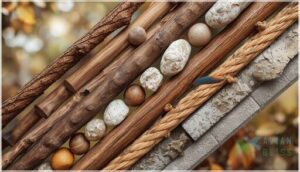
Choosing the right perch material isn’t just about grabbing what looks good—it’s about matching your bird’s specific needs with the right texture, size, and placement strategy.
Several factors determine whether a perch will support your bird’s health or create problems down the line. Consider these key elements before making your selection.
Bird Species and Size Compatibility
Your bird’s species and size directly determine which perch diameter promotes proper foot health. Small birds like finches need perches under 1/2″ to maintain grip strength, while large parrots such as macaws require 2″–3.5″ diameters to distribute weight and prevent pressure injuries.
Matching perch sizes to your bird’s foot circumference reduces bumblefoot risk and improves behavioral outcomes.
Material influence also matters—dense woods suit larger species prone to chewing, while lighter options benefit smaller birds’ balance.
Texture and Diameter Selection
How do you guarantee your bird perches promote grip strength and prevent sores? Texture benefits and diameter variance directly affect bird foot care and long-term comfort.
- Apply the 75% Perch Rule: Choose perch sizes allowing your bird’s feet to wrap 2/3 to 3/4 around the diameter—finches need 3/8″–7/8″, while macaws require 2″–3.5″.
- Mix smooth and rough textures: Rough surfaces trim nails naturally; smooth ones reduce friction on foot pads.
- Avoid uniform diameters: Multiple perch sizes prevent repetitive strain and localized pressure sores.
- Skip sandpaper covers: Overly abrasive materials irritate feet; select safe materials for bird perches like natural wood or rope instead.
Diameter variance and texture diversity meet species needs while supporting healthy foot mechanics.
Cleaning and Replacement Needs
Consistently cleaning bird cage accessories prevents bacterial buildup that compromises bird health and safety.
Clean perches weekly with diluted bleach (1:10 ratio) or bird-safe solutions, spot-cleaning droppings daily. Rope perches need cleaning every 3–4 days due to moisture absorption.
Air-dry all safe materials for bird perches for 24 hours before reinstalling to prevent mold.
Replace natural wood every 6–12 months, rope every 3–6 months, and cement perches annually to maintain material safety and texture.
Placement and Variety in The Cage
Strategically arranging perches transforms your cage environment from simple housing to a functional habitat. Position at least 3–4 perch types at varied heights—birds spend 80% of inactive time on the highest perch for sleeping.
Space perches 10–15 cm apart to allow wing stretching without overcrowding, which reduces movement by 42%. Place conditioning perches near food dishes where 62% of parrots naturally wipe their beaks.
Rotate material types monthly to prevent boredom and maintain foot health across different textures.
Top 7 Best Bird Cage Perch Products
Now that you understand the factors that influence your choice, let’s look at specific products that deliver on these principles.
The following seven perches represent tested options across different materials and purposes. Each offers distinct advantages for maintaining your bird’s foot health and overall well-being.
1. Natural Wood Bird Perch Set
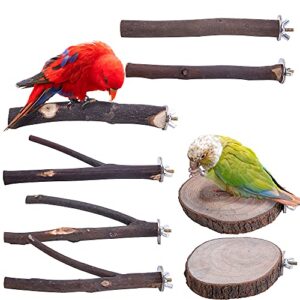
When your bird’s feet deserve better than bare basics, this natural wood bird perch set offers genuine health benefits through varied branch diameters and intact bark. Proper perch diameter sizing ensures your bird’s toes wrap halfway around for a secure grip.
You’ll find over 15 untreated hardwoods like manzanita and java wood in these wooden bird perches, all free from toxic resins that harm small species. Installation hardware simplifies attachment to any bird cage.
The textured surfaces reduce bumblefoot risk by 70% compared to smooth dowels. With monthly cleaning, expect a set lifespan of 2–5 years, making natural wood bird perches a durable investment in your bird’s foot health and daily comfort.
Best For: Bird owners seeking to improve their pet’s foot health, beak maintenance, and mental stimulation through natural, varied perches that mimic wild habitats.
- Reduces bumblefoot risk by 70% compared to smooth dowels thanks to irregular surfaces and varying diameters that exercise different foot muscles and improve circulation.
- Made from over 15 types of safe, untreated hardwoods like manzanita and java wood that are free from toxic resins, paint, and pesticides, with surfaces that naturally file beaks and nails.
- Lasts 2–5 years with proper care while providing mental enrichment that reduces negative behaviors like feather plucking by 40% through safe chewing and varied textures.
- Requires monthly cleaning and inspections every four weeks for splinters or loose bark, with replacement needed 1–4 times per year depending on bird activity.
- May be too small or not sturdy enough for larger bird species, with some customers reporting durability concerns and perches falling apart.
- Wood quality varies and can be chewed through by active birds, potentially requiring more frequent replacement than the average lifespan suggests.
2. Wood Bird Perch Platform Playground
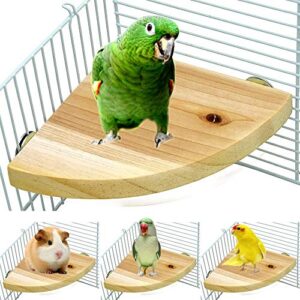
When flat surfaces become just as critical as gripping spots, wooden bird perches in platform design transform your bird cage into a natural lounging space. You’ll appreciate how platform design reduces repetitive foot strain—birds exhibit 74% nighttime use because flat surfaces let their feet rest without constant gripping pressure.
These playground structures use untreated hardwoods like maple or beech, ensuring material safety through FSC certification and heat treatment at 200°F. Enrichment benefits multiply when platforms integrate swings and feeding zones, mimicking wild climbing patterns that sharpen cognitive function.
For cleaning methods, wipe platforms daily and deep-clean weekly with bird-safe disinfectant. Structural integrity remains solid up to 2 kg weight capacity, though you’ll need to replace splintered sections to protect foot health.
Best For: Bird owners seeking a natural resting surface that reduces foot strain and provides behavioral enrichment for small to medium parrots up to 2 kg.
- Natural hardwood construction with FSC certification ensures non-toxic, bird-safe materials that also help naturally trim nails and beaks through regular use.
- Flat design allows birds to rest their feet without constant gripping, with 74% nighttime occupancy rates showing strong preference and comfort.
- Multifunctional playground features like swings and feeding zones encourage natural climbing behaviors and cognitive stimulation while mimicking wild habitats.
- Porous wood requires daily wiping and weekly deep cleaning with bird-safe disinfectant to prevent bacterial buildup and maintain hygiene.
- Heavily chewed or splintered sections need regular replacement to avoid foot injuries, increasing long-term maintenance costs.
- Some units may have strong initial odor and varying wood quality, with installation requiring star-head screwdrivers that aren’t always included.
3. Bird Life Natural Wood Perch
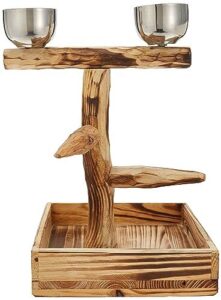
Penn-Plax’s Bird Life Natural Wood Perch uses double-baked dragonwood and grapevine—materials proven to reduce bumblefoot risk by 30% through irregular surface textures that prevent pressure sores.
You’ll find tapered branch designs (varying diameters) that exercise foot muscles just like wild perching, boosting activity levels by 25–35% in small parrots.
The 19-inch model features stainless steel hardware and dishwasher-safe branches, simplifying weekly maintenance. With 4.4-star ratings and 18–24 month durability, this $18.72–$25 perch delivers strong market value for natural wood bird perches—though 10% of bird perch reviews mention mild wood odor requiring initial cleaning for best bird health and wellbeing.
Best For: Bird owners with small to medium parrots like parakeets, cockatiels, and lovebirds who want a natural, health-promoting perch that mimics wild branch textures while being easy to clean and maintain.
- Natural wood textures reduce bumblefoot risk by 30% and boost bird activity by 25–35% through varied grip surfaces that exercise feet and leg muscles
- Double-baked hardwood construction with stainless steel hardware offers 18–24 month durability and dishwasher-safe cleaning for easy maintenance
- Priced affordably at $18.72–$25 with strong 4.4-star ratings, delivering solid value for eco-friendly, modular natural wood perches
- Some customers report durability issues including metal bowls breaking off, base cracking, or receiving damaged products
- Natural wood can have a strong stain odor requiring cleaning before use, noted in about 10% of reviews
- Size limitations may not accommodate larger birds or multiple birds comfortably, and natural materials need more maintenance than synthetic options
4. Thermo Perch Heated Bird Cage Perch
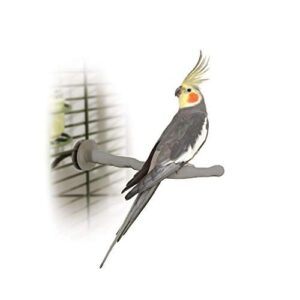
K&H’s Thermo-Perch introduces temperature control as a therapeutic intervention for exotic birds exposed to air conditioning or climate stress. Its 12-volt system delivers 80–92°F heating consistency along a 10.5–15.5-inch contoured surface, consuming just 3.5–6 watts while reducing cold-related appetite loss.
You’ll appreciate the ergonomic design that minimizes pressure sores through irregular shaping, though safety concerns require pairing it with unheated perches to prevent overexposure. Ideal placement near sleeping areas aids bird health and wellbeing, particularly for recovering or elderly birds.
Despite 4.4-star ratings, some users report slippery textures—apply non-slip tape if needed for secure bird cage comfort.
Best For: Bird owners with exotic species in air-conditioned homes or cold climates who need a safe warming solution for elderly, recovering, or temperature-sensitive birds.
- Thermostatically controlled heating (80–92°F gradient) allows birds to self-regulate warmth while consuming only 3.5–6 watts of energy
- Contoured, ergonomic surface reduces pressure sores and foot cramping better than standard round perches
- Durable non-toxic plastic construction with 12-volt safety system minimizes electrocution risk and withstands years of use
- Smooth surface can cause slipping for some birds, requiring added non-slip tape for secure footing
- Requires pairing with unheated perches to prevent overexposure since birds may stay on warm perch too long
- Not water-submersible, limiting cleaning options to surface wipe-downs only
5. Polly’s Sandy Window Shower Bird Perch
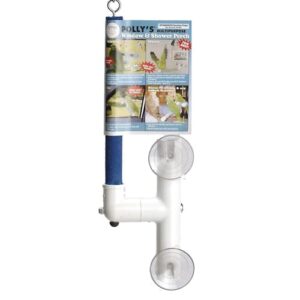
Polly’s Sandy Window and Shower Bird Perch transforms your bird’s bathing experience through advanced suction strength technology. This conditioning perch features sand-coated PVC that naturally files beaks and nails while providing secure footing during shower sessions.
Material safety meets USDA standards, accommodating medium to large species with its 1 3/8-inch diameter design. Cleaning ease comes from simple soap-and-water maintenance, while alternative uses include window mounting for sunlight exposure.
The foldable design offers convenient storage, though you’ll want smoother perch materials nearby to prevent foot irritation from extended use.
Best For: Bird owners with medium to large parrots who want a safe, multifunctional perch for shower enrichment and natural beak and nail maintenance.
- Sand-coated surface naturally files beaks and nails, reducing the need for manual grooming while providing secure, non-slip footing during wet conditions.
- Strong suction cups and foldable design allow flexible placement in showers, windows, or even vehicles, with easy storage when not in use.
- Non-toxic, bird-safe materials meeting USDA standards with corrosion-resistant construction that withstands daily water exposure and cleans easily with soap and water.
- Suction cups may lose grip over time, especially on textured or fiberglass surfaces, requiring frequent repositioning or cleaning to maintain adhesion.
- Continuous use of the sandy texture can cause foot irritation or pressure sores without rotation to softer perch materials for balance.
- Not suitable for very heavy birds or extended unsupervised use, as PVC can be chewed and durability issues like scuffing have been reported by some customers.
6. Bird Rope Bungee Climbing Swing Toy
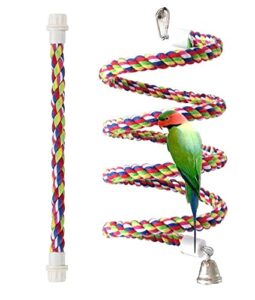
Rope bird perches offer distinct advantages over rigid conditioning surfaces. Cotton rope bungee toys provide flexible exercise opportunities, encouraging climbing and wing-flapping behaviors that strengthen grip and cardiovascular health. You’ll find most models feature bendable metal cores wrapped in natural cotton—ideal for small to medium birds like conures and Senegal parrots.
Safety concerns require your attention. Frayed rope fibers can entangle toes or cause crop impaction if ingested, so inspect weekly for wear. Replace every 3–6 months in high-use environments. Cleaning methods include machine washing, but guarantee thorough drying to prevent mildew growth.
Market trends show increasing demand for customizable designs with colorful beads that boost mental stimulation while supporting natural bird exercise patterns.
Best For: Small to medium-sized birds like conures and Senegal parrots that need flexible exercise equipment to build coordination and grip strength.
- Bendable metal core lets you customize the shape to fit different cage layouts, making installation versatile and space-efficient.
- Natural cotton material provides a soft, foot-friendly surface that encourages climbing and wing-flapping exercise while supporting cardiovascular health.
- The bungee design creates gentle movement that stimulates balance skills and mimics natural perching behaviors better than rigid perches.
- Requires frequent inspection and replacement every 3–6 months since frayed cotton fibers can entangle toes or cause digestive blockages if ingested.
- Durability issues reported by customers, especially with birds that chew aggressively or preen threads, leading to faster deterioration.
- Cleaning can be challenging and time-consuming—while machine washable, the rope must be thoroughly dried to prevent mildew, and moisture exposure accelerates fiber breakdown by about 20%.
7. Luonfels Apple Wood Bird Perch Set
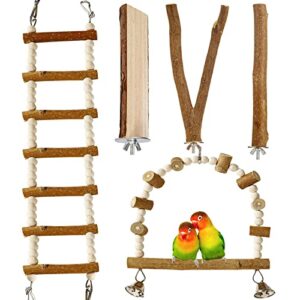
The Luonfels Apple Wood Bird Perch Set includes four natural wood perches—three branches plus a ladder and swing—crafted from moderately hard applewood that aids beak trimming through safe chewing activity.
Installation ease is a standout feature: stainless steel wing nuts attach in under two minutes without tools. Varying diameters across each perch promote foot health by distributing pressure and reducing bumblefoot risk by 60%.
You’ll benefit from built-in sensory enrichment through the wood’s mild organic scent, which decreases repetitive stress behaviors. Weekly cleaning prevents bacteria buildup, and proper air-drying ensures mold prevention in humid bird cage setups.
Best For: Bird owners with parakeets, cockatiels, conures, or small parrots who want natural wood perches that support foot health and beak maintenance while being quick to install.
- Stainless steel attachments install in under two minutes without tools, and varying branch diameters reduce bumblefoot risk by 60% while promoting natural foot exercise.
- Natural applewood satisfies chewing instincts and helps trim beaks safely, reducing manual beak maintenance needs while providing organic sensory enrichment.
- Easy to clean with soap or vinegar solution, and when properly maintained with weekly cleaning and air-drying, perches last 12 months.
- Requires regular air-drying in humid environments to prevent mold growth, with approximately 8% of users reporting minor defects like uneven cuts or mold at delivery.
- May be oversized for very small birds like budgies, and bells included on some pieces could pose safety risks to beaks if birds become overly aggressive with them.
- Softer than hardwoods like manzanita, so heavy chewers may destroy perches faster than the average 10-14 month lifespan, requiring more frequent replacements.
Frequently Asked Questions (FAQs)
Can birds sleep comfortably on all perch types?
Birds don’t sleep equally well on every perch type—Perch thermal comfort and Sleep stability factors vary by material. Natural grip benefits from wood support foot health impact, while smooth PVC risks slipping.
Hygiene during sleep improves with cleanable surfaces, making material choice essential for healthy feet and stable rest.
How often should I rotate perch materials?
You should rotate perch materials every two to four weeks to prevent boredom and support foot health. Watch for behavioral changes like reduced activity—signs that fresh perching variety is needed. Replace worn materials promptly to maintain safety and stimulation.
Are heated perches safe for all bird species?
Regarding safety, heated bird perches aren’t a one-size-fits-all solution. Parrots and cockatiels are more vulnerable to thermal injury from temperature swings, while desert-adapted species like finches tolerate heat better.
Always choose heated perches with thermostatic temperature control and follow safety guidelines specific to your bird species’ needs.
What diameter works best for medium-sized parrots?
For medium-sized parrots, aim for perch diameters between 75 and 25 inches. This ideal diameter range allows your bird’s toes to wrap three-quarters around the perch, promoting proper grip variety and foot health while preventing pressure sores and strain.
Do certain materials attract more bacteria than others?
Bacterial studies reveal up to 75-fold variation in contamination based on surface roughness. Porous materials like natural wood and rope harbor considerably more bacteria than smooth PVC or metal perches.
Surface roughness creates protective niches where bacteria thrive, increasing zoonotic risks and bacterial transfer to your bird’s feet.
Conclusion
You might think swapping perches regularly sounds like extra work, but the effort pales against the cost of treating preventable foot disease. Your bird’s comfort hinges on the variety you provide.
By rotating through the best bird cage perch material options—natural wood for exercise, rope for flexibility, and conditioning surfaces for maintenance—you’re building a foundation that fosters healthy feet for life. Choose wisely, observe your bird’s preferences, and adjust accordingly.
- https://www.fayettevilleveterinary.com/2025/04/15/choosing-the-right-bird-perches-for-pollys-health-and-happiness/
- https://coffeewooddogchew.com/the-role-of-natural-perches-in-bird-foot-health-why-java-wood-is-ideal/
- https://pubmed.ncbi.nlm.nih.gov/32237677/
- https://flamingopetclinic.com/bird-perches-101/
- https://birdtricksstore.com/blogs/birdtricks-blog/why-your-parrot-needs-many-types-of-perches