This site is supported by our readers. We may earn a commission, at no cost to you, if you purchase through links.
 A feather doesn’t just fall from the sky perfectly formed—it’s built molecule by molecule from the nutrients your bird consumes, shaped by the air it breathes, and maintained through behaviors you can either support or accidentally sabotage. When a parrot develops stress bars across its tail feathers or a canary’s plumage loses its luster, the bird isn’t just having a bad feather day; it’s sending you a message written in keratin about deficiencies in diet, environment, or care.
Most bird owners focus on feeding and training, but feather health reveals whether your companion is truly thriving or merely surviving. The difference between vibrant, resilient plumage and dull, damaged feathers often comes down to understanding how amino acids like methionine interact with environmental factors like humidity, and knowing which daily practices protect your bird’s most visible indicator of wellness.
Table Of Contents
- Key Takeaways
- Key Nutrients for Healthy Bird Feathers
- Creating an Optimal Feather-Friendly Environment
- Supporting Feather Growth and Regrowth
- Frequently Asked Questions (FAQs)
- How do I know if my bird’s feathers are healthy?
- How do you teach a bird to care for feathers?
- What can I do to improve my bird’s feather health?
- What should I do if my bird has poor feathers?
- Do birds need a regular wellness checkup?
- Why do parrots have bad feathers?
- How often should I bathe my bird?
- Can feather color indicate specific health problems?
- What toys best support feather health?
- Do different bird species have unique feather needs?
- Conclusion
Key Takeaways
- Your bird’s feathers are built molecule by molecule from dietary nutrients, especially sulfur-containing amino acids like methionine and cysteine, which means feather quality directly reflects whether you’re providing adequate protein (16–18%), vitamins (A, D, E, biotin), minerals (calcium, zinc, manganese), and omega fatty acids in the diet.
- Environmental factors—temperature between 65–80°F, humidity at 40–60%, full-spectrum UVB lighting for at least 30 minutes daily, and clean air free from cooking fumes and VOCs—are just as critical as nutrition because they affect feather structure, preening behavior, and vitamin D synthesis needed for calcium absorption.
- Stress bars, dull coloration, brittle shafts, and feather plucking aren’t cosmetic issues but visible diagnostic signals of underlying problems like nutritional deficiencies, environmental stressors, parasites, or behavioral disorders that require immediate intervention before permanent follicle damage occurs.
- Supporting natural preening through daily misting, providing proper bathing opportunities 2–4 times weekly, maintaining beak and nail health for effective grooming, and scheduling biannual veterinary checkups can prevent 60% of feather-related problems and extend your bird’s lifespan by 3–5 years.
Key Nutrients for Healthy Bird Feathers
Your bird’s feathers aren’t just beautiful—they’re a direct reflection of what you’re feeding them. The right nutrients build strong, vibrant plumage from the inside out, while deficiencies show up as dull, brittle, or damaged feathers.
Let’s break down the essential dietary components that keep your bird’s feathers in peak condition.
Essential Proteins and Amino Acids
Your bird’s feathers are living architecture, built from feather keratin that demands precise amino acid balance and protein synthesis. Feather anatomy reveals why sulfur metabolism matters—cystine alone makes up 9% of feather protein.
Support your bird’s feather health through avian nutrition and diet that includes:
- Methionine supplementation at 0.484% for ideal coverage
- Lysine-rich protein sources at 16–18% dietary levels
- Valine at 0.70% for smooth, resilient plumage
- Threonine at 0.843% supporting nutrient absorption
These sulfur-based amino acids don’t just maintain nutrition—they’re the building blocks your bird uses to weave each feather. Understanding feather nutrition is essential for maintaining healthy feathers in birds.
Vitamins for Feather Quality (A, D, E, Biotin)
While protein builds feather structure, vitamins orchestrate how your bird synthesizes keratin and maintains vibrant plumage. Vitamin A prevents over 60% of feather disorders, but toxicity above 10,000 mg/kg causes blackened edges. Vitamin D from UVB exposure strengthens follicles, while vitamin E reduces oxidative stress during molting. Biotin supplements support keratin formation, yet vitamin interactions matter—excess E blocks A absorption, compromising feather pigmentation.
Balanced avian nutrition prevents these vitamin toxicity issues while supporting ideal feather care and maintenance. A well-planned bird vitamin intake is vital for maintaining healthy feathers.
Important Minerals (Calcium, Zinc, Manganese)
Mineral balance transforms feathers from fragile to formidable. Calcium supplements strengthen the feather’s calamus-to-skin interface, especially when your bird receives 12 hours of UVB daily—studies show an 18% boost in calcium absorption. Zinc deficiency wreaks havoc within weeks, causing frayed shafts and blistering, while adequate levels (78 mg/kg) restore integrity. Manganese benefits include keratin cross-linking and tensile strength gains of 14%. These minerals work synergistically:
- Calcium fortifies follicles and shaft bases
- Zinc stabilizes barb microstructures and pigmentation
- Manganese activates enzymes for feather rigidity
- Combined supplementation increases plume coverage by 28–35%
Feather fortification depends on balanced bird nutrition and avian health monitoring to prevent deficiencies.
Omega Fatty Acids and Hydration
Beyond minerals, Fatty Acid Balance and proper hydration form the cornerstone of feather care. Omega-3 supplementation improves feather density by 15–22% and boosts moisture retention through ceramide enrichment, while balanced omega-6 to omega-3 ratios (around 2:1) improve elasticity.
Adequate Water Intake Management—5–8% of body weight daily—prevents brittleness, and bathing three times weekly decreases dryness by 25%, supporting Avian Skin Health and vibrant plumage through proper nutrition.
Safe and Toxic Foods for Birds
Your bird’s diet can be a lifeline or a minefield. Knowing what’s safe versus what’s toxic protects both feather quality and overall avian health, ensuring proper nutrition fosters vibrant plumage rather than compromising it.
Safe Fruits and Nutrient Balance:
- Safe Fruits like apples (without seeds), mangoes, and blueberries provide vitamins A and C essential for feather pigmentation in balanced avian diets
- Vegetables including kale, carrots, and broccoli deliver calcium and beta-carotene for stronger feathers
- Toxic Food List warnings: avocado causes cardiac distress within 12–48 hours; chocolate and caffeine trigger tremors and potential arrest
- Food Allergies consideration: even “safe” items require gradual introduction, as individual birds may show sensitivities affecting healthy diet outcomes
Creating an Optimal Feather-Friendly Environment

Your bird’s environment plays a critical role in feather health, influencing everything from structural integrity to moisture balance. The right conditions create a foundation for vibrant plumage, while poor environmental factors can trigger stress, molting issues, and long-term damage.
Let’s explore the key environmental elements you’ll need to fine-tune for your bird’s feather care.
Temperature and Humidity Control
Think of your bird’s environment as a climate-controlled sanctuary—because thermal comfort and humidity levels directly determine feather health. Most parrots thrive between 18°C and 27°C (65–80°F), while humidity should hover around 40% to 60% to prevent brittle feathers and plucking behaviors. Tropical species like macaws need slightly warmer conditions, ideally 21°C to 29°C (70–85°F), paired with 50%–70% humidity for ideal feather hydration. Avoid sudden temperature swings exceeding 10°C, which trigger stress and compromise feather integrity. Proper climate control with ventilation systems and automated humidifiers reduces feather-related disorders by up to 40%.
| Environmental Factor | Ideal Range |
|---|---|
| Temperature | 18–27°C (65–80°F) |
| Humidity Levels | 40–60% (50–70% for tropical species) |
| Temperature Fluctuation Limit | Feather plucking is a behavioral distress signal demanding swift intervention, rooted in nutritional deficiencies, chronic stress, or compulsive disorders |
Combat this through behavioral therapy combining environmental enrichment like foraging puzzles, stress management with 12-hour dark sleep cycles, and professional guidance using trust-building techniques that reduce destructive behaviors by 60%.
Parasites, Infections, and When to Seek Help
Hidden threats lurk in even the cleanest aviaries—parasites and infections silently compromise feather integrity before visible symptoms emerge. Your vigilance protects your bird from escalating damage:
- Feather mites infest up to 95% of susceptible populations, while bacterial diseases and fungal infections like Aspergillus increase feather damage risk by 40%.
- Avian pox, mycoplasmosis, and salmonellosis require immediate vet intervention alongside parasite control protocols.
- Labored breathing, excessive scratching, or unexplained feather loss demand urgent veterinary care—delays allow secondary infections to develop.
Annual fecal testing catches intestinal parasites early, preventing the nutrient malabsorption that dulls plumage and weakens your bird’s defenses against avian influenza and circoviral threats.
Supporting Feather Growth and Regrowth
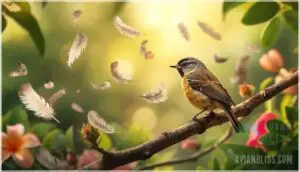
When feathers are damaged or lost, your bird’s body kicks into repair mode, but it needs the right support to rebuild healthy plumage.
Understanding how feathers grow and what they require during recovery helps you create conditions that promote strong, vibrant regrowth.
Let’s look at the key factors that make all the difference during this critical healing phase.
Feather Anatomy and Growth Stages
Understanding feather anatomy helps you support your bird’s plumage health throughout its life. Each feather features a central rachis with paired barbs extending outward, forming the vane through interconnected barbules held together by tiny hooklets.
Feathers grow from follicles deep within the skin, where keratin deposits layer by layer from base to tip during the keratinization process. Once fully mature, feathers become non-living structures your bird maintains through preening until the molting cycle triggers replacement, ensuring continued feather health and functionality.
Nutritional Support During Molting
Proper nutrition becomes your bird’s lifeline during the molting period, when feather production demands peak at renewal time. Increase protein sources to 16–18% of the diet, focusing on sulfur-rich amino acids like methionine and cysteine that form keratin’s structural backbone. Balanced diet adjustments support vigorous feather growth and prevent nutritional deficiencies that compromise plumage quality.
- Vitamin therapy with A, D3, E, and biotin strengthens follicle function and keratin synthesis
- Feather supplements containing zinc and manganese promote proper keratinization and structural integrity
- Omega fatty acids from walnuts or red palm oil maintain skin moisture and boost feather sheen
Time your molting nutrition strategically—daily supplementation during active molting cycles, then every other day afterward.
Reducing Stress for Feather Regrowth
Your bird’s nervous system holds the blueprint for feather regrowth, so stress reduction becomes your primary therapeutic tool.
Establishing environmental stability—consistent routines, 10–12 hours of darkness, and predictable interaction schedules—lowers cortisol production that inhibits follicle activity by up to 50%.
Behavioral therapy using positive reinforcement decreases feather plucking incidents by approximately half in chronic cases, while calming auditory stimulation like low-volume music reduces self-destructive behaviors by 23%.
Relaxation techniques matter: offer two to four weekly baths, rotate enrichment toys, and provide supervised out-of-cage time to support avian stress management and healthier feather regrowth patterns.
Environmental Adjustments for Recovery
Once stress decreases, environmental factors become your next lever for recovery. Temperature Management between 20–23°C with Humidity Control at 30–40% prevents keratin brittleness and aids follicle hydration, while Air Purification removes particulates that damage developing feathers.
Light Therapy using full-spectrum lighting with UV wavelengths boosts preening by 15–20%, and Noise Reduction below 50 dB eliminates acoustic stress that slows feather formation by 18%.
Importance of Regular Avian Vet Check-Ups
Routine veterinary checkups transform feather outcomes because early illness detection reveals hidden problems before visible symptoms appear. When you schedule biannual avian health checks, your bird gains access to baseline exam data, laboratory screening, and professional grooming—tools that collectively extend lifespan by three to five years.
- Hidden infections surface in 65% of “healthy” birds during wellness visits, catching disease before feather damage begins
- Weight tracking detects metabolic shifts as small as 5%, often the earliest warning of nutritional deficiencies affecting plumage
- Feather disease prevention through fecal testing identifies parasites in 15–20% of examined birds, stopping damage at the source
- Bird wellness programs reduce emergency visits by 60% when your avian vets establish consistent health monitoring over three or more years
Frequently Asked Questions (FAQs)
How do I know if my bird’s feathers are healthy?
You’d think vibrant feathers would be obvious, but many owners miss the subtleties. Healthy plumage shows vivid, consistent coloration, smooth texture without fraying, and proper alignment.
Watch your bird’s preening behavior and inspect for bald patches, discoloration, or stress bars during wing inspection.
How do you teach a bird to care for feathers?
You can’t truly “teach” feather preening—it’s hardwired instinct—but you can support natural bird grooming by providing proper bathing opportunities, ensuring beak care tools prevent overgrowth, offering molting support through high-protein diets, and maintaining humidity for healthy plumage care and feather maintenance.
What can I do to improve my bird’s feather health?
You can improve your bird’s feather health through ideal nutrition with quality proteins, vitamins A and D, minerals like zinc, and omega fatty acids.
Maintain proper humidity (50-60%), provide daily sunlight exposure, guarantee clean air quality, and support natural preening behaviors with regular bathing opportunities.
What should I do if my bird has poor feathers?
When your bird’s feathers look dull, broken, or sparse, it’s like reading a distress signal written in keratin. Start with a vet visit to rule out illness, then boost nutrition with protein-rich foods and feather supplements, maintain proper hydration, and create a calm environment with suitable humidity for molting support and healthy plumage regrowth.
Do birds need a regular wellness checkup?
Yes, your bird needs regular wellness checkups. The Association of Avian Veterinarians recommends annual exams for healthy adults, with more frequent visits for seniors or birds with health concerns, ensuring early detection through thorough avian medicine screenings.
Why do parrots have bad feathers?
Poor feather quality in parrots stems from nutritional deficiencies—especially vitamins A, E, and essential minerals—along with environmental stressors like low humidity and inadequate lighting.
Additionally, behavioral issues such as feather plucking, which affects up to 5% of pet parrots, further contribute to this problem.
How often should I bathe my bird?
Most birds thrive with bathing two to four times weekly, though preferences vary—parrots often enjoy daily misting, while finches and canaries do well with three to four sessions per week.
This routine supports feather hygiene and bird wellness, especially during molting care.
Can feather color indicate specific health problems?
Absolutely—your bird’s plumage tells a story you can’t afford to ignore. Dull or faded feathers often signal vitamin A deficiency, malnutrition, or even viral diseases like PBFD, which shifts green to yellow or blue to white, making visual diagnostics a powerful first alert.
What toys best support feather health?
Preening toys made from natural fibers like sisal, untreated wood, and shredded paper encourage grooming behaviors that keep feathers healthy.
Choose toys with safe materials—stainless steel, food-grade acrylics, bamboo—and avoid toxic metals or chemical treatments to protect feather integrity.
Do different bird species have unique feather needs?
One size fits all? That’s a myth your bird didn’t buy into. Species variations demand customized feather care. Macaws need higher protein for vibrant plumage, while desert species thrive in lower humidity than tropical birds requiring 60-80% moisture levels for feather adaptations and ideal avian health.
Conclusion
Feather fitness flows from fundamental care—your bird’s plumage reveals whether you’ve mastered the molecule-level maintenance that separates survival from thriving. By applying these bird feather health tips daily, you’re not just preventing damage; you’re fostering the complex biological process that builds each shaft, barb, and barbule.
Watch your companion’s feathers transform from stress-marked survival signals into vibrant indicators of wellness. The difference between dull plumage and radiant health isn’t luck—it’s understanding that every amino acid, humidity adjustment, and preening opportunity either fosters or sabotages the intricate architecture your bird depends on.
- https://www.tandfonline.com/doi/full/10.1080/00439339.2020.1772024
- https://www.bestbirdfoodever.com/2019/07/avian-malnutrition-feather-condition/
- https://www.paperdue.com/homework-help/literature-reviews-how-do-environmental-factors-impact-feather-degradation-in-avian-species-7719
- https://en.wikipedia.org/wiki/Preening
- https://pmc.ncbi.nlm.nih.gov/articles/PMC10442270/